Artwork
Landscape near The Hague
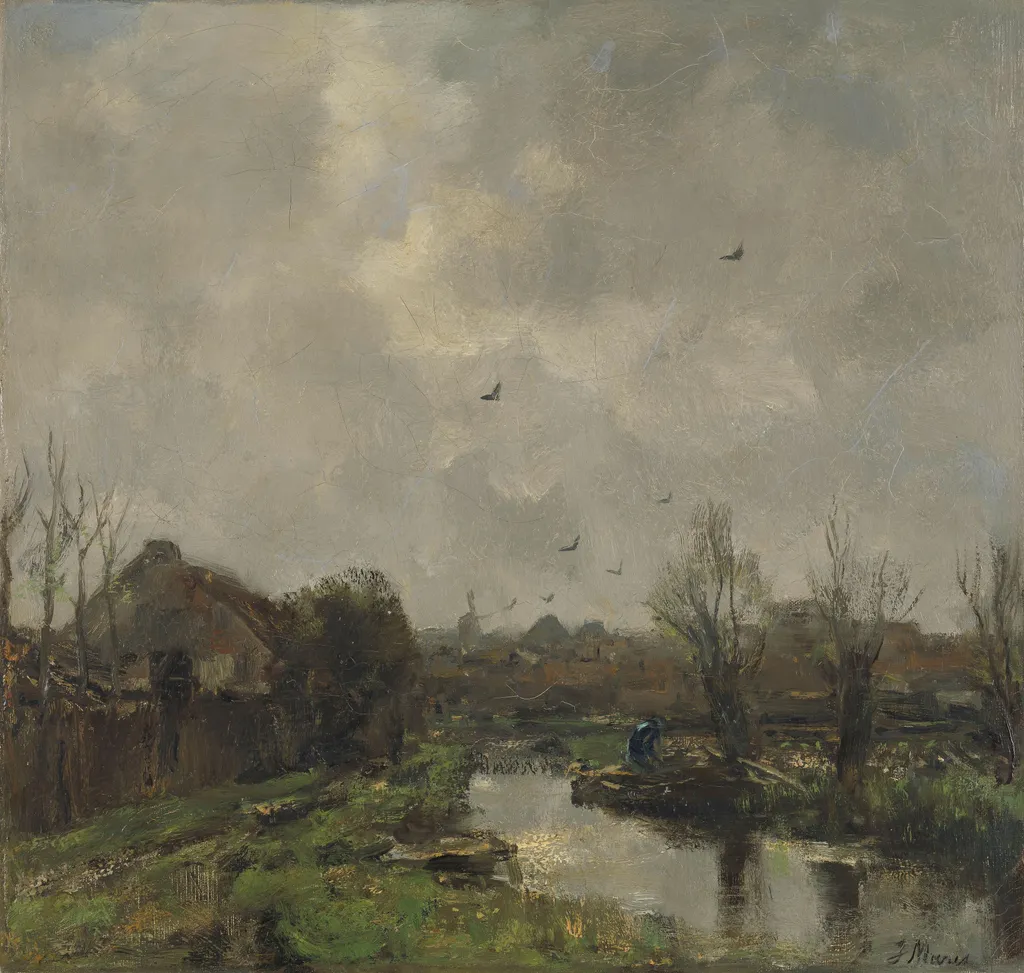
Landscape near The Hague is an oil painting by the Impressionist artist Jacob Maris. It dates from 1896 and is held in the collection of the Rijksmuseum.
About this work
Overview
Landscape near The Hague, painted in 1896 by Jacob Maris, is a characteristic work of the Hague School, a 19th-century Dutch art movement. The oil painting captures a serene Dutch village scene, emphasizing light and atmosphere, hallmarks of Impressionist influence.
Subject & Meaning
The painting depicts a tranquil village by water, with a solitary figure by a pond, a house under bare trees, and a flock of birds in a soft, pale sky. The composition conveys a sense of quiet contemplation, inviting the viewer to reflect on the everyday beauty of the Dutch countryside.
Technique & Style
Maris employed thick, visible brushstrokes, particularly in the sky and water, creating a textured, impasto effect that adds depth and a lively, though calm, atmosphere to the scene. This technique, while rough in appearance, maintains the overall serenity of the landscape.
History & Provenance
Jacob Maris, a prominent Hague School artist, trained under J.A.B. Stroebel before gaining recognition alongside his brothers. *Landscape near The Hague* is now part of the Rijksmuseum's collection, highlighting its significance within Dutch art heritage.
Context
Created during the late 19th century, this work reflects the Impressionist emphasis on capturing light and mood, adapted through the distinctive lens of the Hague School, which often focused on humble, everyday Dutch landscapes.
Own this work as a print
Artist & collection
Artist
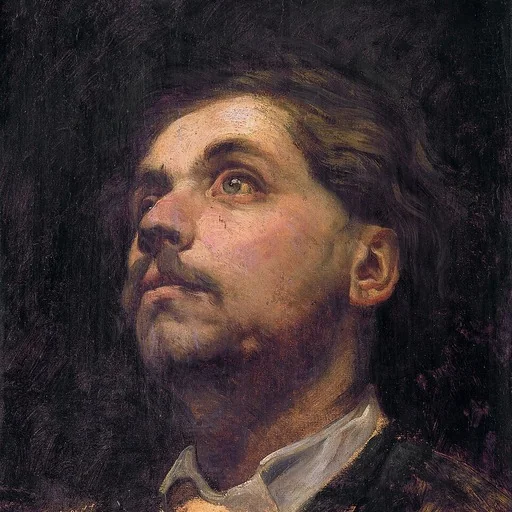
Jacob Henricus Maris (August 25, 1837 – August 7, 1899) was a Dutch painter, who with his brothers Willem and Matthijs belonged to what has come to be known as the Hague School of painters.

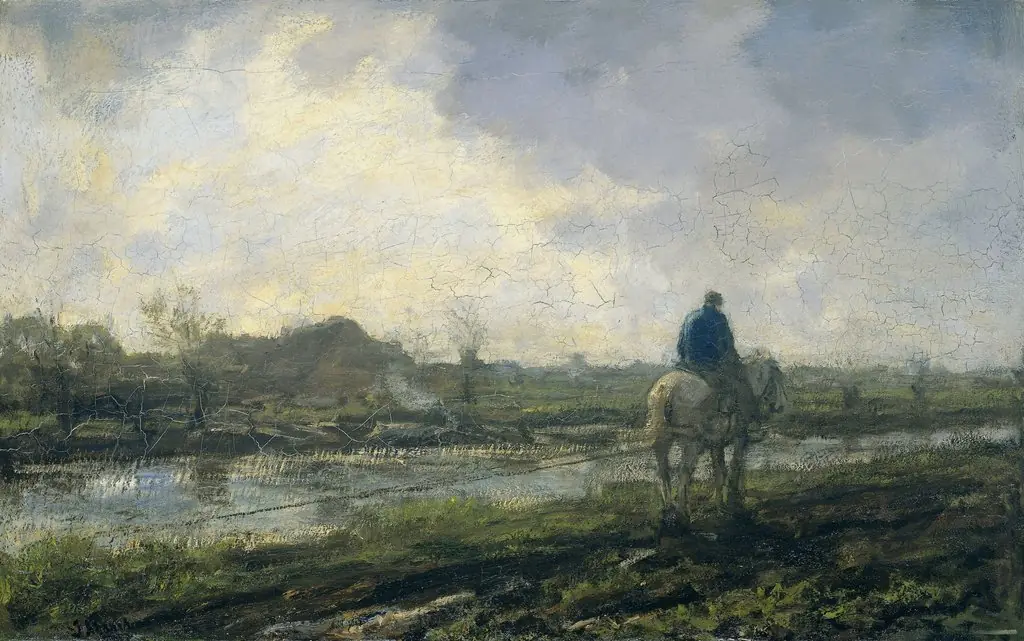
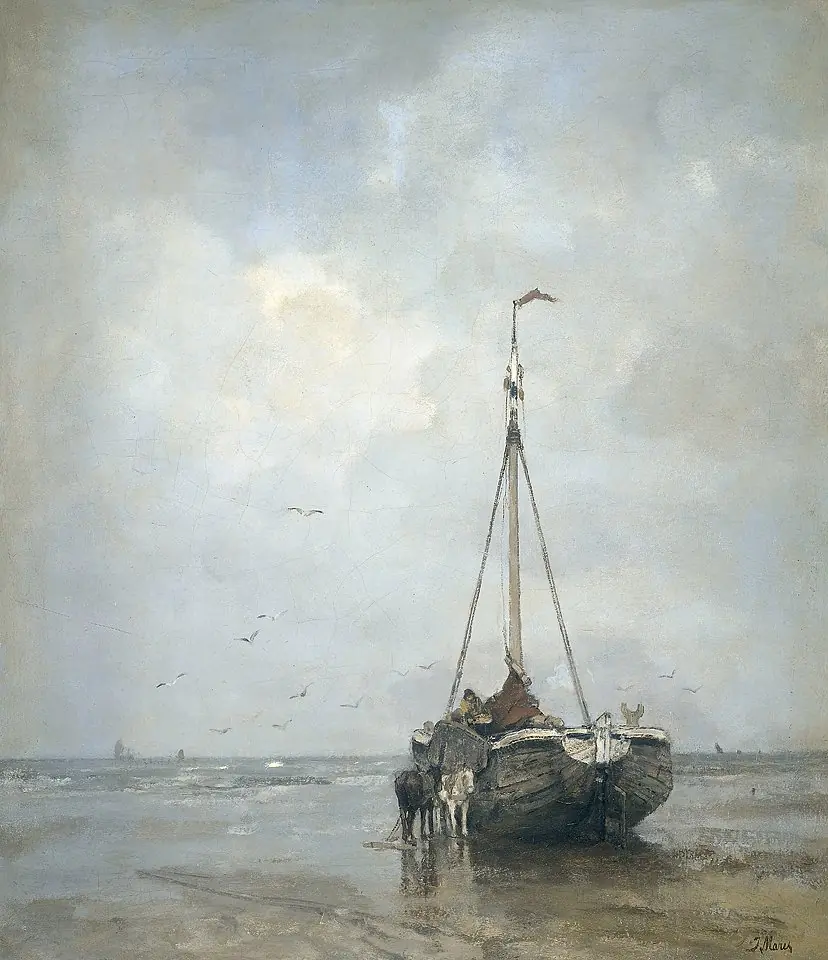
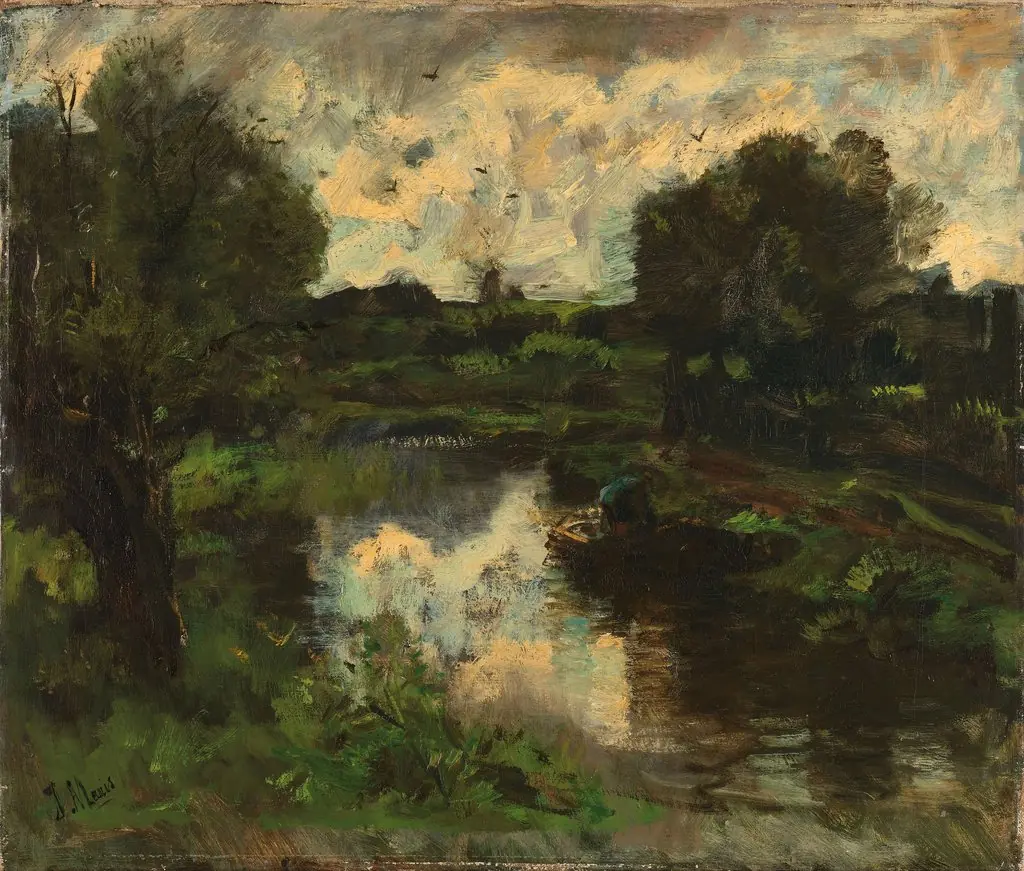 A Polder Landscape after a Thunderstorm
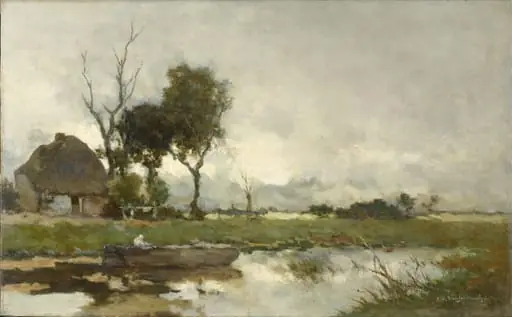 Autumn Landscape
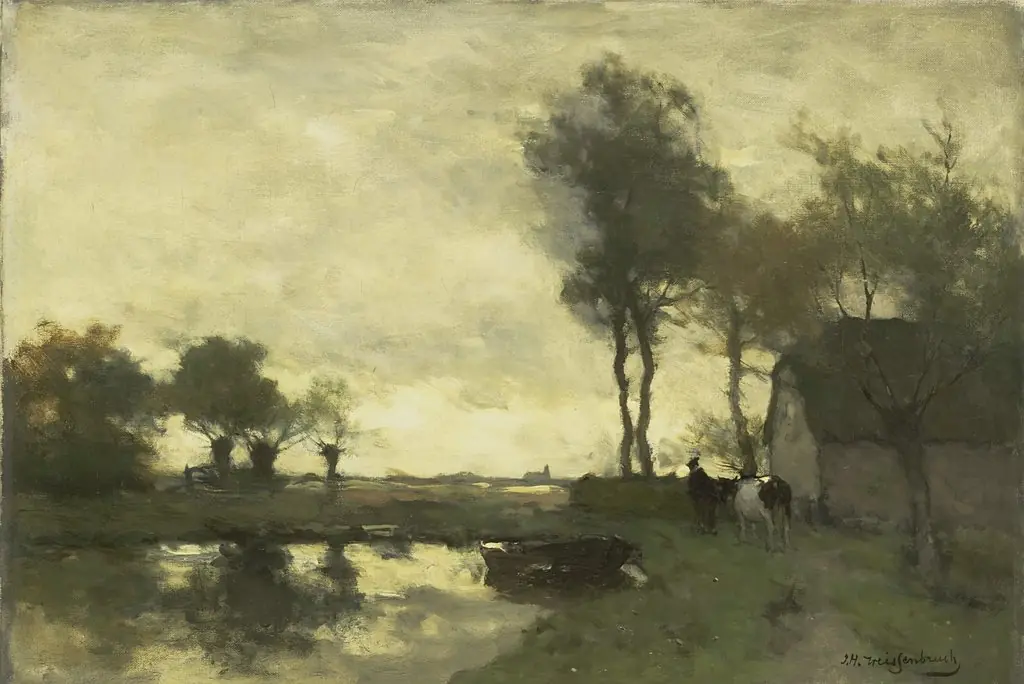 Landschap met boerderij bij een plas
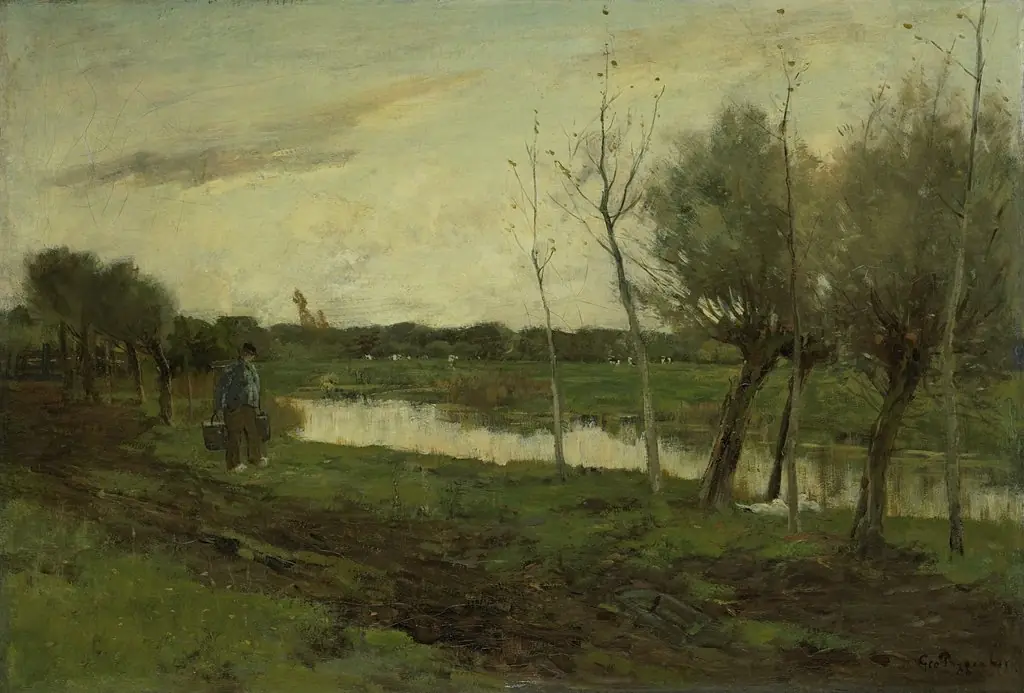 Landscape with canal
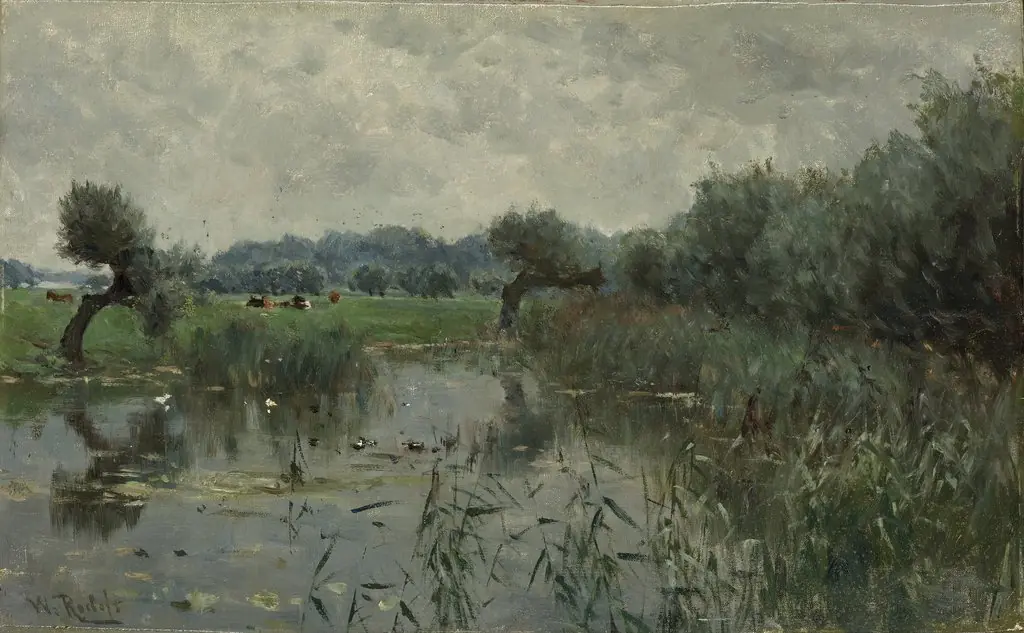 Water Meadows on the River IJssel
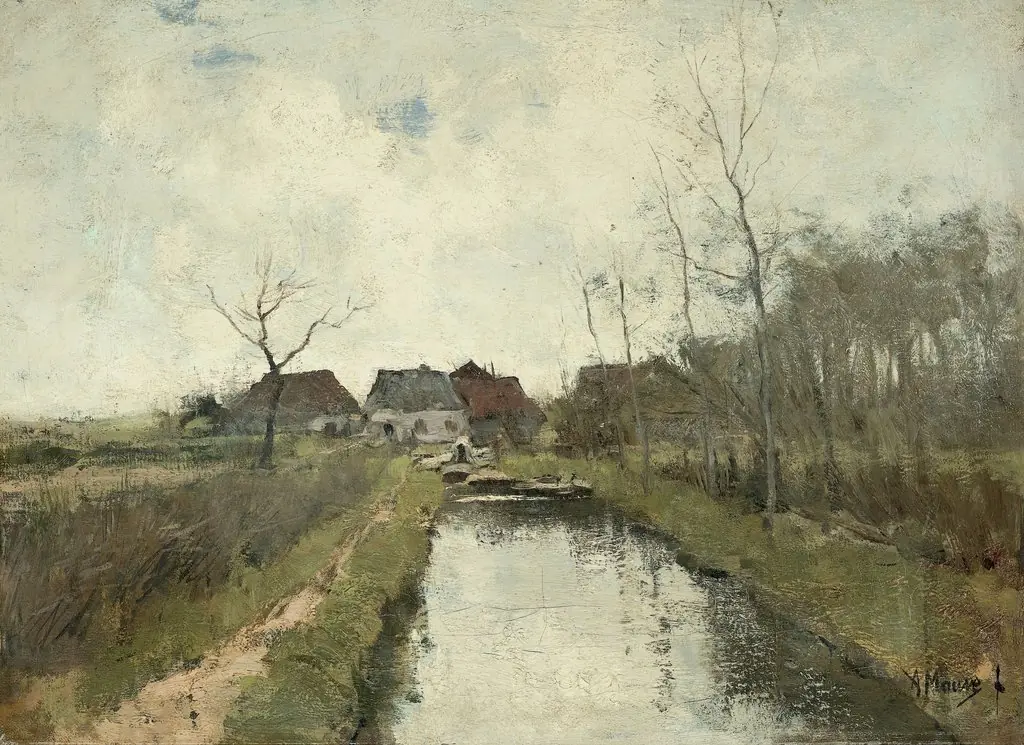 Cottages by a ditch
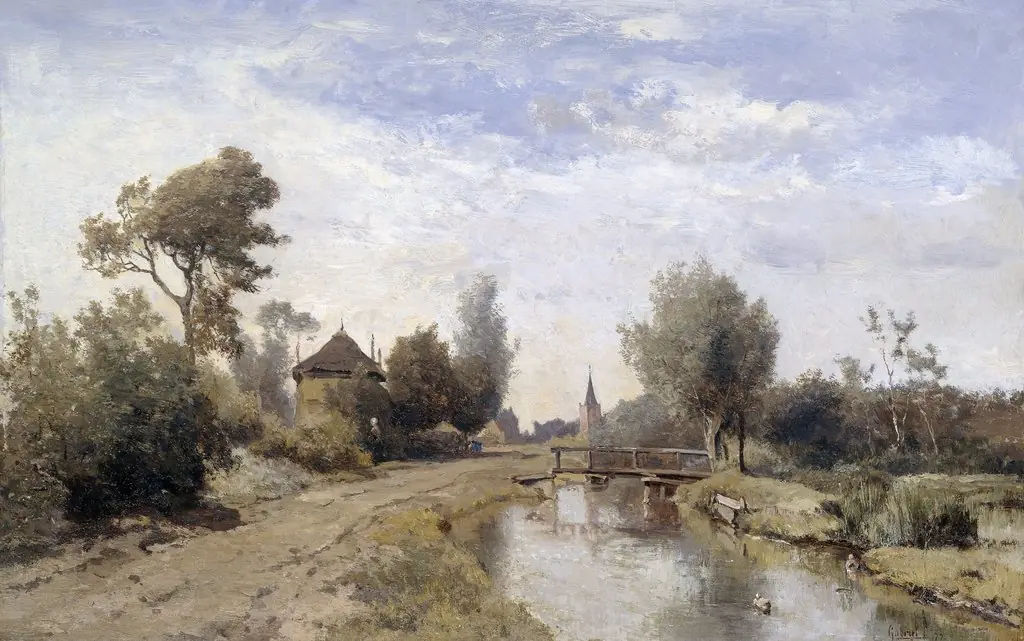 Landscape at Kortenhoef
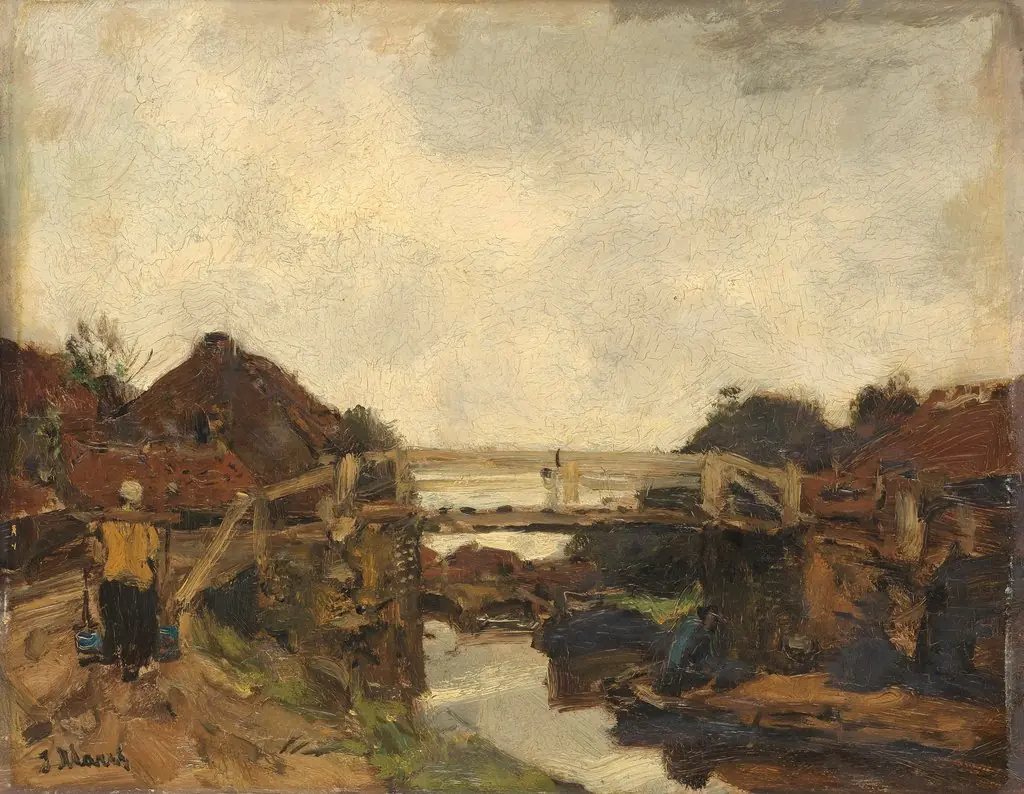 Wooden Bridge across a Canal at Rijswijk
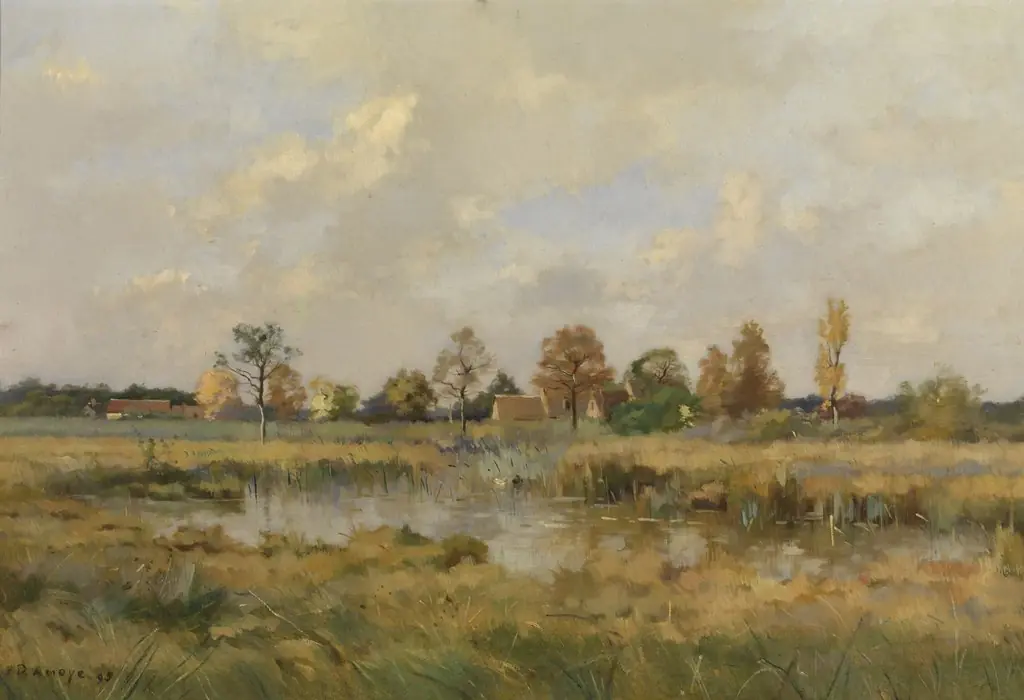 Landscape near Amiens
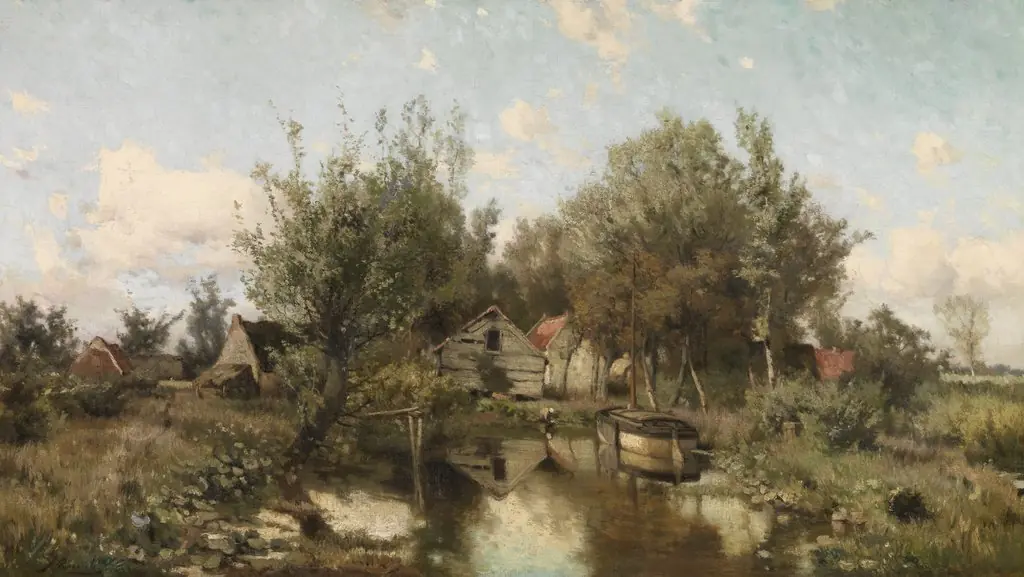 Landscape near Waasmunster
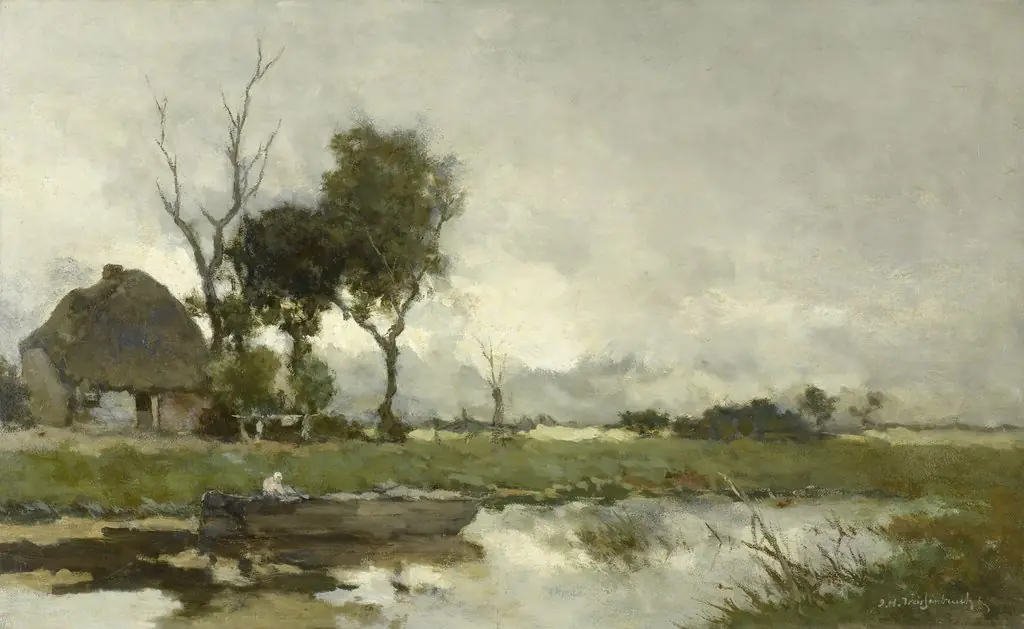 Autumn Landscape
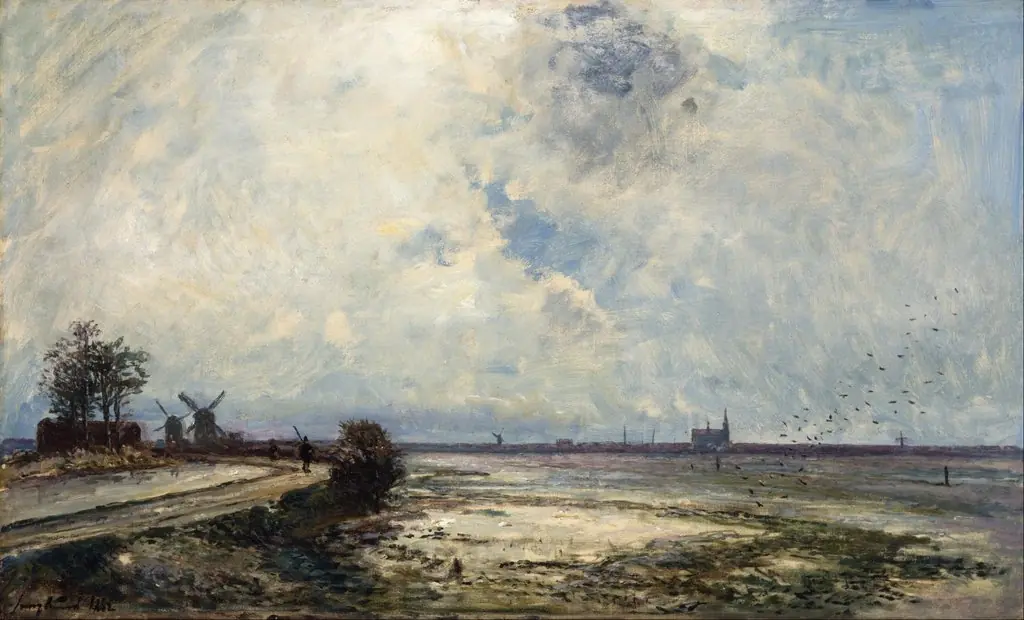 Dutch Landscape