Artwork
Cornelis de Graeff with his Wife and Sons
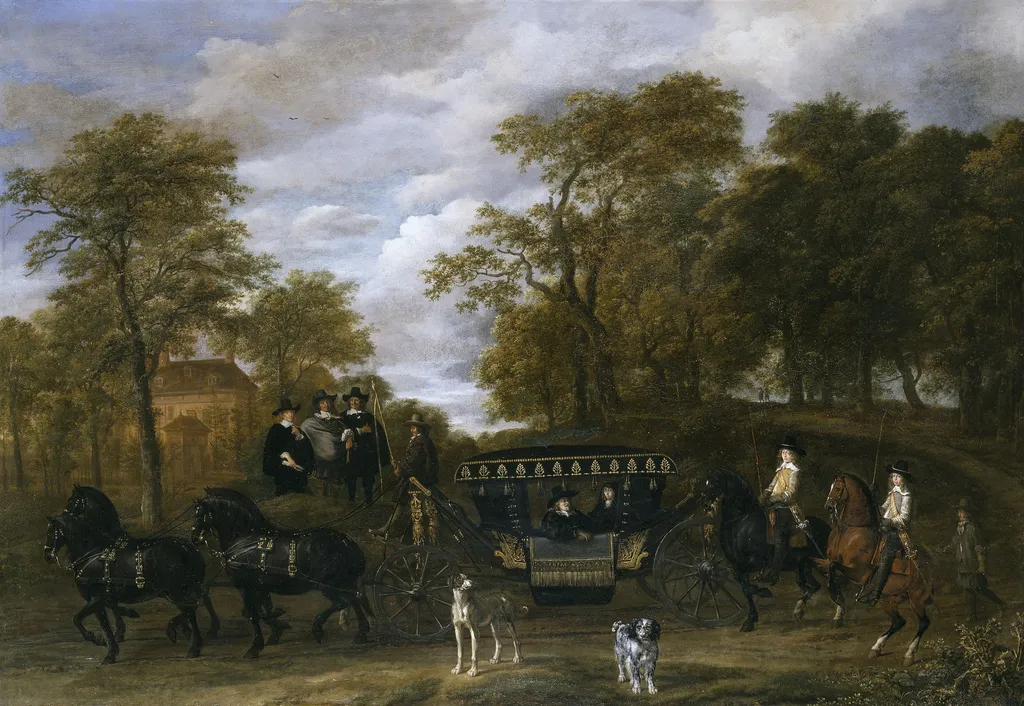
Cornelis de Graeff with his Wife and Sons is an oil painting by the Dutch Golden Age artist Jacob van Ruisdael. It dates from 1660 and is held in the collection of the Amsterdam Museum.
About this work
Overview
It portrays the arrival of the prominent Amsterdam burgomaster Cornelis de Graeff and his family at their country estate, Soestdijk Palace.
Titled Cornelis de Graeff with his Wife and Sons, this oil on canvas painting from approximately 1660 is a collaborative work by Dutch Golden Age artists Thomas de Keyser and Jacob van Ruisdael. It portrays the arrival of the prominent Amsterdam burgomaster Cornelis de Graeff and his family at their country estate, Soestdijk Palace. The artwork is currently held in the collection of the National Gallery of Ireland in Dublin.
Subject & Meaning
The composition centers on Cornelis de Graeff, accompanied by his second wife, Catharina Hooft, and their sons, Pieter and Jacob, as they reach their rural property near Utrecht. Additional family members, including de Graeff's brothers-in-law Willem Schrijver and Pieter Trip, and his younger brother Andries de Graeff, are also present. The scene captures a moment of domestic prosperity and social standing, set against the backdrop of their private country residence.
Technique & Style
This painting is notable for its artistic collaboration. Thomas de Keyser was responsible for depicting the figures, the elegant carriage, and the animals, rendering their rich attire and the vehicle's gilded details with precision. Jacob van Ruisdael contributed the expansive landscape background, including the dense woodland and the distant country estate. The artists meticulously rendered the interplay of light on the foliage and the horses' coats, creating a sense of depth and naturalism.
History & Provenance
The artwork was a direct commission from Cornelis de Graeff himself, making it a rare instance as the only known commissioned piece by Jacob van Ruisdael. While art historian Seymour Slive attributed the landscape elements to Ruisdael in 2001, earlier scholarship, such as Hofstede de Groot's 1911 catalogue raisonné, did not include this work among Ruisdael's oeuvre. This difference highlights ongoing scholarly discussions regarding the precise contributions of each artist.
Own this work as a print
Artist & collection
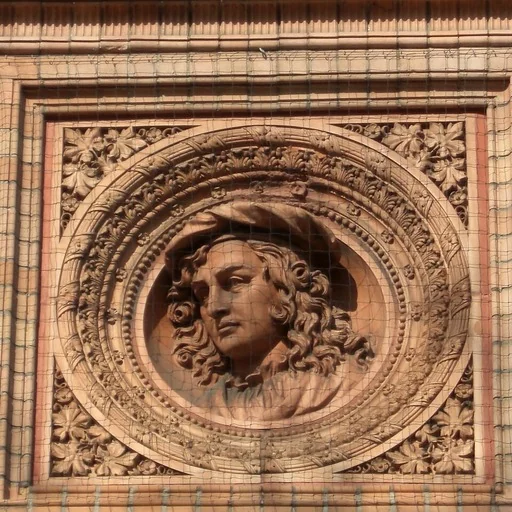
Artist
Jacob Isaackszoon van Ruisdael was a Dutch painter, draughtsman, and etcher. He is generally considered the pre-eminent landscape painter of the Dutch Golden Age, a period of great wealth and cultural achievement when…