Artwork
Dunes and bleaching fields
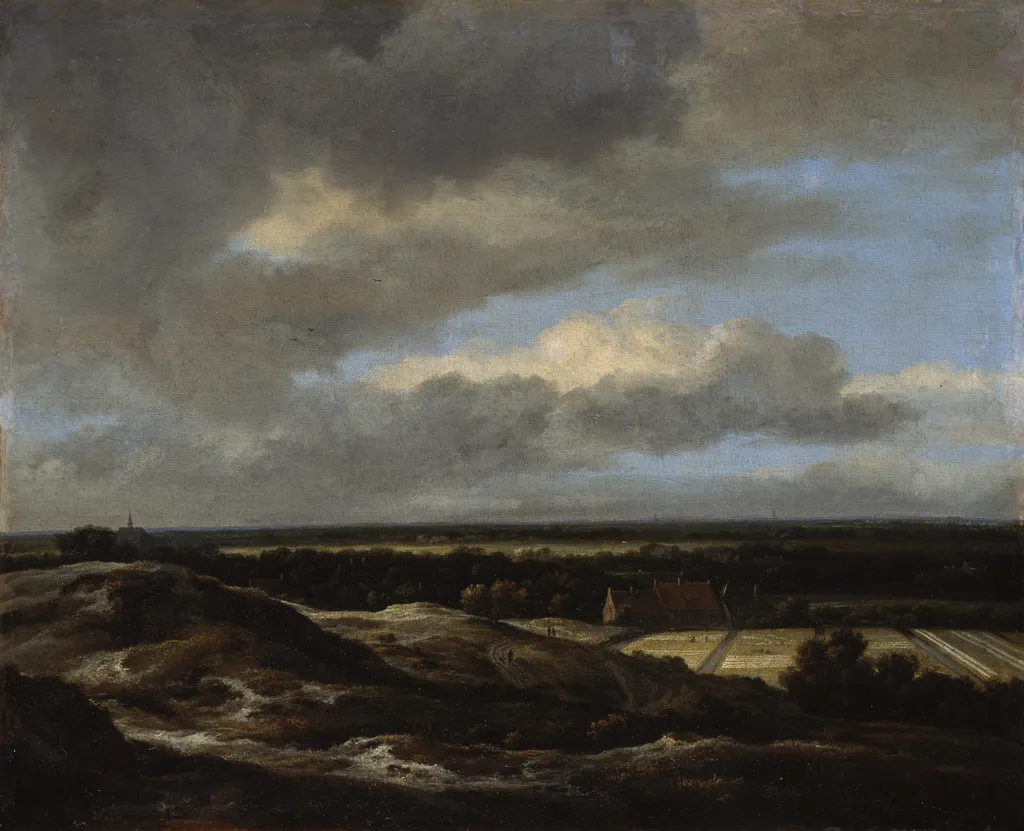
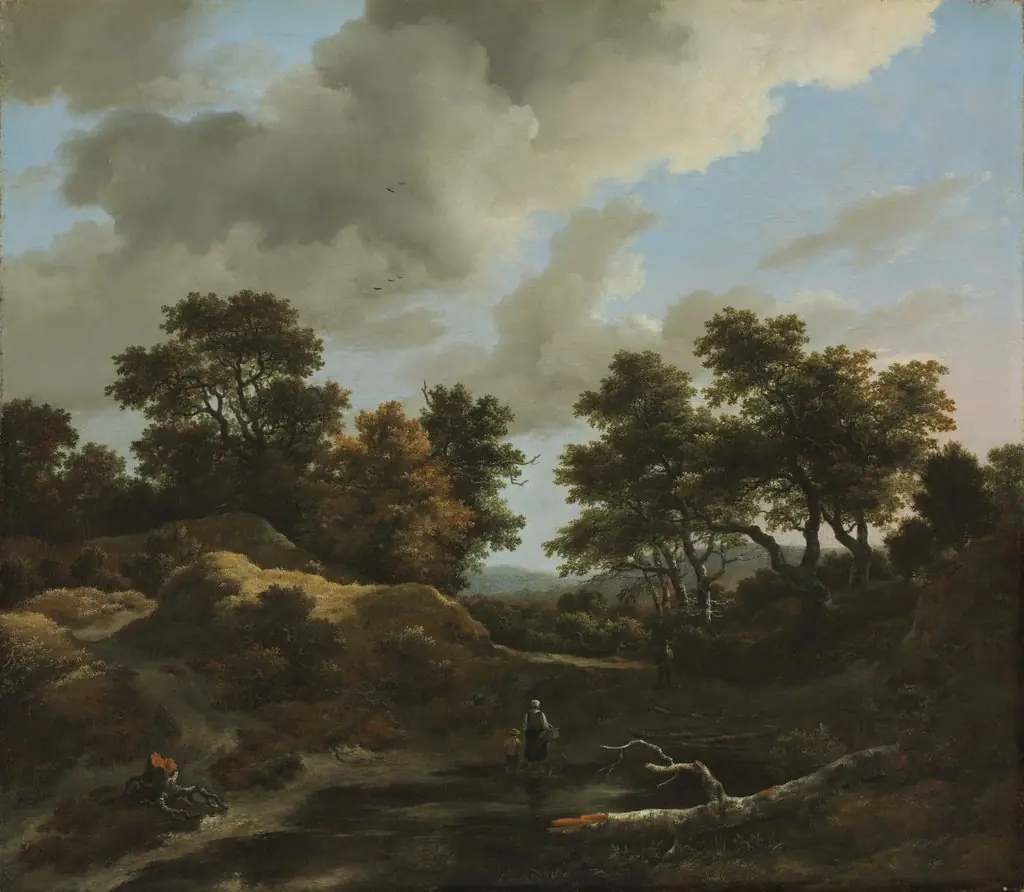
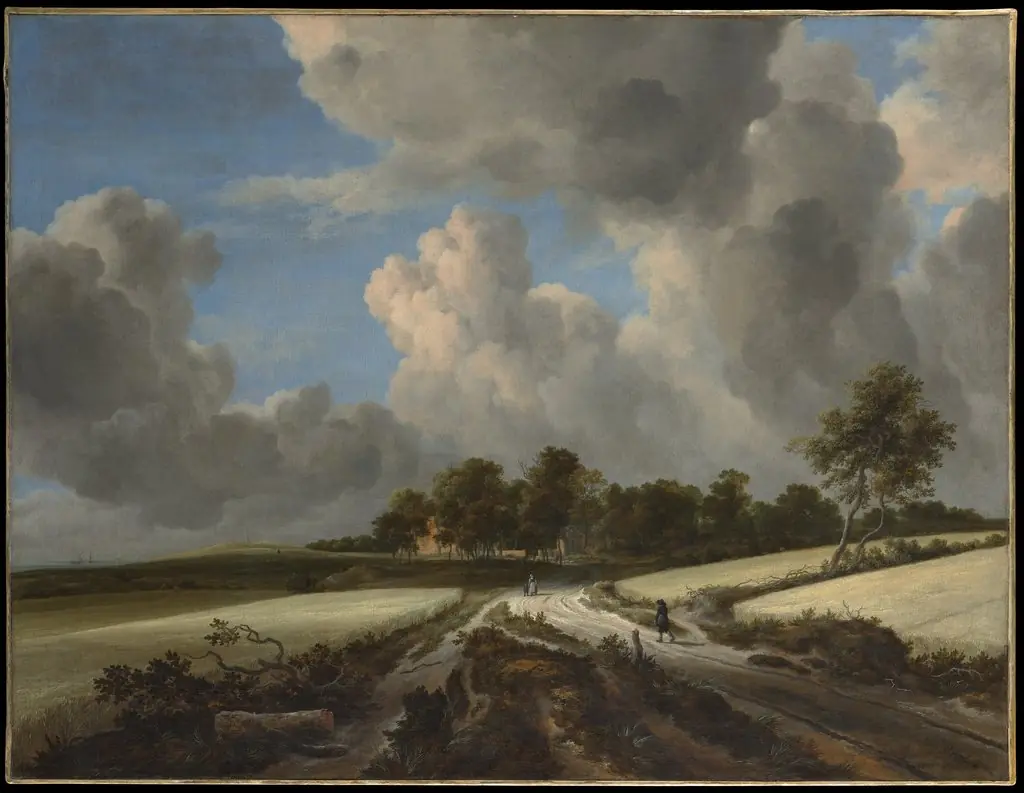
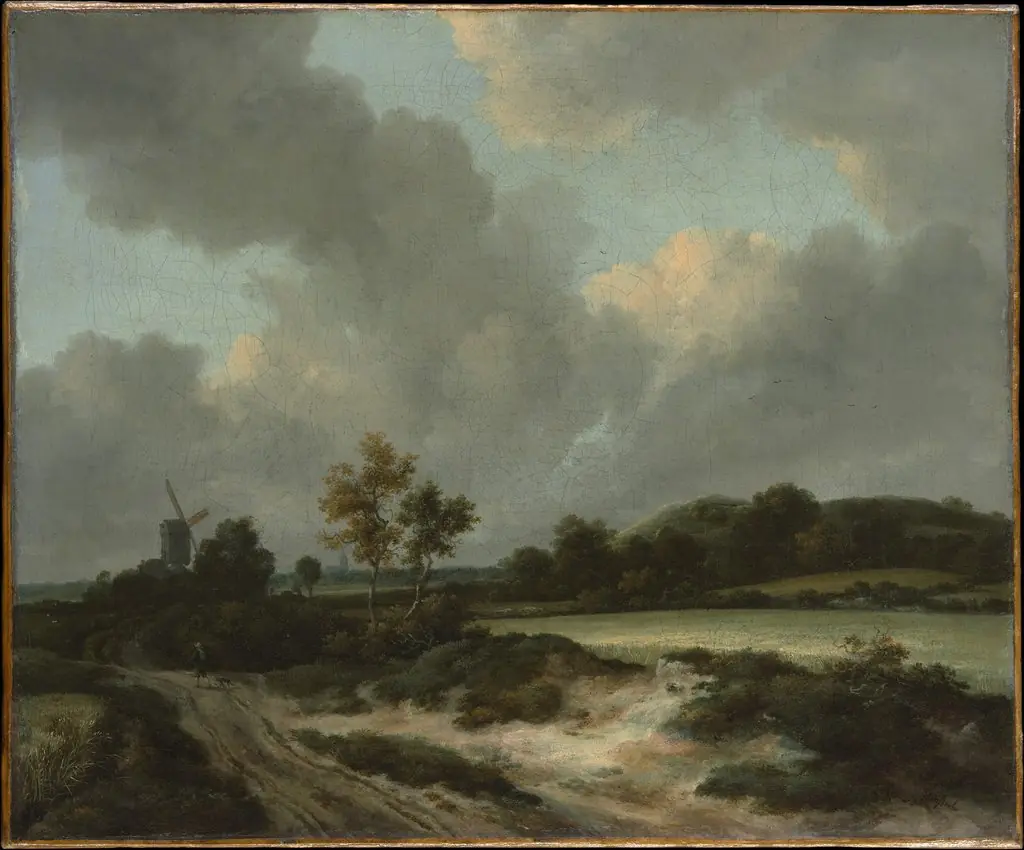
Dunes and bleaching fields is an oil painting by the Dutch Golden Age artist Jacob van Ruisdael. It dates from 1668 and is held in the collection of the Gemäldegalerie Berlin.
About this work
Overview
The work presents a broad, open landscape where rolling dunes occupy the foreground and cultivated bleaching fields extend toward the horizon.
Jacob van Ruisdael’s oil painting *Dunes and Bleaching Fields* was completed in 1668. The work presents a broad, open landscape where rolling dunes occupy the foreground and cultivated bleaching fields extend toward the horizon. A low, cloud‑laden sky dominates the upper portion, while a distant steeple punctuates the scene, providing a visual anchor. The canvas is part of the collection of the Gemäldegalerie in Berlin.
Subject & Meaning
The composition juxtaposes natural and agricultural elements, highlighting the Dutch practice of laying linen out on open fields to bleach in the sun. The dunes, rendered in warm, earthy hues, contrast with the pale, orderly expanse of the fields, suggesting a dialogue between the untamed coastline and the disciplined labor of textile production. The looming grey clouds introduce a subtle mood of transience, perhaps alluding to the fleeting nature of light and work.
Technique & Style
Ruisdael employs a restrained palette, using muted ochres for the sand and delicate grays for the sky. His handling of light creates a gentle gradation of tone that models the dunes’ contours and the reflective surface of the bleaching fields. Fine brushwork delineates the distant steeple and scattered trees, while broader strokes convey atmospheric depth, a hallmark of his mature landscape approach.
History & Provenance
Created in the late seventeenth century, the painting entered the German public sphere through acquisition by the Gemäldegalerie, Berlin, where it remains on display. Documentation traces its ownership back to the museum’s early collection efforts, though earlier private owners are not recorded in surviving inventories.
Context
The work reflects the economic importance of linen bleaching in the Dutch Republic during the 1600s, when coastal plains were routinely transformed into temporary industrial sites. Ruisdael’s inclusion of a church steeple situates the scene within a recognizable, inhabited landscape, linking the natural environment to the cultural and religious life of the period.
Own this work as a print
Artist & collection
Artist
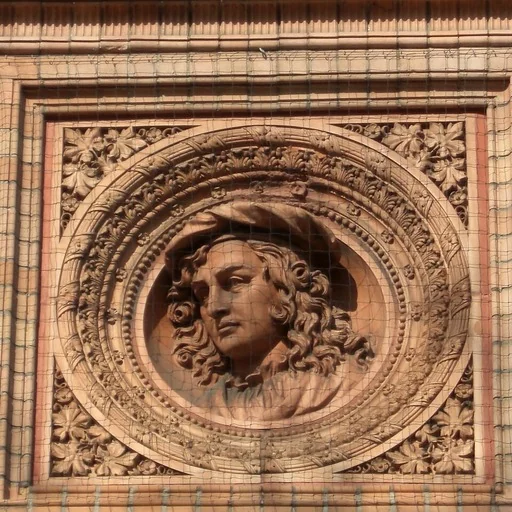
Jacob Isaackszoon van Ruisdael was a Dutch painter, draughtsman, and etcher. He is generally considered the pre-eminent landscape painter of the Dutch Golden Age, a period of great wealth and cultural achievement when…