Artwork
Forest thicket
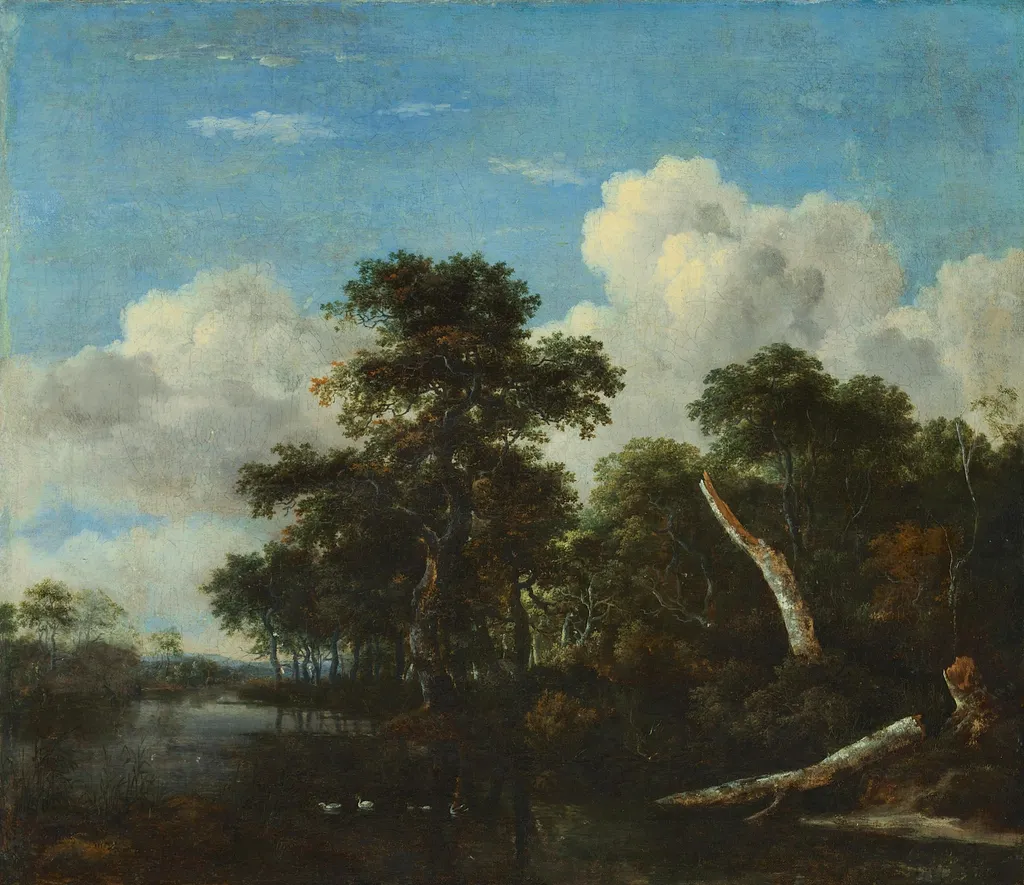
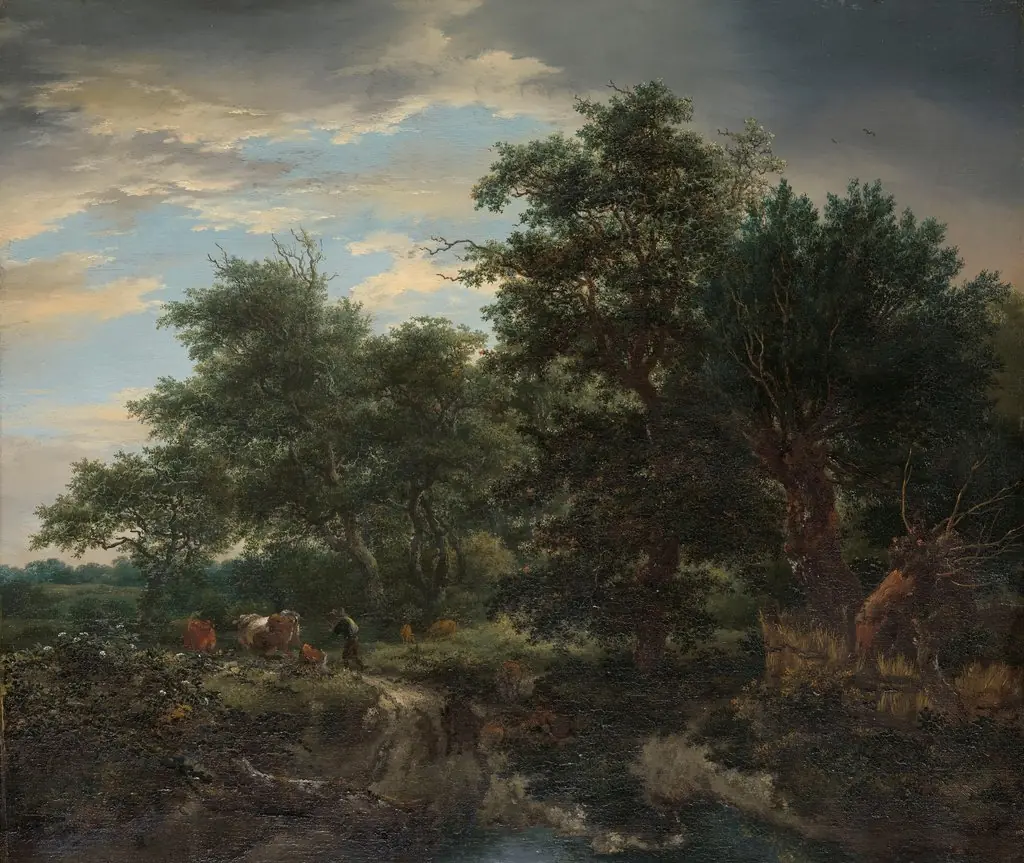
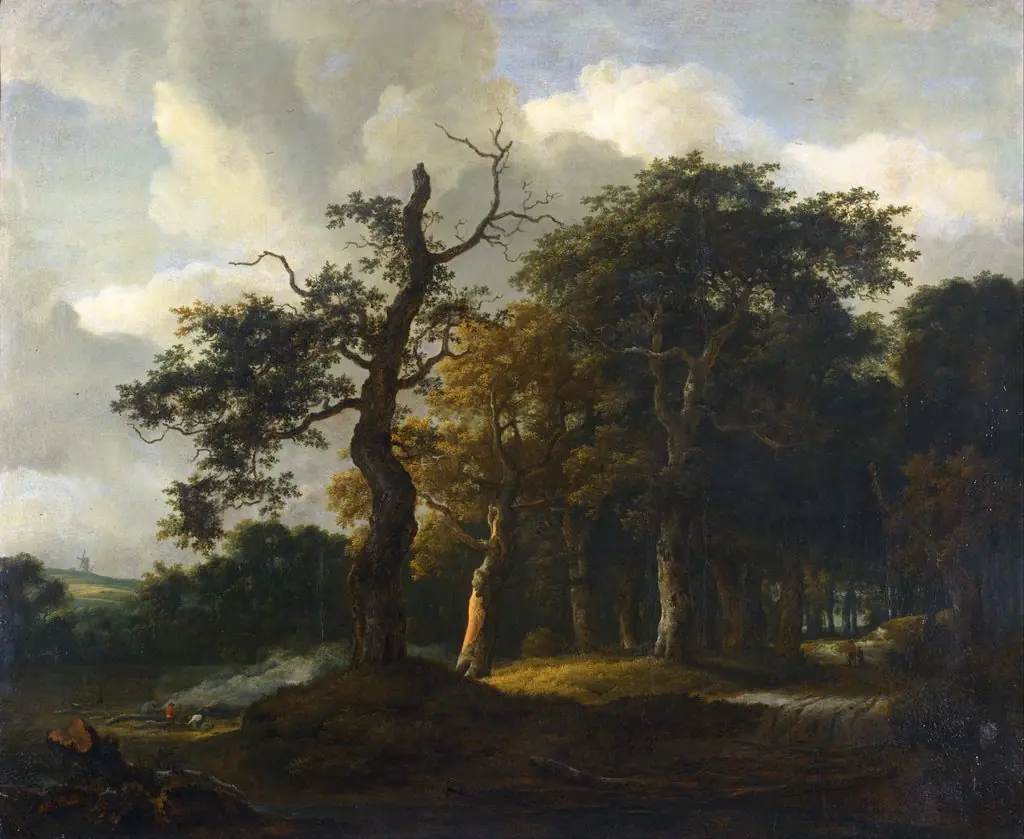
Forest thicket is a paint painting by the Dutch Golden Age artist Jacob van Ruisdael. It dates from 1662 and is held in the collection of the Gemäldegalerie Berlin.
About this work
Overview
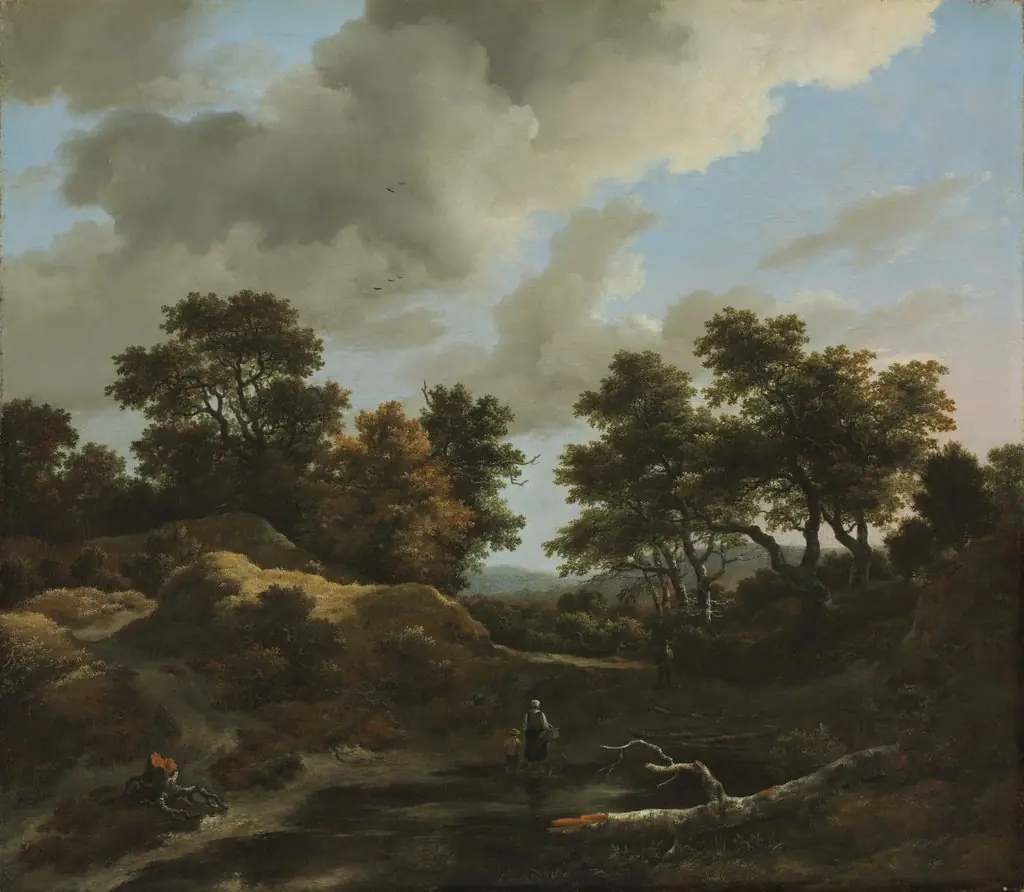
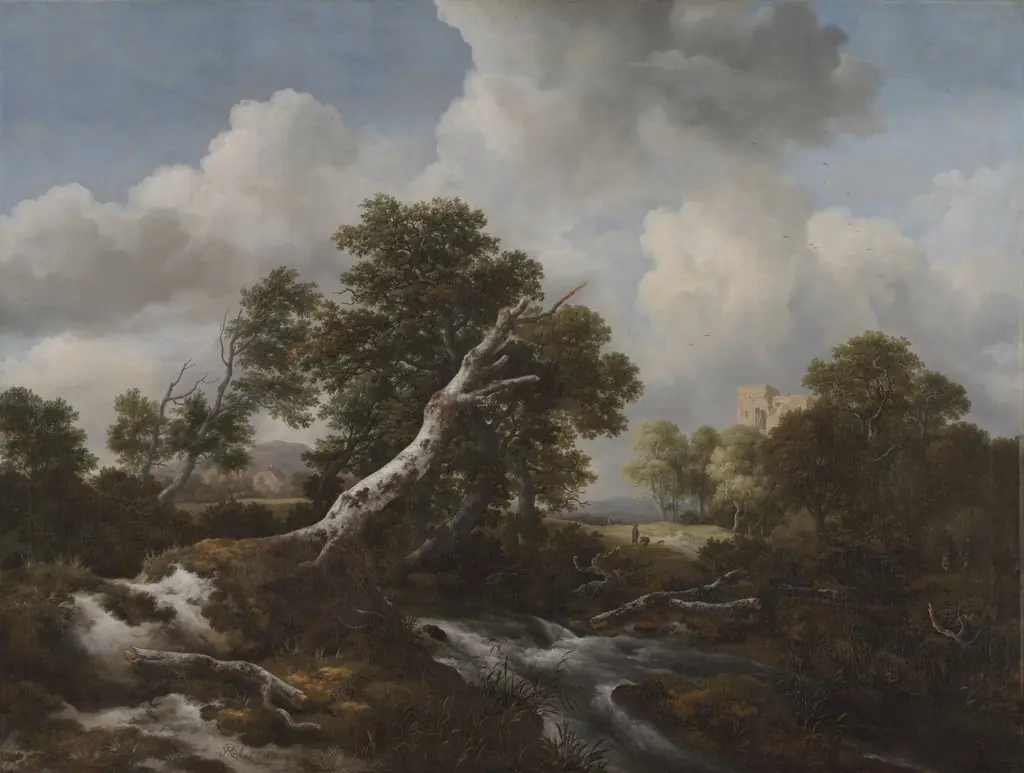
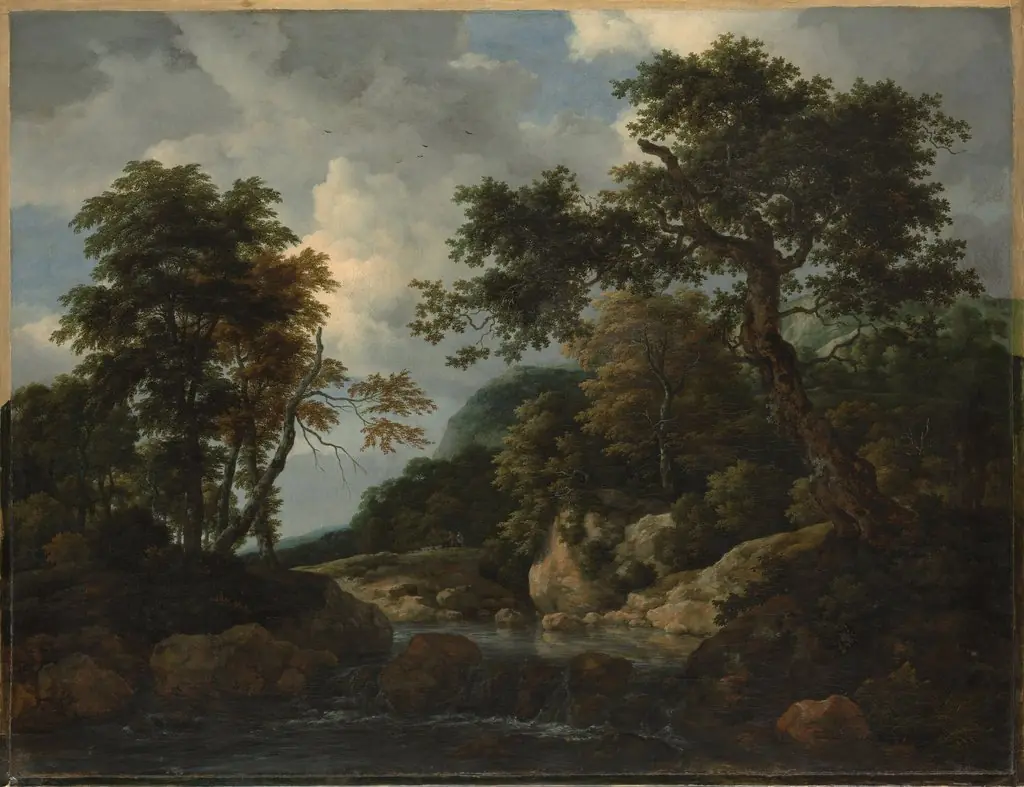
Painted in 1662, Forest Thicket is a landscape by Jacob van Ruisdael, executed in oil on panel. It resides in the Gemäldegalerie in Berlin, where it exemplifies the Dutch Golden Age’s preoccupation with natural environments. The work presents no human figures or narrative, focusing instead on the quiet presence of an ancient woodland, rendered with careful observation and restrained tonality.
Subject & Meaning
The painting portrays a dense, undisturbed forest, emphasizing the wildness and age of the trees. The gnarled trunks and layered canopy suggest a space untouched by human intervention, evoking a sense of timelessness. Rather than idealizing nature, Ruisdael presents it with sober realism, inviting contemplation of the forest’s resilience and quiet grandeur without symbolic embellishment.
Technique & Style
Ruisdael employs a muted palette of ochres, olives, and browns to convey the earthy textures of bark, moss, and undergrowth. Brushwork is precise yet unobtrusive, capturing the irregular forms of tree trunks and the dappled light filtering through dense foliage. The composition draws the eye inward, using overlapping branches and receding planes to create depth without dramatic perspective.
History & Provenance
It has been exhibited periodically but never significantly altered or restored, preserving its original surface and tonal harmony.
Created during Ruisdael’s mature period, the painting entered the collection of the Gemäldegalerie Berlin in the 19th century, likely through the acquisition of private Dutch collections. Its attribution has remained consistent, supported by stylistic analysis and archival records. It has been exhibited periodically but never significantly altered or restored, preserving its original surface and tonal harmony.
Context
In mid-17th century Holland, landscape painting flourished as a distinct genre, reflecting both scientific interest in nature and a cultural shift away from religious or mythological subjects. Ruisdael’s forests align with this trend, offering a secular vision of the natural world valued for its authenticity. His work stood apart from idealized Italianate scenes, favoring local Dutch terrain with unvarnished detail.
Legacy
Forest Thicket contributes to Ruisdael’s reputation as a pivotal figure in Northern European landscape painting. Its unembellished realism influenced later artists who sought to capture nature’s complexity without romanticism. The painting remains a reference point for studies of ecological representation in art, valued for its quiet fidelity to the observed world.
Own this work as a print
Artist & collection
Artist
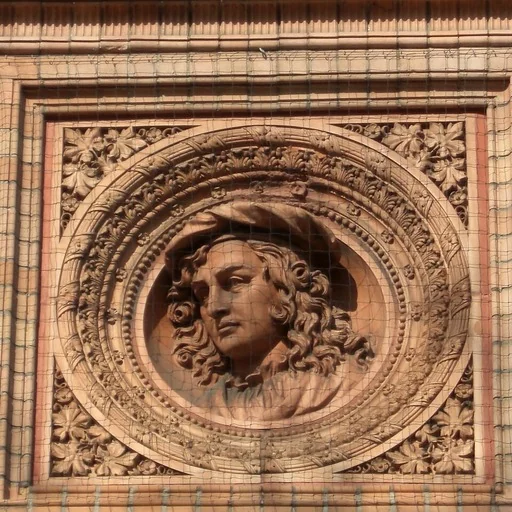
Jacob Isaackszoon van Ruisdael was a Dutch painter, draughtsman, and etcher. He is generally considered the pre-eminent landscape painter of the Dutch Golden Age, a period of great wealth and cultural achievement when…