Artwork
Sandy Track in the Dunes
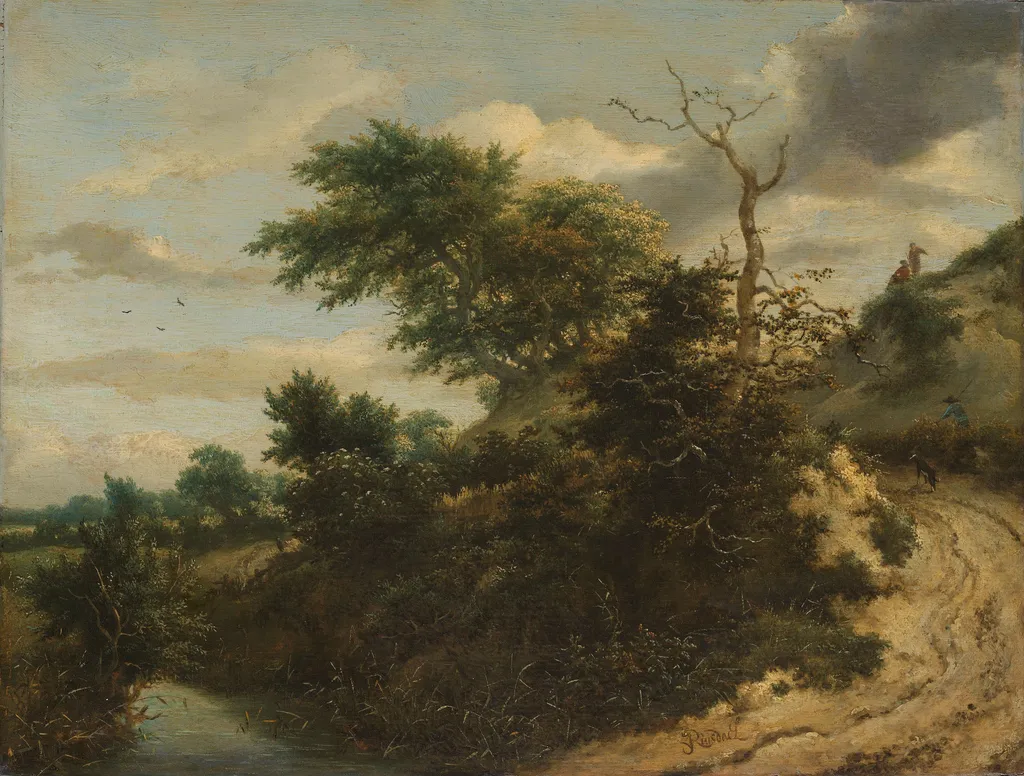
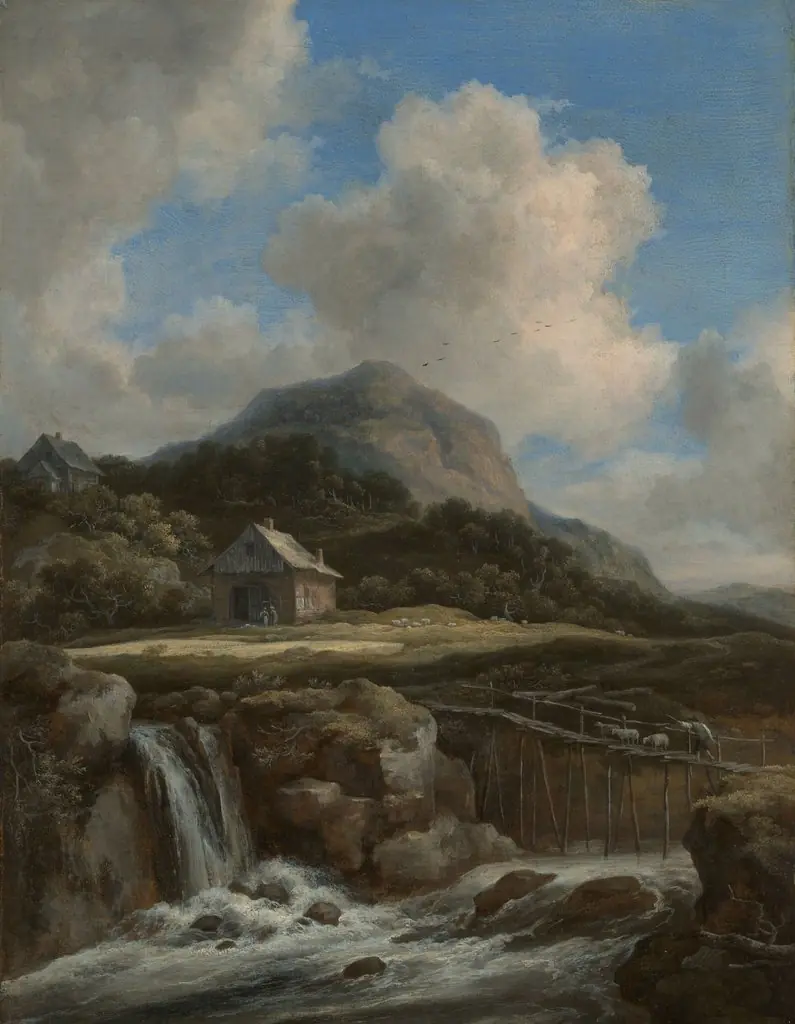
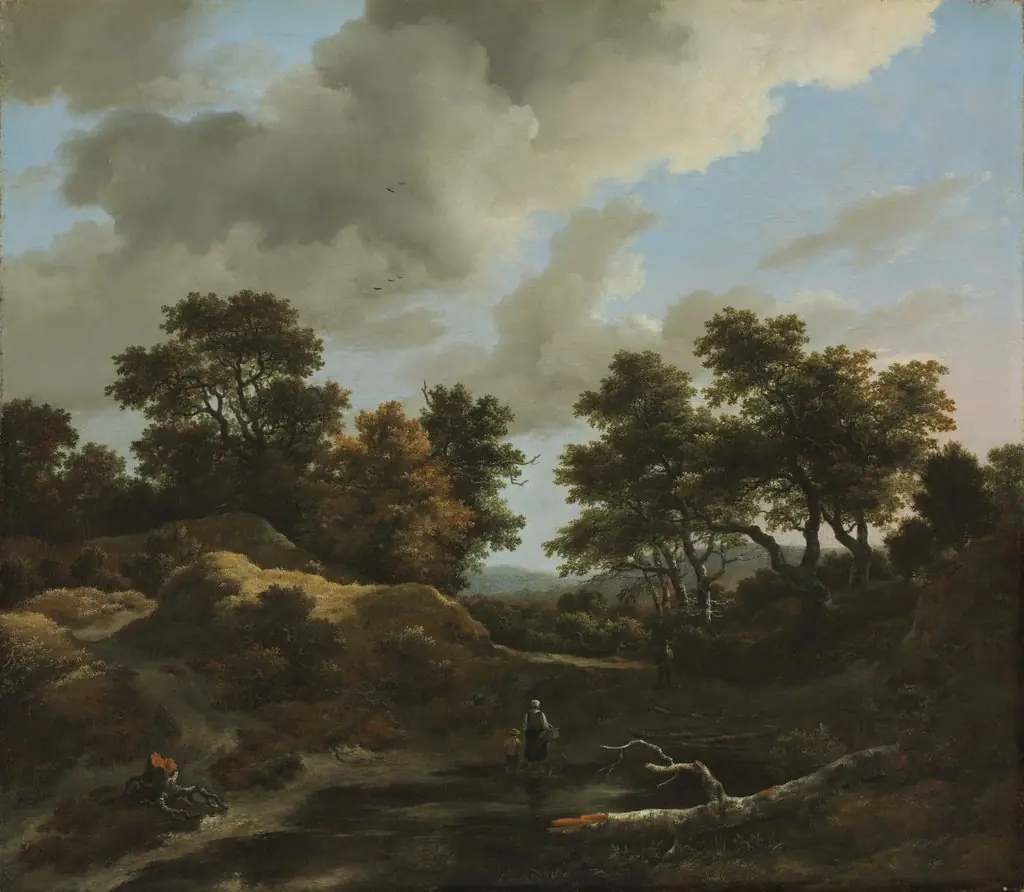
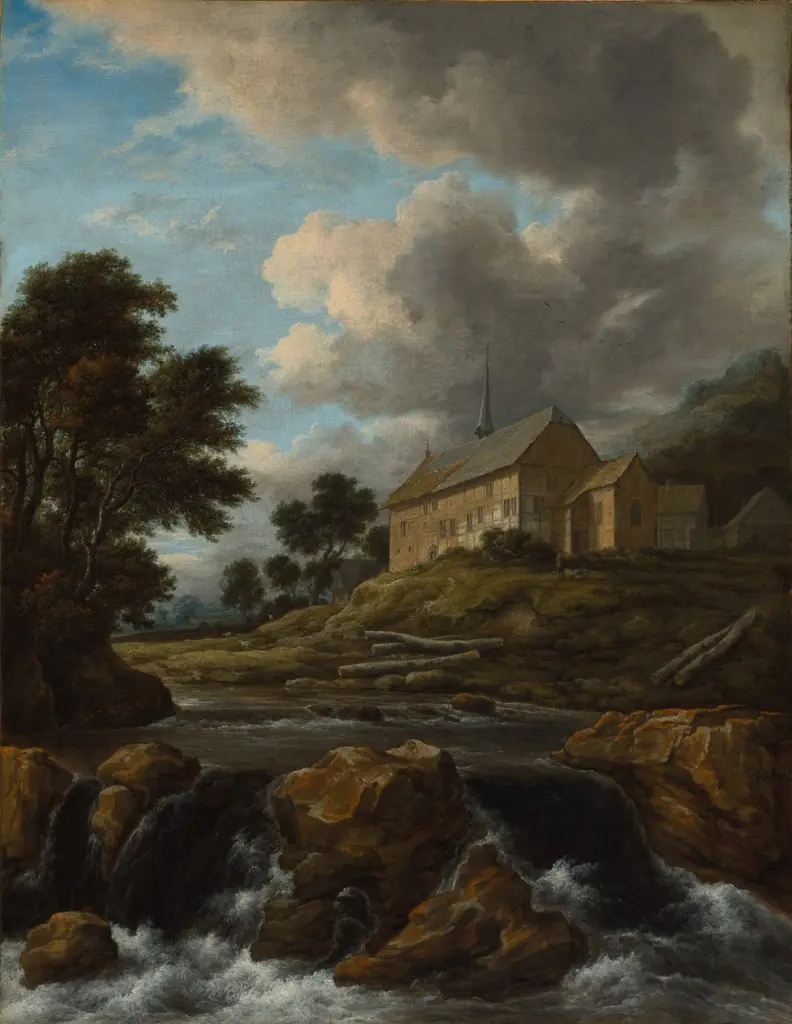
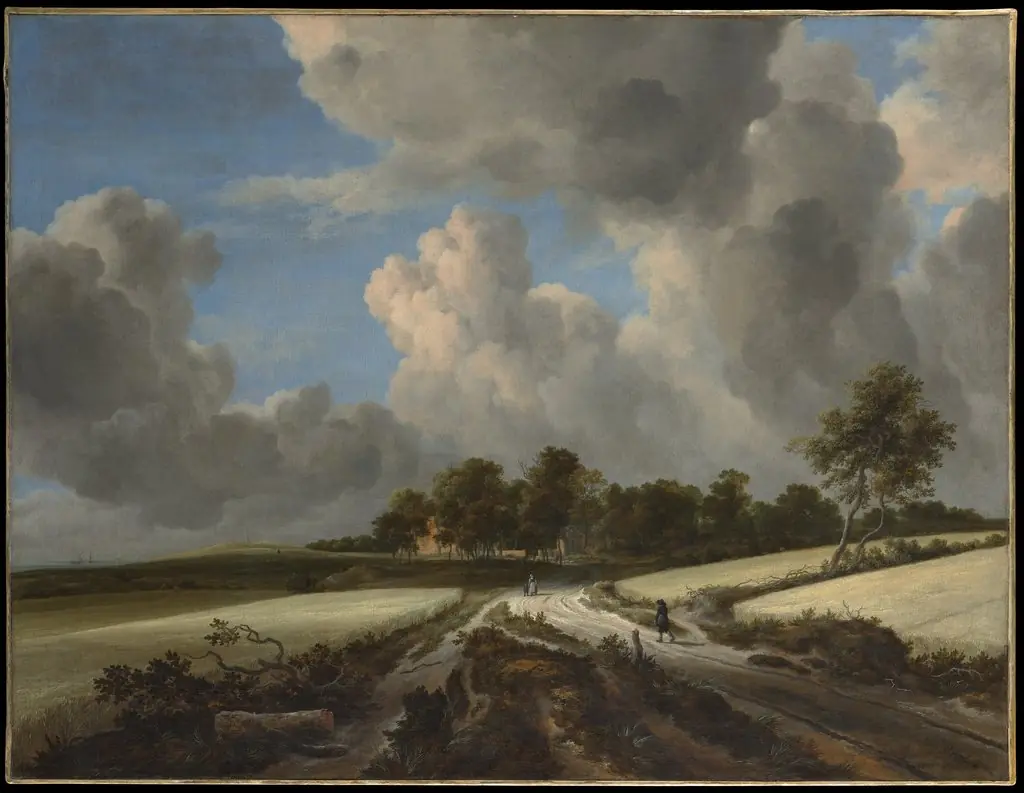
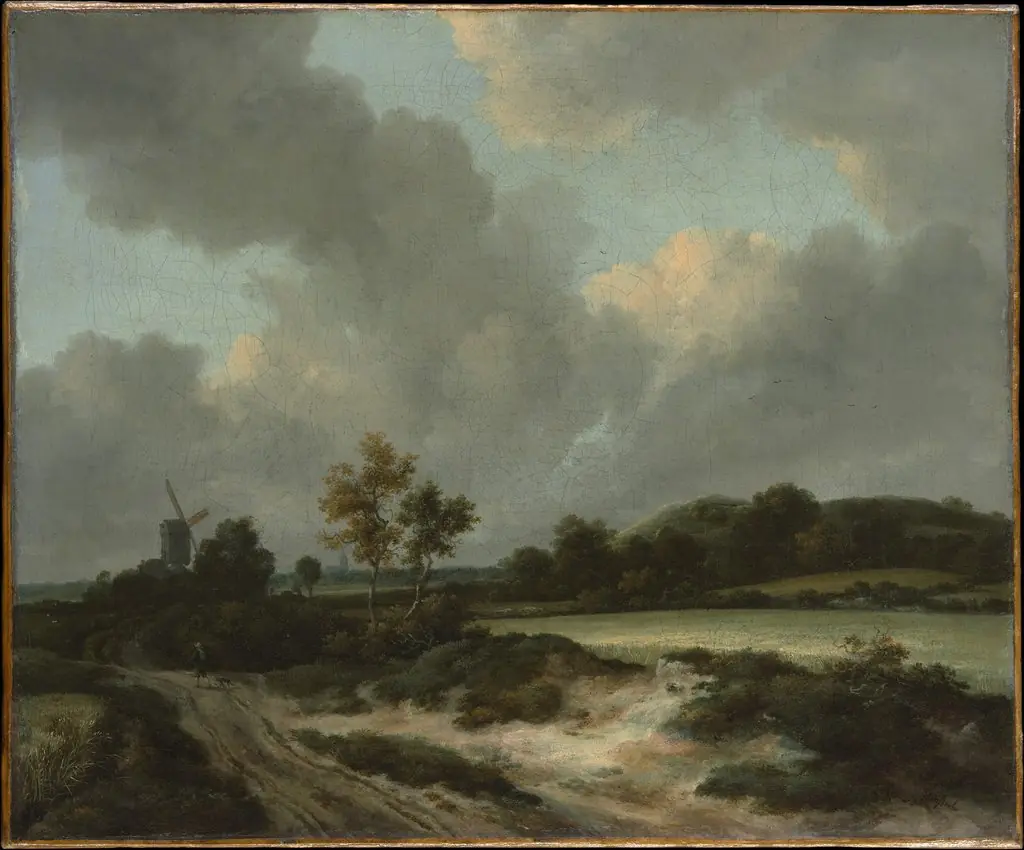
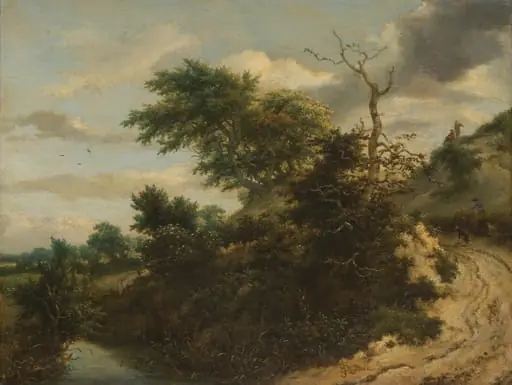
Sandy Track in the Dunes is an oil painting by the Dutch Golden Age artist Jacob van Ruisdael. It dates from 1650 and is held in the collection of the Rijksmuseum.
About this work
Overview
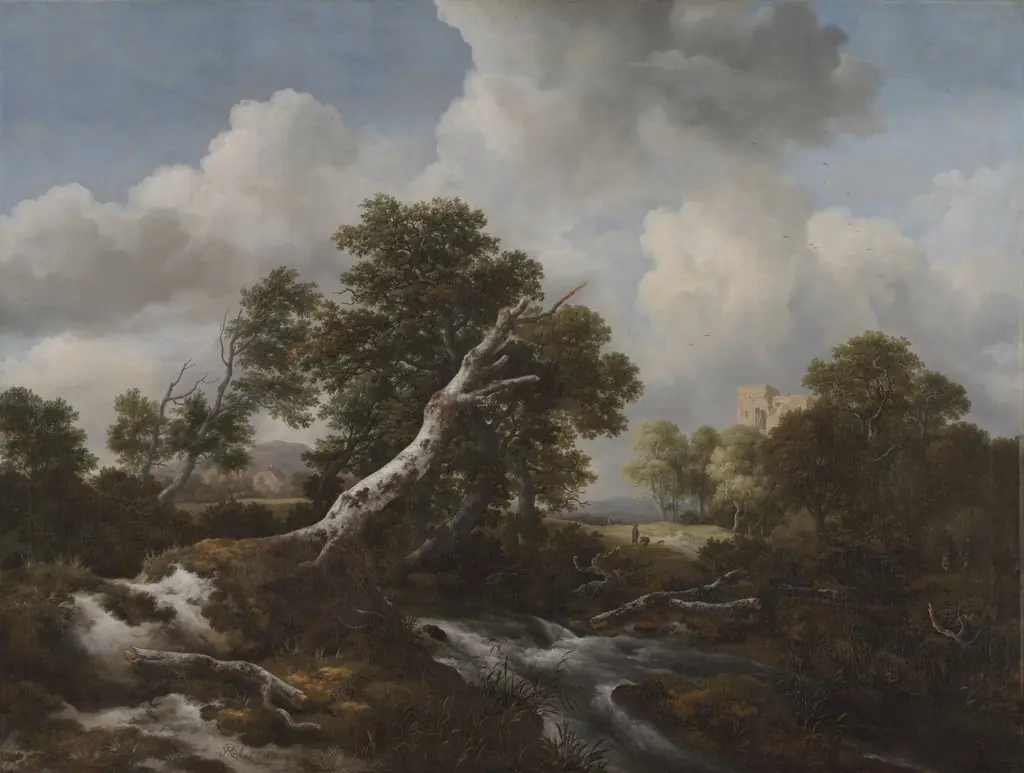
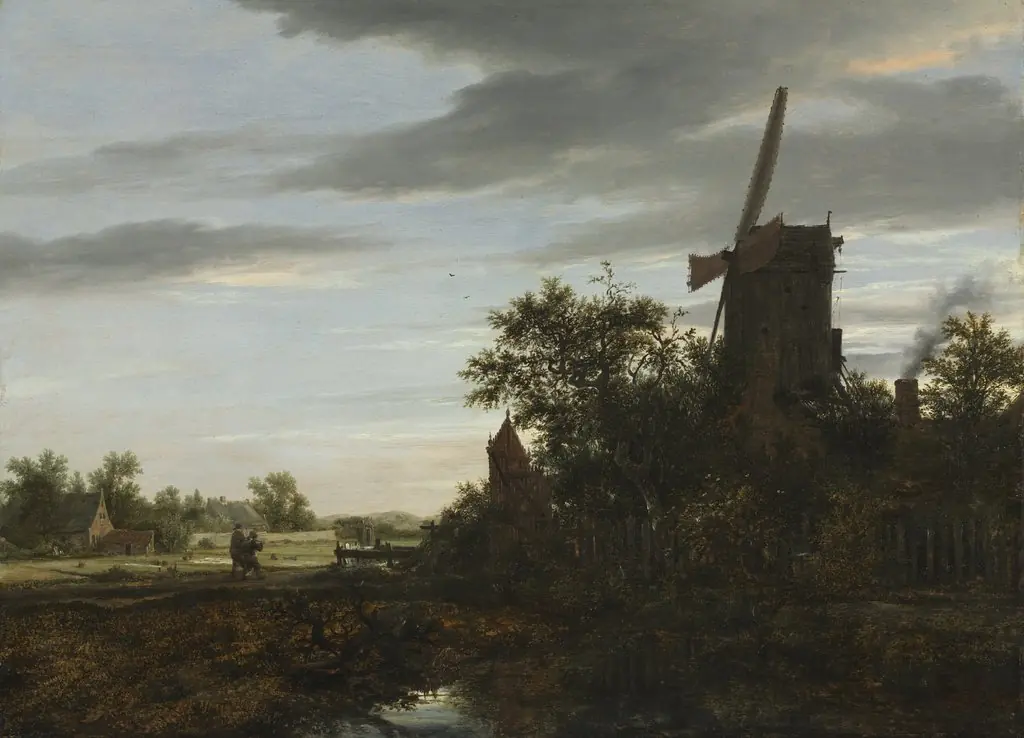
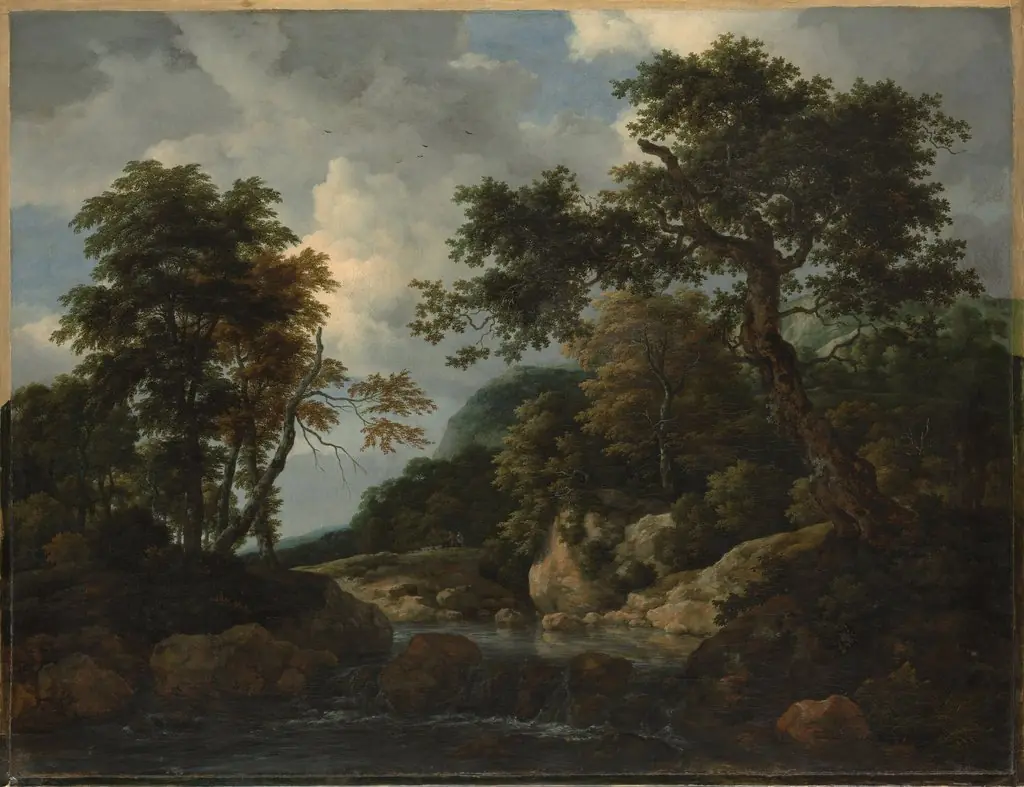
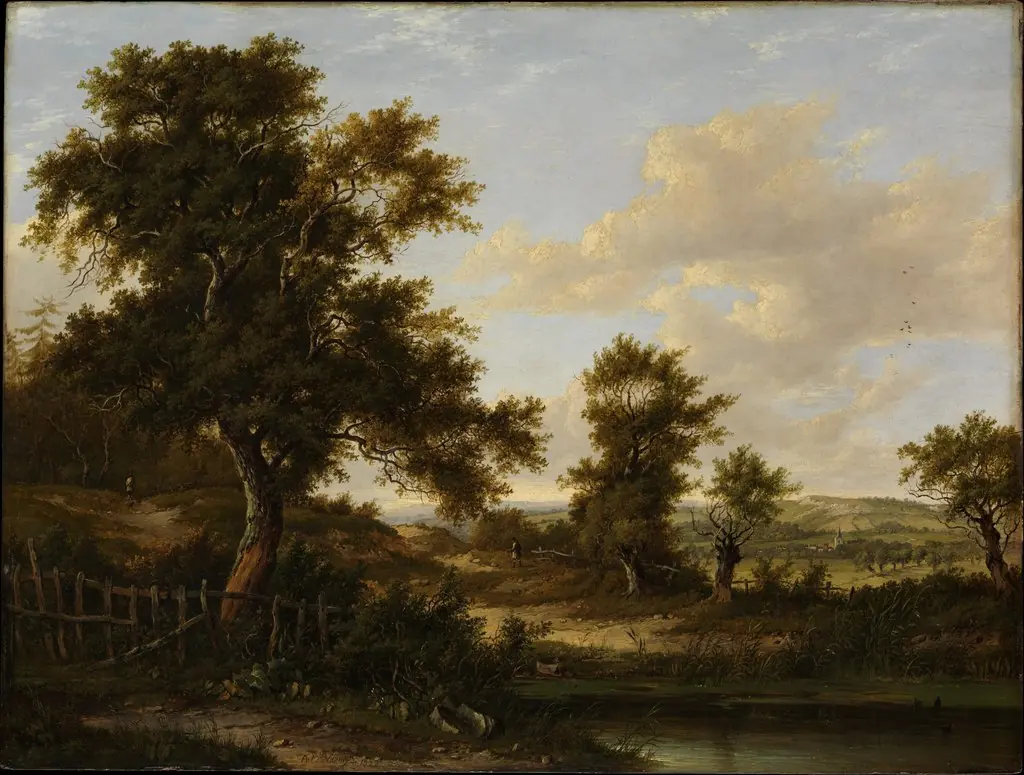
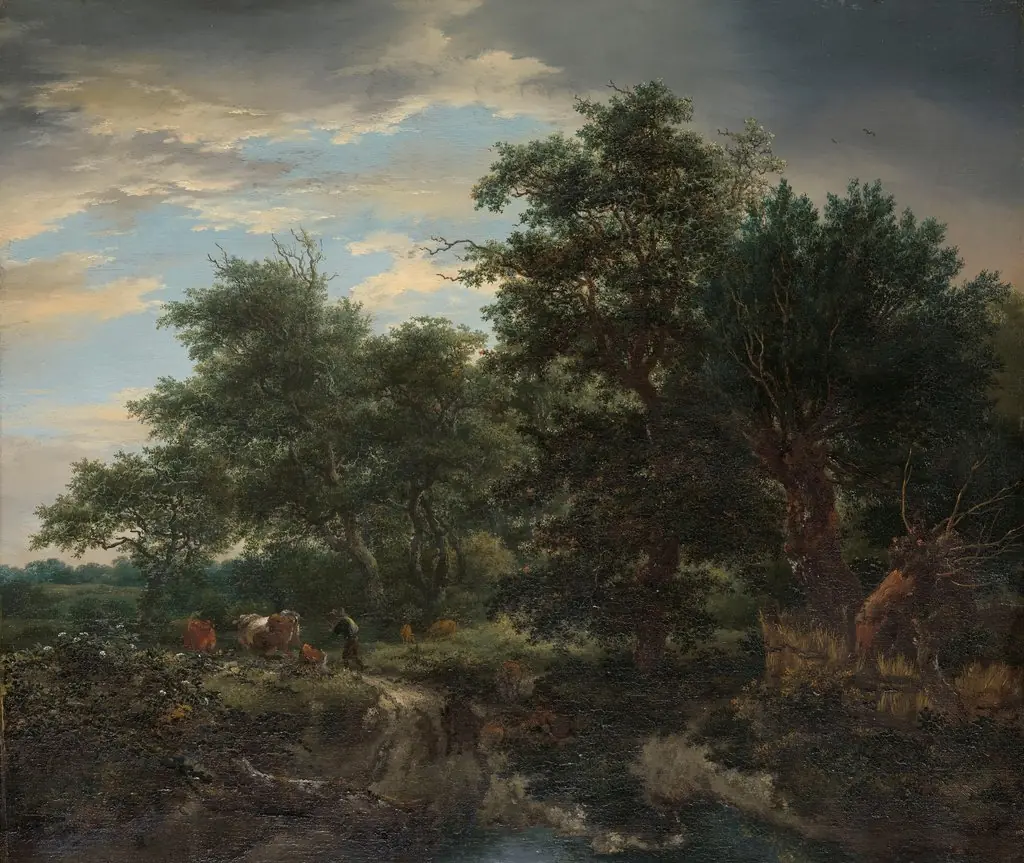
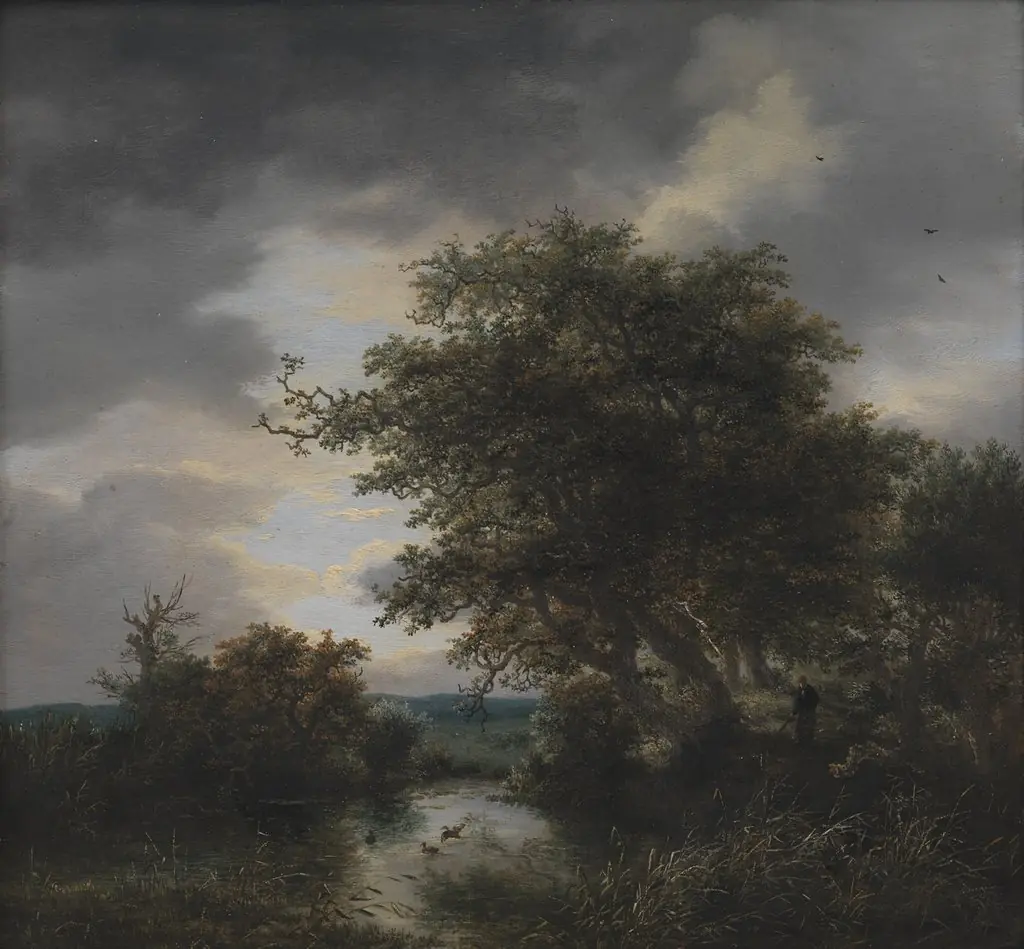
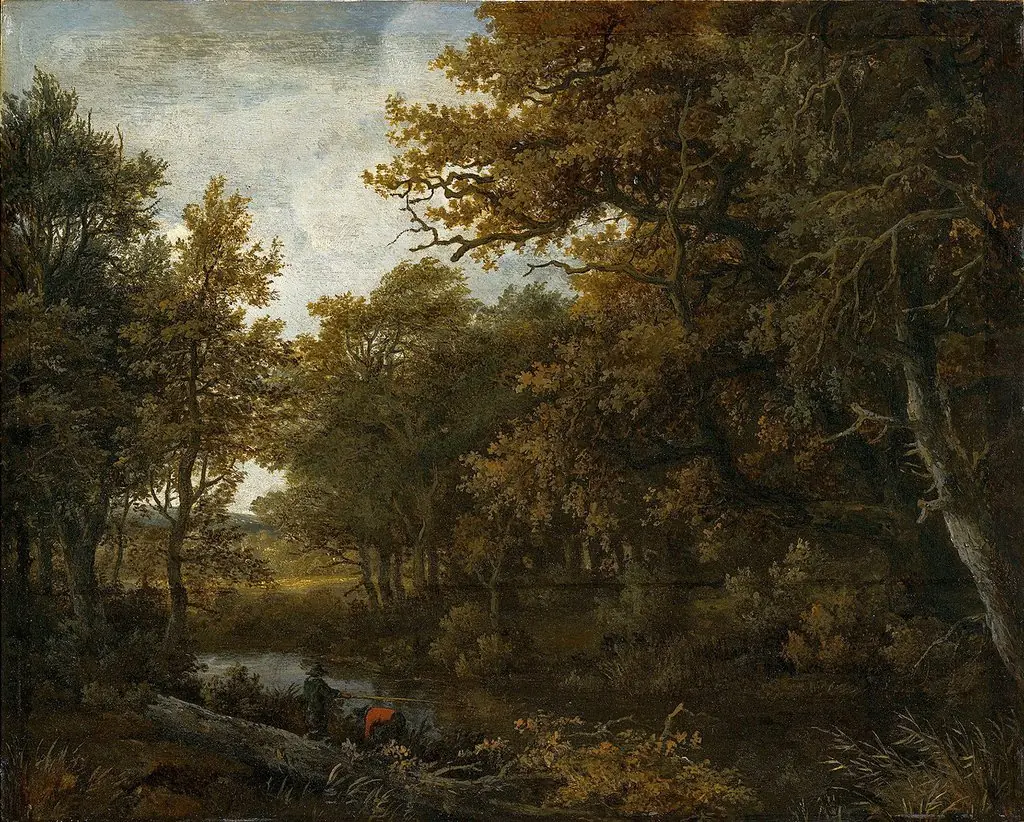
Jacob van Ruisdael’s oil painting, dated to around 1650, presents a tranquil coastal scene where a winding track cuts through a stretch of sandy dunes. A solitary, leaf‑less tree crowns a modest rise, its twisted limbs reaching into a pale, expansive sky. Small figures are visible near the water’s edge, while low vegetation punctuates the foreground.
Subject & Meaning
The composition juxtaposes the emptiness of the dunes with the subtle activity of travelers, suggesting a moment of quiet passage through an otherwise desolate landscape. The barren tree, stripped of foliage, may symbolize resilience amid harsh conditions, while the muted horizon conveys a sense of distance and contemplation.
Technique & Style
Ruisdael employs a restrained palette of soft, muted tones, allowing atmospheric perspective to dissolve forms into the sky. Thin glazes build a luminous veil over the dunes, creating a seamless transition between earth and heavens. The delicate rendering of wind‑blown sand and the delicate brushwork on the tree’s bark illustrate his mastery of tonal subtlety.
History & Provenance
The work belongs to the Rijksmuseum’s collection, where it has been displayed as part of the museum’s Dutch Golden Age holdings. Its provenance traces back to the mid‑17th century, reflecting the period’s interest in naturalistic landscape painting and the artist’s reputation as a leading interpreter of the Dutch countryside.
Own this work as a print
Artist & collection
Artist
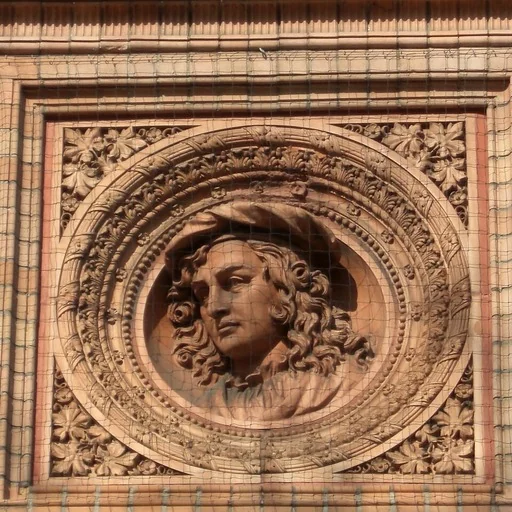
Jacob Isaackszoon van Ruisdael was a Dutch painter, draughtsman, and etcher. He is generally considered the pre-eminent landscape painter of the Dutch Golden Age, a period of great wealth and cultural achievement when…