Artwork
The Last Judgment and the Seven Deadly Sins
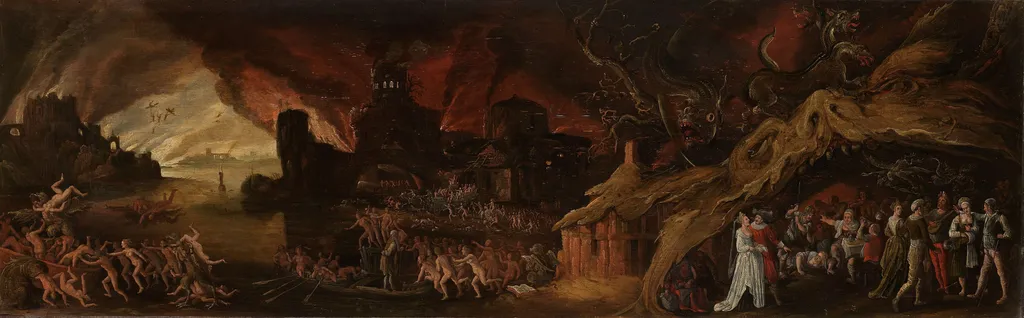
The Last Judgment and the Seven Deadly Sins is an oil painting by the Early Baroque Italian artist Jacob van Swanenburgh. It dates from 1619 and is held in the collection of the Rijksmuseum.
About this work
Overview
Jacob van Swanenburgh’s 1619 oil painting combines the biblical scene of the Last Judgment with allegorical figures representing the seven deadly sins. Dark tones and stark contrasts dominate the canvas, conveying a turbulent vision of divine reckoning and moral corruption.
Subject & Meaning
The composition juxtaposes the moment of final judgment with personifications of lust, gluttony, greed, sloth, wrath, envy, and pride. Figures in torment are pulled toward infernal forces, illustrating contemporary Protestant concerns about sin and its consequences.
Technique & Style
Employing pronounced chiaroscuro, van Swanenburgh creates depth through illuminated foreground figures against a shadowy, flame‑filled sky. The dramatic lighting and vigorous brushwork reflect the early Baroque sensibility he absorbed during his Italian sojourn.
History & Provenance
After completing the work in the Netherlands, the painting entered the collection of the Rijksmuseum, where it remains on display. Van Swanenburgh’s Italian training preceded his return to Holland, where he later instructed the young Rembrandt.
Context
Produced at a time when Dutch artists were integrating Italian Baroque dynamism with local religious reform, the work exemplifies the period’s preoccupation with moral didacticism. Its emphasis on judgment and sin aligns with broader Protestant visual culture of the early seventeenth century.
Artist & collection
Artist
Jacob Isaacszoon van Swanenburg (Dutch pronunciation: ; 1571 in Leiden – 1638 in Utrecht) was a Dutch painter, draftsman and art dealer.
