Artwork
Judas Casts down the Pieces of Silver in the Temple
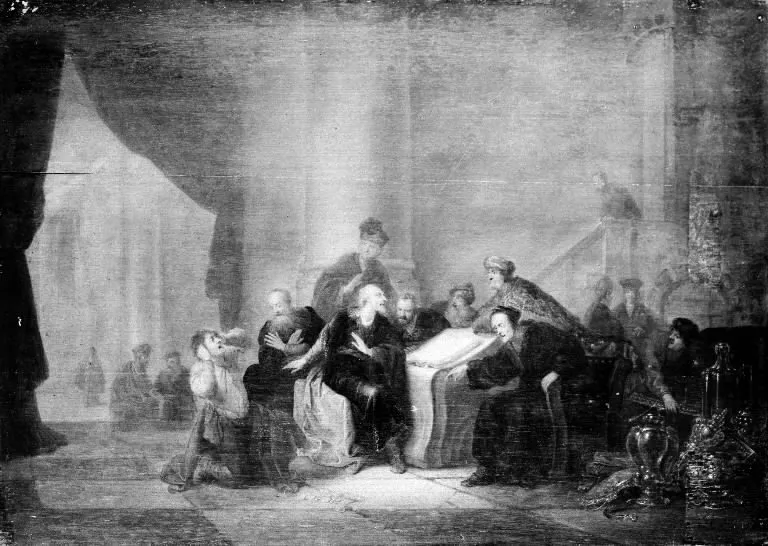
Judas Casts down the Pieces of Silver in the Temple is an oil painting by the Dutch Golden Age artist Jacob Willemsz de Wet. It dates from 1642 and is held in the collection of the Statens Museum for Kunst.
About this work
Overview
Jacob Willemsz de Wet, a Dutch painter of the 17th‑century Golden Age, completed the oil painting *Judas Casts down the Pieces of Silver in the Temple* in 1642. The work illustrates a moment from the New Testament in which Judas Iscariot returns the thirty pieces of silver to the Jewish temple after betraying Jesus. It is part of the collection of the Statens Museum for Kunst in Copenhagen.
Subject & Meaning
The scene captures Judas kneeling on the temple floor, clutching the silver coins while surrounding figures observe him with a mixture of curiosity and tension. The emphasis on the scattered money underscores the gravity of Judas’s remorse and the betrayal’s monetary price, a theme that resonated with contemporary viewers familiar with the biblical narrative.
Technique & Style
De Wet employs a chiaroscuro lighting scheme, casting deep shadows across the interior and allowing the coins and faces to emerge in a soft, uneven glow. The composition is tightly grouped, with figures positioned around a central focal point, a technique reminiscent of Rembrandt’s influence on the artist’s handling of light, texture, and human expression.
History & Provenance
Created during the height of Dutch artistic production, the painting reflects the period’s interest in biblical subjects rendered with naturalistic detail. After remaining in private hands for several centuries, it entered the Statens Museum for Kunst’s holdings, where it has been displayed as part of the museum’s Dutch Golden Age collection.
Context
The work belongs to a broader tradition of 17th‑century Dutch religious painting that combined dramatic narrative with meticulous observation of everyday gestures. By focusing on a moment of moral conflict rather than a grandiose miracle, de Wet aligns with contemporary trends that favored intimate, psychologically charged biblical scenes.
Artist & collection
Artist
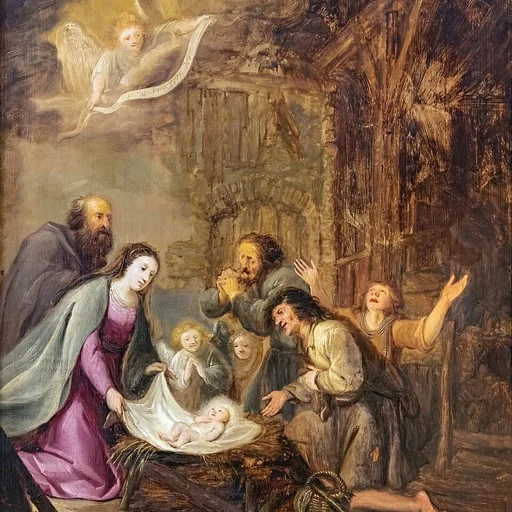
Jacob Willemszoon de Wet or Jacob Willemsz. de Wet the Elder (c. 1610 – between 1675 and 1691) was a Dutch Golden Age painter whose works were largely influenced by Rembrandt.