Artwork
The Four Regents, the Secretary and the House Father of the Lepers' House of Amsterdam, 1773
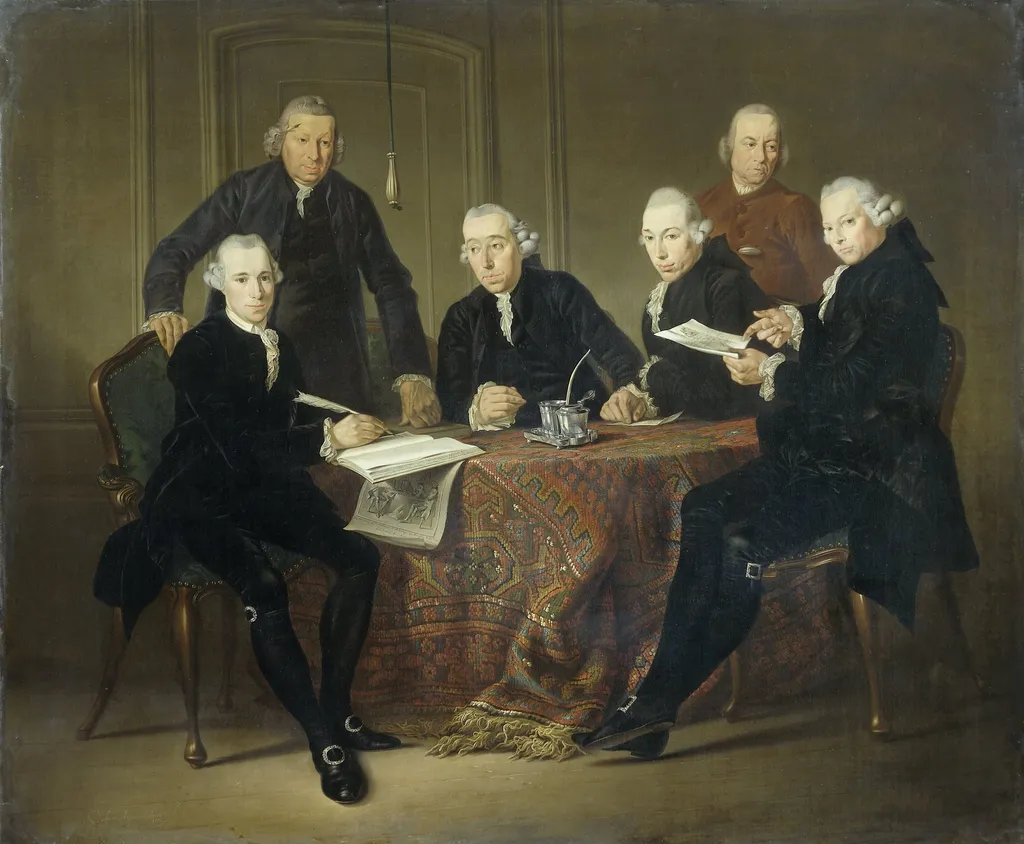
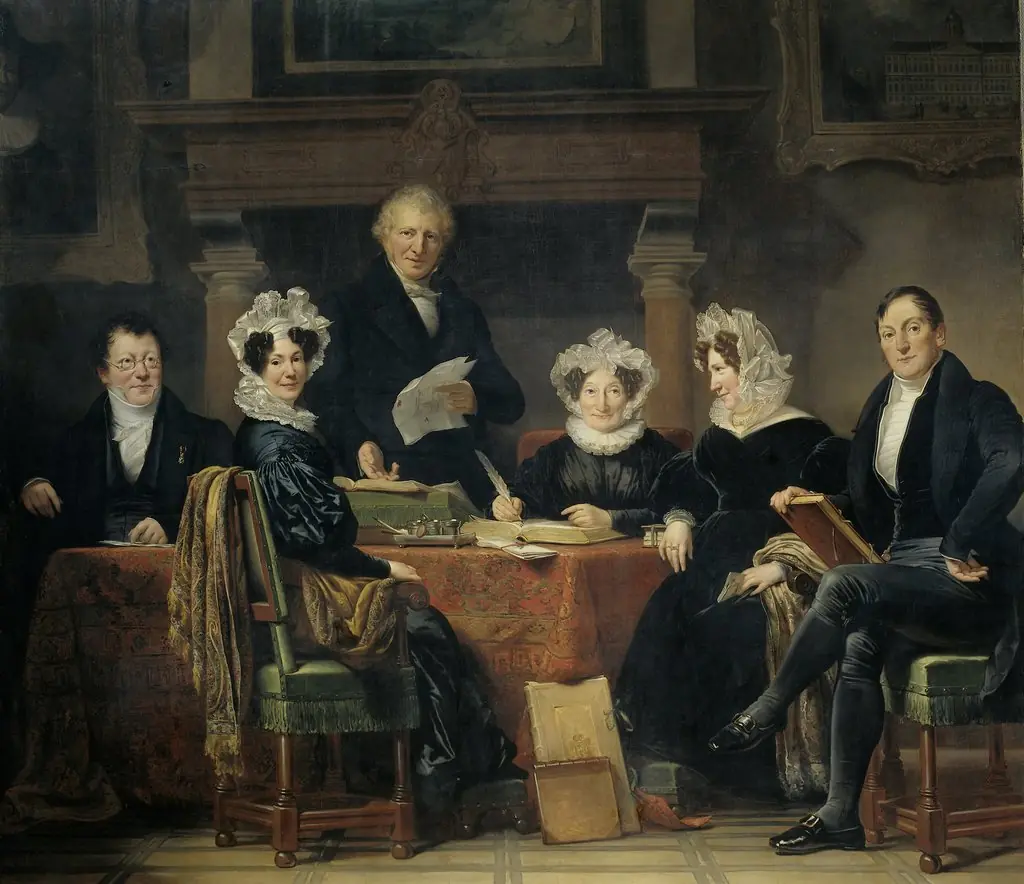
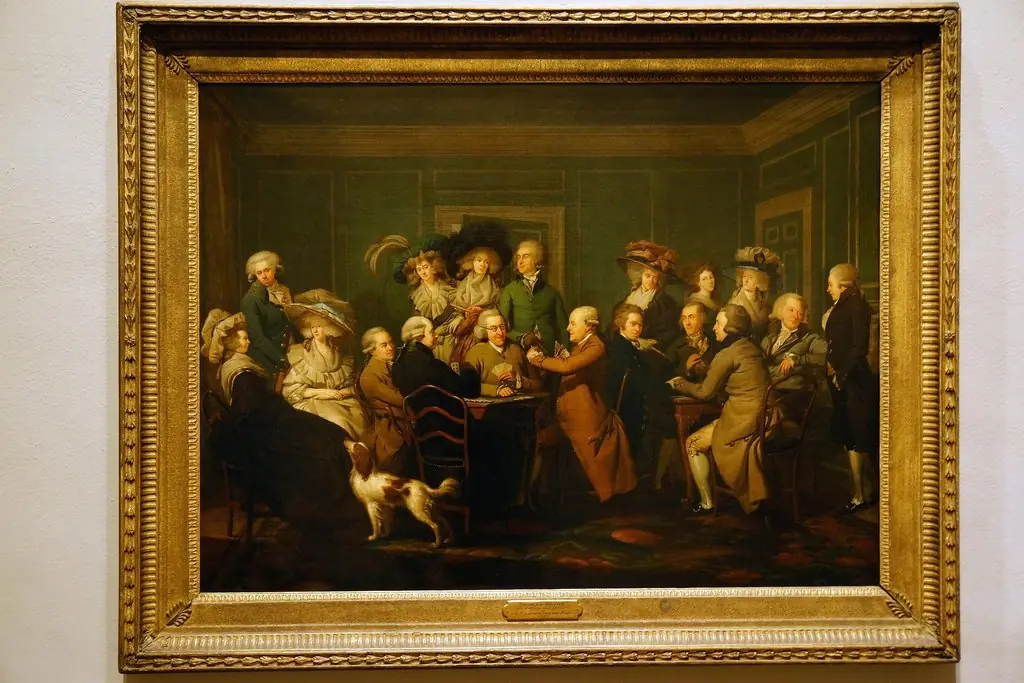
The Four Regents, the Secretary and the House Father of the Lepers' House of Amsterdam, 1773 is an unspecified painting by the Rococo painting artist Jacobus Luberti Augustini. It dates from 1773 and is held in the collection of the Rijksmuseum. The canvas presents six men seated around a long table strewn with documents, ink pots and a ledger.
About this work
The painting was probably hung in the boardroom so visitors could see who was in charge.
Six men sit around a long table covered with papers, ink pots, and a ledger. They wear dark coats with white cravats, looking serious and official.
This is a group portrait of the board that ran Amsterdam’s leper house in 1773. The painting was probably hung in the boardroom so visitors could see who was in charge. The names of all six men are written on the back, but no one knows who painted it.
To see more paintings of Dutch charity boards, visit the Rijksmuseum.
Overview
The canvas presents six men seated around a long table strewn with documents, ink pots and a ledger. Dressed in dark coats and white cravats, they appear solemn and authoritative, embodying the administrative function of the group they represent.
Subject & Meaning
The figures are the regents and officials who governed Amsterdam’s leper house in 1773: R.J. van den Broeke, H. van Veen, J. Veening, M. van Son, the house father H. Linteloo, and secretary D. Nolthenius. Their collective portrayal underscores the civic responsibility and oversight exercised over charitable institutions in the Dutch Republic.
Technique & Style
Executed in the Dutch group‑portrait tradition, the work employs a restrained palette of muted browns and grays, with careful attention to the textures of fabric and the reflective surfaces of the ink pots. The composition arranges the sitters along a single plane, allowing each individual to be identified while maintaining a unified visual field.
History & Provenance
The painting’s authorship remains unknown, and no contemporary records attribute it to a specific artist. It was likely displayed in the leper house’s boardroom, serving as a visual record of the governing body for visitors and staff alike. The names of the six men are recorded on the reverse side of the canvas.
Context
Charitable boards were a common subject in 18th‑century Dutch art, reflecting the importance of civic philanthropy. This portrait aligns with other regent group portraits held by institutions such as the Rijksmuseum, illustrating the social hierarchy and communal obligations of the period.
Own this work as a print
Artist & collection
Artist
Jacobus Luberti Augustini (1748–1822) was an artist, born in Haarlem.

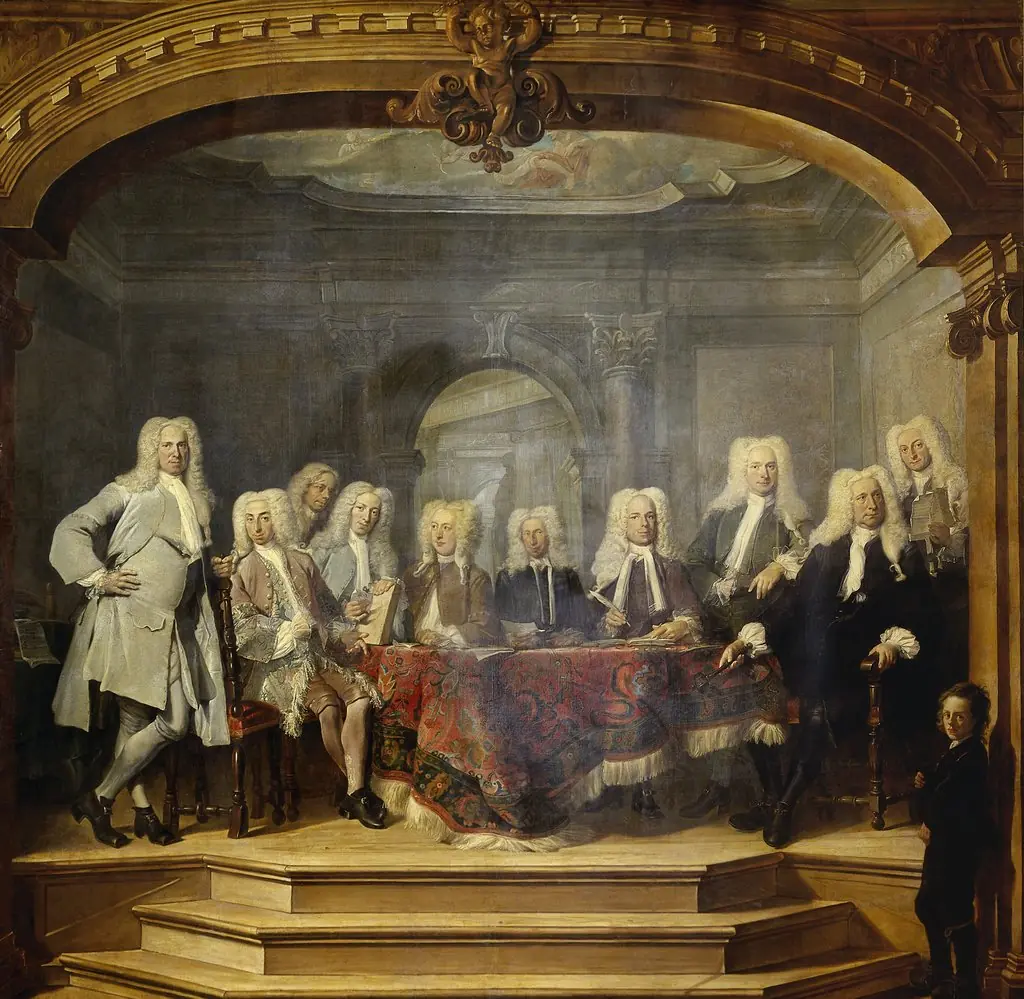 Regents of the Almshouse in 1729
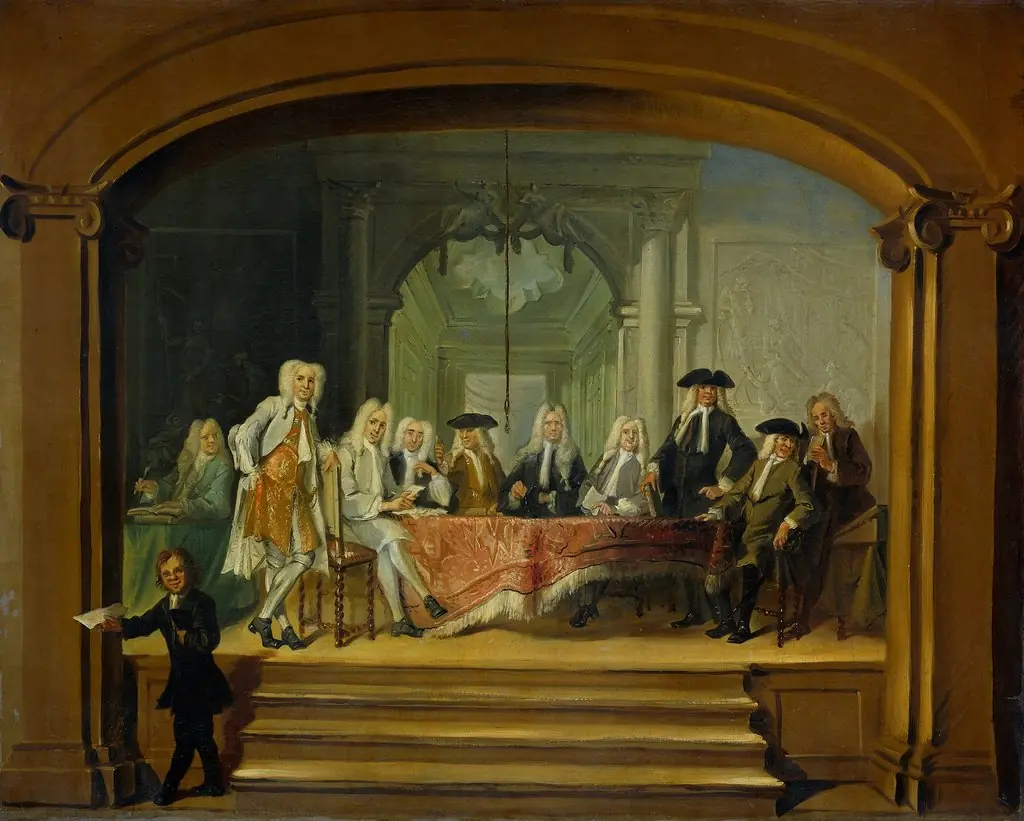 Regents of the Almshouse, 1729
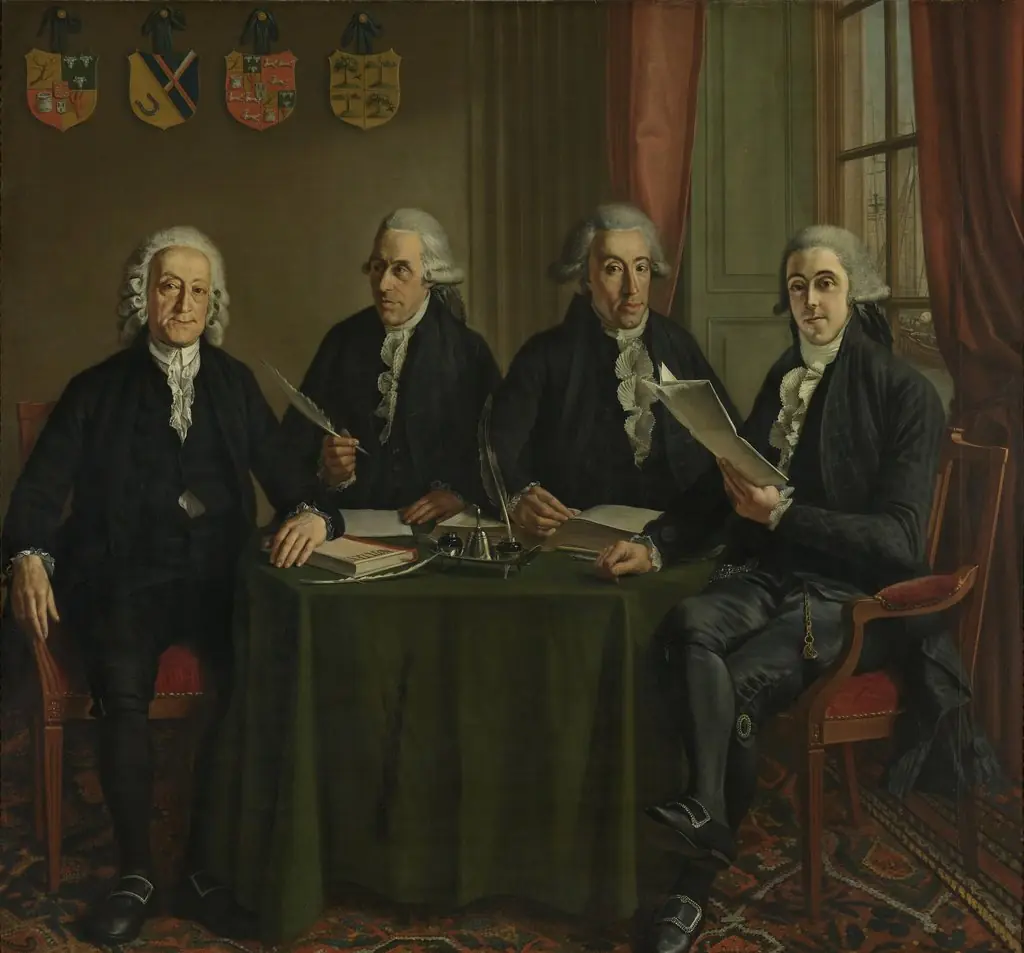 The Four Chief-Commissioners of the Harbors, Ramparts and Cranes of Amsterdam
 Portrait of Theodorus Bisdom van Vliet and his Family
 Archduchess Marie Christine and Duke Albert of Saxony Teschen Present the Family with Pictures of their Relatives in Italy
 Fra Ludvig Holbergs "Den Stundesløse", I akt, 6. scene
 Voltaire Welcoming his Guests
 Portrait of Thomas Payne with His Family and Friends