Artwork
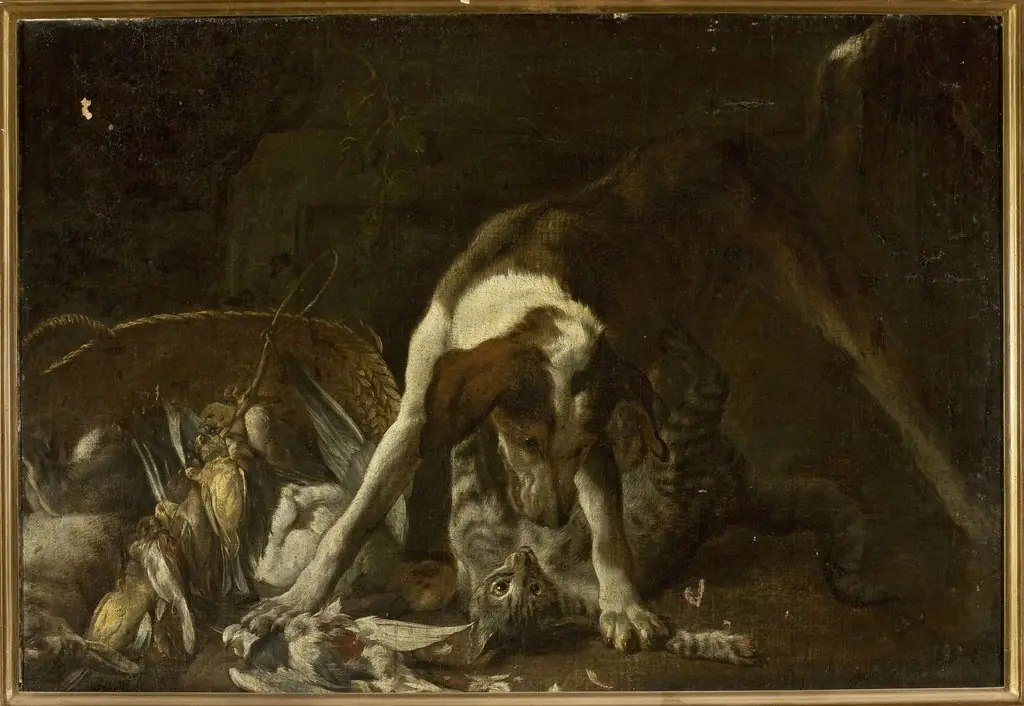
Fight of a Cock and a Cat
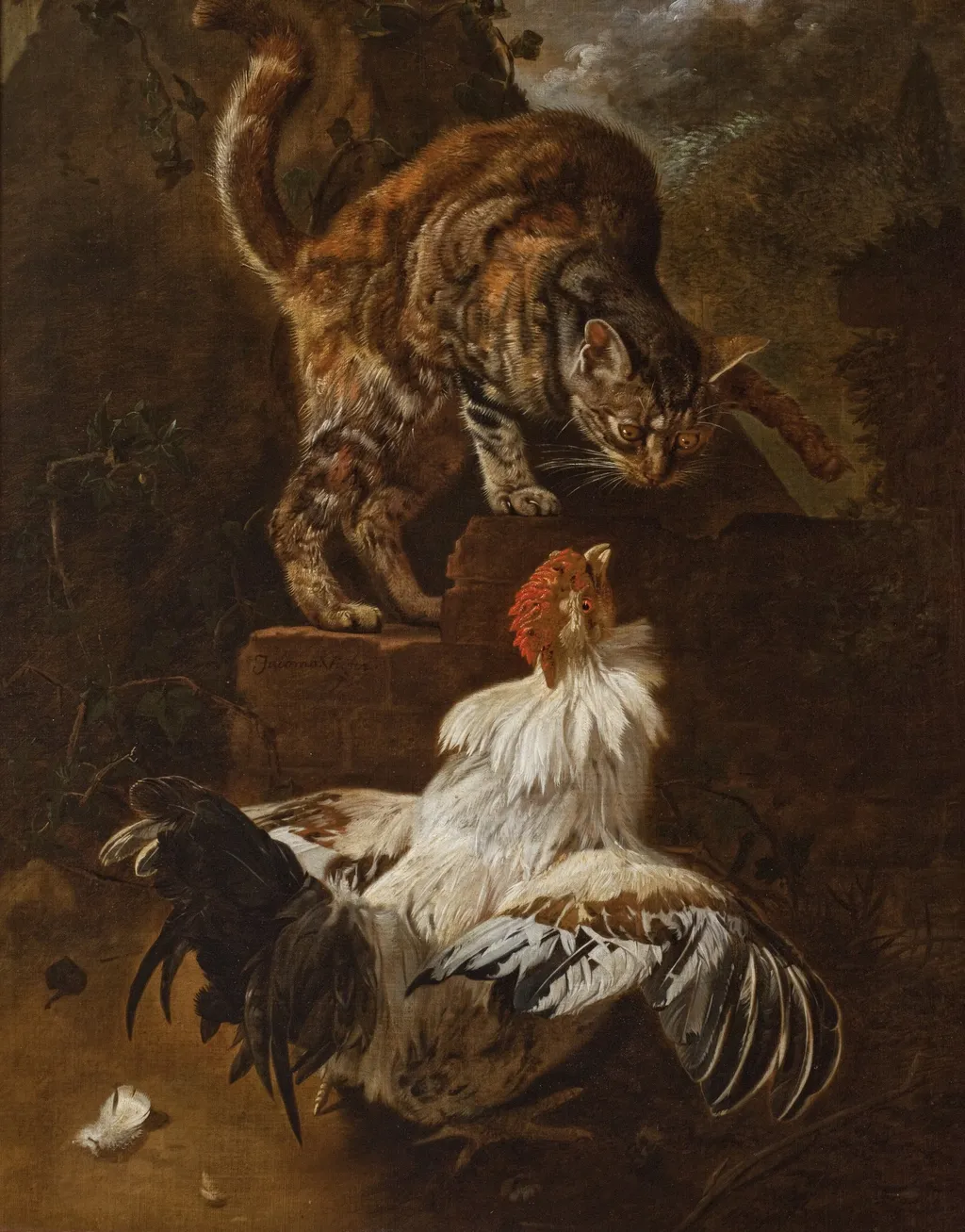
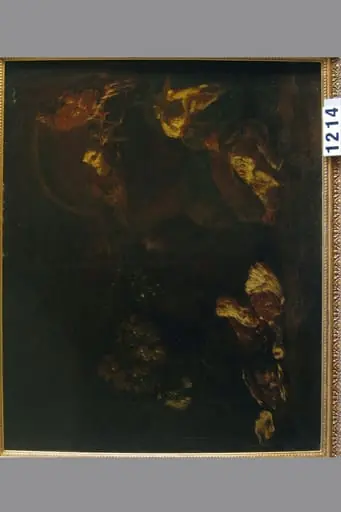
Fight of a Cock and a Cat is an oil painting by the Flemish Baroque painting artist Jacomo Victors. It dates from 1674 and is held in the collection of the National Museum in Kraków.
About this work
Overview
Painted in 1674 by Jacomo Victors, this oil on canvas depicts a tense encounter between a cat and a rooster.
Painted in 1674 by Jacomo Victors, this oil on canvas depicts a tense encounter between a cat and a rooster. The work is part of the collection at the National Museum in Kraków. Its compact composition focuses on the animals in a moment of suspended aggression, framed by a shadowed environment that heightens the sense of impending action. The painting reflects Victors’ interest in naturalistic animal subjects rendered with dramatic lighting.
Subject & Meaning
The scene captures a moment of predatory tension: a striped cat perches on a stone wall, gazing down at a wounded rooster with wings spread and feathers ruffled. The rooster’s posture suggests recent struggle, while the cat remains poised, neither attacking nor retreating. The interaction may allude to themes of vulnerability and instinct, common in 17th-century Dutch and Flemish genre scenes that observed animal behavior as a mirror to human nature.
Technique & Style
Victors employs chiaroscuro to model the animals’ forms, using sharp contrasts between light and deep shadow to define volume and texture. The cat’s fur and the rooster’s feathers are rendered with careful brushwork, while the dark background isolates the figures and enhances their three-dimensionality. Minimal environmental detail—just hints of greenery—directs attention to the animals’ physical presence and emotional intensity.
History & Provenance
The painting entered the National Museum in Kraków’s collection in the 19th century, though its earlier ownership remains undocumented. It was likely acquired during a period of increased interest in Flemish and Dutch genre paintings across Central Europe. No records indicate it was commissioned or exhibited publicly before its arrival in Kraków, suggesting it may have circulated in private collections for decades.
Context
In mid-17th-century Flanders, animal subjects were popular among painters seeking to demonstrate technical skill and observational precision. Victors, active in Antwerp, contributed to this tradition, often portraying domestic or wild creatures in moments of conflict or stillness. This work aligns with broader trends in Northern European art that valued naturalism over idealization, reflecting a growing fascination with the physical world.
Legacy
Though not widely reproduced or studied today, the painting remains a representative example of Victors’ approach to animal subjects. Its quiet drama and technical control offer insight into a lesser-known facet of Flemish painting beyond religious or mythological themes. It continues to be referenced in scholarly discussions of 17th-century genre painting and the depiction of animal behavior in art.
Own this work as a print
Artist & collection