Artwork
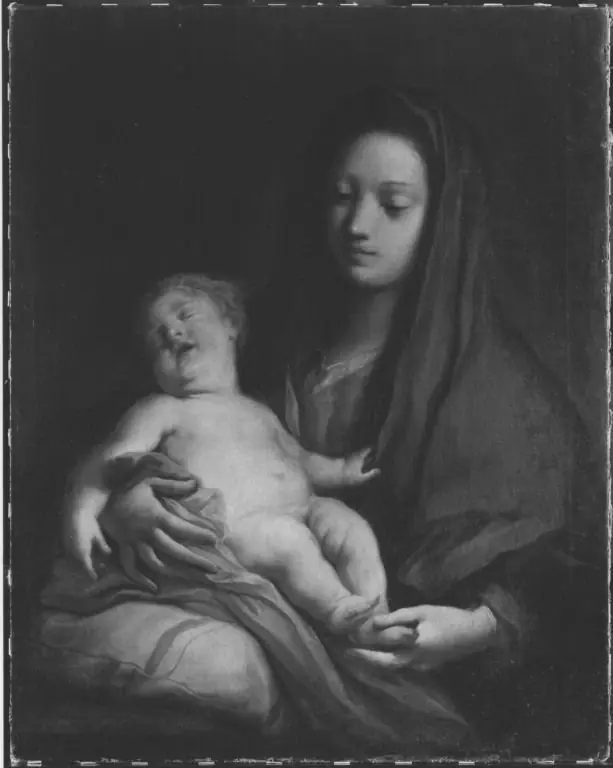
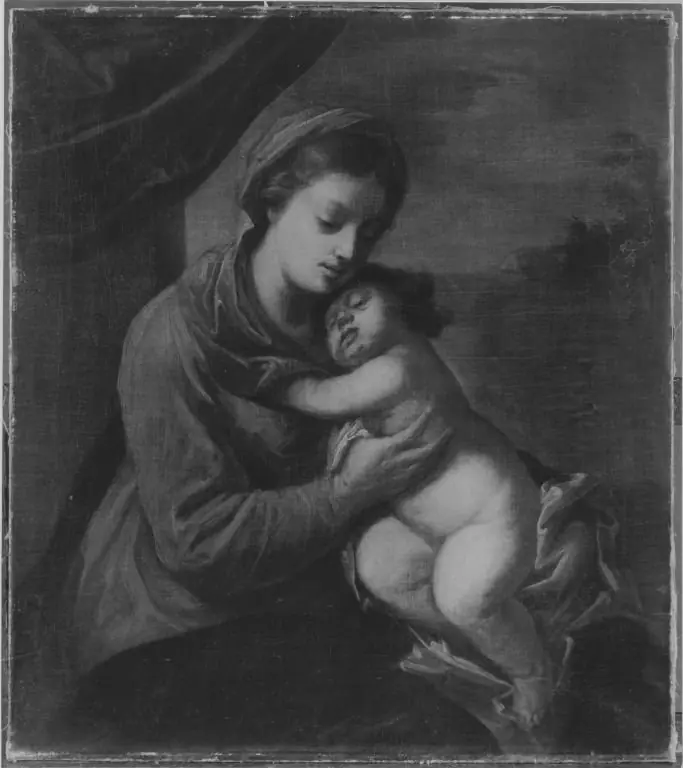
Maria mit Kind
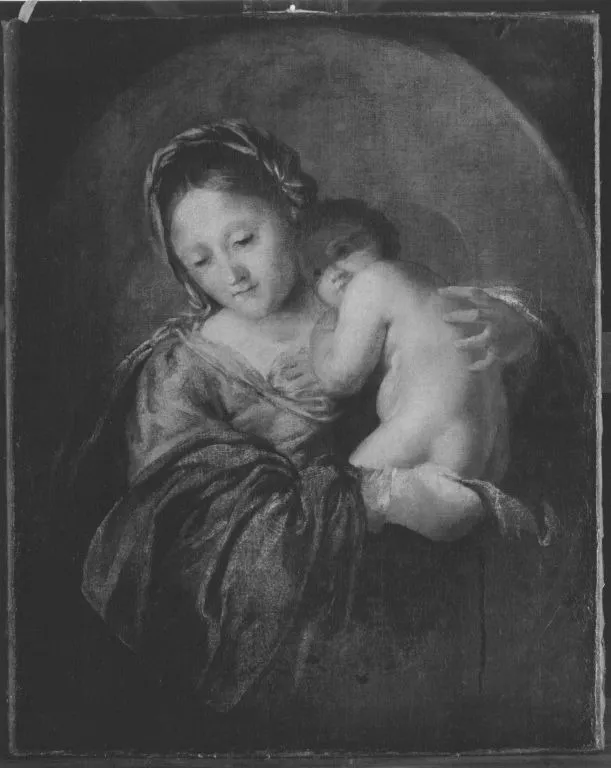
Maria mit Kind is an unspecified painting by the Rococo painting artist Jacopo Amigoni. It dates from 1713 and is held in the collection of the Bavarian State Painting Collections.
About this work
Overview
Jacopo Amigoni’s 1713 oil painting *Maria mit Kind* presents a quiet, intimate encounter between a woman and an infant. Executed in the Rococo idiom, the work resides in the Alte Pinakothek’s collection, offering a serene glimpse of maternal devotion rendered in delicate brushwork.
Subject & Meaning
The composition centers on a dark‑robed woman cradling a nude child whose head rests on her shoulder. The woman’s gaze is lowered, focused on the infant, whose eyes are closed, suggesting a moment of trust and repose. The scene conveys tenderness and spiritual intimacy, aligning with traditional depictions of the Virgin and Christ.
Technique & Style
Amigoni employs the soft, pastel palette and fluid lines characteristic of Rococo painting. A subtle circular form in the background creates depth without distracting from the figures, while the gentle modeling of flesh and fabric enhances the work’s calm, luminous atmosphere.
History & Provenance
Created during Amigoni’s productive period in Venice, the painting later entered the holdings of the Alte Pinakothek in Munich. Its presence there reflects the museum’s broader acquisition of 18th‑century European works, particularly those illustrating devotional themes.
Context
The early 18th century saw a shift from the dramatic intensity of the Baroque toward the lighter, more decorative Rococo style. Amigoni, an itinerant Italian artist, adapted to this trend, producing portraits and religious scenes that appealed to patrons across Europe, including the German courts that later acquired this piece.
Artist & collection
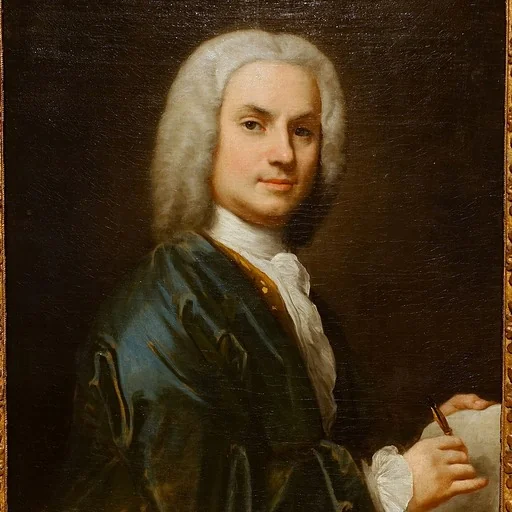
Artist
Jacopo Amigoni (born Giacomo Amiconi; 1682 – September 1752), was an Italian painter of the late-Baroque or Rococo period, who began his career in Venice, but traveled and was prolific throughout Europe, where his sumptuous portraits were…