Artwork
Piazza Navona in Rome during the Carnival
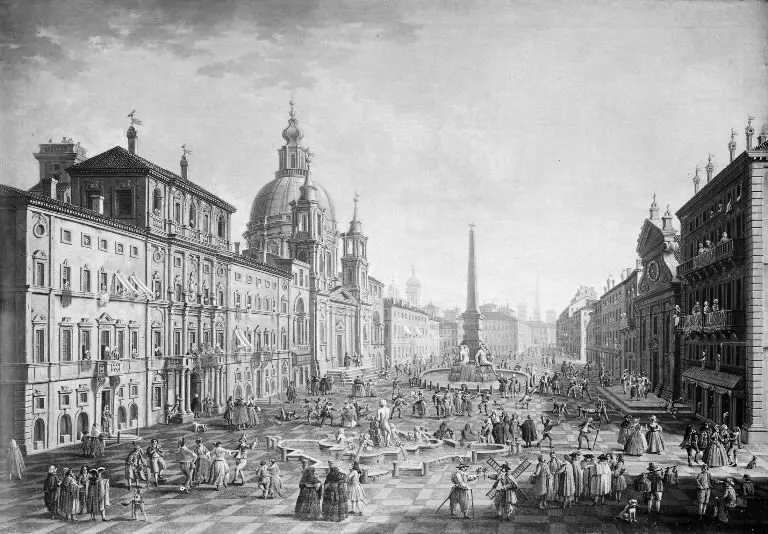
Piazza Navona in Rome during the Carnival is an oil painting by the Rococo painting artist Jacopo Fabris. It dates from 1732 and is held in the collection of the Statens Museum for Kunst.
About this work
Overview
Painted in 1732 by Jacopo Fabris, this oil work captures Piazza Navona in Rome during the Carnival season. The painting is part of the collection at Statens Museum for Kunst in Copenhagen. It presents a bustling urban scene with a dense assembly of figures, architectural detail, and atmospheric lighting, reflecting the vibrancy of Roman public life in the early 18th century.
Subject & Meaning
The painting documents a moment of collective revelry, emphasizing communal participation rather than religious or political symbolism.
The scene depicts a public celebration in one of Rome’s most prominent squares, where masked figures and elaborately dressed attendees mingle around a central fountain. The presence of masks and varied social postures suggests a temporary suspension of everyday norms, characteristic of Carnival. The painting documents a moment of collective revelry, emphasizing communal participation rather than religious or political symbolism.
Technique & Style
Fabris employs chiaroscuro to model forms and guide the viewer’s eye through the crowded square. Light falls selectively on faces, costumes, and architectural features, enhancing depth and movement. The brushwork is precise yet fluid, capturing textures of fabric, stone, and skin without overt idealization. The composition is tightly organized, with buildings framing the action and leading toward the central fountain as a visual anchor.
History & Provenance
The painting was completed in 1732 and entered the collection of Statens Museum for Kunst in Denmark, though its path from Rome to Copenhagen remains undocumented. It is one of the few known works by Fabris, an artist whose career is otherwise poorly recorded. Its survival and preservation suggest it was valued early on, possibly as a record of Roman customs for foreign collectors.
Context
In early 18th-century Rome, Carnival was a major seasonal event marked by public festivities, masquerades, and performances. Piazza Navona, with its Baroque fountains and grand architecture, served as a natural stage for such gatherings. Fabris’s painting aligns with a broader European tradition of topographical scenes that documented urban life, catering to both local pride and international curiosity about Italian culture.
Legacy
Though Jacopo Fabris is not widely recognized today, this painting remains a valuable visual record of Roman Carnival customs. It contributes to the study of 18th-century social history and urban representation in art. Its preservation in a major Nordic museum underscores its role as a cross-cultural artifact, offering insight into how foreign audiences perceived Italian public life during the Baroque era.
Artist & collection

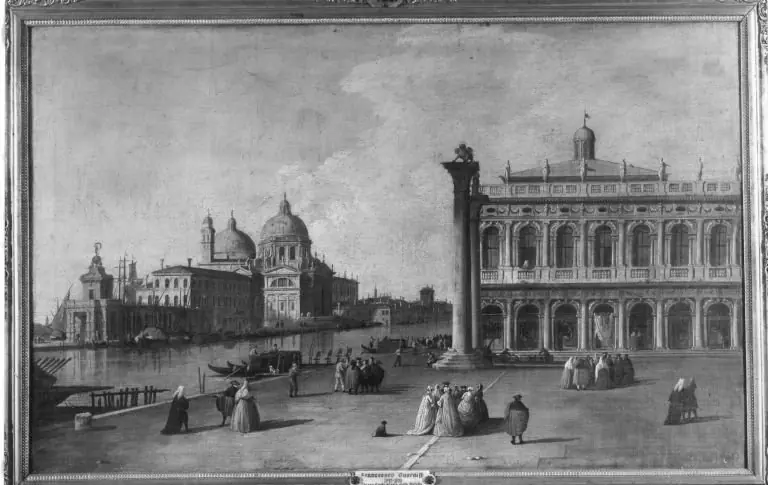 Piazetta mit Blick auf Santa Maria della Salute (Nachahmer)
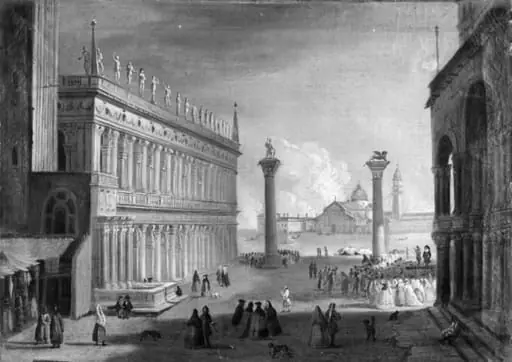 Piazettaen i Venezia
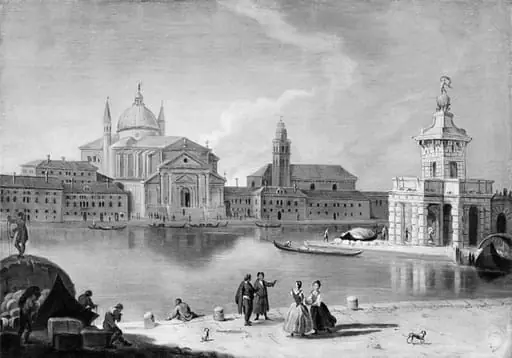 La Dogana i Venezia
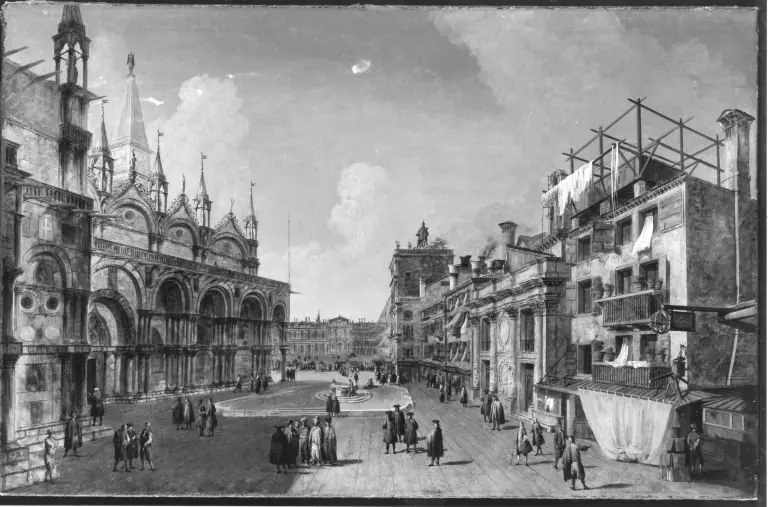 Ansicht der Piazzetta dei Leoni in Venedig
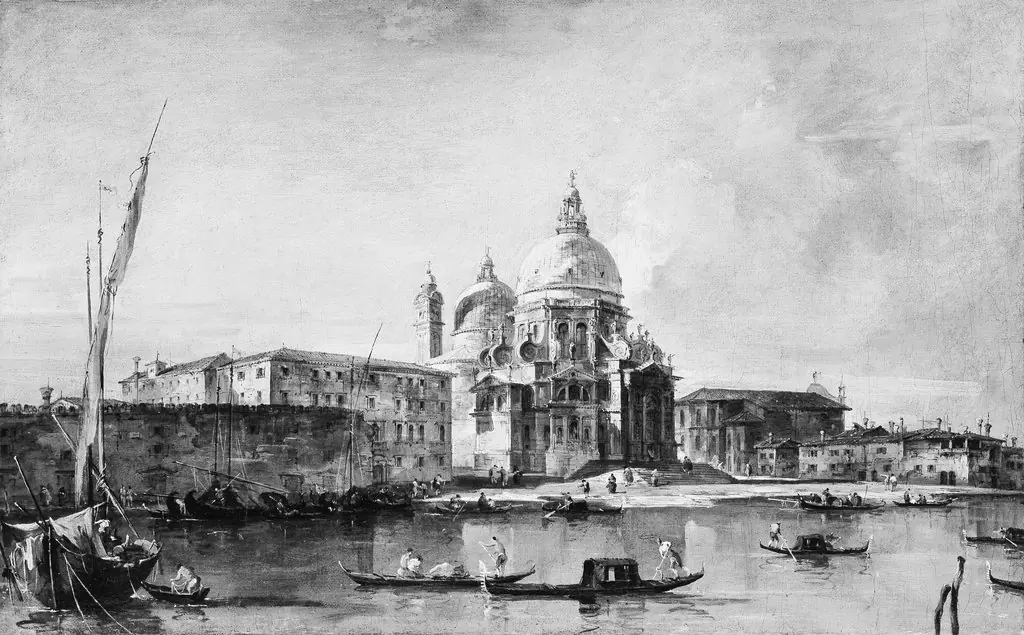 Santa Maria della Salute
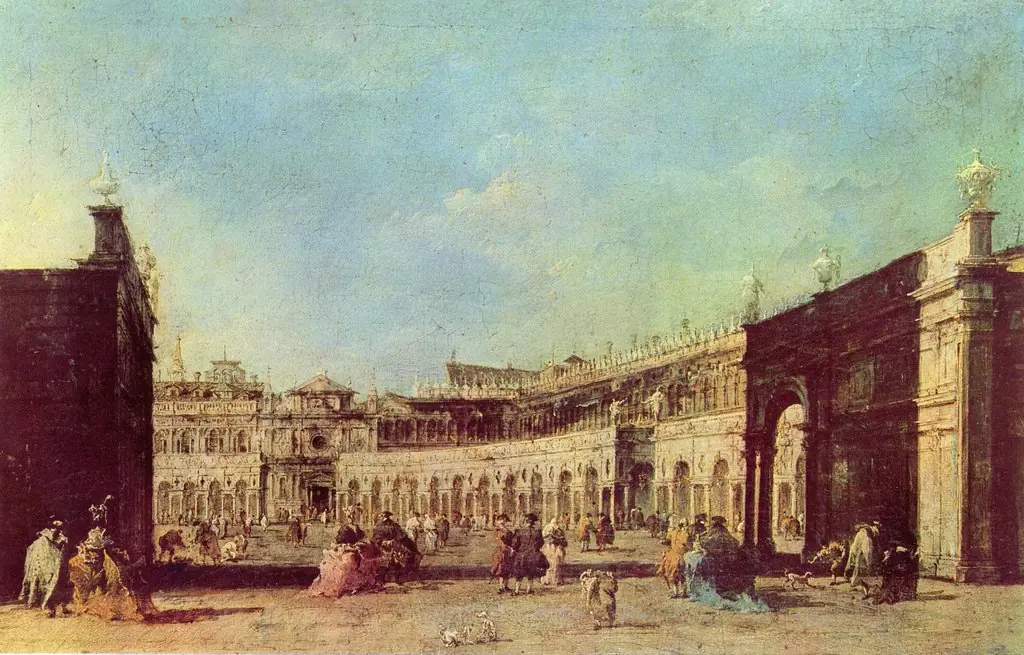 Piazza San Marco
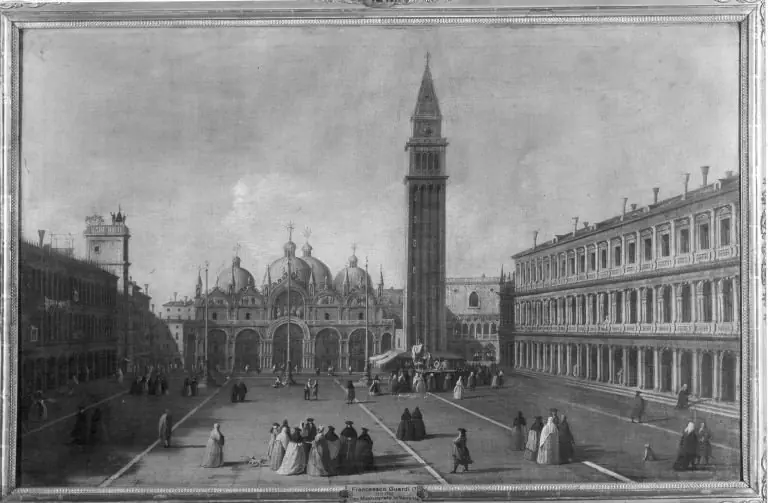 Markusplatz in Venedig mit Blick gegen Campanile und Dogenpalast (Nachahmer)
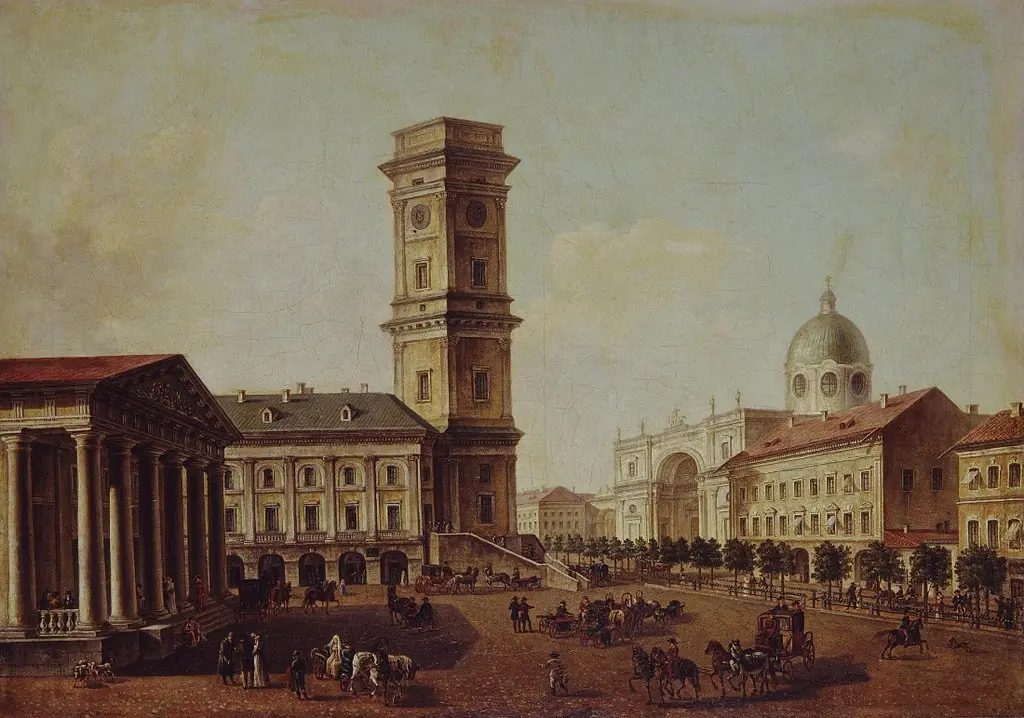 The View of Nevsky Prospect near the City Duma in St Petersburg
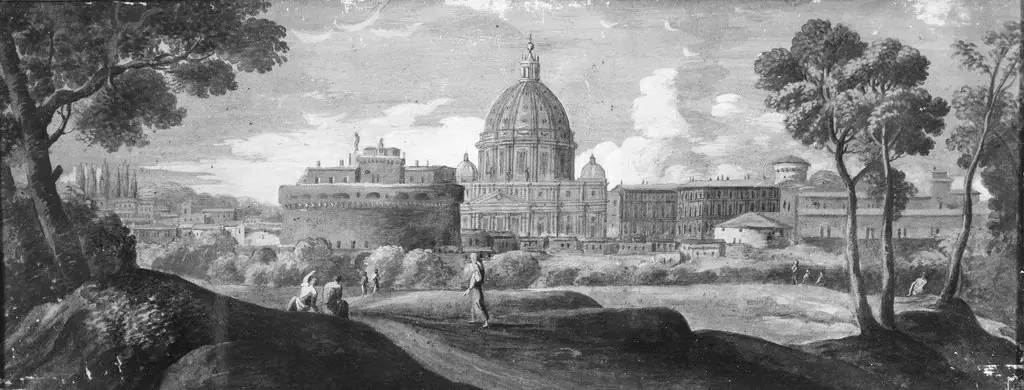 The Church of St Peter's in Rome