Artwork
Portrait of a White-Bearded Man
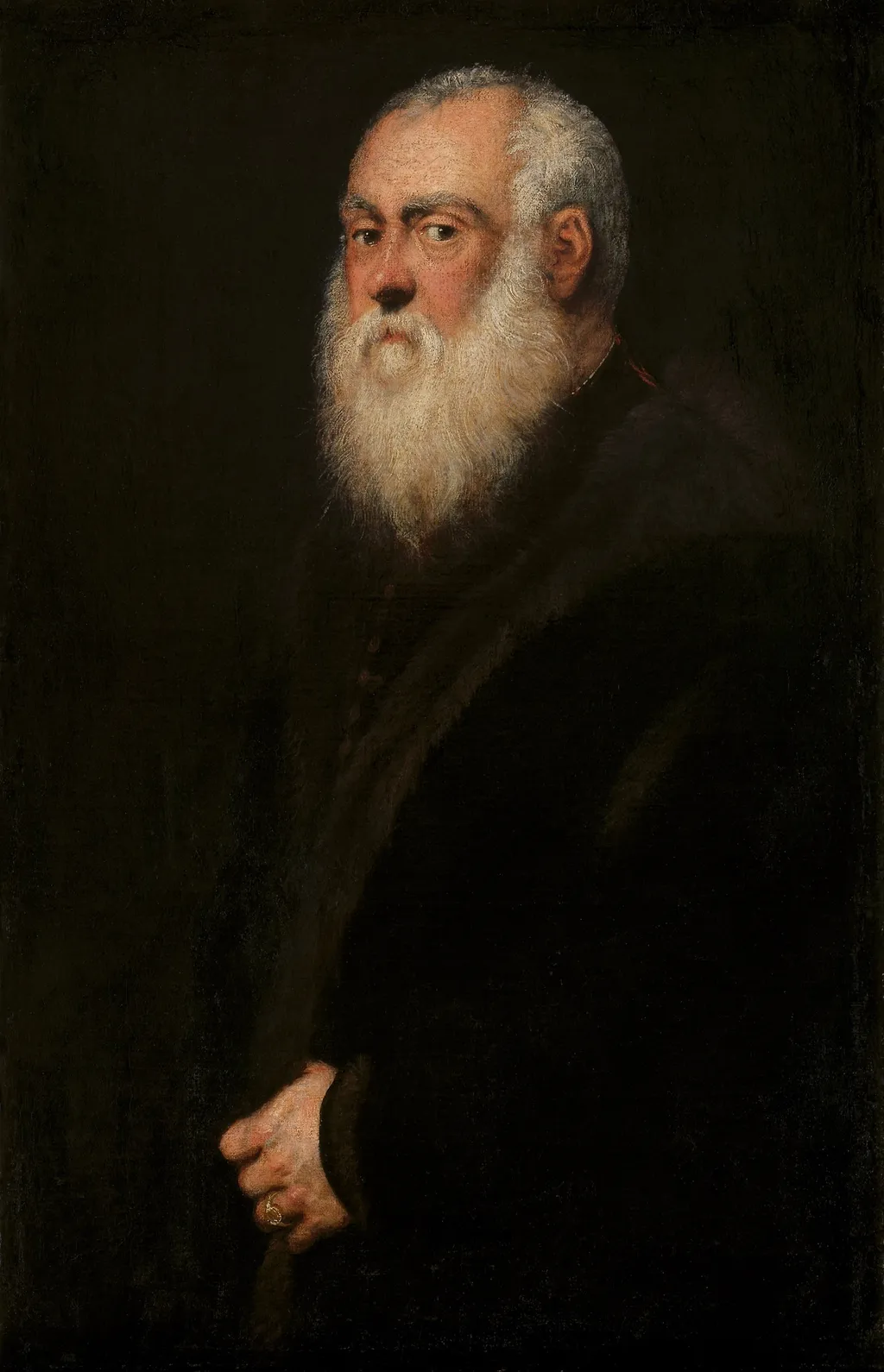
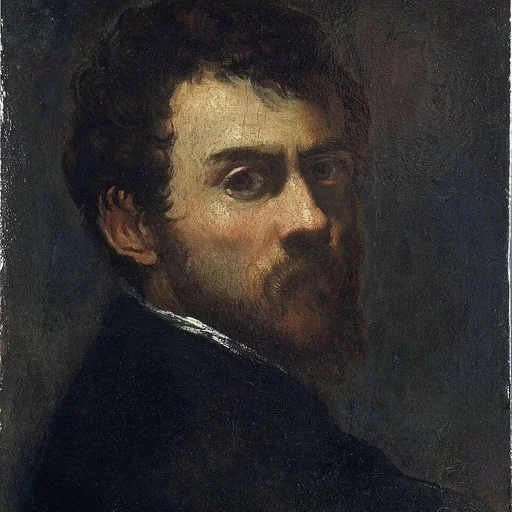
Portrait of a White-Bearded Man is an oil painting by the Mannerist artist Jacopo Tintoretto. It dates from 1570 and is held in the collection of the Kunsthistorisches Museum.
About this work
Overview
Jacopo Tintoretto painted the Portrait of a White-Bearded Man in 1570, using oil on canvas. The work belongs to the Kunsthistorisches Museum’s collection and exemplifies the artist’s late‑Renaissance output, marked by vigorous execution and a pronounced Mannerist sensibility.
Subject & Meaning
The canvas presents an elderly male sitter, his long white beard and thinning gray hair rendered with careful detail. He wears a dark robe, rests a hand on his chest, and displays a modest ring, suggesting a dignified, perhaps scholarly or civic identity, though no specific name is recorded.
Technique & Style
Tintoretto employs stark chiaroscuro, setting the figure against an entirely black background. The sharp contrast between illuminated facial features and deep shadow creates a three‑dimensional effect, a hallmark of his dynamic brushwork and the dramatic composition favored by Mannerist painters.
History & Provenance
Created in Venice during Tintoretto’s mature period, the portrait entered the Kunsthistorisches Museum’s holdings at an unspecified date. Its provenance traces back to the artist’s workshop, with no documented patron or commission attached to the sitter.
Context
The painting reflects the broader Mannerist trend of the late 16th century, when artists emphasized exaggerated poses, heightened contrast, and stylized representation over strict naturalism. Tintoretto’s approach aligns with contemporaneous Venetian practices that favored theatrical lighting and vigorous handling of paint.
Own this work as a print
Artist & collection
Artist
Jacopo Robusti (late September or early October 1518 – 31 May 1594), best known as Tintoretto ( TIN-tə-RET-oh; Italian: ; Venetian: ), was an Italian Renaissance painter of the Venetian school.