Artwork
Astonishment of the Mask Wouse
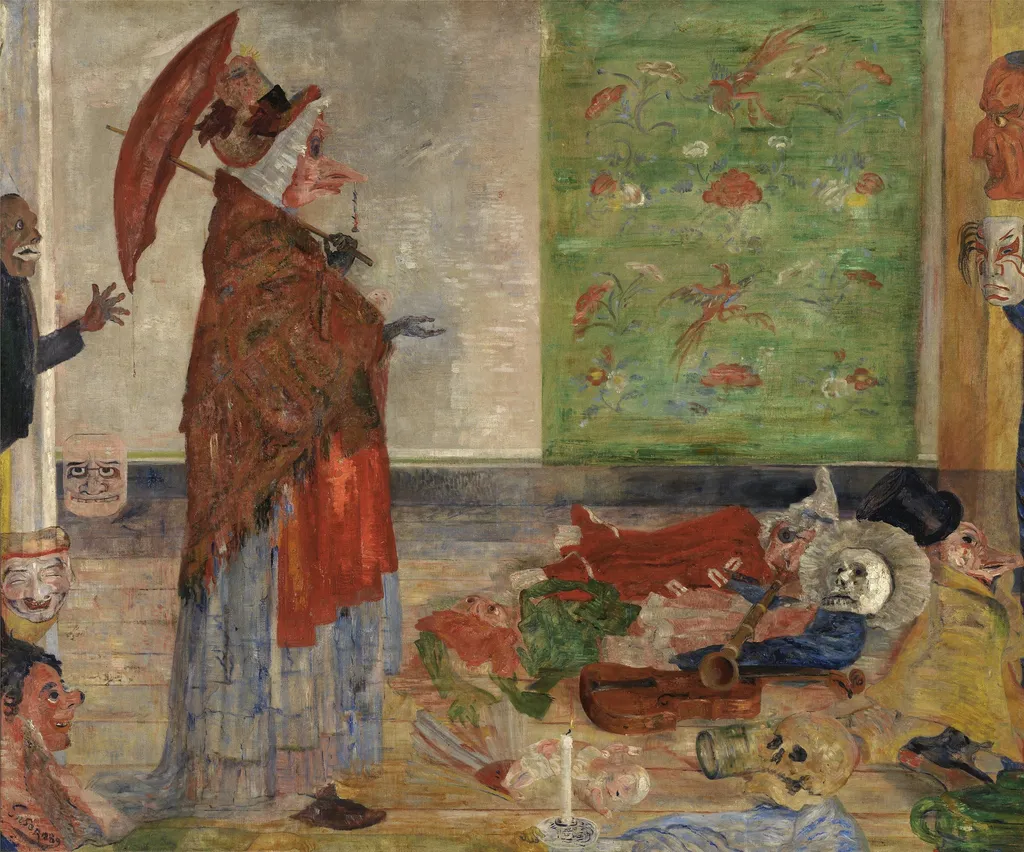
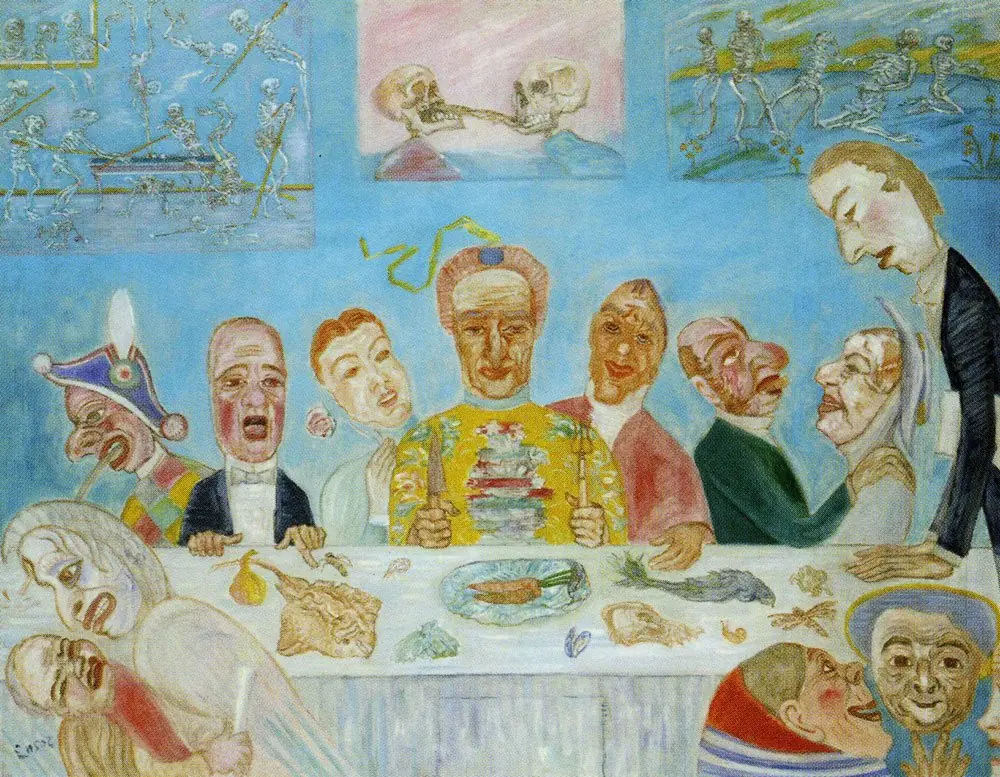
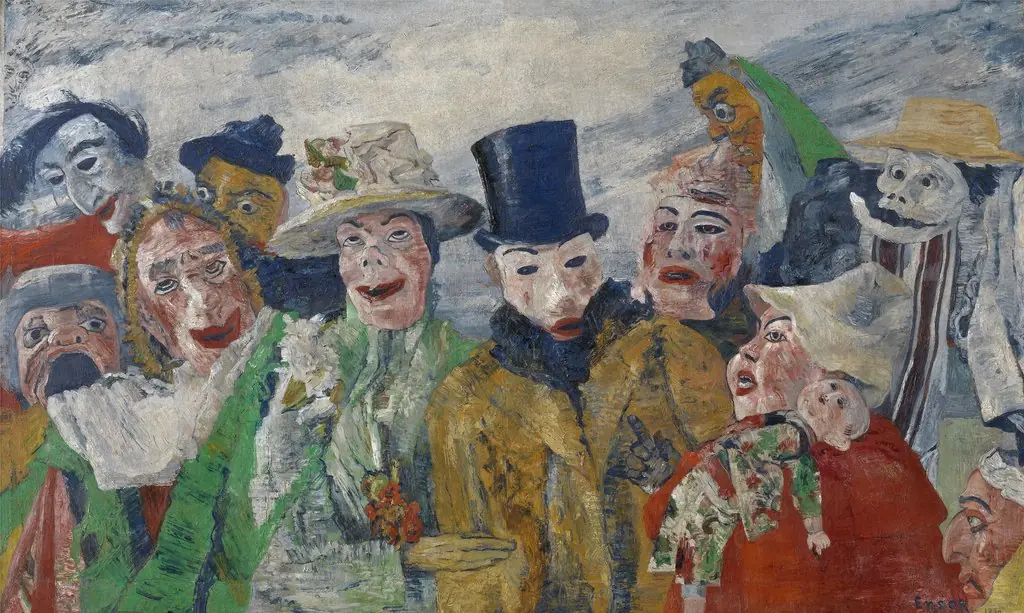
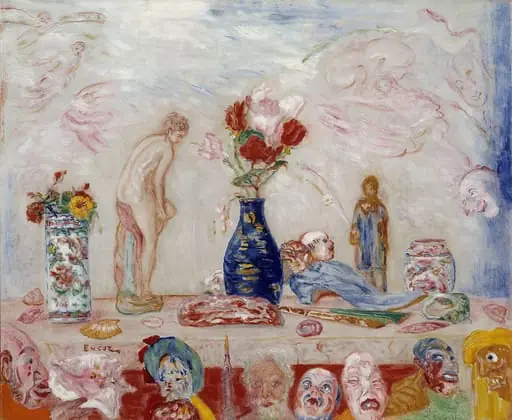
Astonishment of the Mask Wouse is an oil painting by James Ensor. It dates from 1895 and is held in the collection of the Royal Museum of Fine Arts Antwerp.
About this work
Overview
Painted in 1895 by Belgian artist James Ensor, this oil-on-canvas work presents a crowded interior scene dominated by masked figures.
Painted in 1895 by Belgian artist James Ensor, this oil-on-canvas work presents a crowded interior scene dominated by masked figures. Ensor, based in Ostend and active in the avant-garde group Les XX, used the medium to explore psychological and social tension. The painting resides in the Royal Museum of Fine Arts Antwerp, part of a broader body of work that challenged conventional aesthetics through symbolic distortion and vivid color.
Subject & Meaning
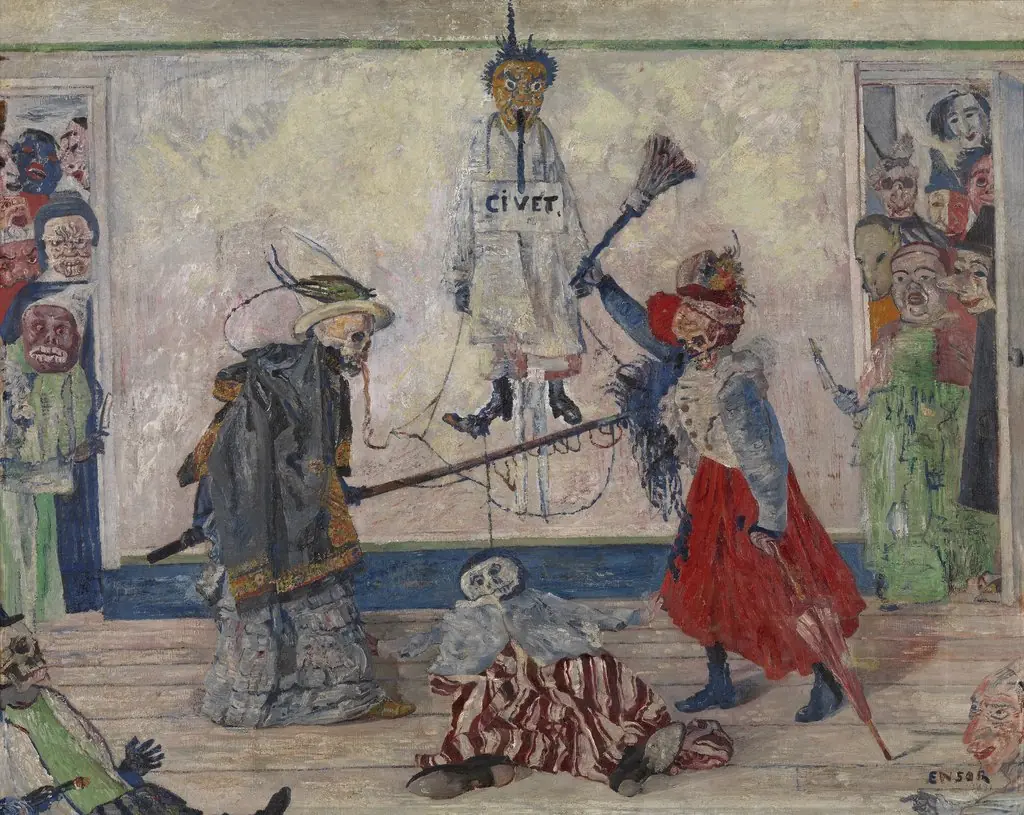
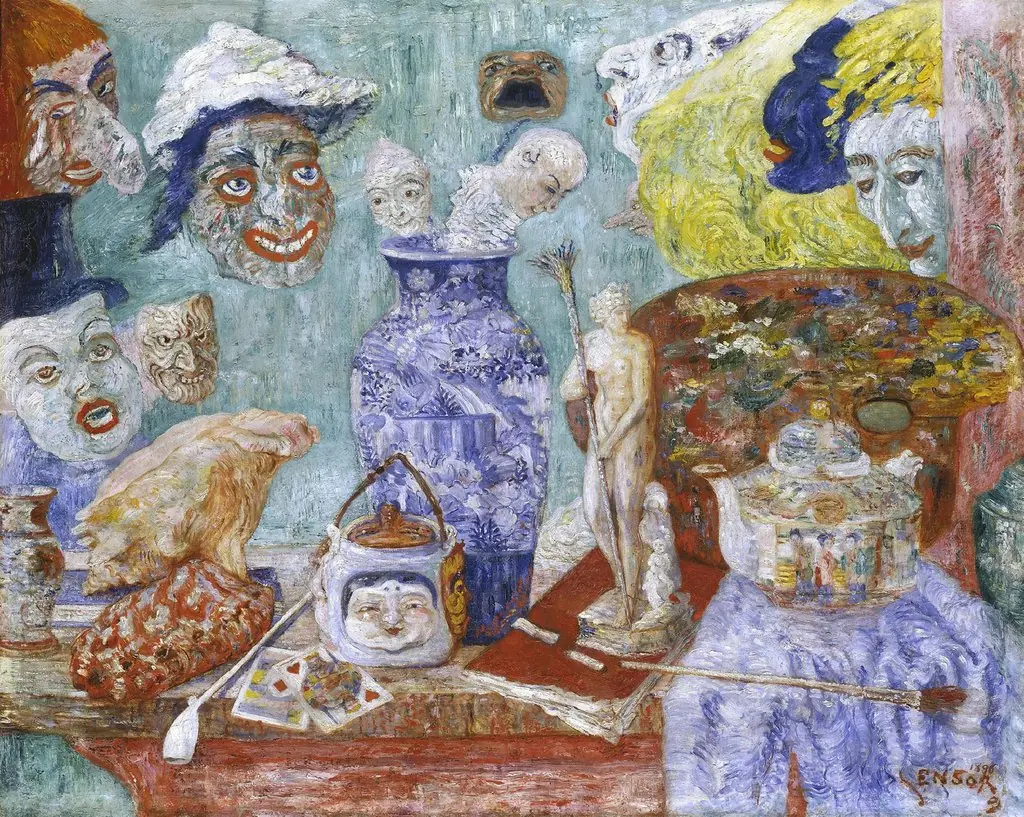
A central woman in a long dress and red shawl holds a parasol, observing a gathering of masked individuals, one wearing a skull-like visage. The masks suggest anonymity, performance, or societal roles, while the disordered arrangement implies psychological unease. Objects like a violin, book, and candle may symbolize culture, knowledge, or transience, contributing to an atmosphere of ambiguity and latent anxiety rather than narrative clarity.
Technique & Style
Ensor employed thick, expressive brushwork and saturated hues—particularly reds and greens—to heighten emotional intensity. Forms are deliberately distorted, with figures elongated and perspectives slightly skewed. The composition is dense and cluttered, rejecting spatial harmony in favor of visual overload. These choices create a sense of psychological dislocation, anticipating later expressionist tendencies through deliberate aesthetic disruption.
History & Provenance
Created during Ensor’s most experimental period, the painting entered the collection of the Royal Museum of Fine Arts Antwerp in the early 20th century. It has remained there since, documented in museum records as part of a core group of Ensor’s works acquired by Belgian institutions. Its survival and preservation reflect growing institutional recognition of his unconventional vision during his lifetime.
Context
Ensor painted this during a time when Belgian artists were breaking from academic traditions. His engagement with Les XX, a radical collective promoting modern art, encouraged experimentation with symbolism and satire. The use of masks aligned with broader European interests in identity and alienation, while his confrontational style contrasted sharply with prevailing Impressionist and Realist norms.
Legacy
Though not widely exhibited during his early career, this work contributed to Ensor’s reputation as a precursor to Expressionism and Surrealism. Later artists recognized his use of distortion and symbolic masks as foundational to exploring inner turmoil visually. The painting remains a key reference in studies of early modernist psychological art, influencing how emotion and identity were rendered beyond literal representation.
Artist & collection
Artist
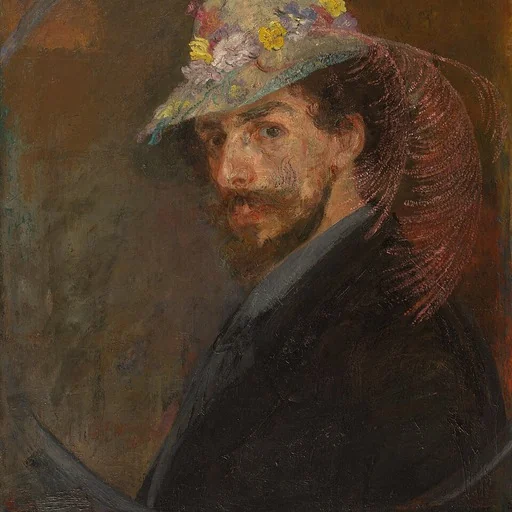
James Sidney Edouard, Baron Ensor (13 April 1860 – 19 November 1949) was a Belgian painter and printmaker, an important influence on expressionism and surrealism who lived in Ostend for most of his life.