Artwork
Little Evelyn
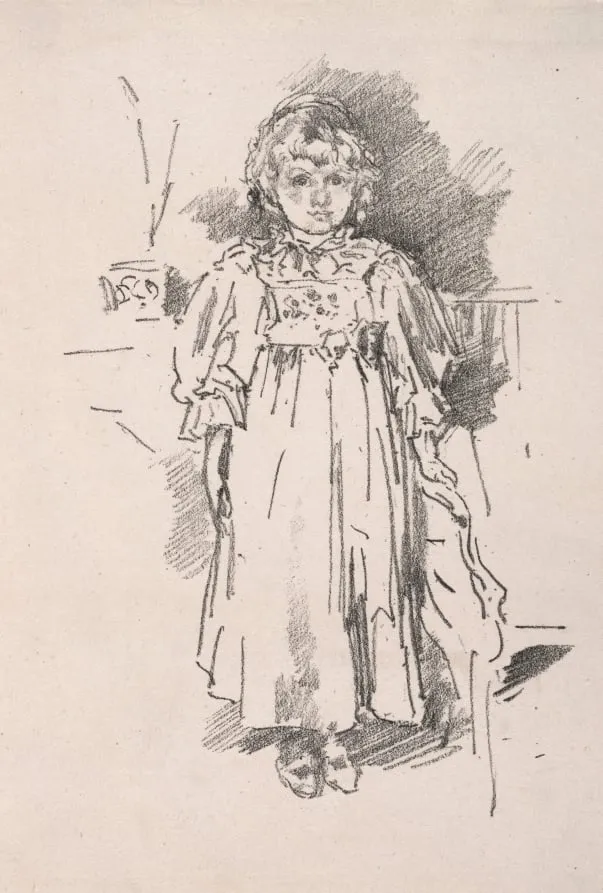
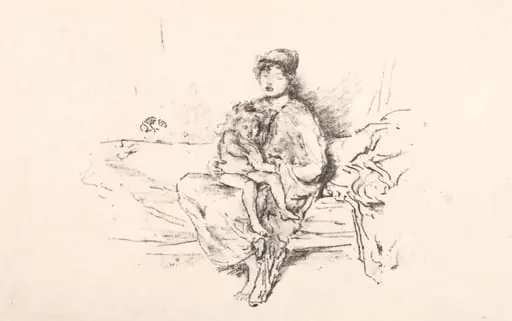
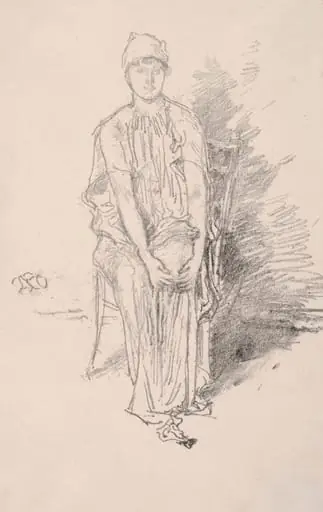
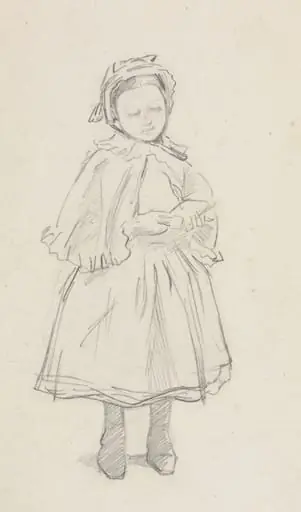
Little Evelyn is a print by the Impressionist artist James McNeill Whistler. It dates from 1896 and is held in the collection of the Cleveland Museum of Art.
About this work
To learn more about the Impressionism movement, which influenced Whistler's work, explore the art of Claude Monet, a key figure in the movement.
The painting "Little Evelyn" by James McNeill Whistler, created in 1896, showcases a young girl standing in front of a chair, her hands clasped together in front of her. She is dressed in a long, white dress with a high neckline and puffy sleeves, and her curly hair is tied back with a ribbon. The background of the painting is a soft, muted color, which helps to focus attention on the subject.
The artist's use of light and shadow adds depth and dimension to the painting, creating a sense of warmth and intimacy. The overall effect is one of quiet contemplation, inviting the viewer to step into the peaceful world of the painting.
To learn more about the Impressionism movement, which influenced Whistler's work, explore the art of Claude Monet, a key figure in the movement.
Overview
Little Evelyn, completed in 1896 by James McNeill Whistler, is a portrait in print form depicting a young girl in a quiet, introspective pose. The work is part of the collection at The Cleveland Museum of Art and reflects Whistler’s interest in subtle tonal harmonies and restrained composition. Unlike his more famous oil paintings, this piece was produced as a drypoint etching, emphasizing delicate line work and atmospheric nuance over bold color.
Subject & Meaning
The subject is a young girl, identified as Evelyn, standing still with her hands clasped before her. Her posture conveys stillness and modesty, while her gaze is directed inward, suggesting contemplation rather than engagement with the viewer. The absence of narrative detail or symbolic objects focuses attention on her presence alone, evoking a sense of private stillness common in Whistler’s depictions of children.
Technique & Style
Whistler employed drypoint etching to render the figure with fine, expressive lines and soft gradations of tone. The background is minimized to a muted wash, allowing the girl’s form to emerge through subtle contrasts of light and shadow. The texture of her dress and the delicate rendering of her hair are achieved with meticulous hatching, reflecting Whistler’s commitment to tonal balance and quiet elegance over dramatic effect.
History & Provenance
Created in 1896, Little Evelyn was made during Whistler’s later years, when he increasingly focused on intimate portraits and printmaking. The work entered The Cleveland Museum of Art’s collection in the 20th century, following its circulation among private collectors and print societies. Its preservation as a print rather than a painting aligns with Whistler’s broader interest in the reproducibility and accessibility of art.
Context
In the 1890s, Whistler turned away from large-scale compositions toward smaller, more personal subjects, often children or solitary figures. This shift coincided with his engagement with Japanese aesthetics and the growing interest in printmaking among European artists. Little Evelyn reflects these influences through its flattened space, emphasis on line, and subdued palette, aligning with broader trends in late 19th-century graphic art.
Legacy
Though less widely known than Whistler’s oil portraits, Little Evelyn exemplifies his mastery of the print medium and his ability to convey emotional depth through minimal means. It remains a key example of his late-period work, studied for its technical refinement and quiet psychological presence. The piece continues to inform discussions on the role of intimacy and restraint in modern portraiture.
Artist & collection
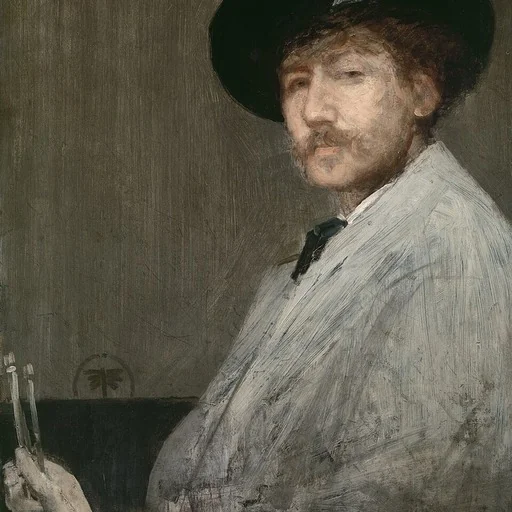
Artist
James Abbott McNeill Whistler was an American painter in oils and watercolor, and printmaker, active during the American Gilded Age and based primarily in the United Kingdom.

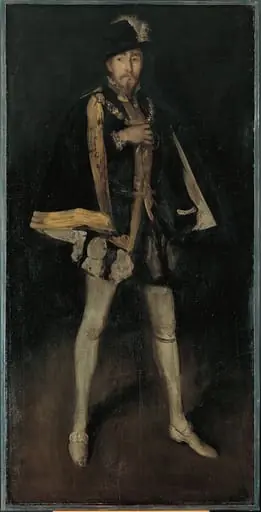 Arrangement in Black, No. 3: Sir Henry Irving as Philip II of Spain
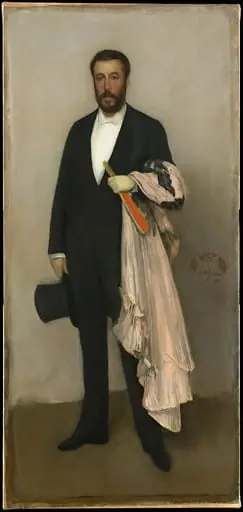 Arrangement in Flesh Colour and Black: Portrait of Theodore Duret
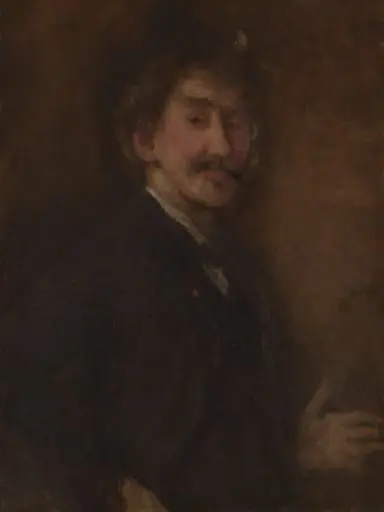 Gold and Brown: Self-Portrait
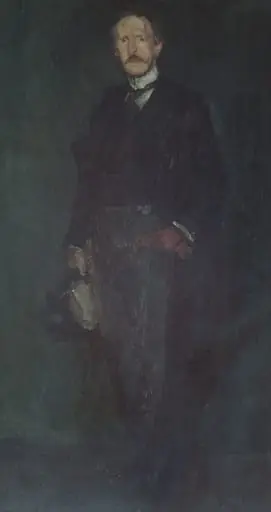 Edward Guthrie Kennedy
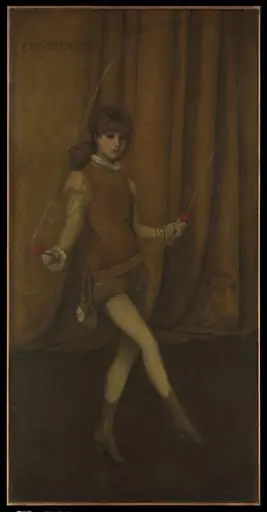 Harmony in Yellow and Gold: The Gold Girl—Connie Gilchrist
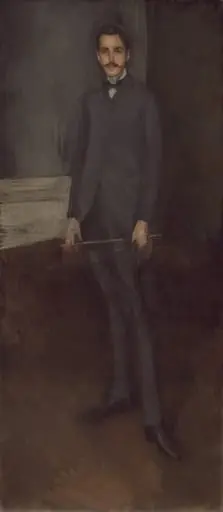 George W. Vanderbilt
 Symphony in White, No. 1: The White Girl
 Henry Irving as Philip II of Spain