Artwork
Ponte del Piovan
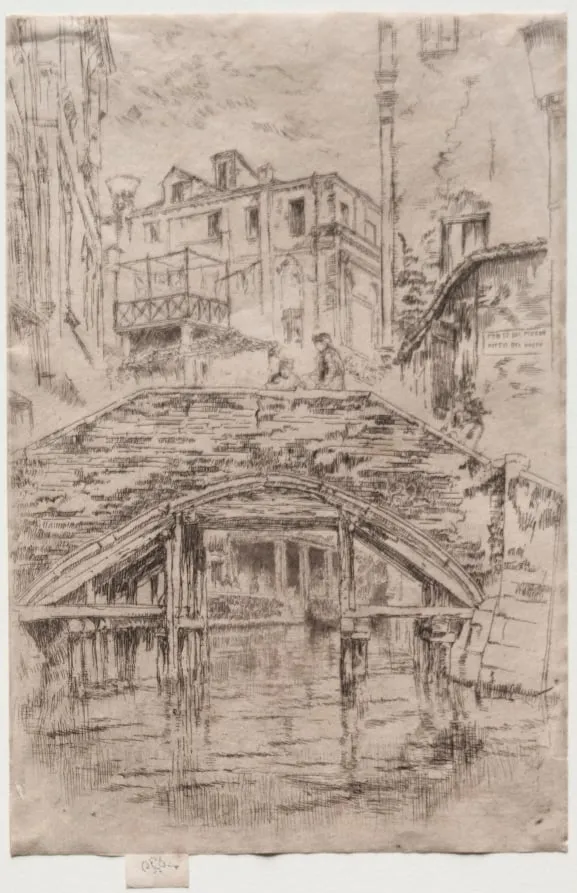
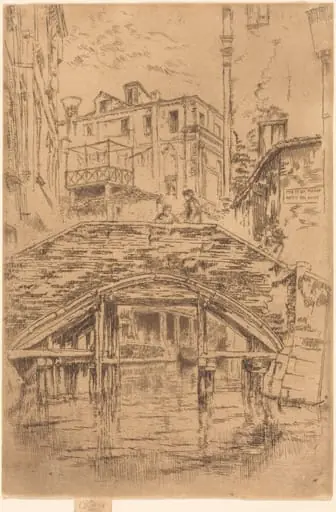
Ponte del Piovan is a print by the Impressionist artist James McNeill Whistler. It dates from 1886 and is held in the collection of the Cleveland Museum of Art.
About this work
Overview
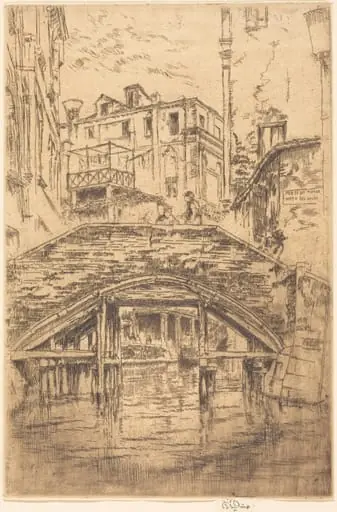
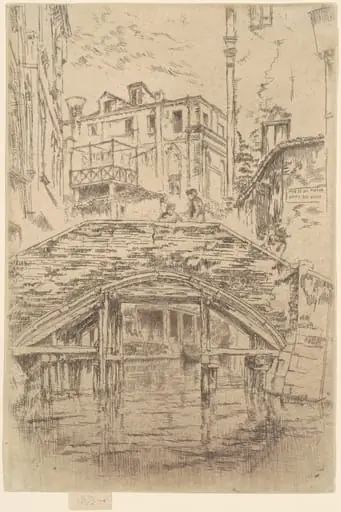
James McNeill Whistler’s 1886 print titled Ponte del Piovan presents a modest stone bridge spanning a rippling waterway. The composition is anchored by two diminutive figures—one childlike, the other adult—standing upon the bridge, while a tall building with a balcony and a street sign looms in the background. The work is part of the Cleveland Museum of Art’s collection.
Subject & Meaning
The scene captures an ordinary moment of daily life, emphasizing the quiet interaction between architecture and its surroundings. The bridge, its dark reflection, and the solitary figures suggest a contemplative pause within an urban setting, inviting viewers to consider the relationship between human presence and the built environment.
Technique & Style
Executed in a loose, sketch‑like manner, the print relies on broad outlines and tonal contrasts rather than fine detail. Whistler emphasizes shape and shadow, allowing the dark, wavering water to echo the bridge’s arches. This approach aligns with the realist tendency to portray everyday subjects with an economy of line.
History & Provenance
Created in 1886, Ponte del Piovan entered the Cleveland Museum of Art’s holdings at an unspecified later date, where it remains on view. The work reflects Whistler’s interest in European locales during his travels, documenting a specific bridge that likely existed near the Piovan area of Italy.
Context
During the late nineteenth century, artists increasingly turned to realistic depictions of mundane scenes, moving away from grand historical narratives. Whistler’s print fits within this broader movement, illustrating how a simple bridge and its surroundings could become a vehicle for exploring light, atmosphere, and the passage of time.
Artist & collection
Artist
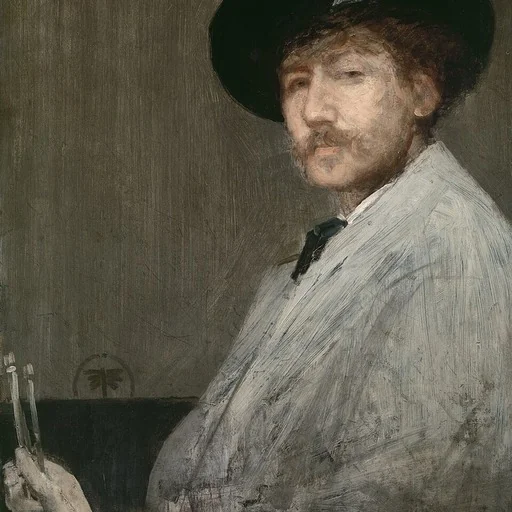
James Abbott McNeill Whistler was an American painter in oils and watercolor, and printmaker, active during the American Gilded Age and based primarily in the United Kingdom.

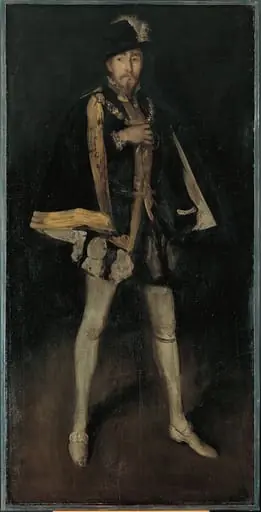 Arrangement in Black, No. 3: Sir Henry Irving as Philip II of Spain
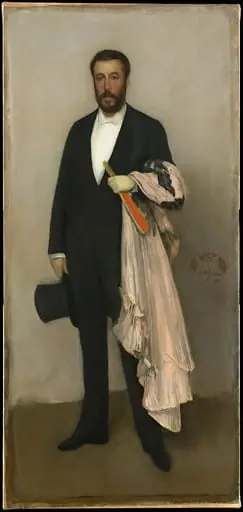 Arrangement in Flesh Colour and Black: Portrait of Theodore Duret
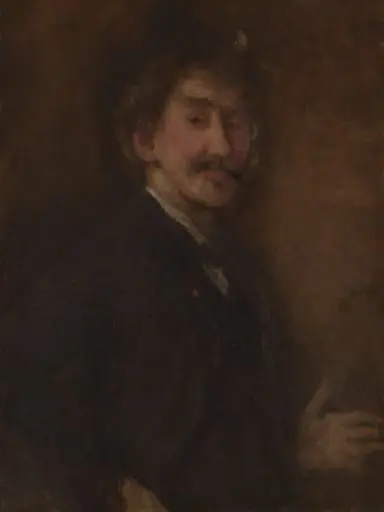 Gold and Brown: Self-Portrait
 Edward Guthrie Kennedy
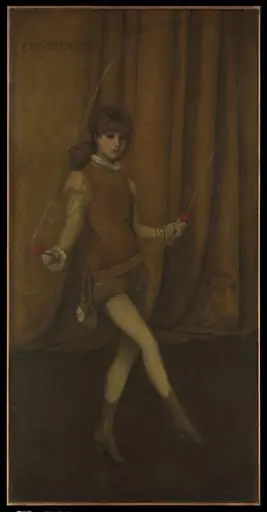 Harmony in Yellow and Gold: The Gold Girl—Connie Gilchrist
 George W. Vanderbilt
 Symphony in White, No. 1: The White Girl
 Henry Irving as Philip II of Spain