Artwork
Temple
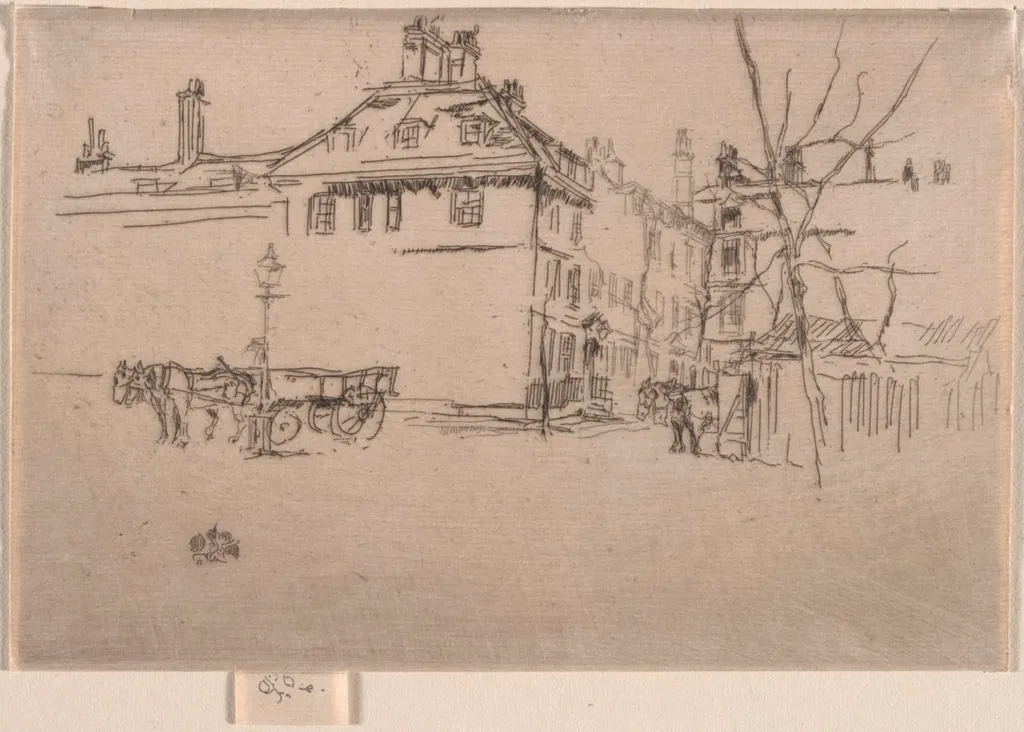
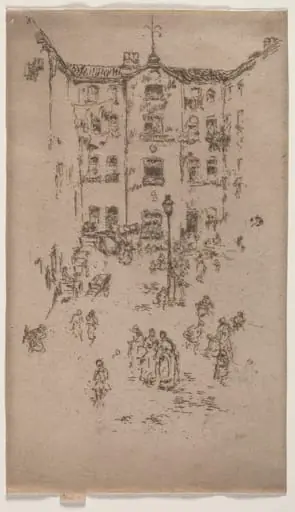
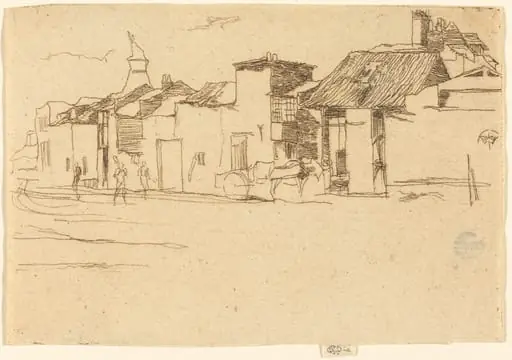
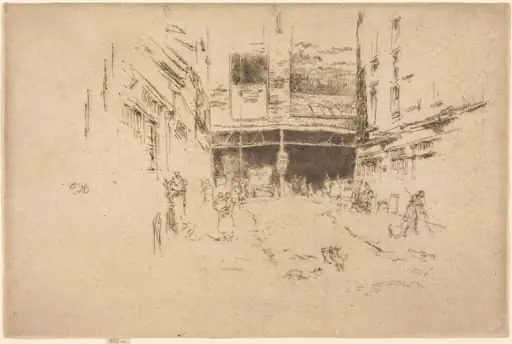
Temple is a print by the Impressionist artist James McNeill Whistler. It dates from 1886 and is held in the collection of the Cleveland Museum of Art.
About this work
Overview
Temple, created in 1886 by James McNeill Whistler, is a print that captures a quiet nocturnal scene.
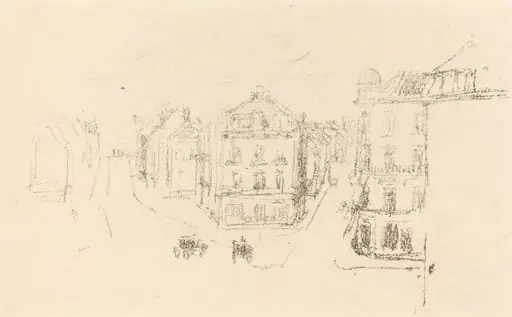
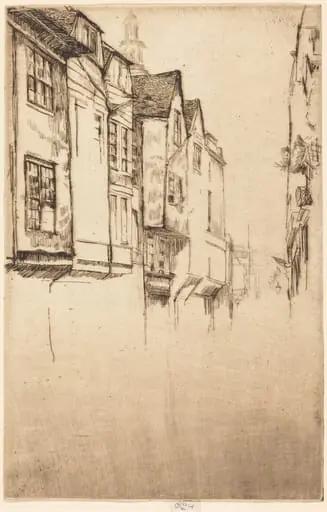
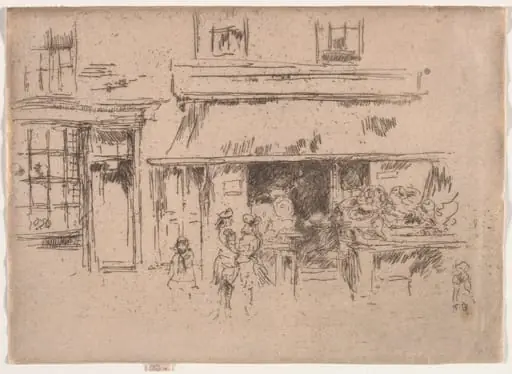
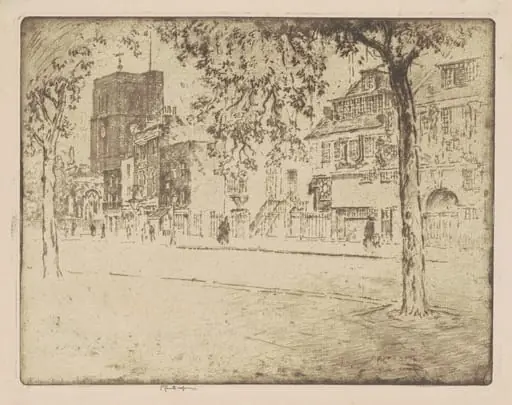
Temple, created in 1886 by James McNeill Whistler, is a print that captures a quiet nocturnal scene. It is part of the collection at The Cleveland Museum of Art. The composition centers on a dominant tree in the foreground, its limbs arcing across the upper portion of the image, while distant structures and figures recede into the background. The work reflects Whistler’s interest in atmospheric tone over narrative detail.
Subject & Meaning
The scene suggests a tranquil, possibly Eastern-inspired landscape, though no specific temple is identified. The minimal human presence—figures on a path—serves to emphasize solitude and stillness. Whistler avoids literal storytelling, instead evoking a mood of contemplative calm. The title may allude to spiritual serenity rather than architectural specificity, aligning with his broader aesthetic philosophy.
Technique & Style
Whistler employed a restrained palette of grays and blues, using subtle tonal variations to model form and depth. The print technique, likely etching or drypoint, allows for delicate linework and soft gradations. Light is suggested rather than defined, with shadows dissolving into the night. The composition is carefully balanced, with the tree acting as a vertical anchor against the horizontal recession of the landscape.
History & Provenance
Created during Whistler’s later period, Temple reflects his mature approach to printmaking, following his earlier experiments with the etched tonal landscapes of the 1870s. The work entered The Cleveland Museum of Art’s collection through established acquisition channels, likely as part of a broader effort to represent Whistler’s graphic oeuvre. Its provenance remains consistent with institutional holdings of his prints from the late 19th century.
Context
Whistler produced Temple during a time when he was deeply engaged with Japanese aesthetics and the idea of art as harmony of tone and form. His prints from this era often eschewed detail in favor of mood, aligning with the broader Aesthetic Movement’s emphasis on beauty over moral or narrative content. The work resonates with contemporaneous developments in printmaking across Europe and America.
Legacy
Temple exemplifies Whistler’s influence on modern printmaking through its emphasis on atmosphere and restraint. It contributed to a shift in how landscapes were interpreted in graphic media—away from topographical precision toward emotional resonance. The work continues to be studied for its refined use of tone and its role in the evolution of late 19th-century print aesthetics.
Artist & collection
Artist
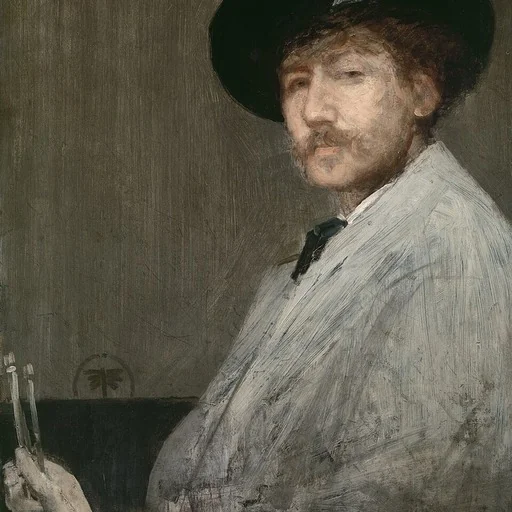
James Abbott McNeill Whistler was an American painter in oils and watercolor, and printmaker, active during the American Gilded Age and based primarily in the United Kingdom.

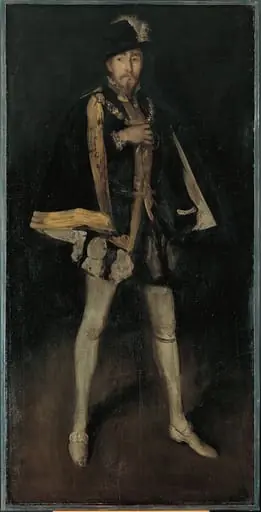 Arrangement in Black, No. 3: Sir Henry Irving as Philip II of Spain
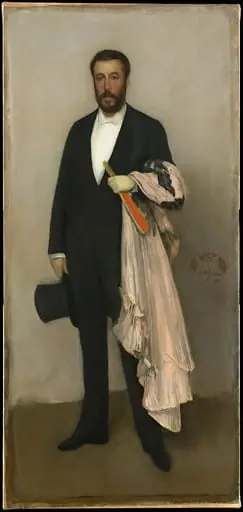 Arrangement in Flesh Colour and Black: Portrait of Theodore Duret
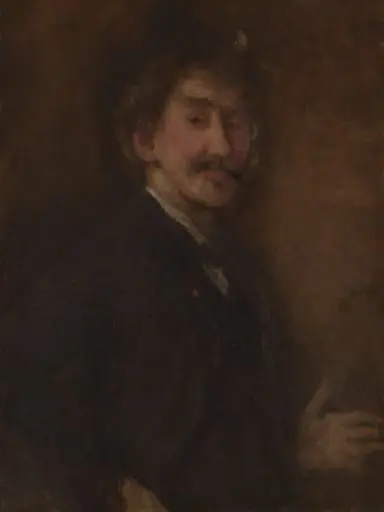 Gold and Brown: Self-Portrait
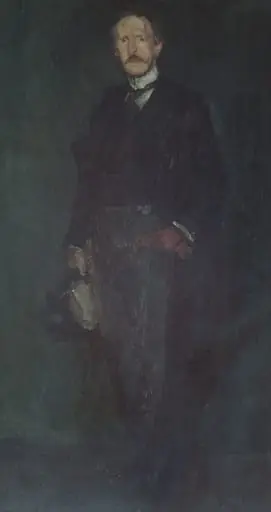 Edward Guthrie Kennedy
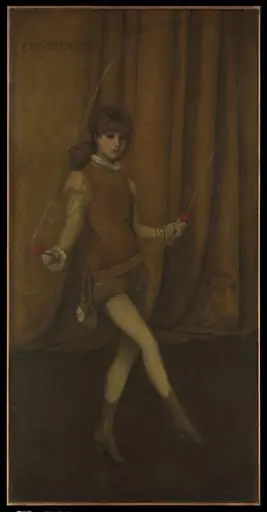 Harmony in Yellow and Gold: The Gold Girl—Connie Gilchrist
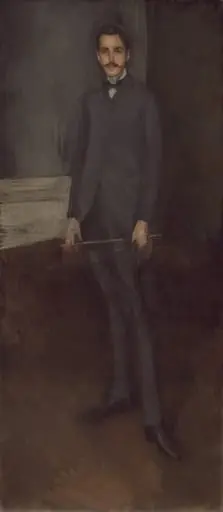 George W. Vanderbilt
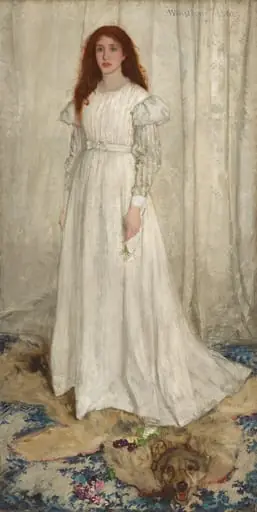 Symphony in White, No. 1: The White Girl
 Henry Irving as Philip II of Spain