Artwork
Thames Warehouse
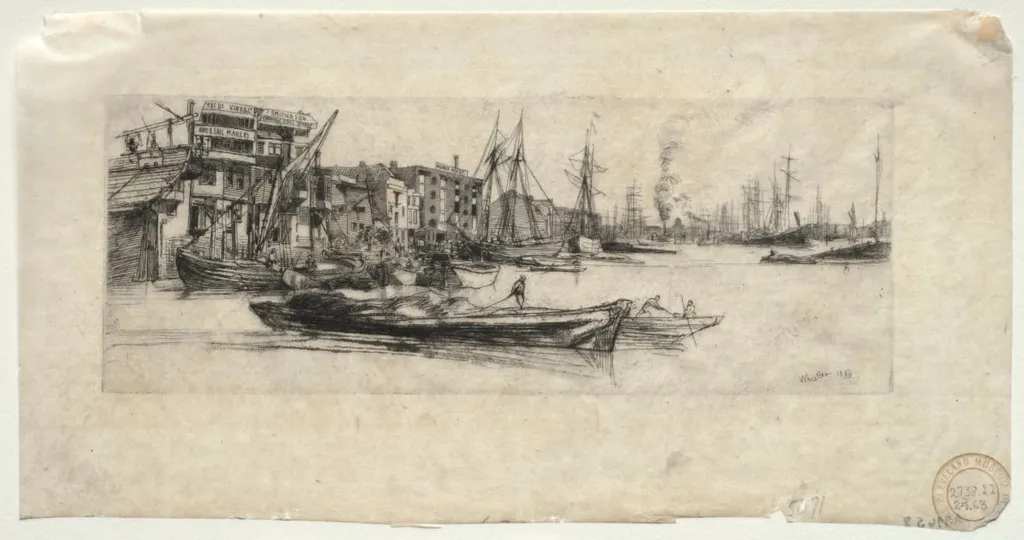
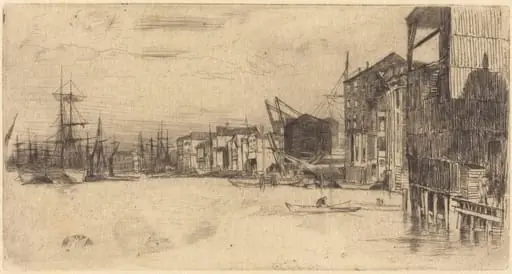
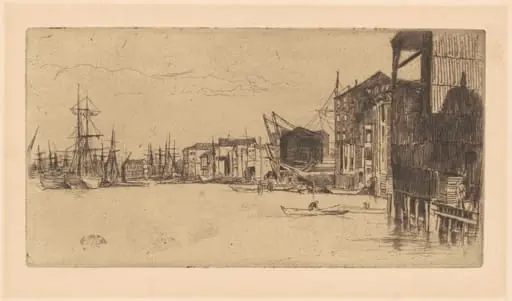
Thames Warehouse is a print by the Impressionist artist James McNeill Whistler. It dates from 1859 and is held in the collection of the Cleveland Museum of Art.
About this work
Overview
James McNeill Whistler’s 1859 print titled Thames Warehouse depicts a quiet industrial scene along the River Thames. The composition centers on a large vessel occupied by a solitary figure, likely engaged in loading or unloading. A modest crowd of figures populates the water and shore, while the background is dominated by tall, window‑lined warehouses under a muted, overcast sky.
Subject & Meaning
The work records everyday commercial activity in mid‑nineteenth‑century London, emphasizing the routine labor of dockworkers and the architectural rhythm of the riverside warehouses. By presenting ordinary laborers within a structured urban environment, the image reflects a sober observation of the city’s economic engine rather than romanticizing the setting.
Technique & Style
Executed as a print, Whistler employs a restrained palette of grays, browns, and soft blues, reinforcing the somber atmosphere. The handling of line and tone conveys the texture of water and stone while maintaining a clear, unembellished realism. The subdued coloration and focus on commonplace subject matter align the piece with the Realist movement’s emphasis on truthful representation.
History & Provenance
Created in 1859, Thames Warehouse entered the collection of the Cleveland Museum of Art, where it remains on view. The museum’s acquisition underscores the institution’s commitment to preserving works that document urban life and industrial development in 19th‑century Britain.
Artist & collection

Artist
James Abbott McNeill Whistler was an American painter in oils and watercolor, and printmaker, active during the American Gilded Age and based primarily in the United Kingdom.

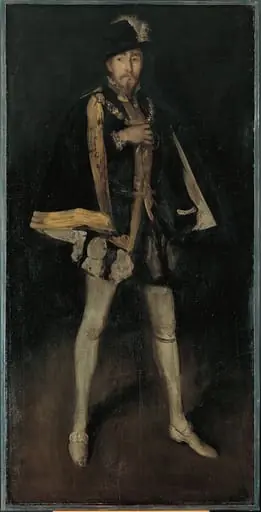 Arrangement in Black, No. 3: Sir Henry Irving as Philip II of Spain
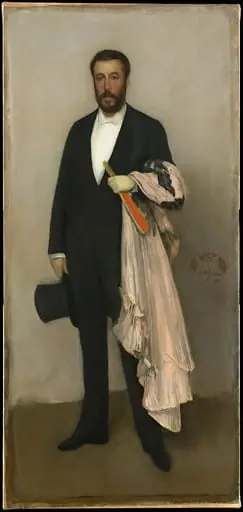 Arrangement in Flesh Colour and Black: Portrait of Theodore Duret
 Gold and Brown: Self-Portrait
 Edward Guthrie Kennedy
 Harmony in Yellow and Gold: The Gold Girl—Connie Gilchrist
 George W. Vanderbilt
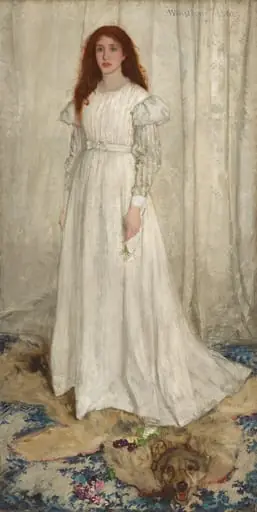 Symphony in White, No. 1: The White Girl
 Henry Irving as Philip II of Spain