Artwork
Nocturne in Black and Gold – The Falling Rocket
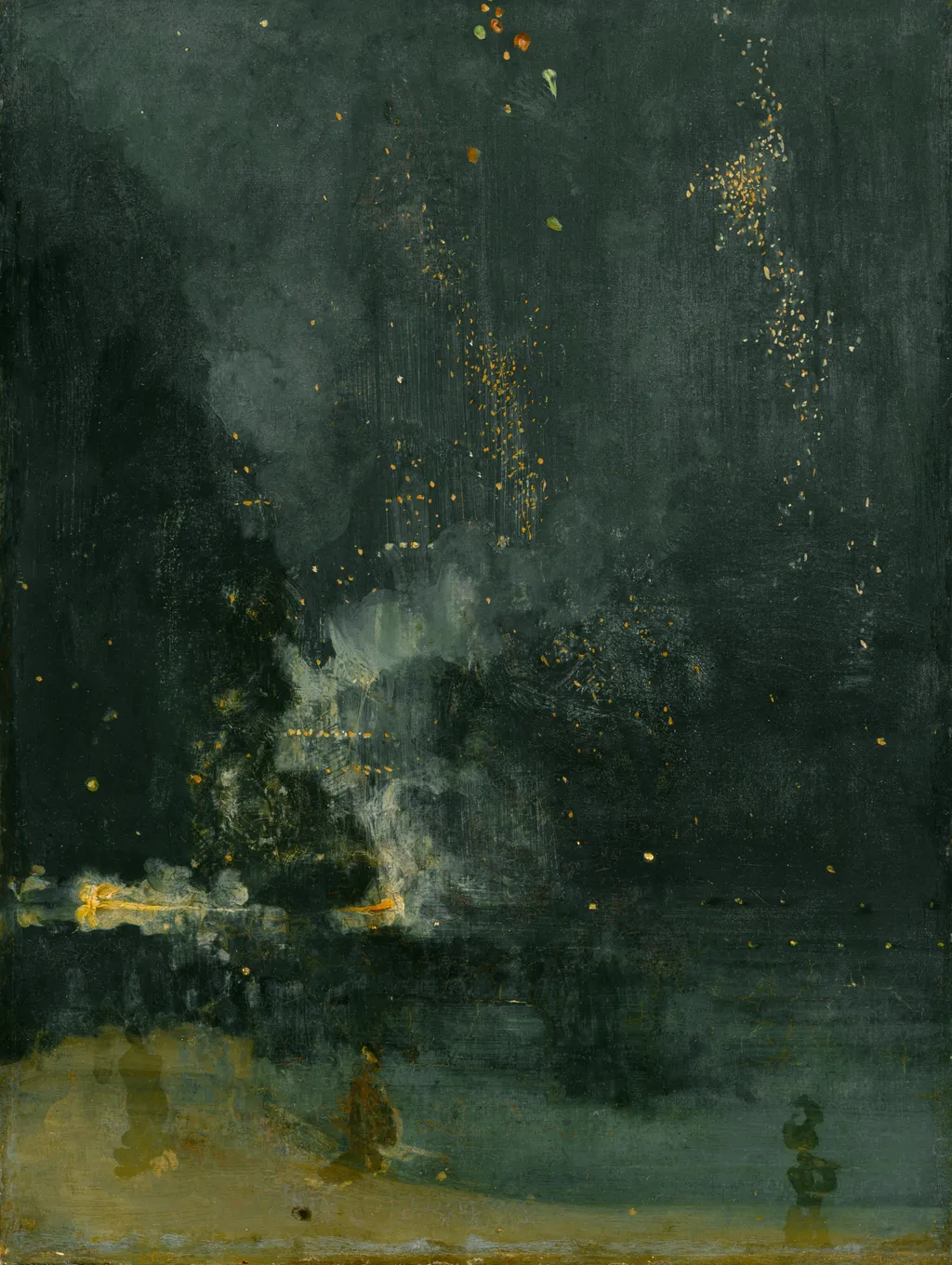
Nocturne in Black and Gold – The Falling Rocket is an oil painting by the American Impressionist artist James McNeill Whistler. It dates from 1875 and is held in the collection of the Detroit Institute of Arts.
About this work
The painting is associated with the concept of art for art's sake, which was formulated by Pierre Jules Théophile Gautier and Charles Baudelaire.
Nocturne in Black and Gold – The Falling Rocket is a painting by James McNeill Whistler. It was created in 1875 using oil paint.
The painting is associated with the concept of art for art's sake, which was formulated by Pierre Jules Théophile Gautier and Charles Baudelaire. This concept emphasizes the importance of art as an end in itself.
You can learn more about the artist who created this painting, artist: James McNeill Whistler (American, 1834–1903).
Overview
James McNeill Whistler’s oil painting Nocturne in Black and Gold – The Falling Rocket, executed around 1875, is part of the Detroit Institute of Arts collection. The work belongs to Whistler’s series of nocturnes, portraying a night scene illuminated by fireworks over a mist‑shrouded London park. Its muted palette of blacks and golds emphasizes atmosphere over narrative detail.
Subject & Meaning
The canvas captures a fleeting fireworks display above the fog‑laden expanse of Cremorne Gardens, a popular Victorian leisure venue. By focusing on light, color, and the evanescent quality of the burst, Whistler foregrounds visual sensation rather than a literal story, aligning the image with the aesthetic principle that art need not serve moral or didactic purposes.
Technique & Style
Whistler employed thin layers of oil to achieve a luminous, almost translucent surface, allowing the gold tones of the rockets to glow against a deep, velvety black sky. The composition is deliberately simplified, with broad brushstrokes suggesting forms rather than detailing them, exemplifying the tonal harmony and restrained realism characteristic of his nocturne series.
History & Provenance
First exhibited at London’s Grosvenor Gallery in 1877, the painting was one of two works inspired by Cremorne Gardens, the other being Nocturne in Black and Gold – The Firewheel. It later entered the Detroit Institute of Arts, where it remains. The work gained notoriety through Whistler’s 1877 libel suit against critic John Ruskin, which centered on the painting’s perceived lack of conventional finish.
Legacy
The Falling Rocket has been cited as a high point of Whistler’s middle period and a visual articulation of the “art for art’s sake” doctrine championed by Théophile Gautier and Charles Baudelaire. Its inclusion in the 1980 BBC Two series “100 Great Paintings” reflects its continued relevance in discussions of aesthetic theory and the evolution of modernist painting.
Own this work as a print
Artist & collection

Artist
James Abbott McNeill Whistler was an American painter in oils and watercolor, and printmaker, active during the American Gilded Age and based primarily in the United Kingdom.

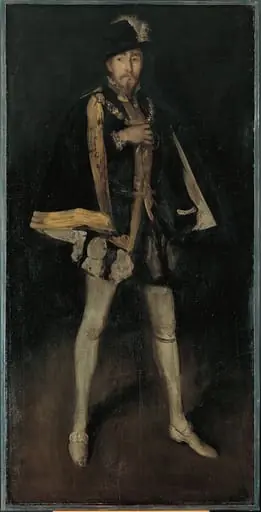 Arrangement in Black, No. 3: Sir Henry Irving as Philip II of Spain
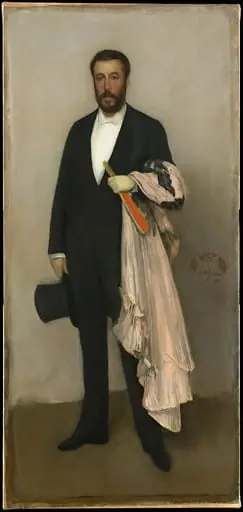 Arrangement in Flesh Colour and Black: Portrait of Theodore Duret
 Gold and Brown: Self-Portrait
 Edward Guthrie Kennedy
 Harmony in Yellow and Gold: The Gold Girl—Connie Gilchrist
 George W. Vanderbilt
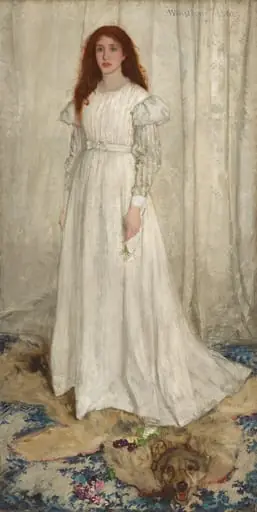 Symphony in White, No. 1: The White Girl
 Henry Irving as Philip II of Spain