Artwork
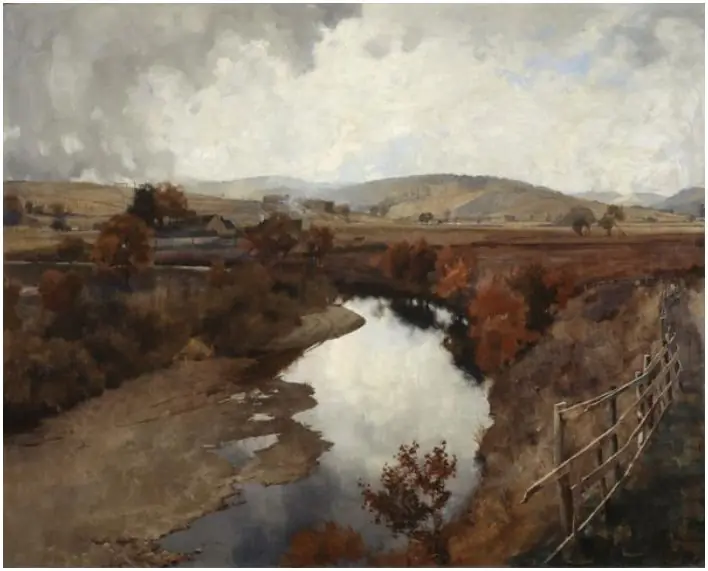
Autumn in Glencairn, Moniaive
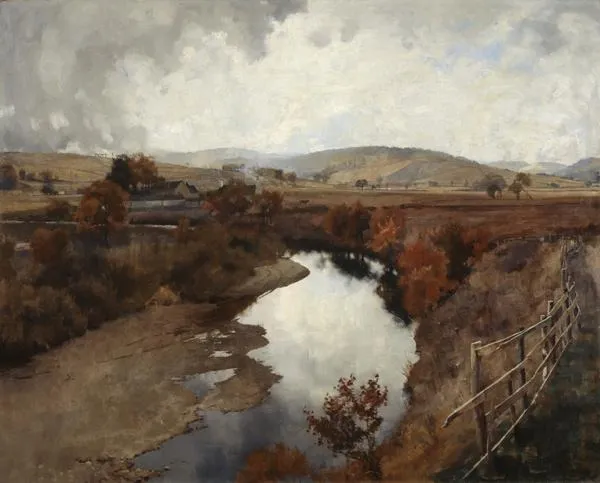
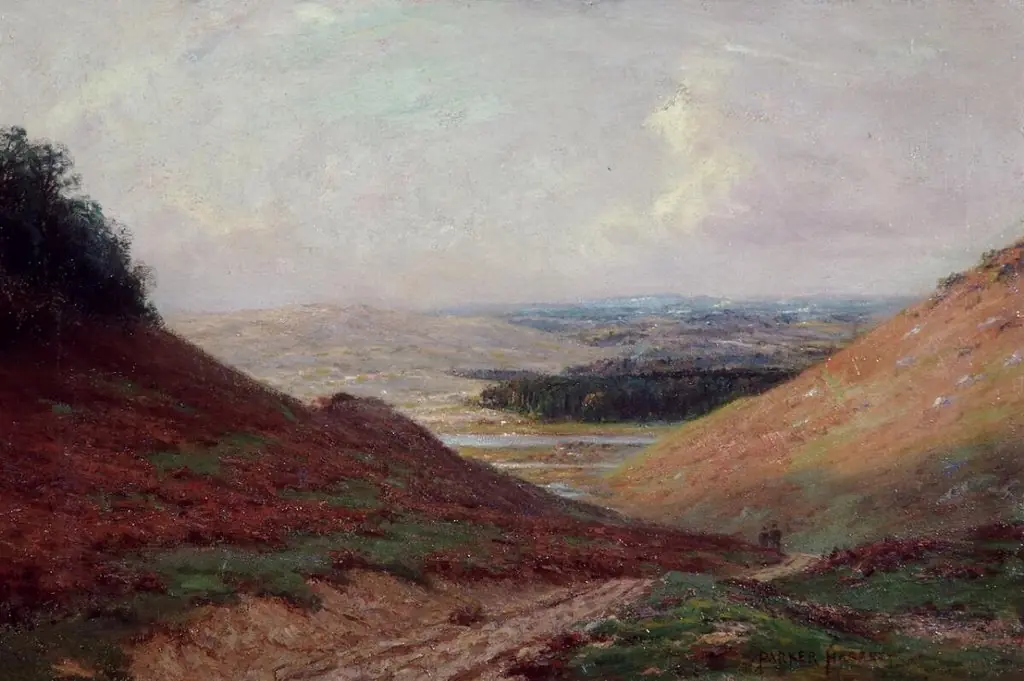
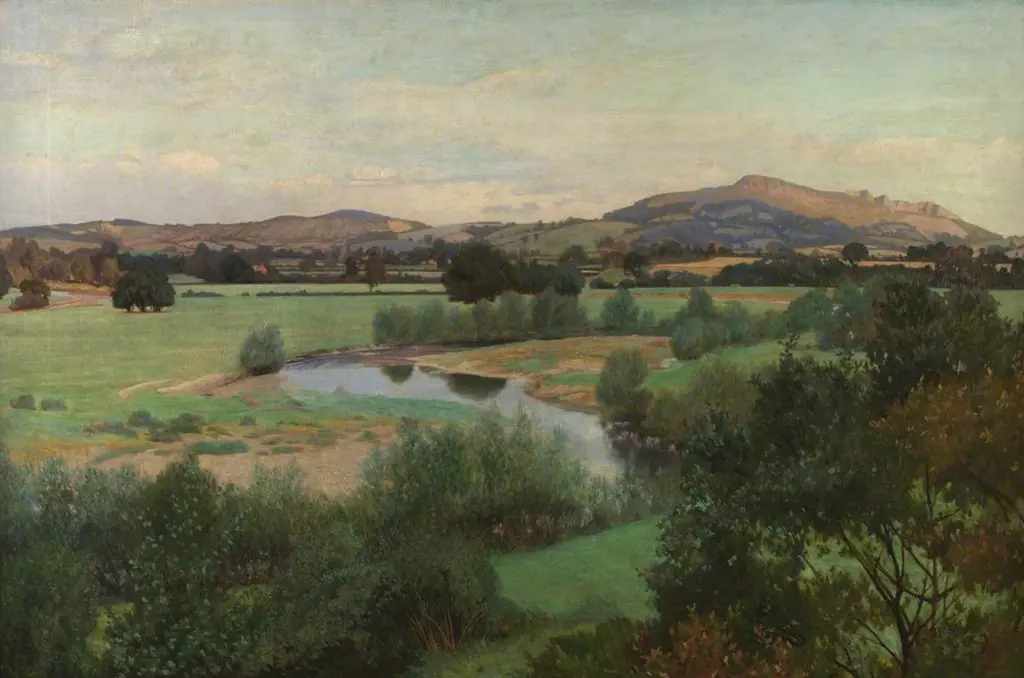
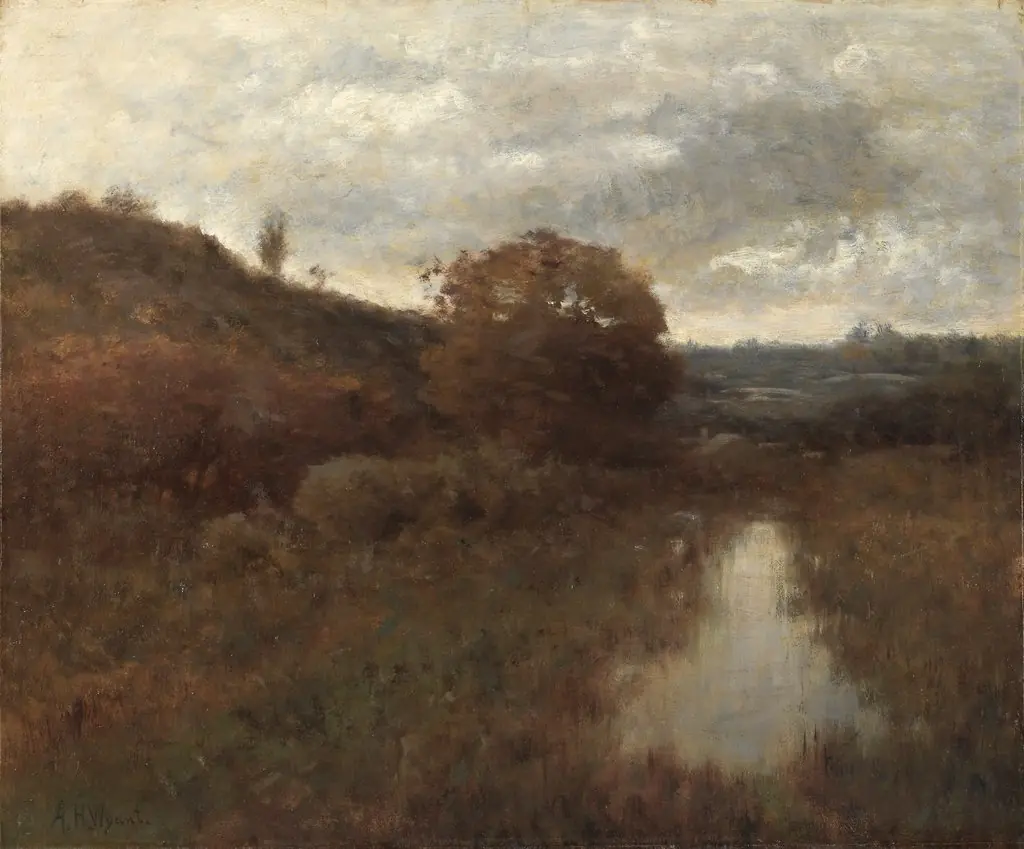
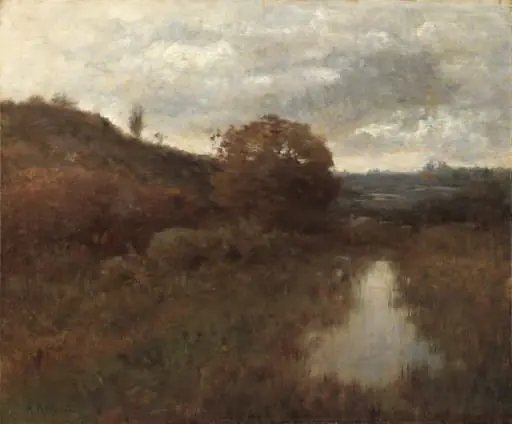
Autumn in Glencairn, Moniaive is an oil painting by the Impressionist artist James Paterson. It dates from 1894 and is held in the collection of the National Galleries Scotland.
About this work
Overview
Its composition centers on a meandering river, flanked by gently sloping hills and wooded banks, capturing the subdued hues and stillness of early autumn.
Painted in 1894 by James Paterson, Autumn in Glencairn, Moniaive is an oil-on-canvas landscape depicting a quiet rural scene in Dumfries and Galloway. The work is part of the Scottish National Gallery’s collection and exemplifies late 19th-century Scottish naturalism. Its composition centers on a meandering river, flanked by gently sloping hills and wooded banks, capturing the subdued hues and stillness of early autumn.
Subject & Meaning
The painting presents an unembellished view of the Scottish countryside, emphasizing quietude over drama. The river, acting as a visual conduit, draws the eye through the landscape, while the wooden fence suggests human presence without intrusion. There is no narrative or symbolic element—instead, the work conveys a contemplative reverence for seasonal change and the unremarkable beauty of everyday rural environments.
Technique & Style
Paterson employs soft, blended brushwork to render foliage and distant hills, evoking a hazy, wind-softened atmosphere. Muted earth tones—ochres, olives, and browns—dominate the palette, reinforcing the season’s quietude. Light is diffused and even, minimizing harsh shadows to enhance the scene’s serenity. Foreground textures, like the fence and riverbank, are rendered with subtle detail to anchor the composition without disrupting its calm.
History & Provenance
Completed in 1894, the painting was acquired by the Scottish National Gallery shortly after its creation. Paterson, a member of the Glasgow School, frequently painted Scottish landscapes during this period, often focusing on lesser-known rural locales. The work remained in the gallery’s collection without significant public exhibition until the mid-20th century, when it was included in surveys of Scottish landscape painting.
Context
Created during a time when Scottish artists were increasingly turning to native scenery for inspiration, the painting reflects a broader movement away from romanticized vistas toward intimate, unidealized views of the land. Paterson’s approach aligns with contemporaries like William Quiller Orchardson and George Henry, who valued observation over theatricality, capturing the subtle rhythms of nature in everyday settings.
Legacy
Autumn in Glencairn, Moniaive endures as a quiet example of Scottish naturalism, appreciated for its restraint and fidelity to observed light and texture. While not widely reproduced, it remains a representative work in the Scottish National Gallery’s holdings, illustrating the shift toward intimate landscape painting in late Victorian Scotland. Its influence lies in its quiet persistence rather than public acclaim.
Artist & collection
Artist
James Paterson painted landscapes around Scotland. His Autumn in Glencairn, Moniaive shows golden hills and quiet lanes in 1887 oil paint. Edinburgh from Craigleith, finished in 1899, captures the city rising above…