Artwork
Pandy Mill, North Wales
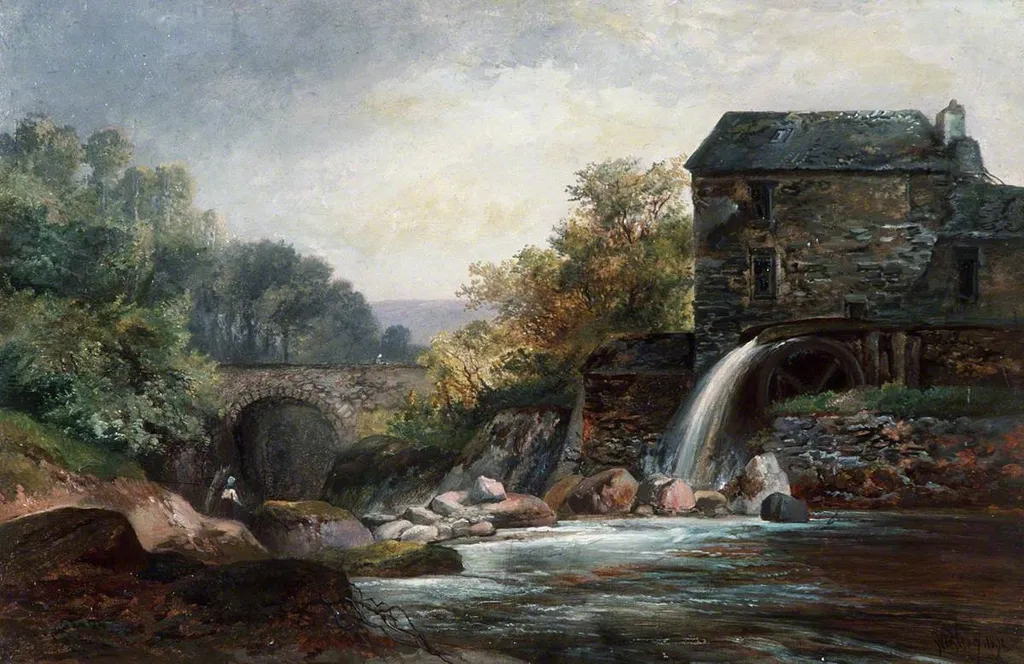
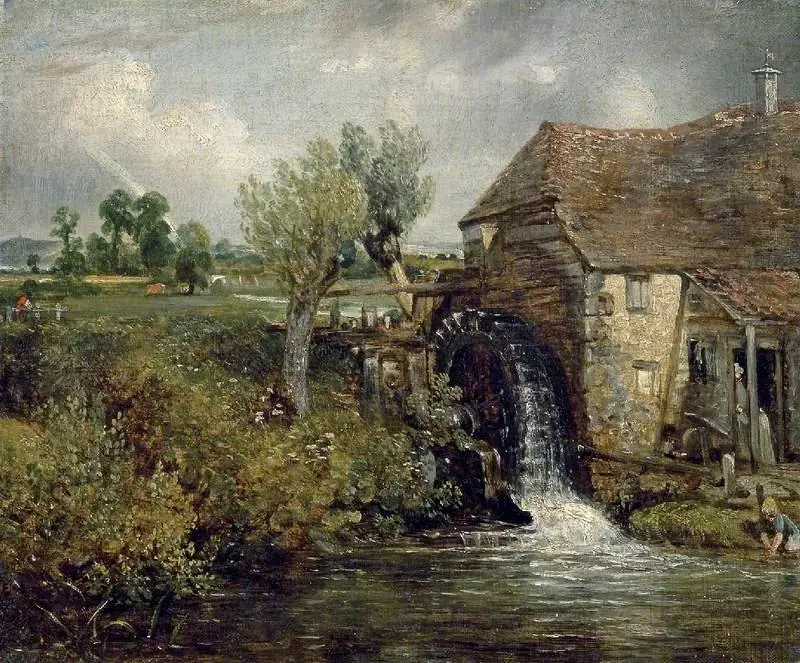
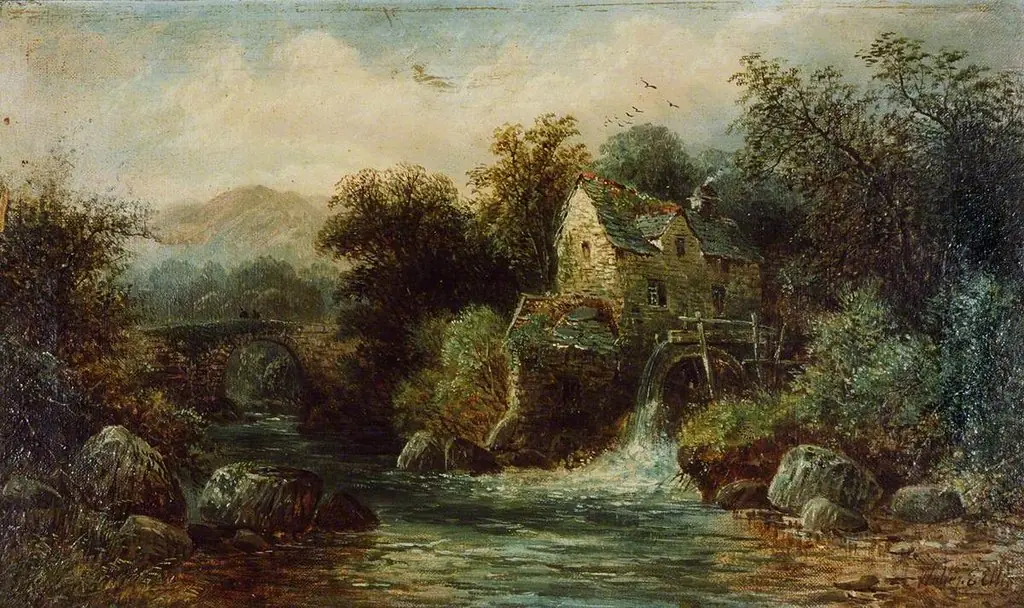
Pandy Mill, North Wales is an oil painting by the Impressionist artist James Vivien De Fleury. It dates from 1896 and is held in the collection of the National Library of Wales.
About this work
Overview
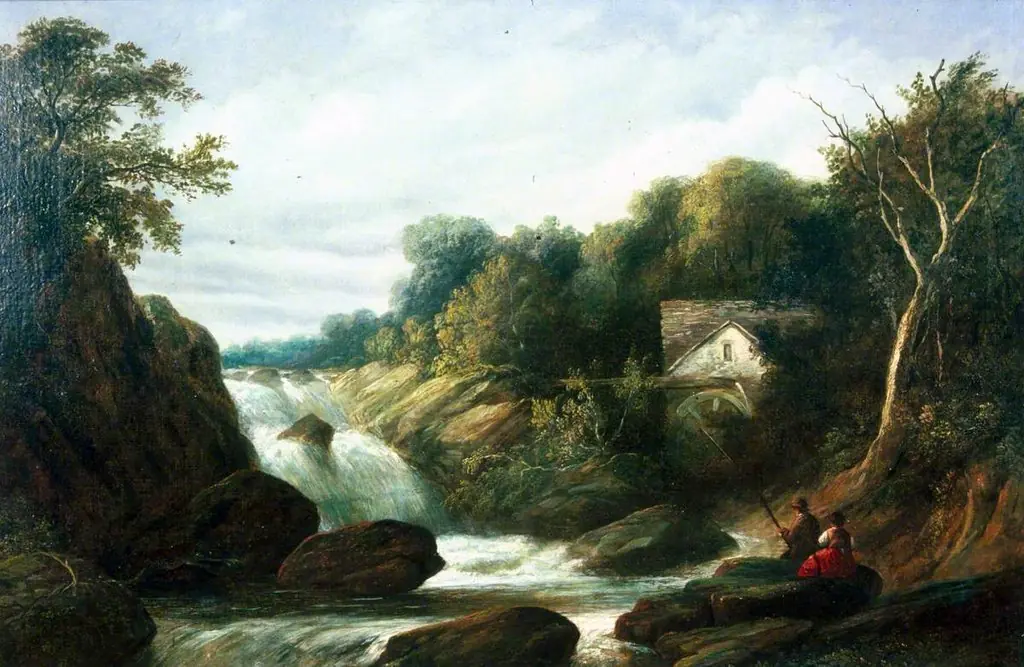
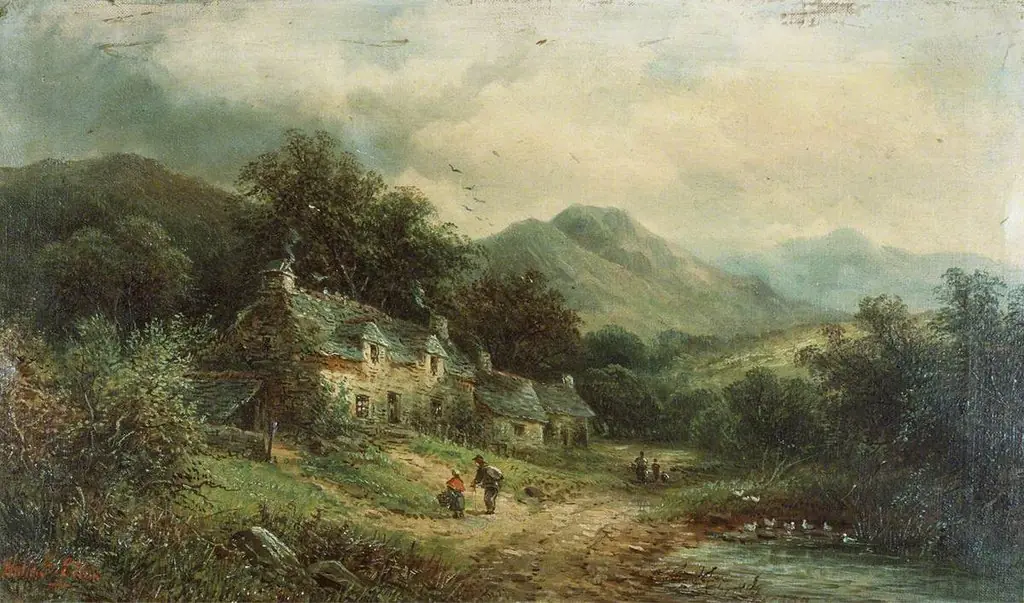
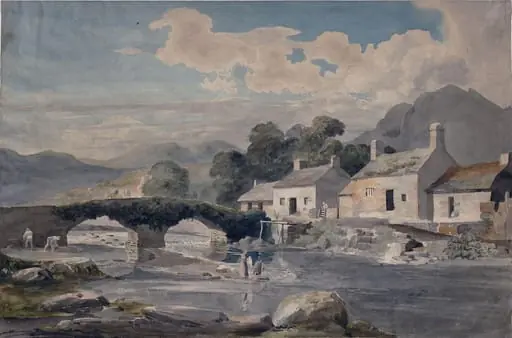
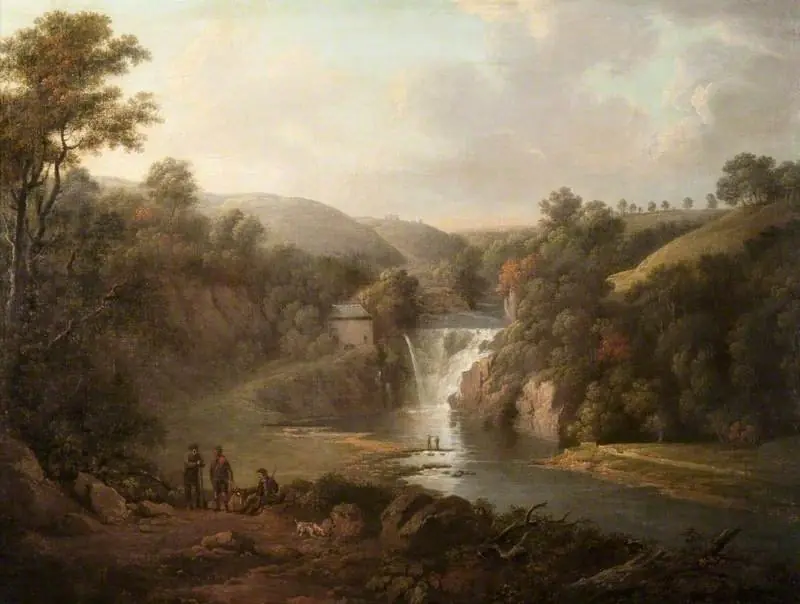
James Vivien De Fleury’s 1896 oil painting captures a tranquil riverside scene in North Wales. The composition centers on a modest stone bridge spanning a swift river, beneath which a waterwheel turns beside a weathered mill building. Surrounding trees and gentle hills frame the setting, while a pale sky softens the overall atmosphere.
Subject & Meaning
The work portrays a functional watermill integrated into a natural landscape, emphasizing the harmony between rural industry and its environment. By focusing on the modest architecture and the flowing water, the painting reflects the everyday life of a Welsh community reliant on water power, suggesting a quiet resilience of place.
Technique & Style
De Fleury employs a muted palette, contrasting the darker tones of the river and rocks with the lighter, hazy sky. Careful rendering of light on wet surfaces gives the water a glossy, realistic quality, while the stone bridge and mill are depicted with solid, textured brushwork that conveys age and sturdiness.
History & Provenance
Created in 1896, the painting entered the collection of the National Library of Wales, where it remains accessible for study. Its acquisition reflects the institution’s interest in documenting Welsh landscapes and industrial heritage through contemporary art of the period.
Context
During the late nineteenth century, watermills were common fixtures in the Welsh countryside, serving as essential sites for grain grinding and other local industries. De Fleury’s depiction aligns with a broader artistic interest in rural industrial scenes, illustrating the transition of traditional practices amid emerging modernity.
Artist & collection