Artwork
Schapen op de heide
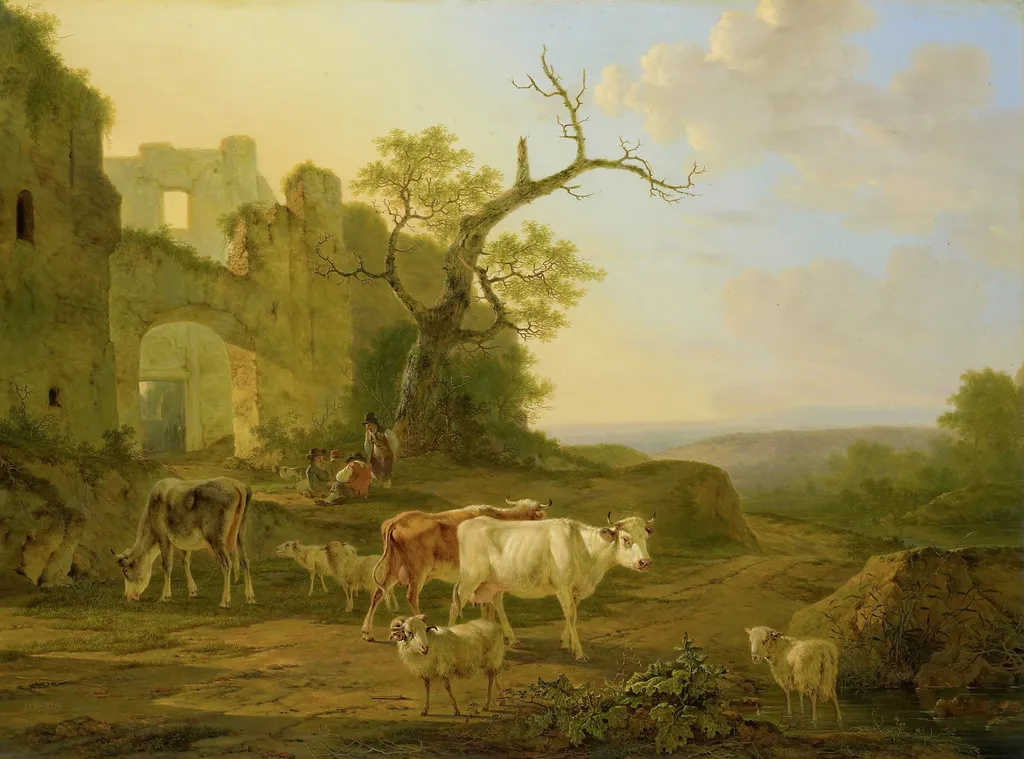
Schapen op de heide is an oil painting by Jan Bedijs Tom. It dates from 1866 and is held in the collection of the Rijksmuseum.
About this work
Overview
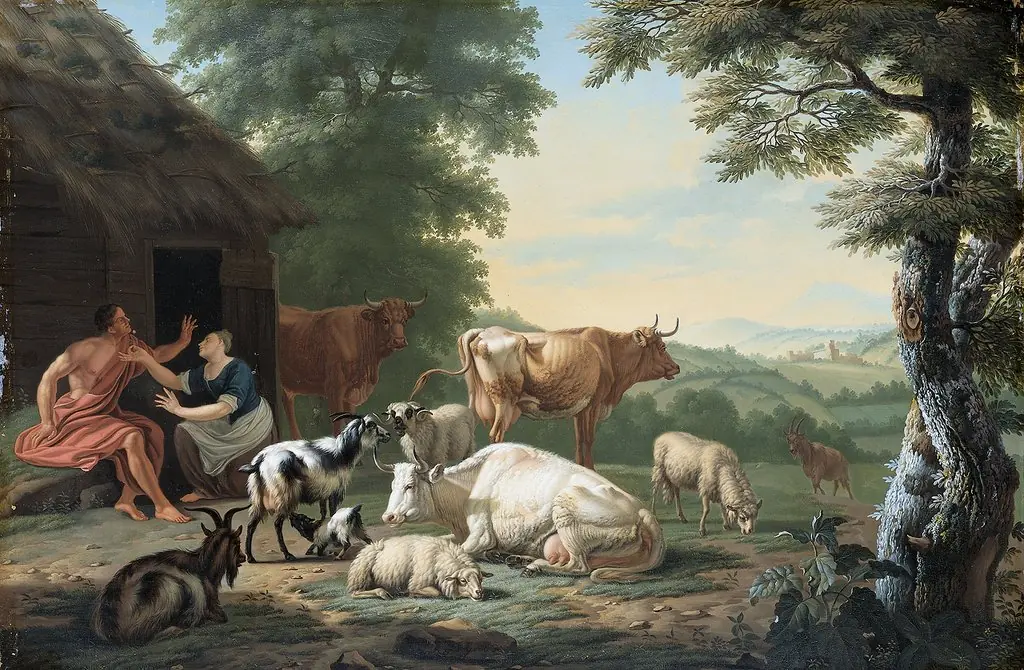
Jan Bedijs Tom’s 1866 oil painting, Schapen op de heide, presents a tranquil rural tableau. The composition centers on a solitary tree beside the remnants of a stone ruin, while livestock—sheep and a cow—dot the surrounding meadow. A few figures are perched on a grassy ledge in the distance, and the sky is rendered in soft, hazy tones that merge with distant hills.
Subject & Meaning
The work juxtaposes cultivated farmland with the decay of an ancient structure, suggesting a dialogue between human activity and the passage of time. The grazing animals embody pastoral serenity, whereas the crumbling arches introduce a subtle sense of history and mystery, inviting viewers to contemplate the coexistence of nature’s continuity and architectural ruin.
Technique & Style
Executed in oil on canvas, Tom employs a delicate handling of light that bathes the scene in warm, natural illumination. The brushwork captures the texture of grass and the moss-covered stone, while the atmospheric perspective softens distant elements, creating depth and a gentle, enveloping mood characteristic of mid‑nineteenth‑century Dutch landscape painting.
History & Provenance
Created in 1866, Schapen op de heide entered the collection of the Rijksmuseum, where it remains on display. The museum’s acquisition reflects its interest in documenting Dutch rural life and the work of lesser‑known landscape artists of the period.
Context
During the mid‑1800s, Dutch painters often turned to the countryside to record the nation’s agrarian heritage. Tom’s inclusion of both livestock and a dilapidated ruin aligns with contemporary interests in realism and the romantic allure of historic sites, situating the piece within broader trends of Dutch naturalist landscape art.
Own this work as a print
Artist & collection

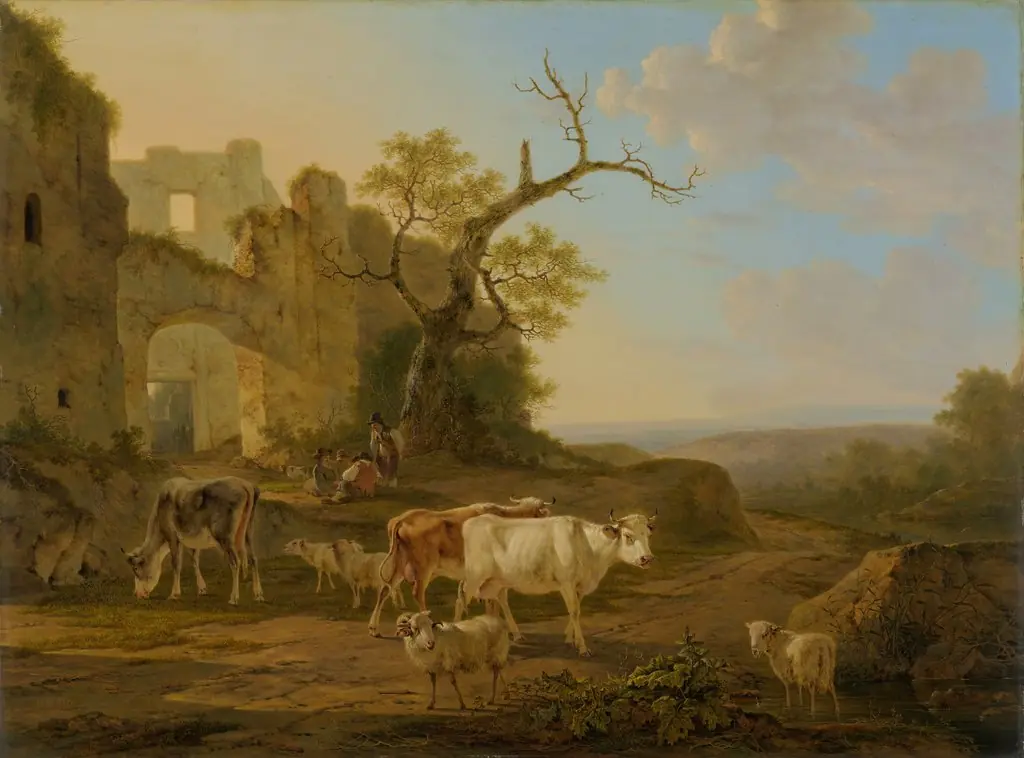 Landscape with Cows near a Ruin
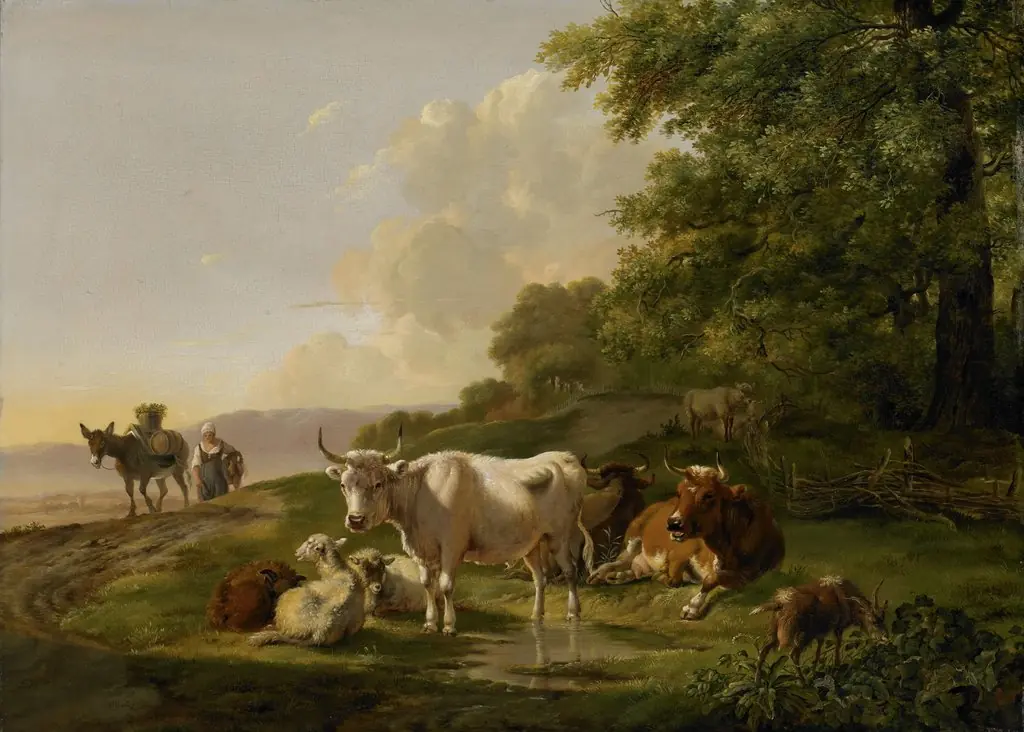 Landscape with Cattle
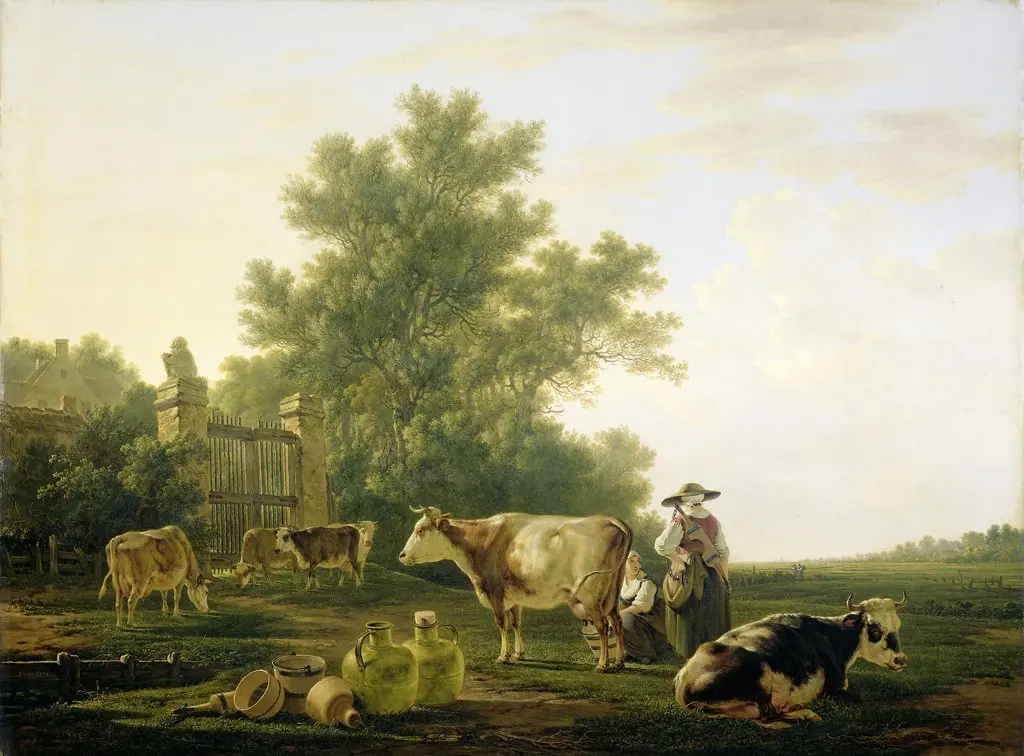 Milking Time
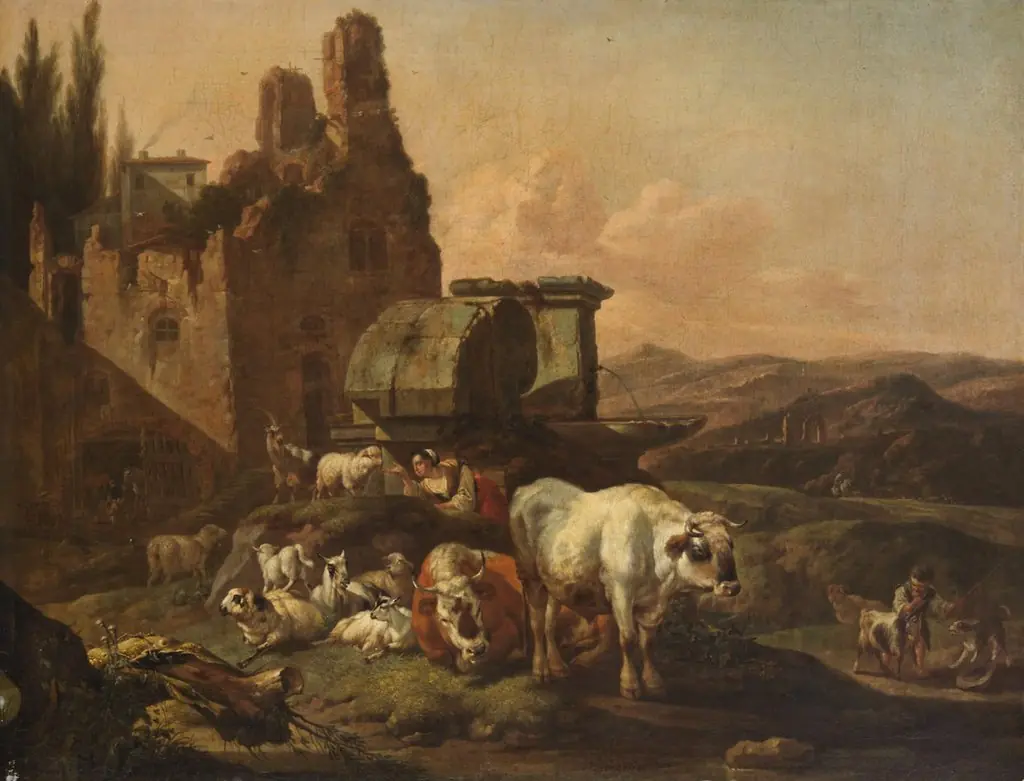 Landschaft mit Tieren an der Tränke
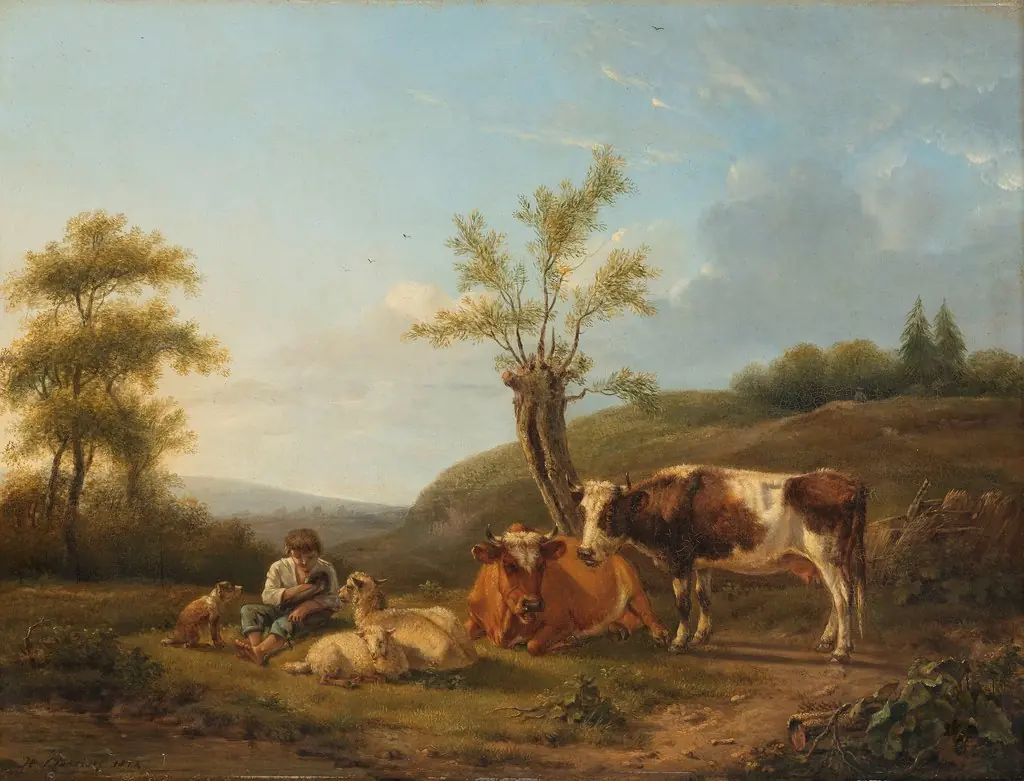 Landscape with Cattle near Darthuizen
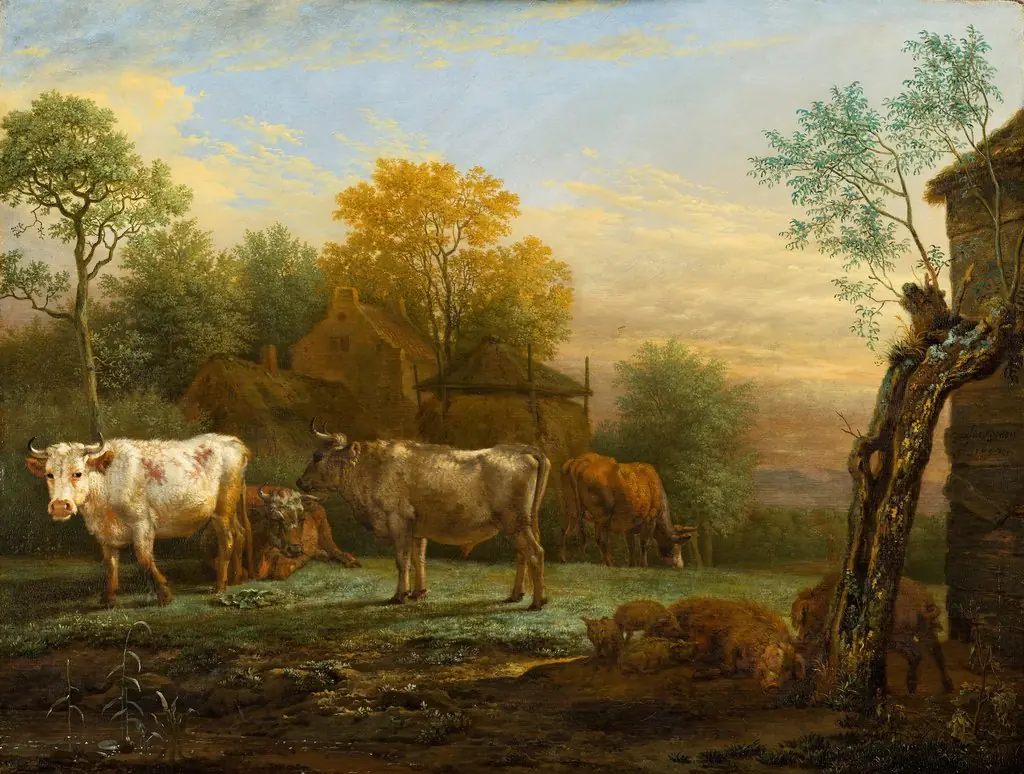 Cattle in a Meadow
 Landscape with a Peasant and His Flock
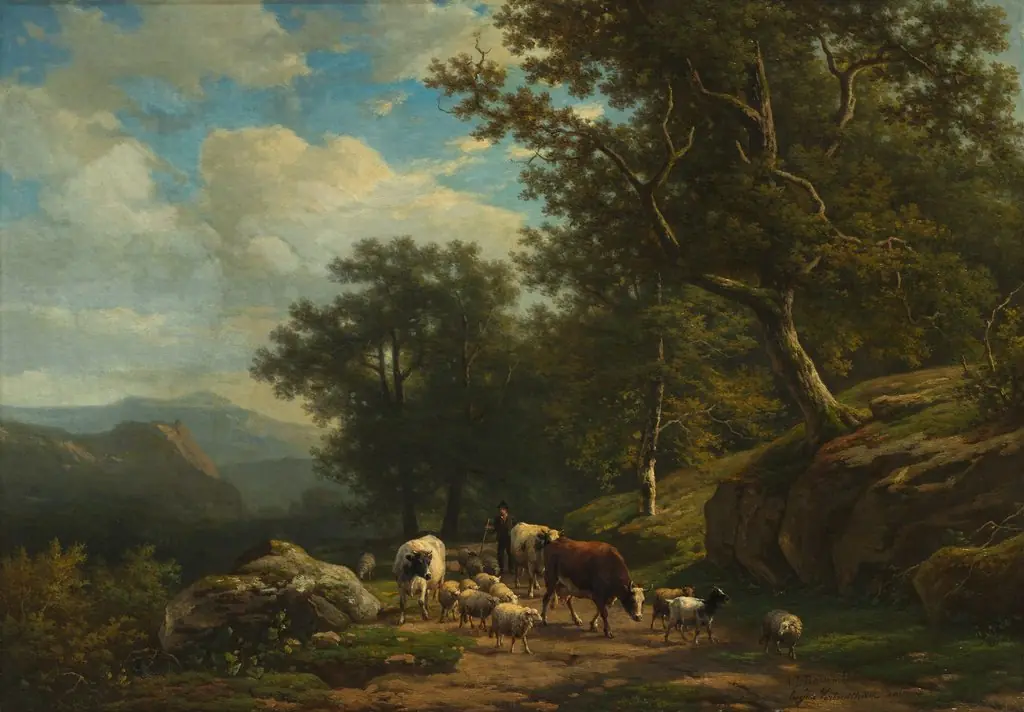 Landscape with a Peasant and His Flock
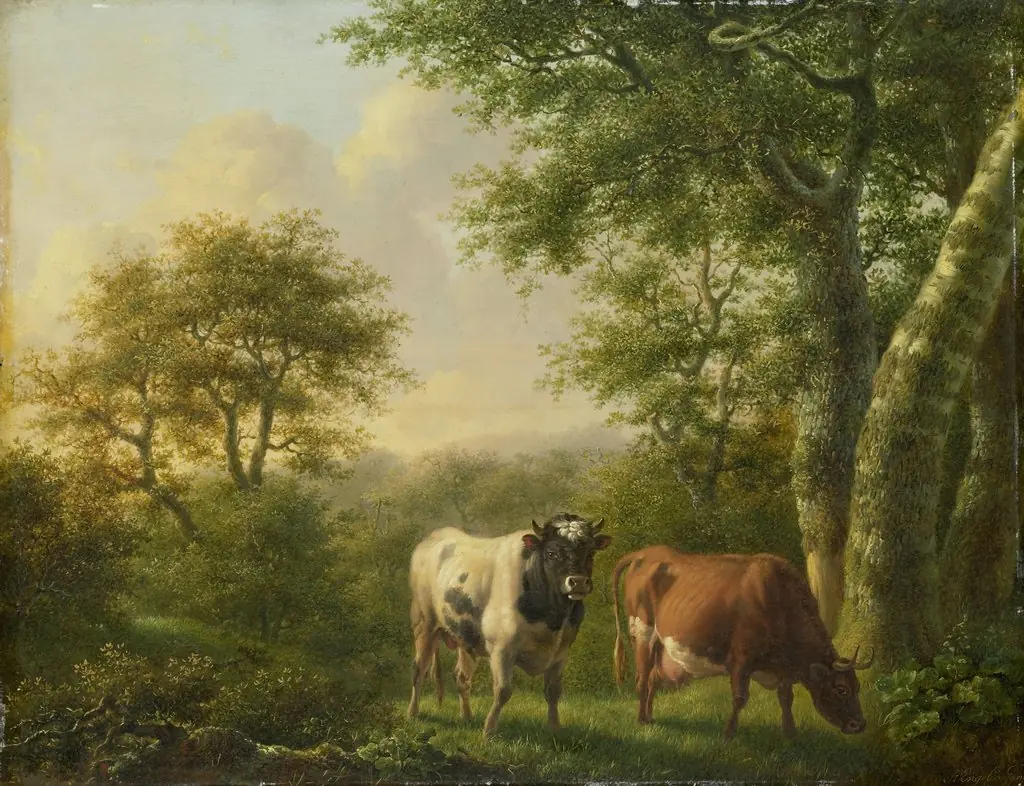 Landscape with Cows
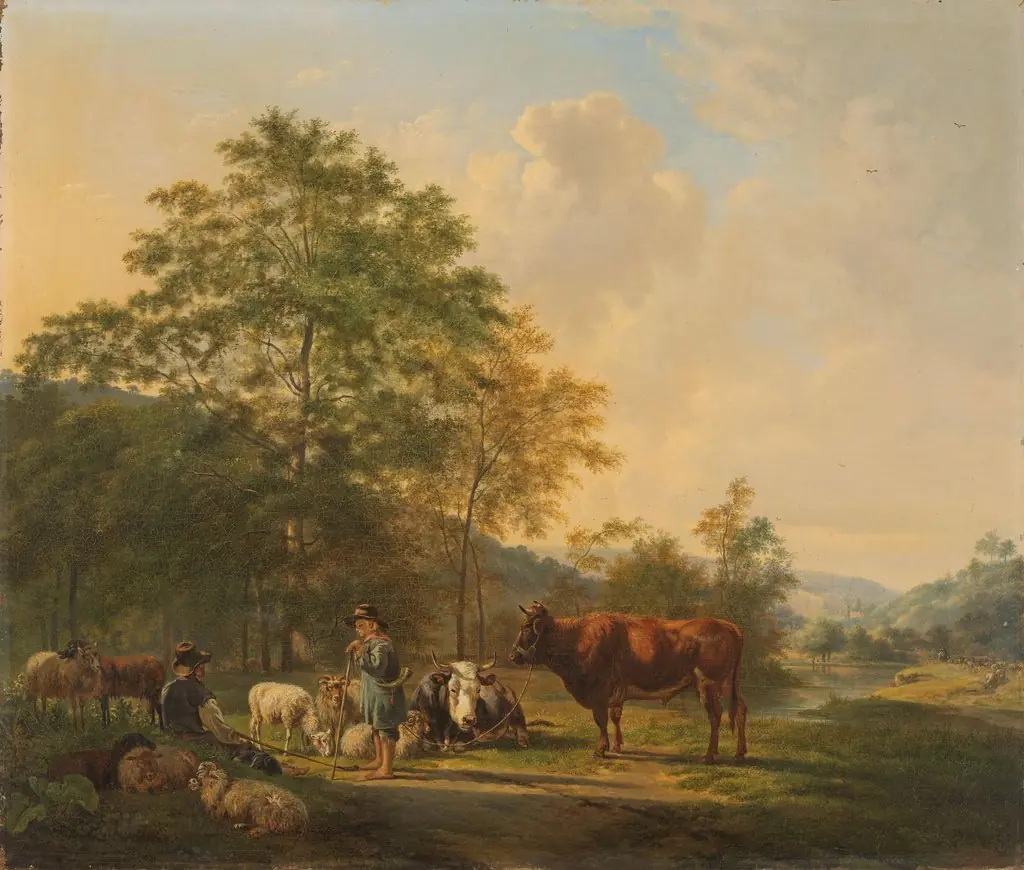 Hilly Landscape with Shepherd, Drover and Cattle
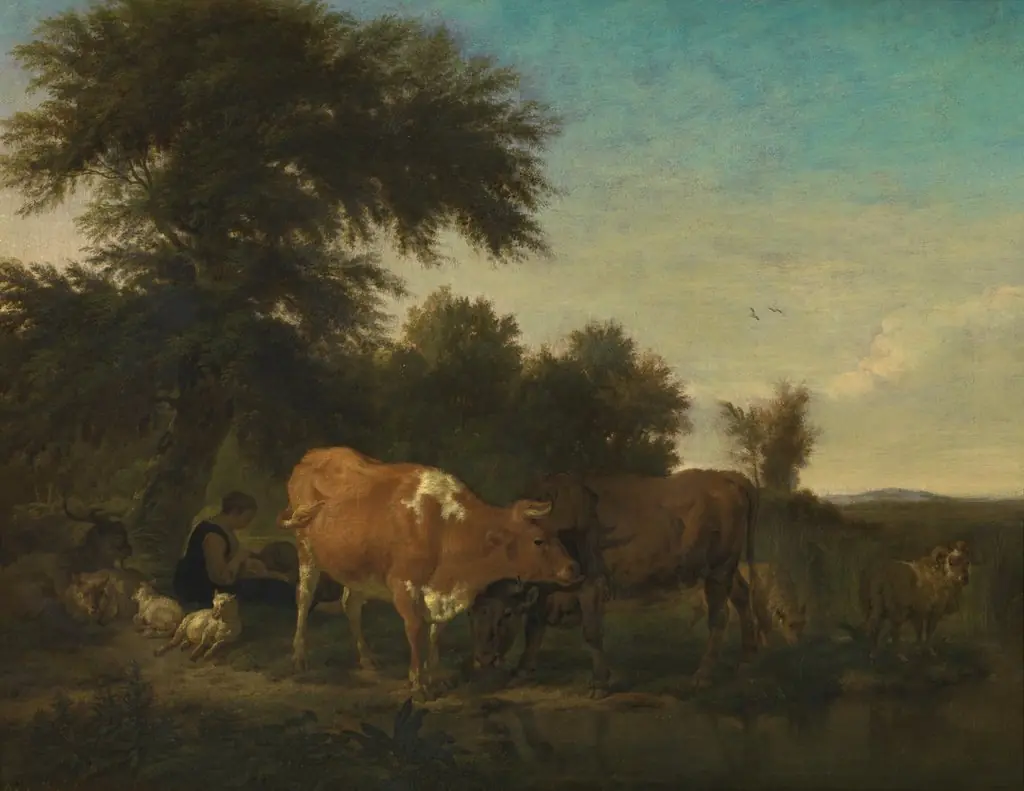 Landscape
 Arcadian Landscape with Shepherds and Animals