Artwork
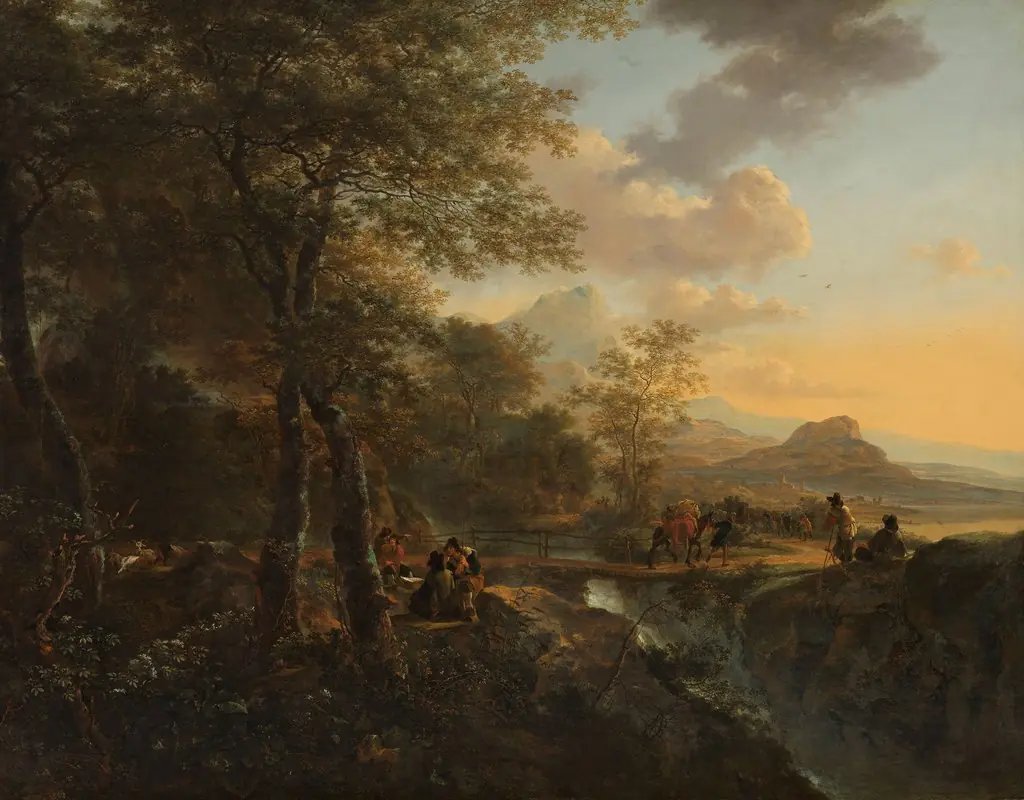
Italian Landscape with Ferry
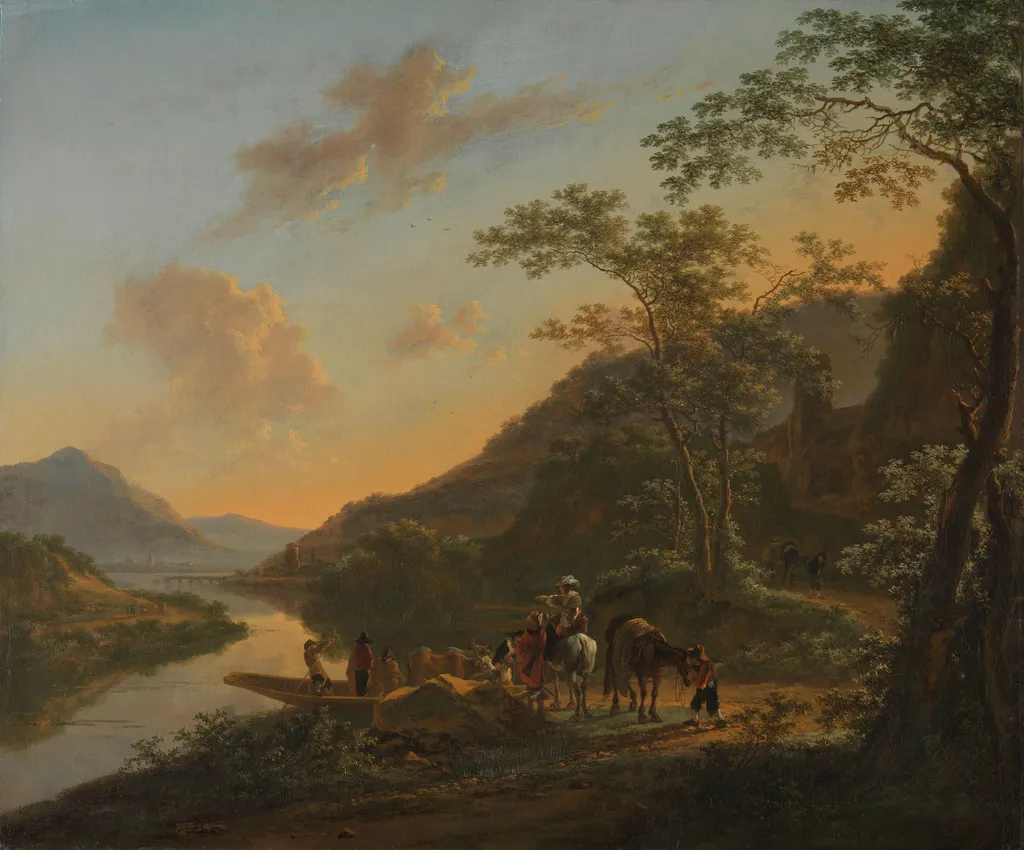
Italian Landscape with Ferry is an oil painting by the Dutch Golden Age artist Jan Both. It dates from 1640 and is held in the collection of the Rijksmuseum.
About this work
Overview
Jan Both's *Italian Landscape with Ferry*, an oil painting from 1640, captures a tranquil scene within the Italian countryside. The work features a ferry traversing a river, likely the Tiber, with a mule visible near the crossing. This piece exemplifies the artist's focus on rendering atmospheric natural settings and is currently part of the collection at the Rijksmuseum.
Subject & Meaning
The painting presents a serene vista of the Italian landscape, with a river, possibly the Tiber, flowing through the foreground. A ferry, laden with passengers and a mule, makes its way across the water. The composition extends into the distance with rolling hills, scattered trees, and a bridge spanning the river, all contributing to a sense of expansive depth within the tranquil setting.
Technique & Style
The artist's manipulation of light and shadow, particularly the warm, golden glow of a setting sun, imbues the scene with a serene yet dynamic presence.
Both employed oil paint to create a distinctive atmospheric quality in this landscape. The artist's manipulation of light and shadow, particularly the warm, golden glow of a setting sun, imbues the scene with a serene yet dynamic presence. Bold and expressive brushstrokes contribute to a sense of energy, while the strategic use of chiaroscuro enhances the painting's depth and volume, drawing the viewer into the expansive composition.
Own this work as a print
Artist & collection

Artist
Jan Dirksz Both was a Dutch painter, draughtsman, and etcher, who made an important contribution to the development of Dutch Italianate landscape painting.