Artwork
A Dutch Family Group (Portrait of a Man, Woman and Two Girls)
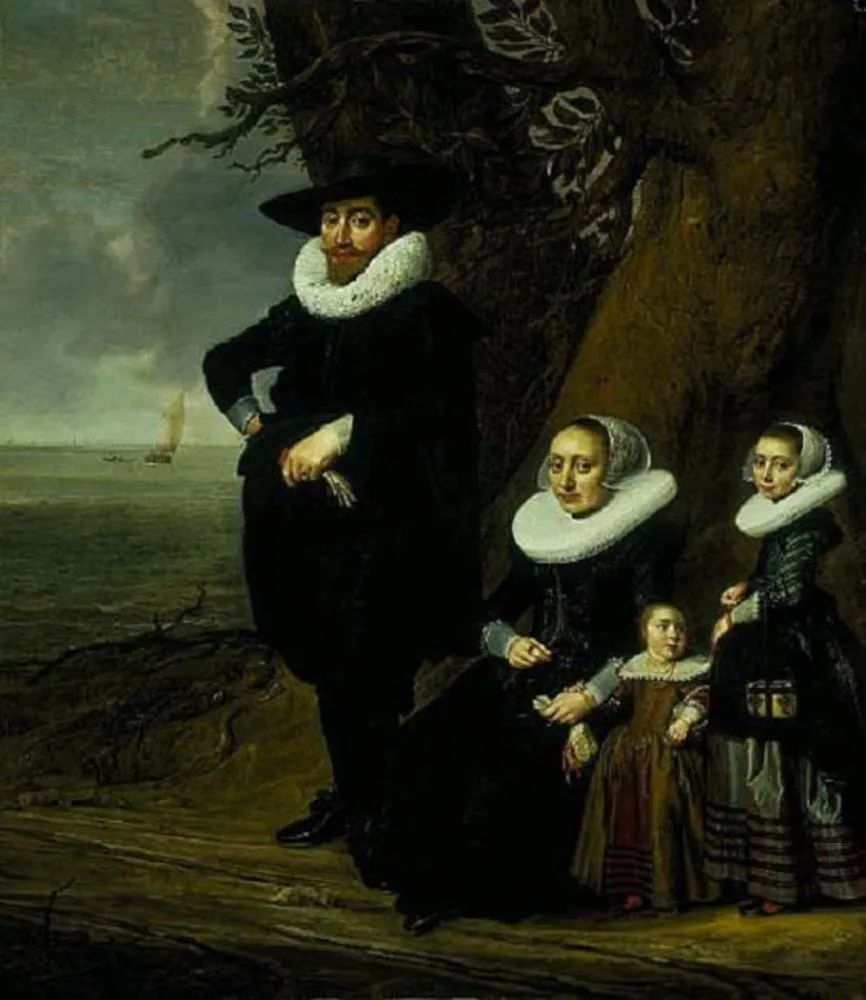
A Dutch Family Group (Portrait of a Man, Woman and Two Girls) is an oil painting by the Dutch Golden Age artist Jan Daemen Cool. It dates from 1633 and is held in the collection of the National Galleries Scotland.
About this work
Overview
Painted in 1633 by Jan Daemen Cool, this oil portrait depicts a Dutch family of four standing together in a composed, formal arrangement. The work is part of the collection at the Scottish National Gallery and exemplifies mid-17th-century Dutch portraiture, where familial status and quiet dignity were central themes. The composition is restrained, avoiding theatricality in favor of calm presence.
Subject & Meaning
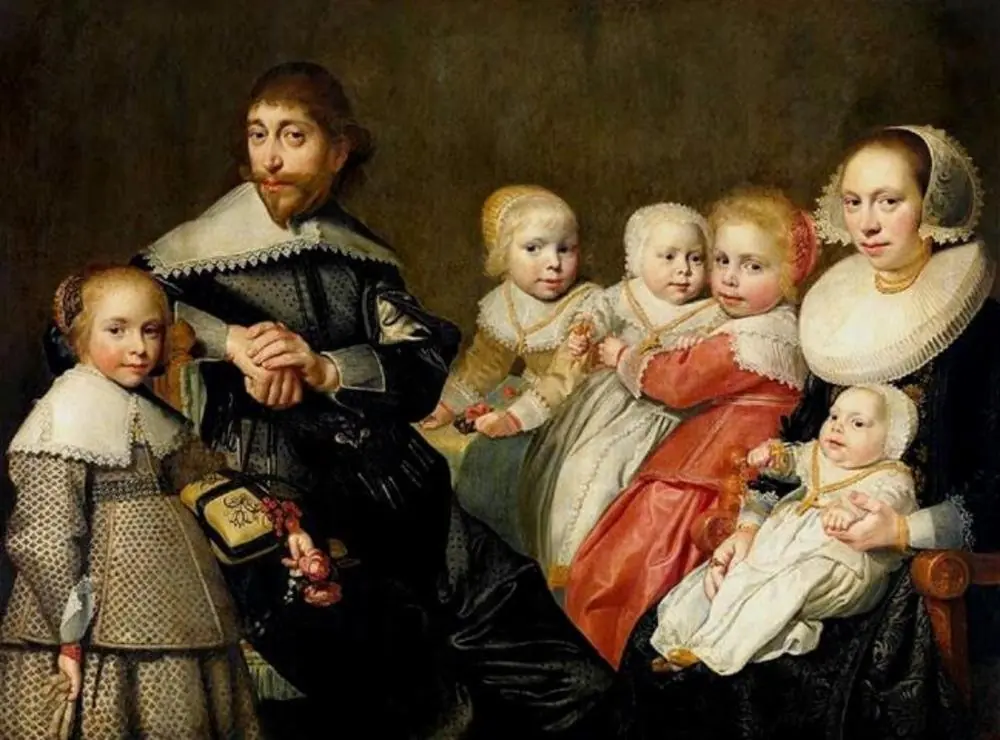
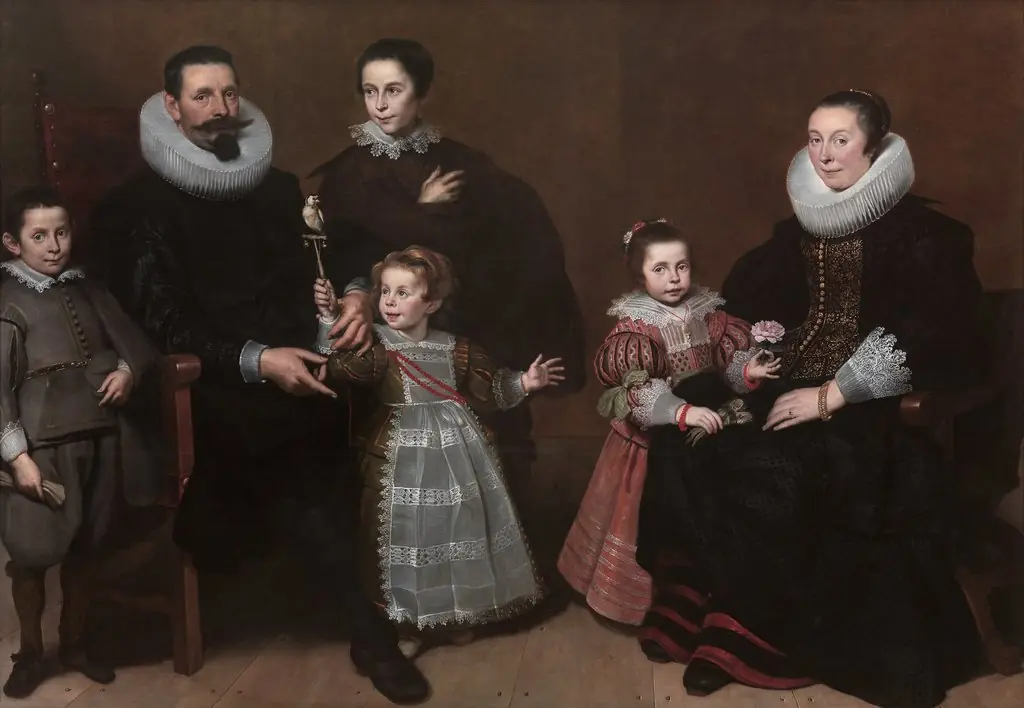
The painting portrays a man, his wife, and their two daughters, likely members of a prosperous urban household. Their matching dark attire and crisp white collars signal modest affluence and moral restraint, values prized in Protestant Dutch society. The grouping suggests unity and continuity across generations, with the father’s upright stance anchoring the family’s social stability.
Technique & Style
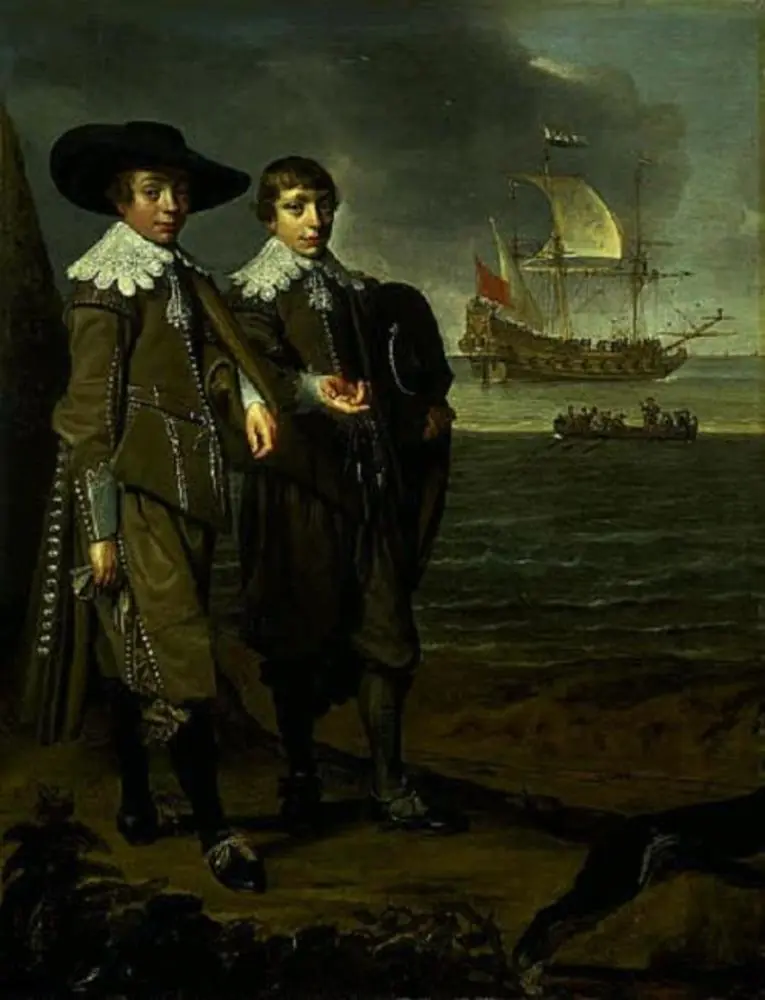
Cool employs subtle tonal gradations and precise brushwork to render fabric textures and facial expressions. The figures are rendered with naturalistic detail, yet their poses remain formal and deliberate. The background, with its distant water and boat, provides spatial depth without distraction, reinforcing the quiet focus on the family as the painting’s sole subject.
History & Provenance
The painting has been in the collection of the Scottish National Gallery since the 19th century, though its earlier ownership remains undocumented. It was likely commissioned by the family depicted, as was customary among Dutch burghers. No records of significant alterations or restorations are known, preserving its original condition.
Context
In 17th-century Holland, portraiture flourished among the merchant class as a means of asserting identity and social standing. Unlike aristocratic portraits elsewhere, Dutch family images emphasized restraint, domesticity, and moral character. Cool’s work aligns with this trend, reflecting a culture that valued quiet virtue over ostentation.
Legacy
Jan Daemen Cool’s portraits, though less widely known than those of Rembrandt or Hals, offer valuable insight into the visual culture of provincial Dutch elites. This work remains a representative example of how ordinary families commissioned art to affirm their place in society, contributing to the broader tradition of Dutch domestic portraiture.
Artist & collection