Artwork
Landschap met brug
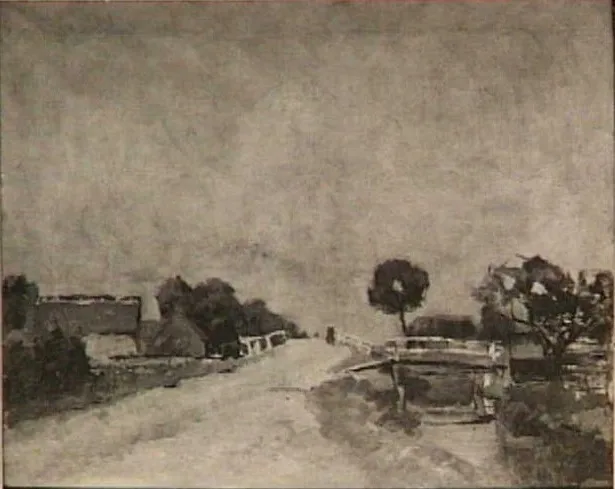
Landschap met brug is an oil painting by the Impressionist artist Jan Hillebrand Wijsmuller. It dates from 1902 and is held in the collection of the Rijksmuseum.
About this work
Overview
Jan Hillebrand Wijsmuller’s 1902 oil painting *Landschap met brug* portrays a tranquil, mist‑shrouded lane crossed by a modest stone bridge. The composition is dominated by muted grays and browns, punctuated by darker shadows that suggest depth. A solitary tree and a cluster of low buildings frame the right side, while the still water beneath the bridge reflects the subdued atmosphere.
Subject & Meaning
The work captures a quiet moment in a Dutch countryside setting, emphasizing the interplay between human structures and the natural environment. The bridge serves as a focal point, linking the road and water, while the lone tree and nearby houses hint at a modest, lived-in landscape, inviting contemplation of everyday rural life.
Technique & Style
Wijsmuller employs loose, sketch‑like brushwork that softens edges and conveys a fleeting impression rather than precise detail. The palette, restrained to cool grays and earthy browns, reflects the influence of French Impressionism’s light handling while retaining a distinctly Dutch tonal restraint. The overall effect is atmospheric and mood‑driven.
History & Provenance
Created during the early phase of Wijsmuller’s involvement with the second generation of the Hague School and Amsterdam Impressionism, *Landschap met brug* entered the Rijksmuseum’s collection, where it remains part of the museum’s holdings of early‑20th‑century Dutch painting.
Artist & collection
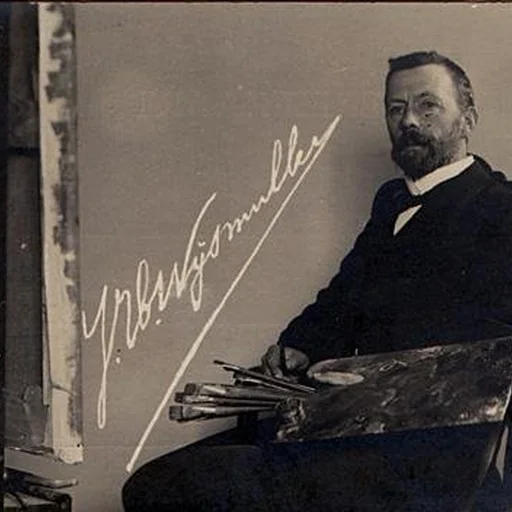
Artist
Jan Hillebrand Wijsmuller (13 February 1855 in Amsterdam – 23 May 1925 in Amsterdam) was a Dutch painter.
