Artwork
Blumenstück
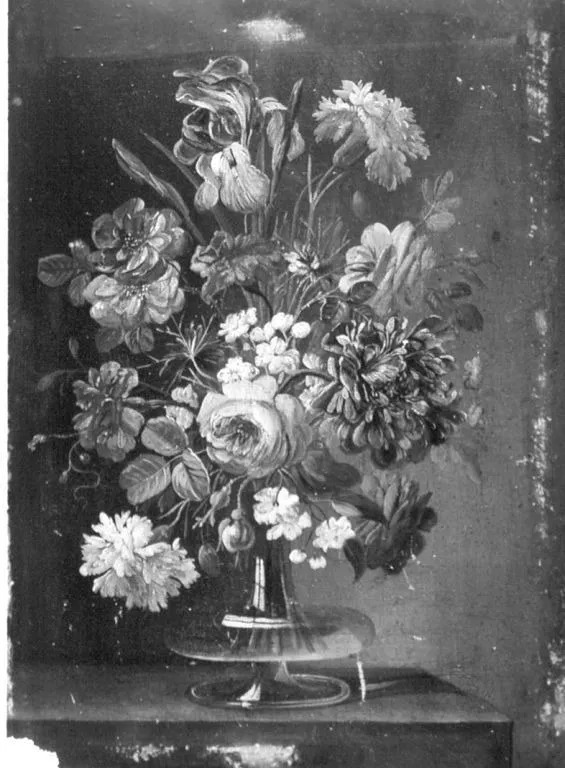
Blumenstück is an unspecified painting by the Rococo painting artist Jan Kašpar Hirschely. It dates from 1719 and is held in the collection of the Bavarian State Painting Collections.
About this work
Overview
Blumenstück is a 1719 still‑life painting by Jan Kašpar Hirschely. Executed in oil on canvas, the work presents a single floral arrangement set in a glass‑like vase. It is part of the collection of the Alte Pinakothek in Munich, where it is displayed among other Baroque period pieces.
Subject & Meaning
The composition centers on a modest bouquet of white and pink blossoms, some accented with darker cores, surrounded by foliage of varying green tones. The arrangement, placed on a partially visible surface, conveys a quiet elegance, typical of early‑18th‑century decorative motifs that celebrated natural beauty within domestic interiors.
Technique & Style
Hirschely employs a restrained palette and careful modulation of light to model the petals and leaves, giving them a tangible volume. The dark, muted background enhances the contrast, allowing the delicate colors of the flowers to emerge. The rendering of the translucent vase suggests a careful study of glass surfaces, a hallmark of the period’s attention to material realism.
History & Provenance
Created in 1719, the painting entered the Alte Pinakothek’s holdings during the museum’s early acquisitions of Central European Baroque works. Its provenance prior to the museum’s purchase is not extensively documented, but the work has remained in public collections since the 19th century, reflecting its consistent appreciation by curators of the genre.
Context
During the early 1700s, still‑life paintings of floral subjects were popular in Bohemian and German courts, serving both decorative and symbolic purposes. Hirschely’s work aligns with this tradition, emphasizing refined composition and the transient beauty of blossoms, a theme echoed in contemporary literature and courtly aesthetics.
Artist & collection
