Artwork
The Village Inn
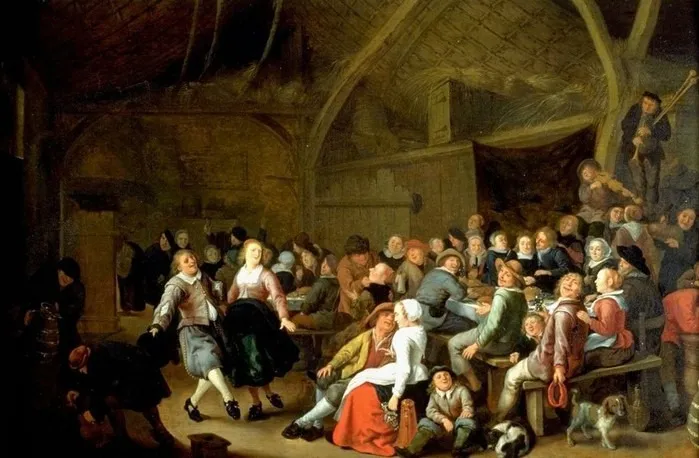
The Village Inn is an oil painting by the Dutch Golden Age artist Jan Miense Molenaer. It dates from 1659 and is held in the collection of the Gemäldegalerie Berlin.
About this work
Overview
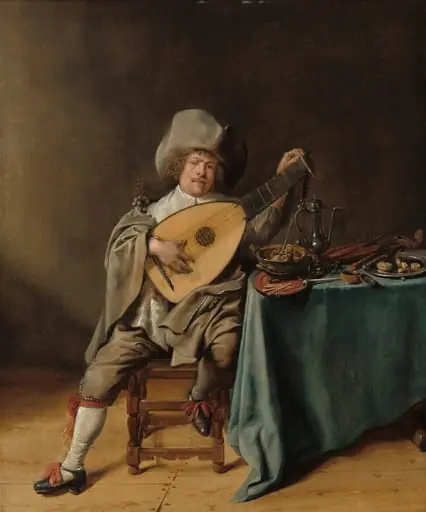
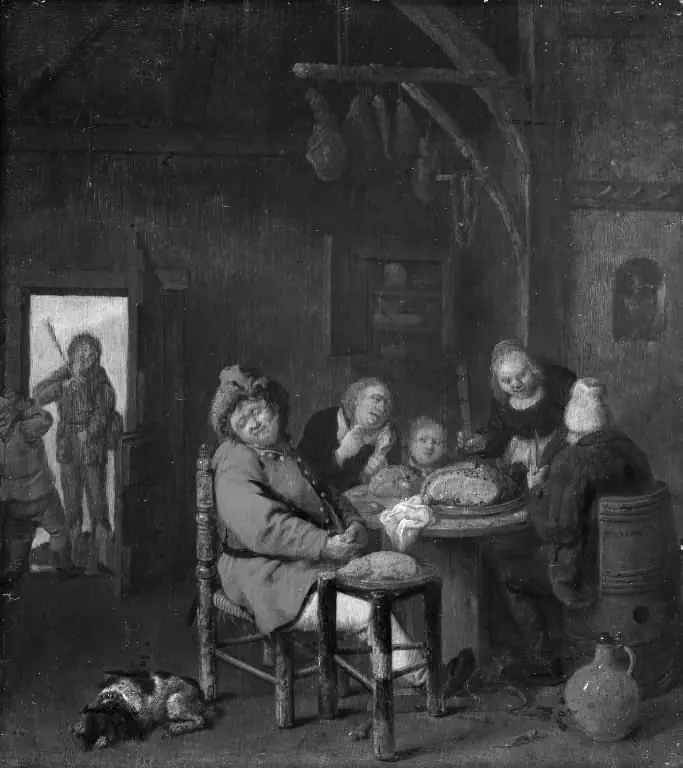
Jan Miense Molenaer, a Dutch painter active during the Golden Age, completed the oil painting *The Village Inn* in 1659. The work portrays a bustling interior scene typical of genre paintings of the period, focusing on a tavern setting where music, food, and lively interaction converge.
Subject & Meaning
The composition centers on a crowded inn where a bagpiper and a violinist provide music for diners and dancers. Figures are shown eating, drinking, and conversing; a woman in a red garment cradles a cat, while a nearby man appears on the verge of losing his balance, suggesting a moment of spontaneous, informal merriment.
Technique & Style
Molenaer employs a chiaroscuro effect, contrasting illuminated faces and garments with deeper shadows cast by the dim interior. This handling of light creates a sense of depth and movement, emphasizing the texture of stone walls and the cramped atmosphere of the high-ceilinged room.
History & Provenance
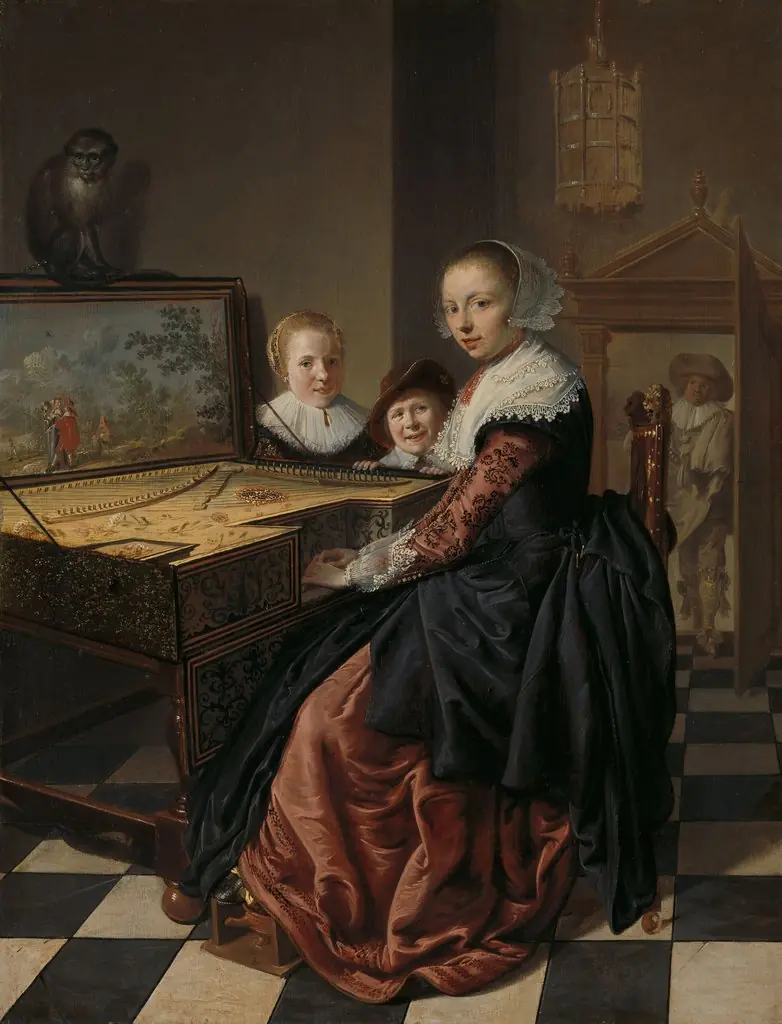
The painting belongs to Molenaer’s mature period, during which he produced numerous tavern scenes that prefigure the later work of Jan Steen. Molenaer shared his studio with his wife, Judith Leyster, herself a notable genre and portrait painter, indicating a collaborative artistic environment.
Context
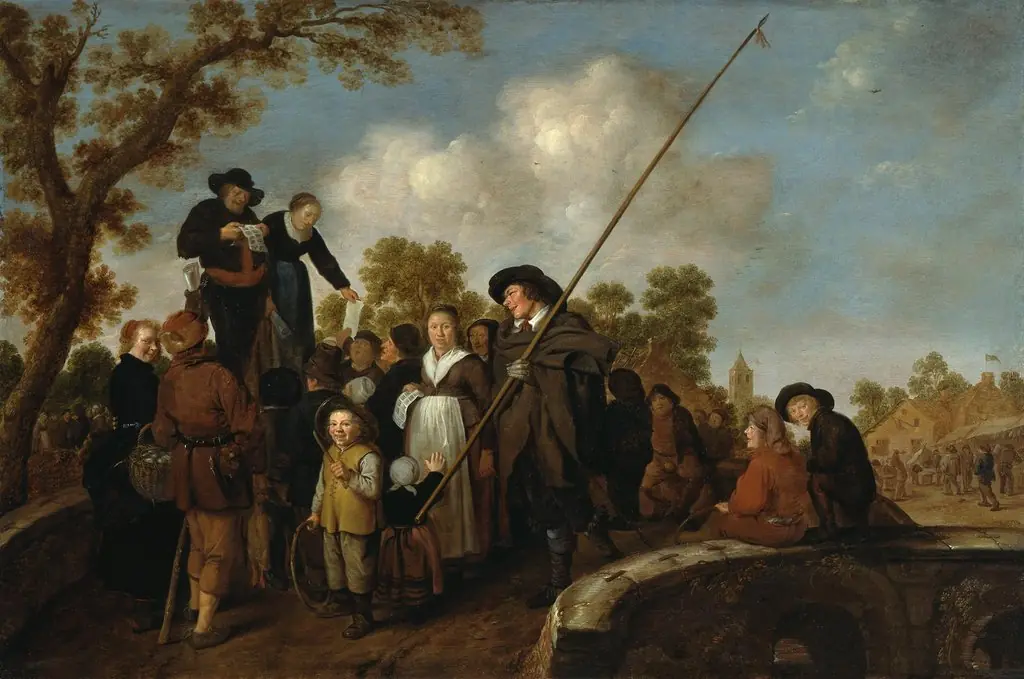
*The Village Inn* reflects everyday Dutch social life in the mid‑17th century, when inns served as communal hubs for entertainment and trade. The inclusion of music, food, and casual interaction aligns with contemporary genre conventions that celebrated domestic and public leisure.
Artist & collection
Artist
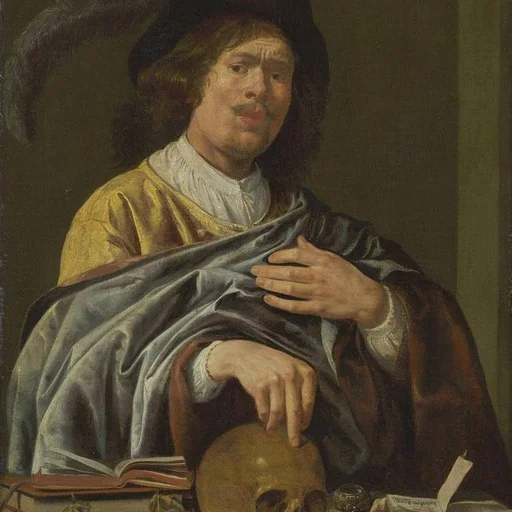
Jan Miense Molenaer (1610 – buried 19 September 1668) was a Dutch Golden Age genre painter whose style was a precursor to Jan Steen's work during Dutch Golden Age painting.