Artwork
Saint Sophia’s Orthodox Cathedral in Kyiv
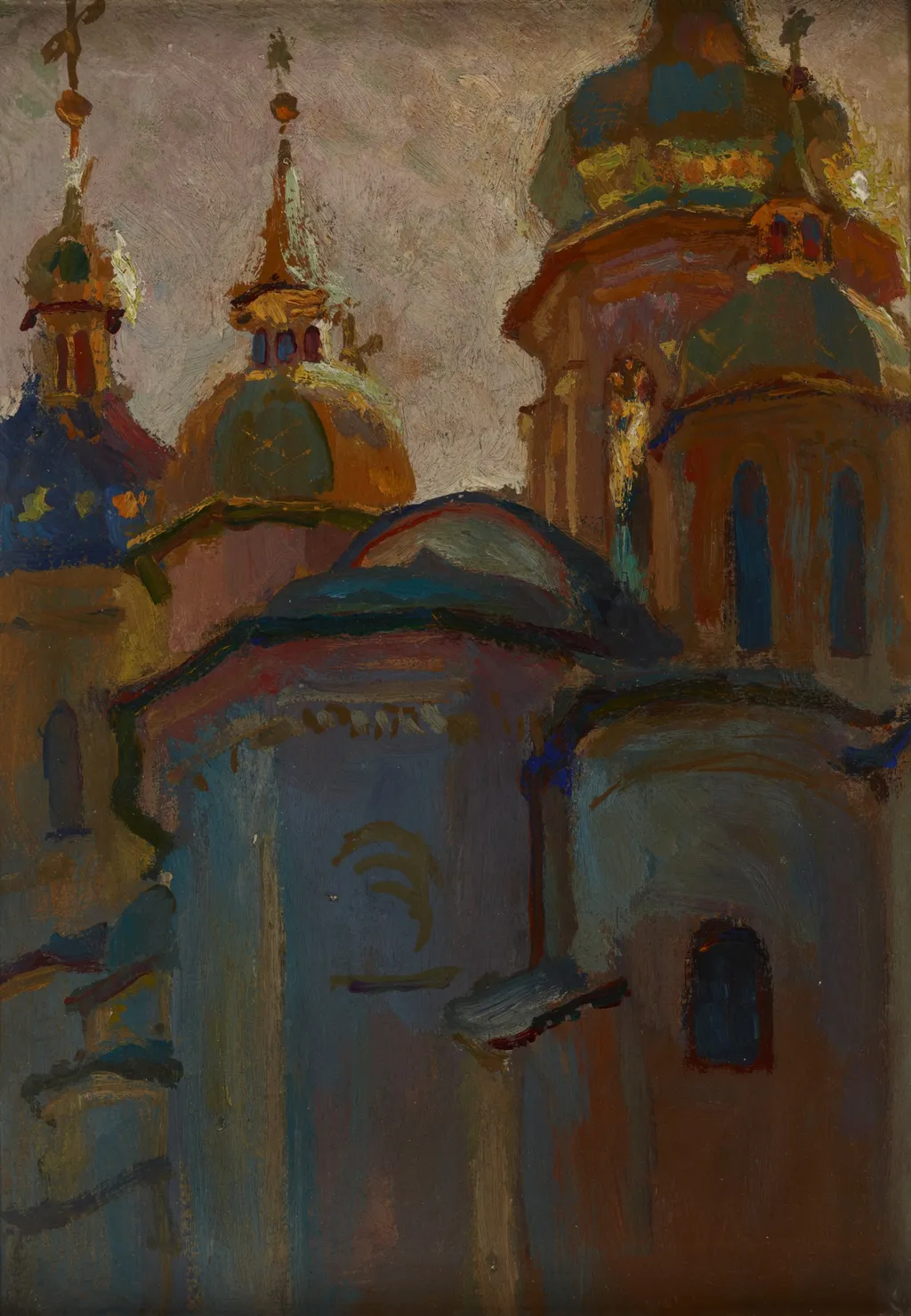
Saint Sophia’s Orthodox Cathedral in Kyiv is an unspecified painting by the Post-Impressionist artist Jan Stanisławski. It dates from 1903 and is held in the collection of the National Museum in Kraków.
About this work
Overview
Painted in 1903 by Polish artist Jan Stanisławski, this work presents Saint Sophia’s Cathedral in Kyiv as a monumental cityscape.
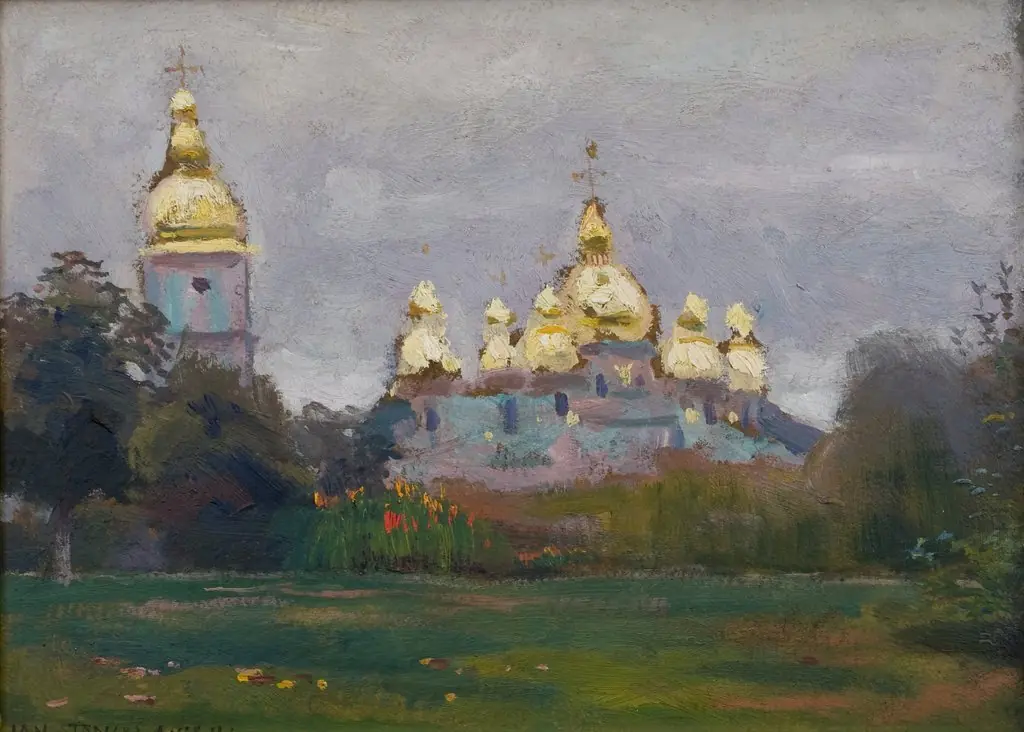
Painted in 1903 by Polish artist Jan Stanisławski, this work presents Saint Sophia’s Cathedral in Kyiv as a monumental cityscape. Executed in a post-impressionist idiom, the painting emphasizes emotional resonance over topographical accuracy. Stanisławski, then emerging as a key figure in Poland’s modernist circles, used the cathedral as a vehicle to explore form, light, and atmosphere through expressive brushwork and saturated color.
Subject & Meaning
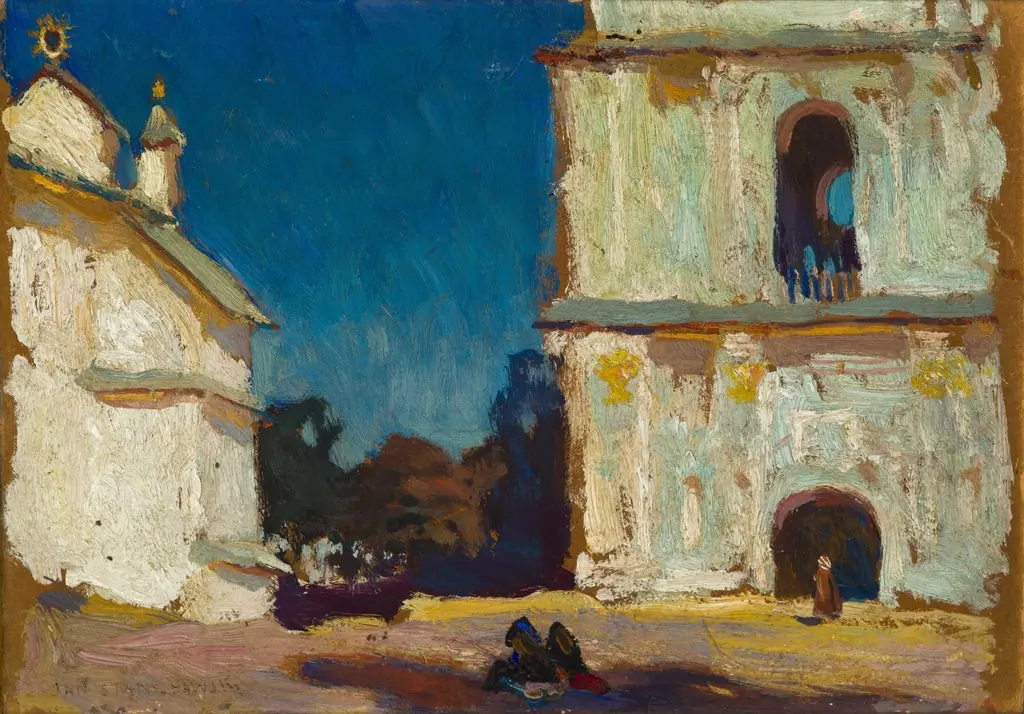
The painting centers on Saint Sophia Cathedral, a historic Byzantine structure symbolizing religious and cultural endurance in Kyiv. Stanisławski does not render it as a documentary image but as a solemn, almost haunting presence. A solitary, indistinct figure near the entrance suggests human scale against architectural grandeur, evoking contemplation rather than narrative. The cathedral becomes a silent witness to history, its weight conveyed through form rather than detail.
Technique & Style
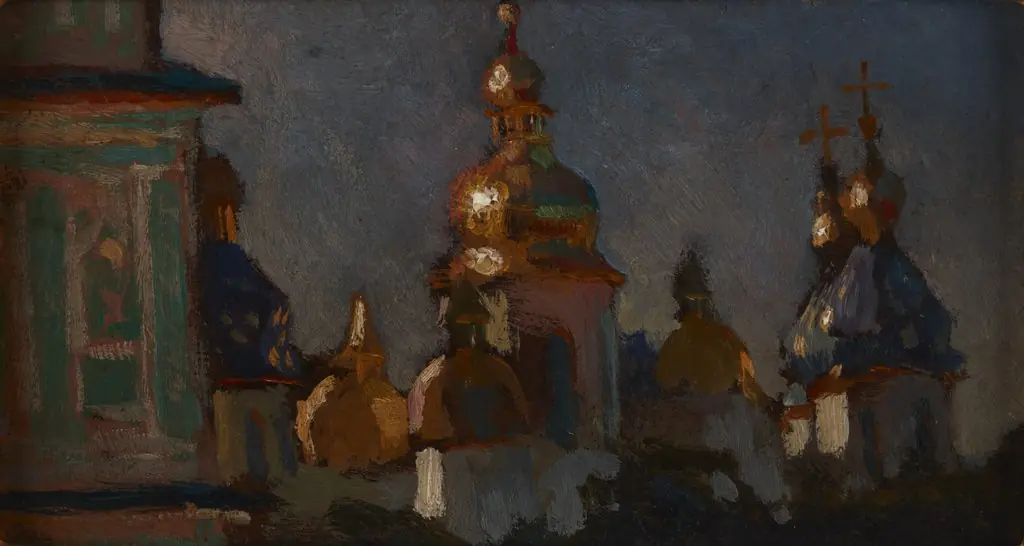
Stanisławski employed thick, textured brushstrokes and a restricted palette of deep blues, rust reds, and muted browns to convey the cathedral’s mass and age. Light is suggested through abrupt contrasts—pale highlights on domes against shadowed walls—rather than gradual modeling. The paint is applied with urgency, edges blurred or left raw, creating a sense of immediacy. This approach aligns with post-impressionist concerns for emotional expression over optical realism.
History & Provenance
Created during Stanisławski’s formative years as an artist and educator, the painting entered the collection of the National Museum in Kraków, where it remains today. Its acquisition reflects the museum’s early 20th-century interest in Polish modernist works. Stanisławski’s later role as a professor at the Kraków Academy of Fine Arts underscores the painting’s significance within his evolving artistic and pedagogical legacy.
Context
In 1903, Kyiv was part of the Russian Empire, and its Orthodox cathedrals carried complex cultural meanings for Poles, many of whom viewed them as symbols of shared Slavic heritage. Stanisławski’s depiction, devoid of political commentary, instead focuses on architectural presence and mood. His approach resonated with broader European trends that sought spiritual depth in landscape and monument, distancing from academic conventions.
Legacy
The painting stands as an early example of how Polish modernists engaged with Eastern European architecture through expressive, non-naturalistic means. While not widely exhibited beyond regional circles, it influenced later generations of artists interested in emotional architecture. Its preservation in Kraków ensures its continued role as a touchstone for discussions on identity, memory, and the painted monument.
Own this work as a print
Artist & collection
Artist
Jan Grzegorz Stanisławski (24 June 1860 – 6 January 1907) was a Polish modernist painter, art educator, and founder and member of various innovative art groups and literary societies.