Artwork
The supper at Emmaus
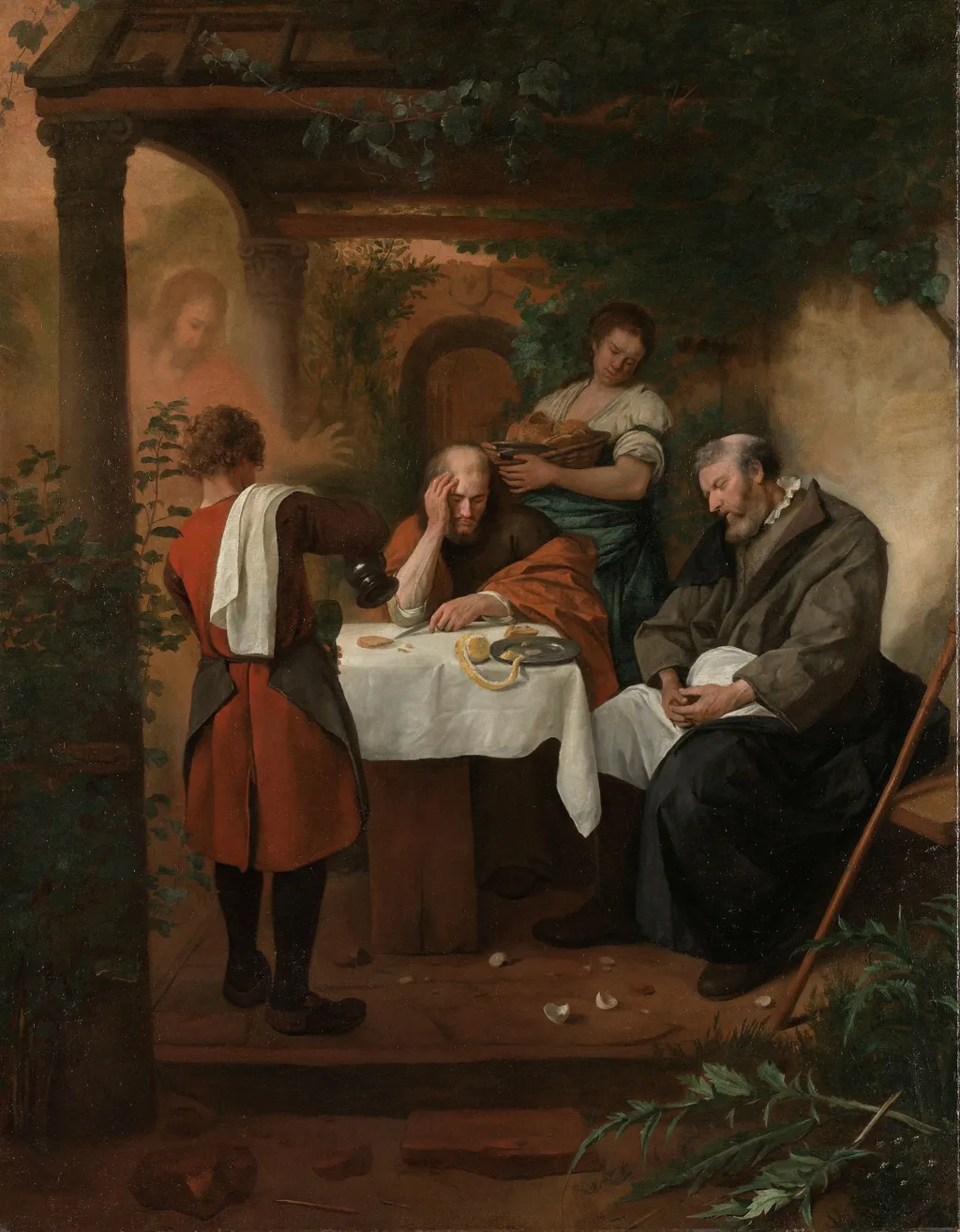
The supper at Emmaus is an oil painting by the Dutch Golden Age artist Jan Steen. It dates from 1666 and is held in the collection of the Rijksmuseum.
About this work
Overview
Jan Steen’s 1666 oil on canvas, titled *The Supper at Emmaus*, presents a modest interior scene in which four figures share a simple meal. The composition is anchored by a stone floor and warm, muted tones that give the room a domestic feel. The work is part of the Rijksmuseum’s collection, where it is displayed among other Dutch Golden Age paintings.
Subject & Meaning
The narrative derives from the Gospel episode in which the resurrected Christ reveals himself to two disciples during a meal in Emmaus. In Steen’s version, the central figure of Christ is implied rather than overtly shown; the focus rests on the human reactions—astonishment, fatigue, and contemplation—captured in the gestures of the diners.
Technique & Style
Steen employs a subtle chiaroscuro, allowing light to fall on the table and illuminate the bread, jug, and dishes, while casting the surrounding space in softer shadow. This contrast enhances the three‑dimensionality of the figures and conveys a sense of immediacy. The brushwork is characteristic of Dutch genre painting, with careful attention to texture in fabrics and stone.
History & Provenance
Created in 1666, the painting remained in private Dutch collections before entering the Rijksmuseum’s holdings in the 20th century. Documentation traces its ownership through several estate inventories, confirming its attribution to Steen and its continuous presence in the Netherlands since its inception.
Artist & collection
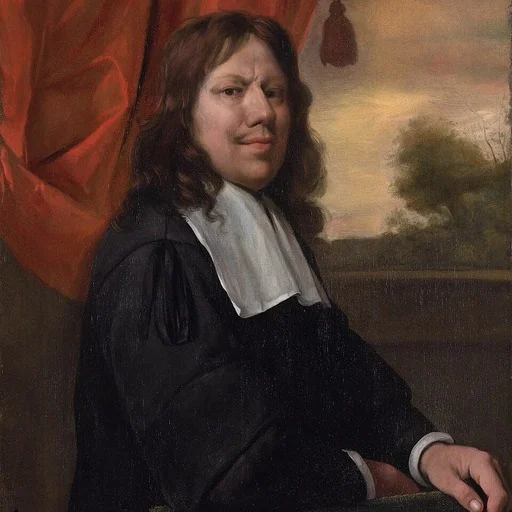
Artist
Jan Havickszoon Steen was a Dutch Golden Age painter, one of the leading genre painters of the 17th century.

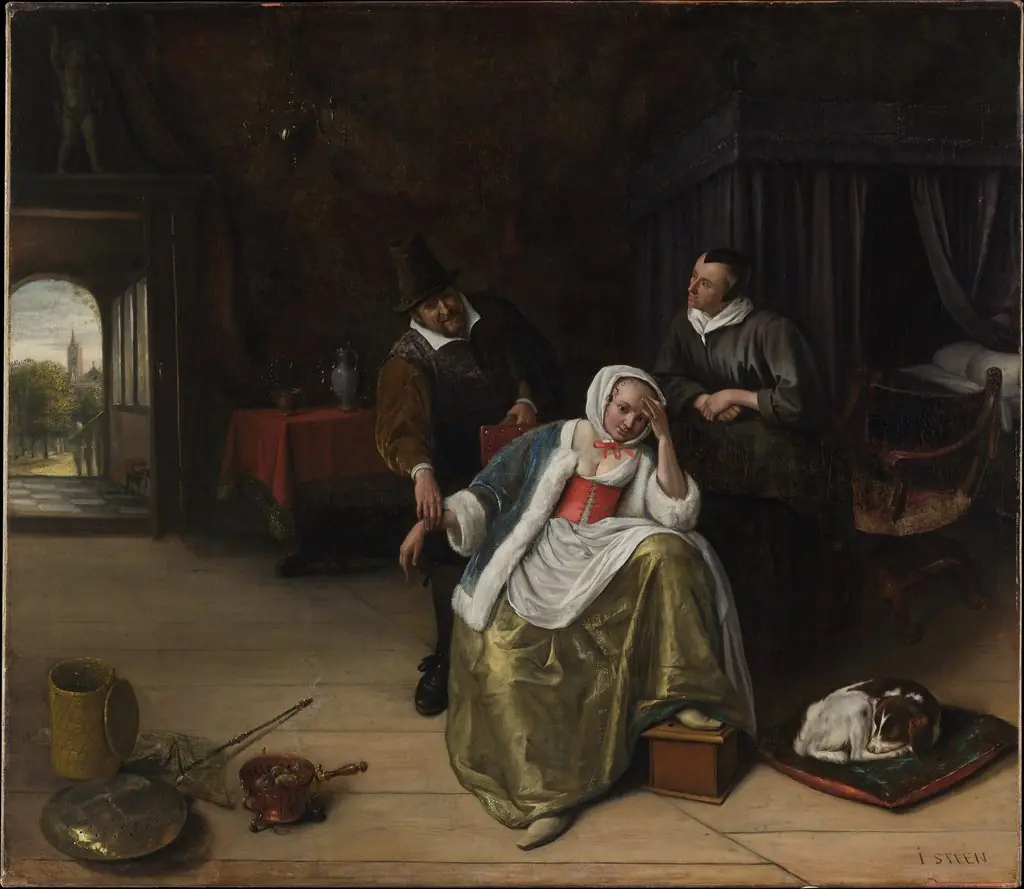 Paintings of physicians by Jan Steen
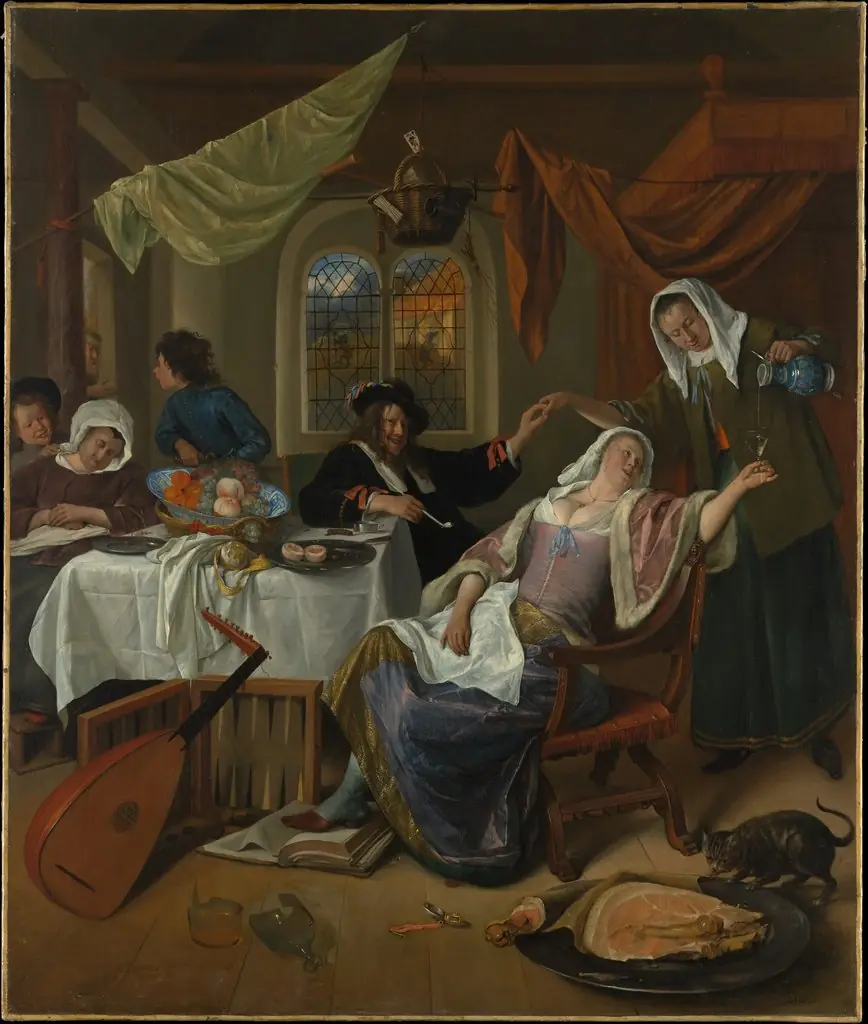 The Dissolute Household
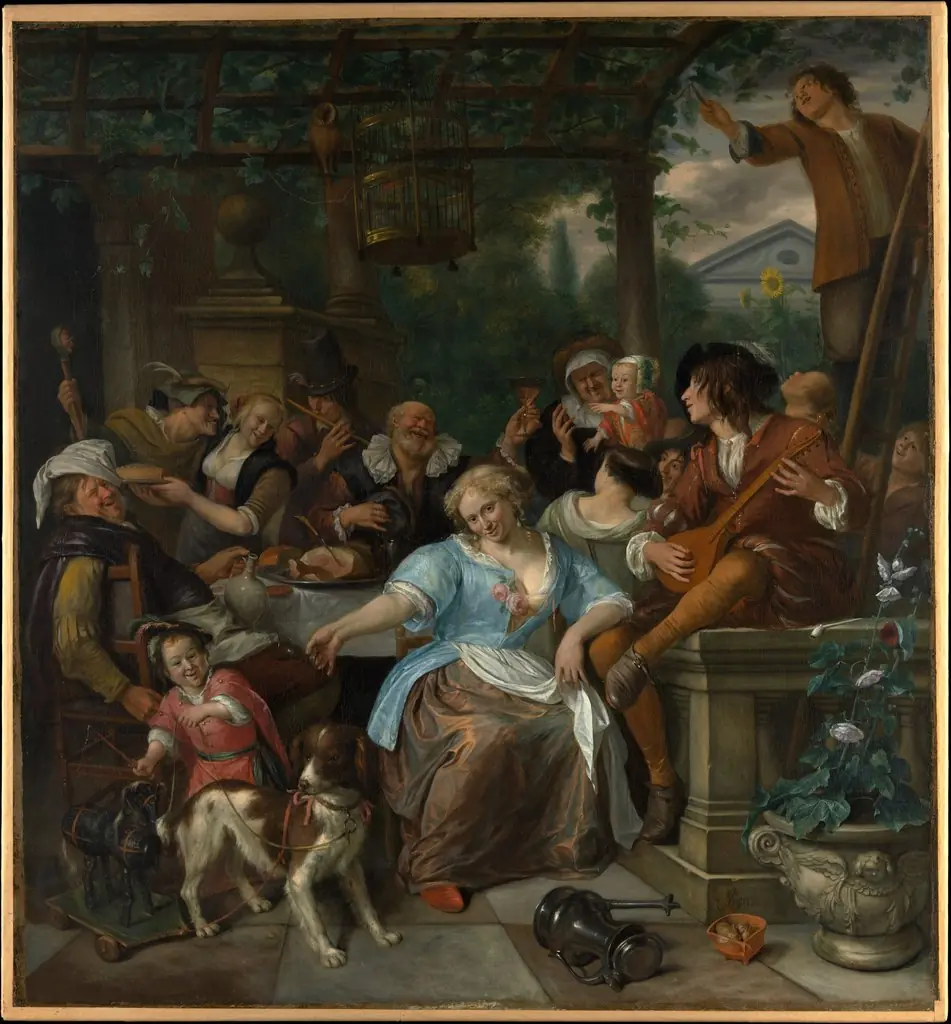 Merry Company on a Terrace
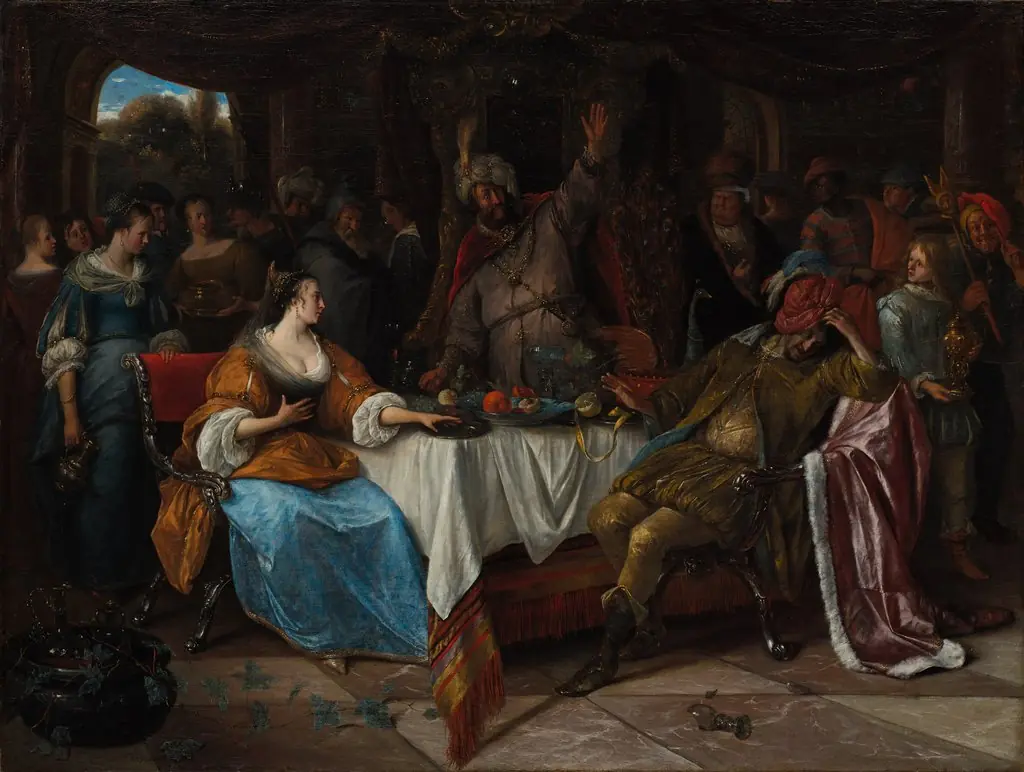 Esther, Ahasuerus, and Haman
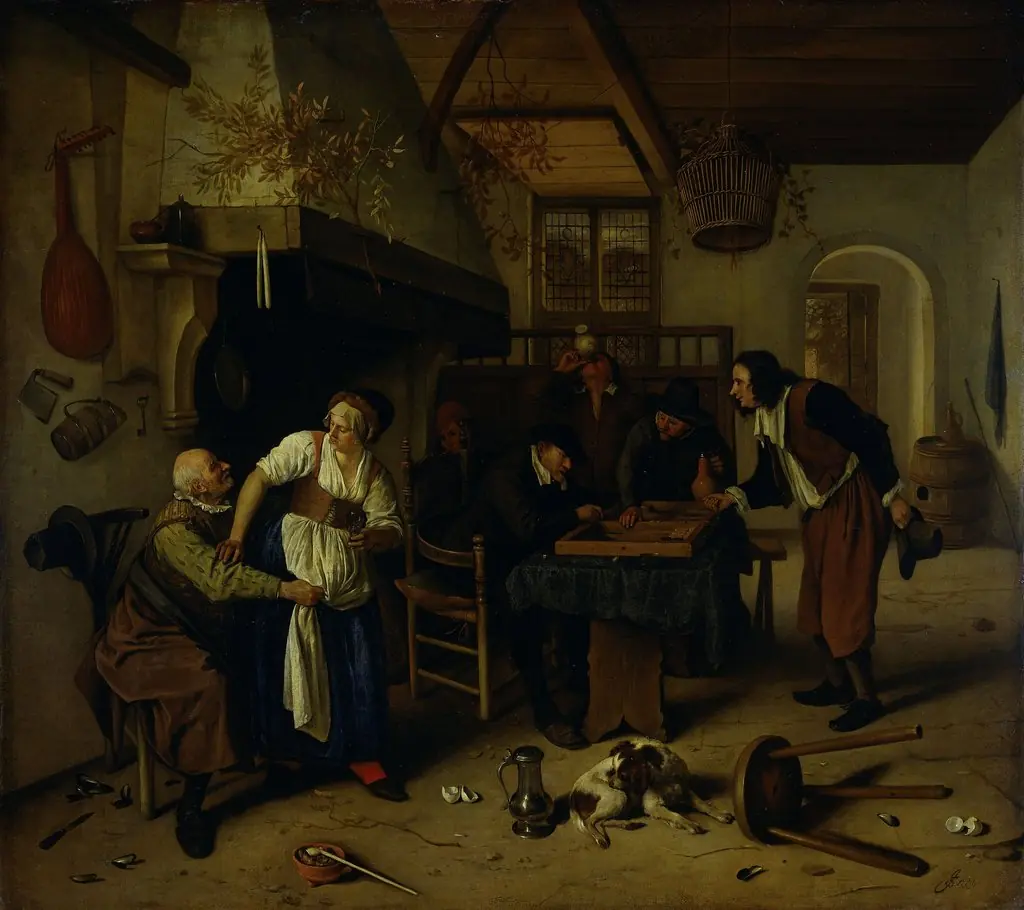 Interior of an inn with an old man amusing himself with the landlady and two men playing backgammon, known as 'Two kinds of games'
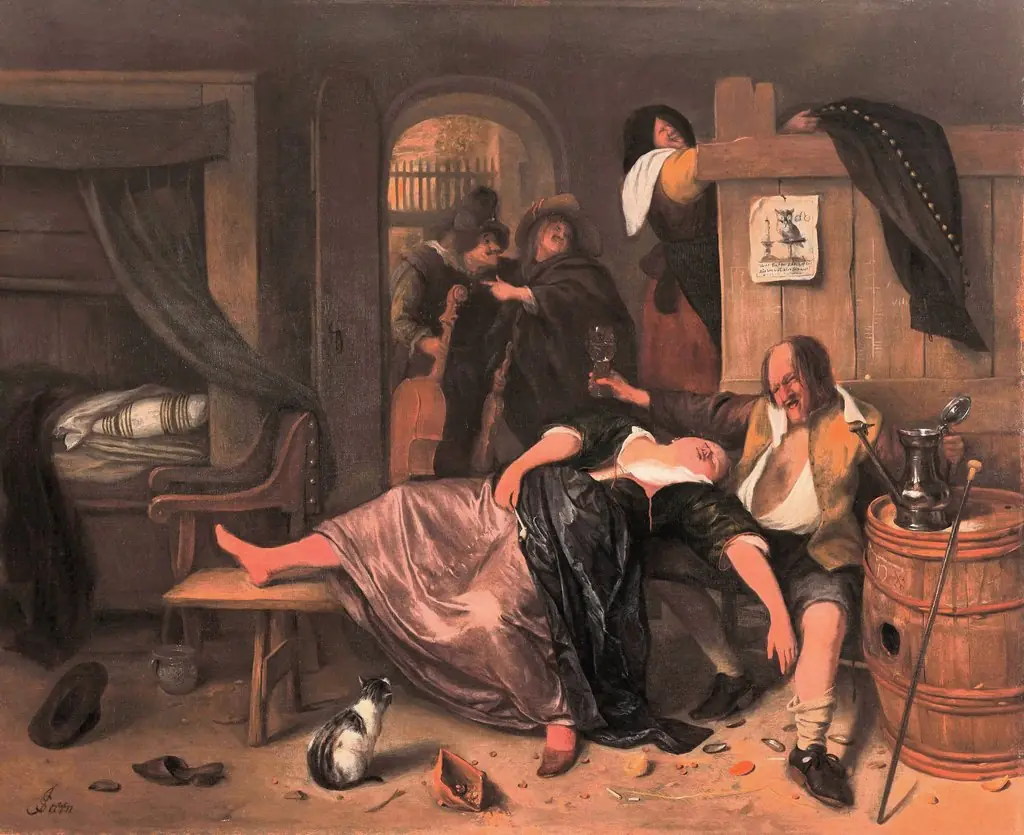 The Drunken Couple
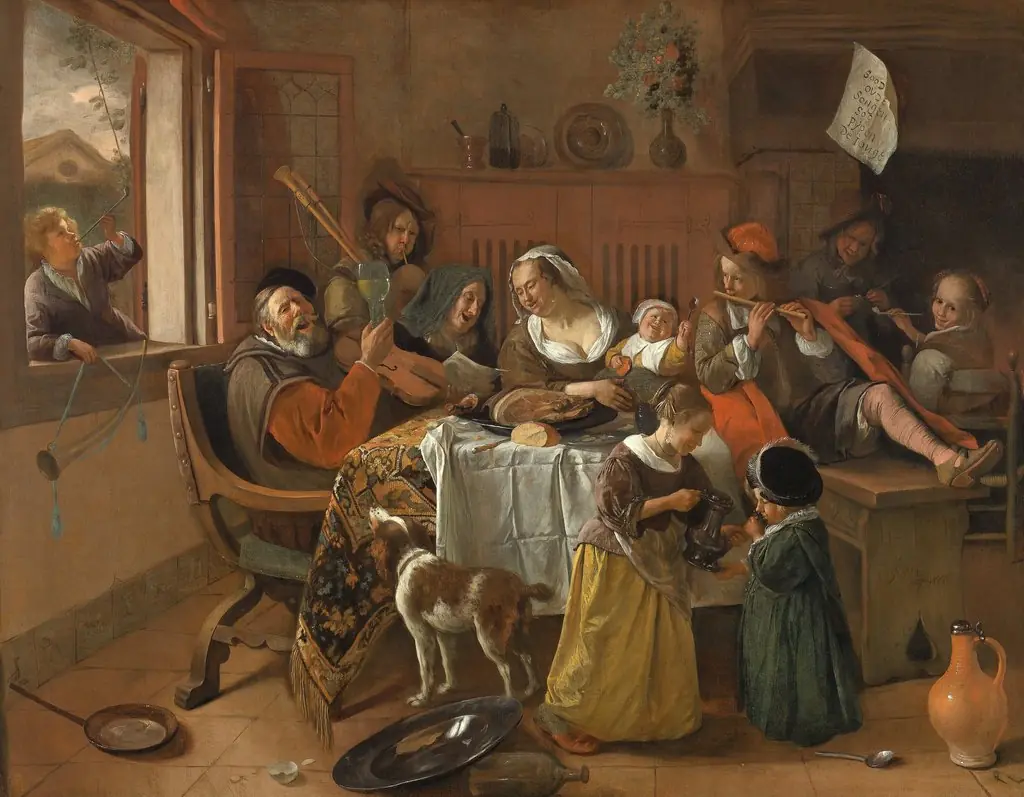 The Happy Family
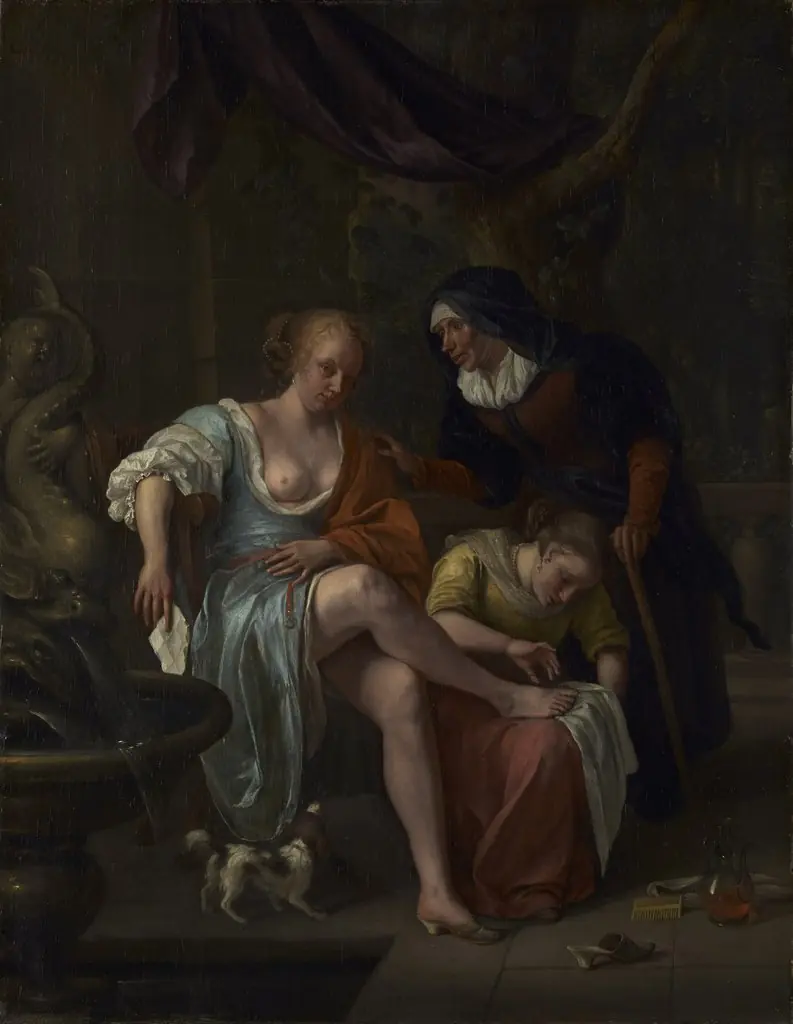 Bathsheba after the Bath