Artwork
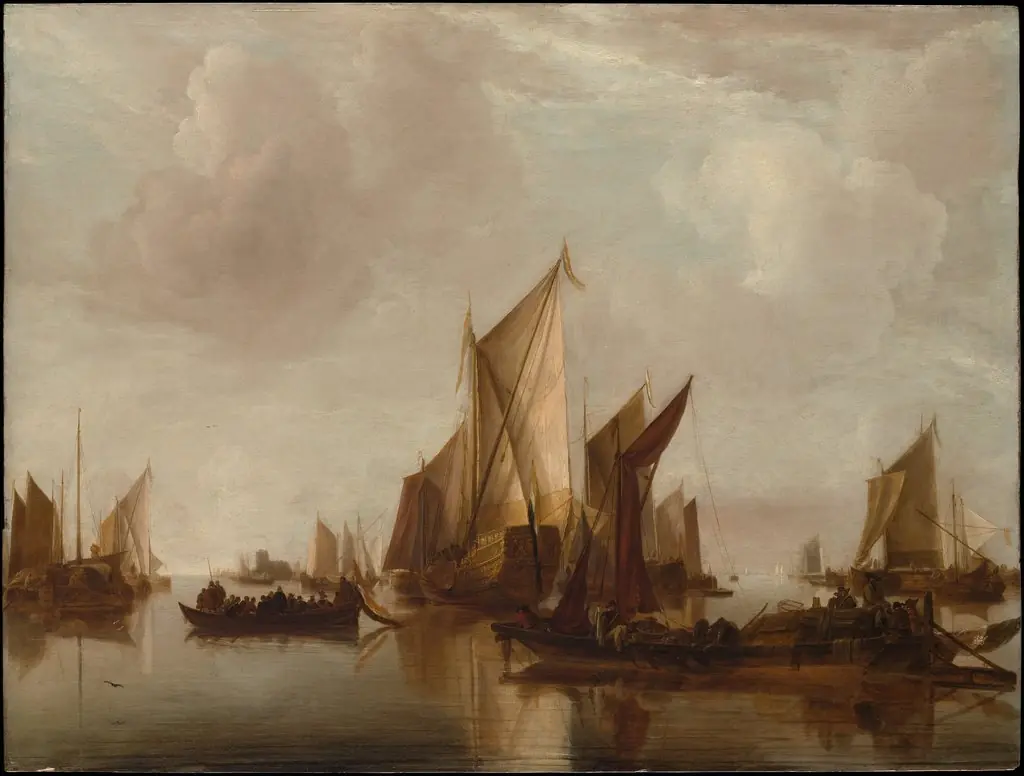
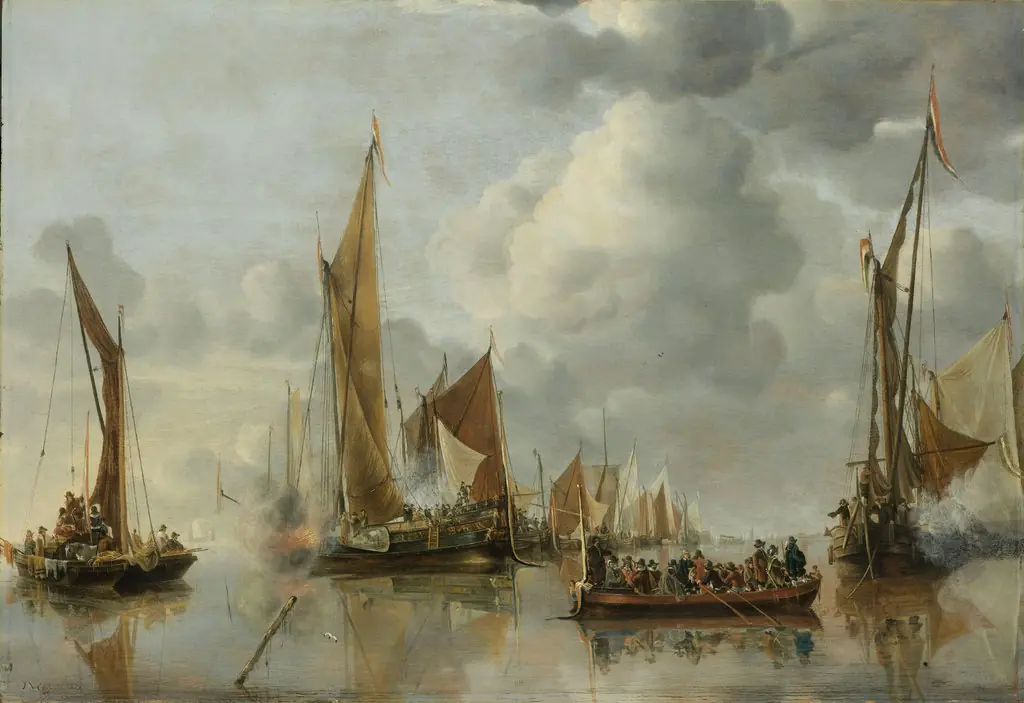
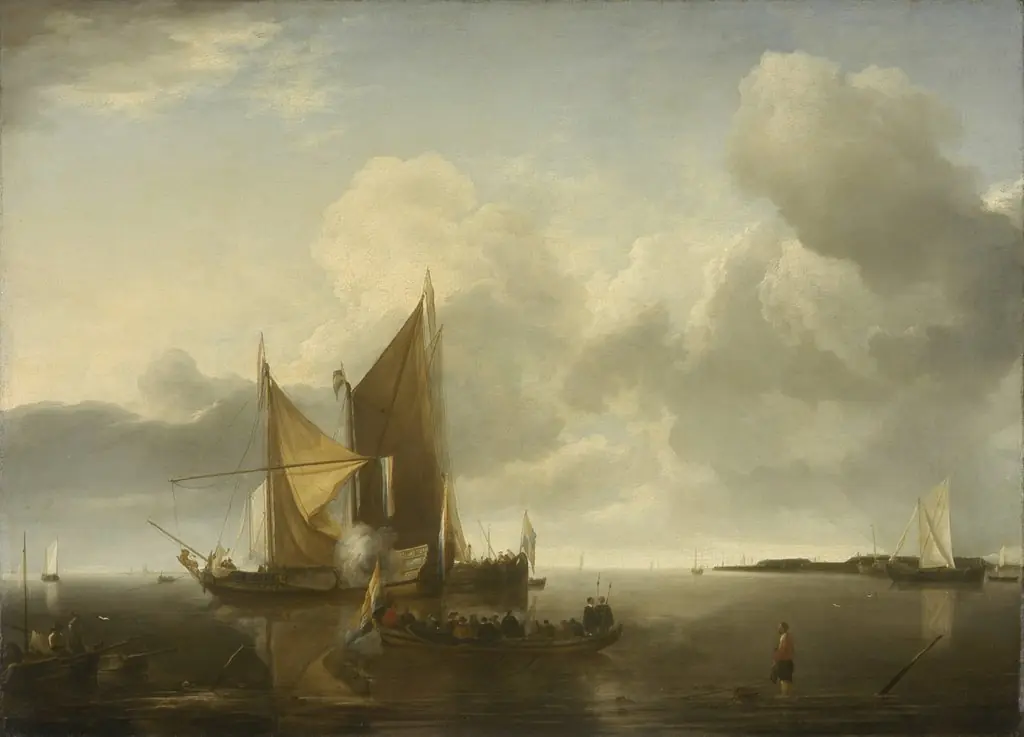
Shipping in a Calm at Flushing with a States General Yacht Firing a Salute
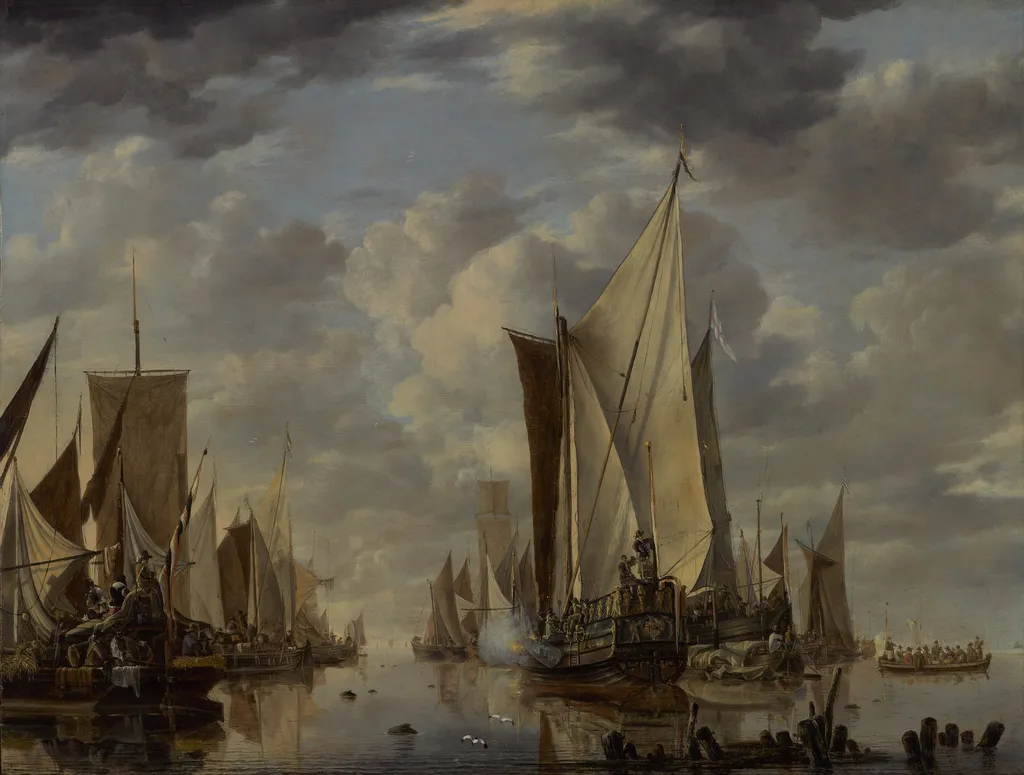
Shipping in a Calm at Flushing with a States General Yacht Firing a Salute is an oil painting by Jan van de Cappelle. It dates from 1649 and is held in the collection of the J. Paul Getty Museum.
About this work
Overview
Van de Cappelle, primarily known for marine subjects, rendered the calm waters and diffuse sky with subtle tonal shifts, emphasizing stillness over drama.
Painted in 1649 by Jan van de Cappelle, this oil-on-canvas work captures a quiet harbor at Flushing during a moment of ceremonial activity. The scene centers on a yacht belonging to the States General, firing a salute, while smaller vessels drift peacefully nearby. Van de Cappelle, primarily known for marine subjects, rendered the calm waters and diffuse sky with subtle tonal shifts, emphasizing stillness over drama.
Subject & Meaning
The painting portrays a naval salute, a formal gesture of respect or greeting, likely marking a state occasion. The presence of the States General’s yacht signals political authority, while the surrounding merchant and fishing boats suggest the harbor’s commercial vitality. The absence of conflict or turbulence reflects a moment of order and civic dignity, characteristic of Dutch maritime pride in the mid-seventeenth century.
Technique & Style
Van de Cappelle employed a restrained palette of grays, blues, and muted browns to convey atmospheric depth. His brushwork is precise yet unobtrusive, rendering sails, rigging, and water surfaces with quiet accuracy. Light filters evenly through the overcast sky, softening contrasts and unifying the composition. The effect is one of serene realism, achieved through careful observation rather than theatrical lighting.
History & Provenance
Created during the height of the Dutch Golden Age, the painting remained in private collections until entering the J. Paul Getty Museum’s holdings. Van de Cappelle, an Amsterdam native, maintained his dyeworks business alongside his art, using his access to high-quality pigments—possibly including carmine—to enhance his marine scenes. The work’s survival and attribution reflect its steady recognition among collectors of Dutch seascapes.
Context
In 1649, the Dutch Republic was consolidating its naval power and commercial dominance. Harbor scenes like this one were not merely decorative but affirmed civic identity and maritime order. The States General’s yacht, as a symbol of state authority, appears among working vessels, illustrating the integration of political and economic life. Such paintings catered to a wealthy, literate class who valued both realism and national pride.
Legacy
Van de Cappelle’s focus on tranquil marine environments influenced later Dutch painters who prioritized mood over action. His ability to capture subtle shifts in light and water without overt drama set a quiet standard for seascapes. Though less celebrated than contemporaries like Rembrandt, his work remains a key reference for understanding the nuanced realism and restrained symbolism of Dutch maritime art.
Own this work as a print
Artist & collection
Artist
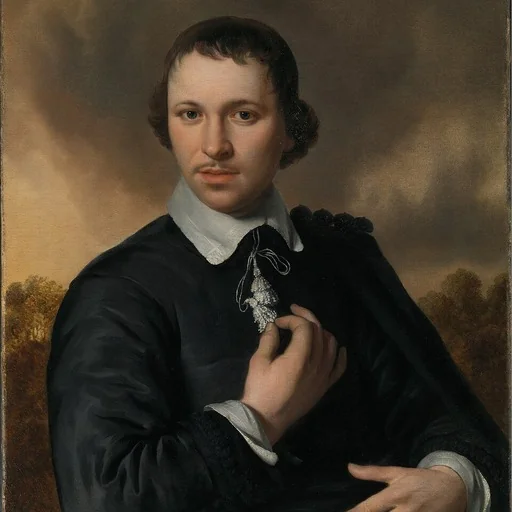
Jan van de Cappelle (or Joannes / van der / Capelle in various combinations; 25 January 1626 (baptized) – 22 December 1679 (buried)) was a Dutch Golden Age painter of seascapes and winter landscapes, also notable as an industrialist and…