Artwork
Dune Landscape
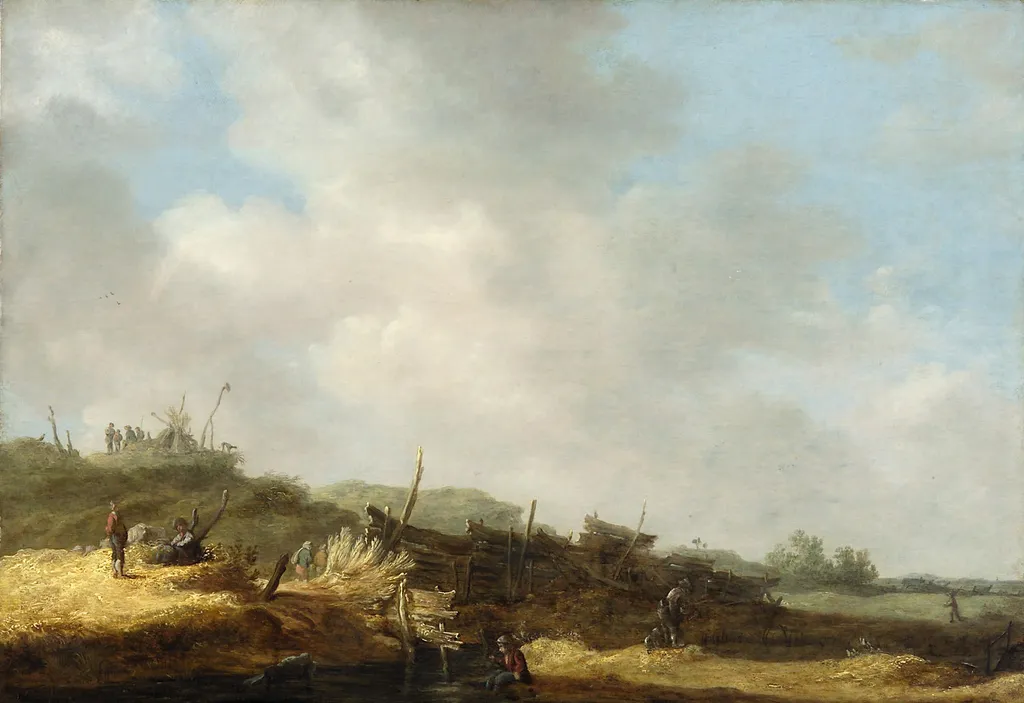
Dune Landscape is an unspecified painting by the Dutch Golden Age artist Jan van Goyen. It dates from 1630 and is held in the collection of the Kunsthistorisches Museum.
About this work
Overview
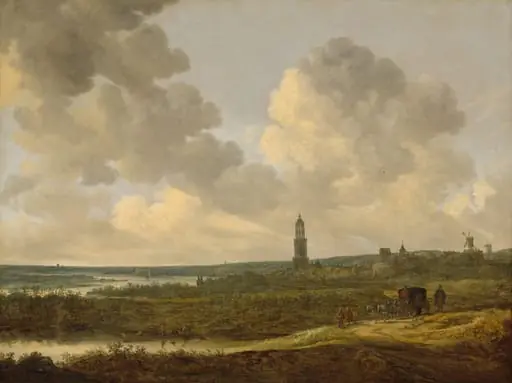
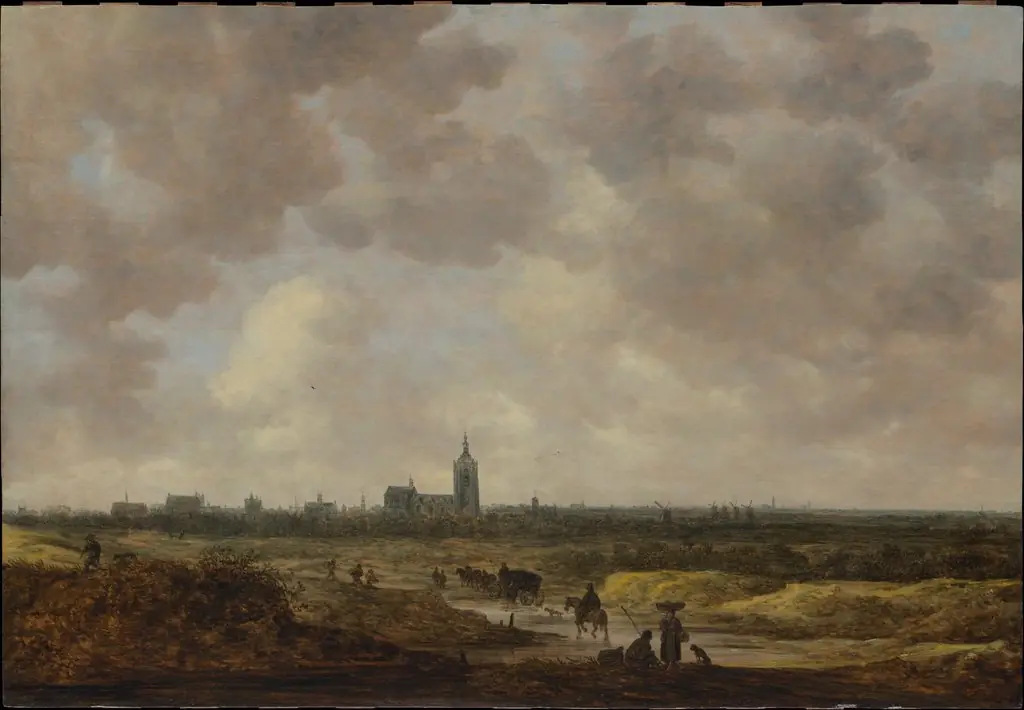
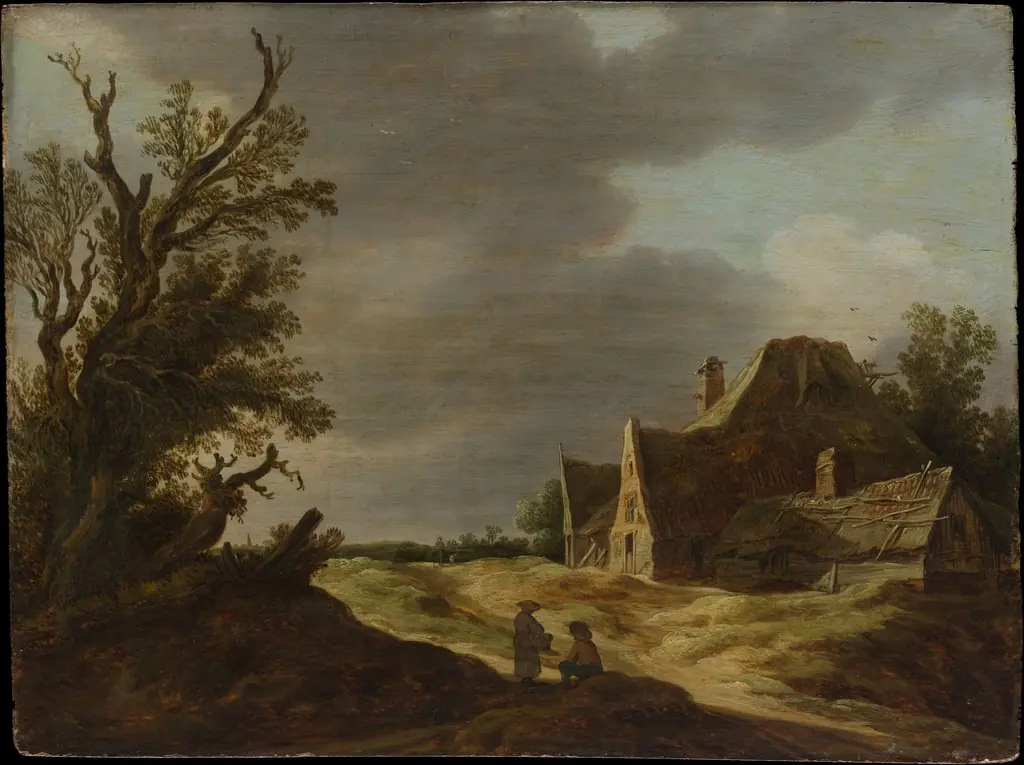
Jan van Goyen’s *Dune Landscape*, painted in 1630, belongs to the Dutch Golden Age of art. Executed in oil on canvas, the work presents a broad, sandy dune punctuated by a modest fence and a lone figure. The composition is dominated by a muted sky and a dry, uneven ground, conveying a sense of spacious tranquility.
Subject & Meaning
The scene captures a quiet coastal environment where human activity is minimal. A solitary individual, dwarfed by the expansive dunes, suggests a contemplation of humanity’s modest presence within the natural world. The simple fence, appearing to hold back shifting sand, reinforces the theme of subtle human intervention in an otherwise untouched landscape.
Technique & Style
Van Goyen employs a restrained palette of earth tones, using thin, layered brushwork to render the soft sky and the textured sand. His handling of light creates a gentle atmospheric effect, while the limited detail of figures emphasizes the overall mood of openness rather than narrative specificity.
History & Provenance
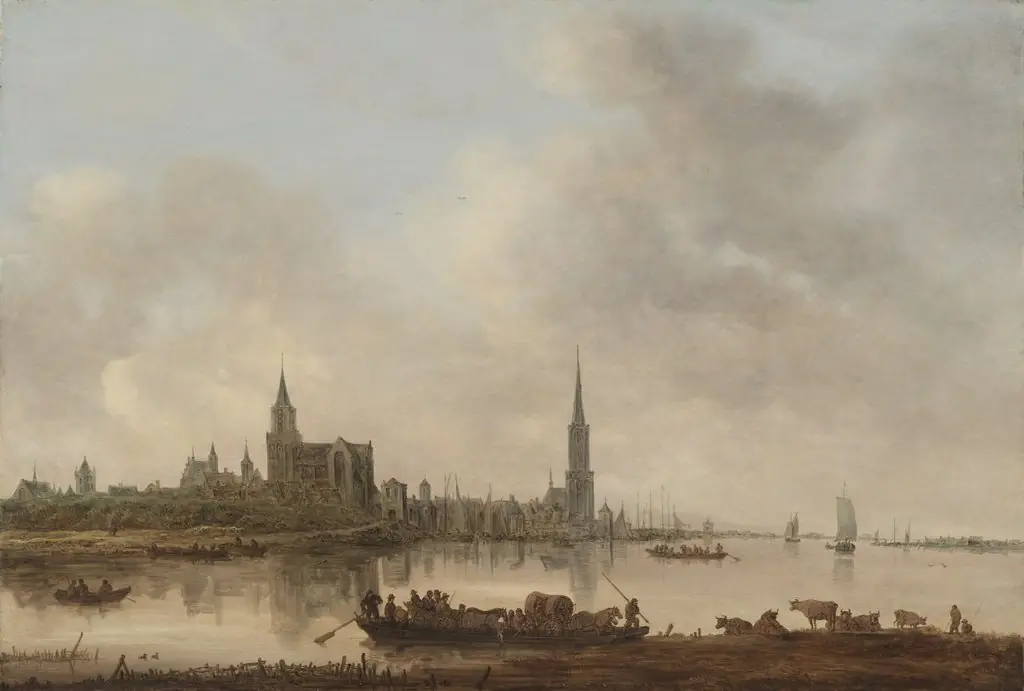
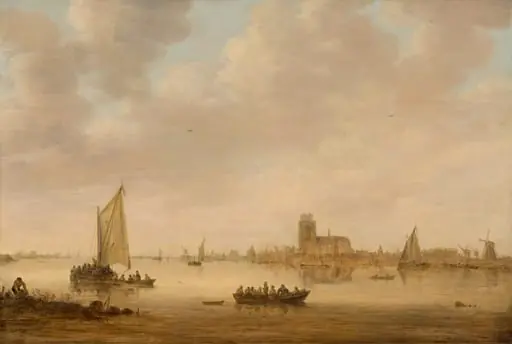
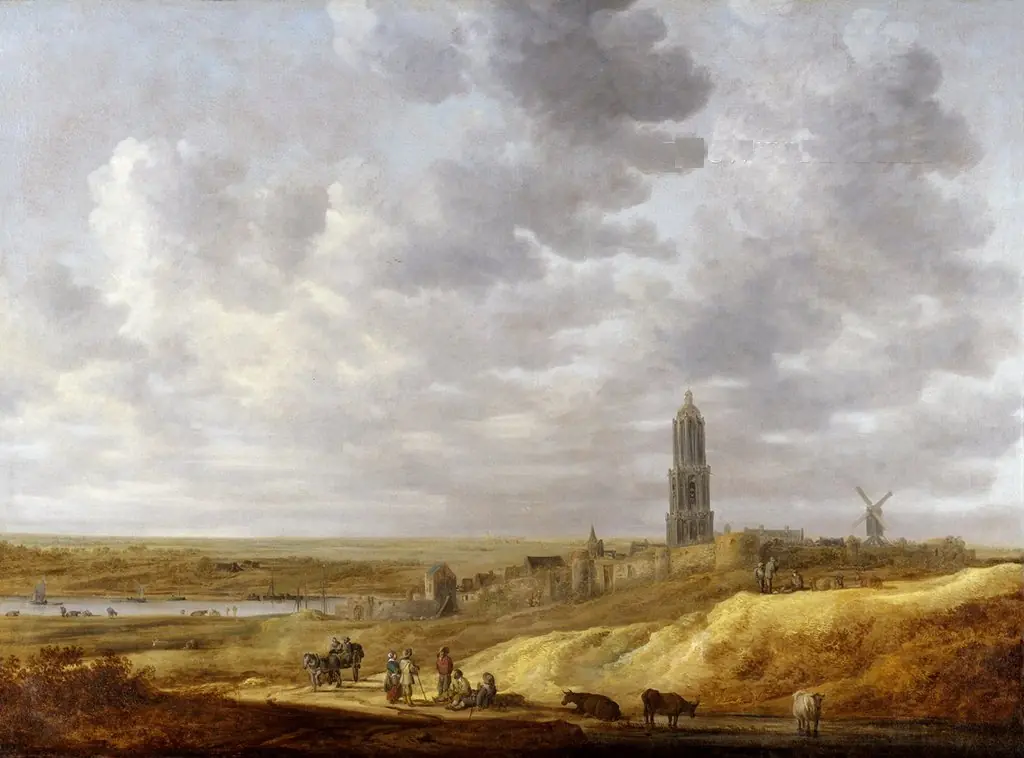
Created during a prolific period in which van Goyen produced roughly twelve hundred paintings and over a thousand drawings, the work reflects his focus on varied Dutch scenery. *Dune Landscape* entered the collection of the Kunsthistorisches Museum in Vienna, where it remains part of the museum’s holdings of 17th‑century Dutch art.
Artist & collection
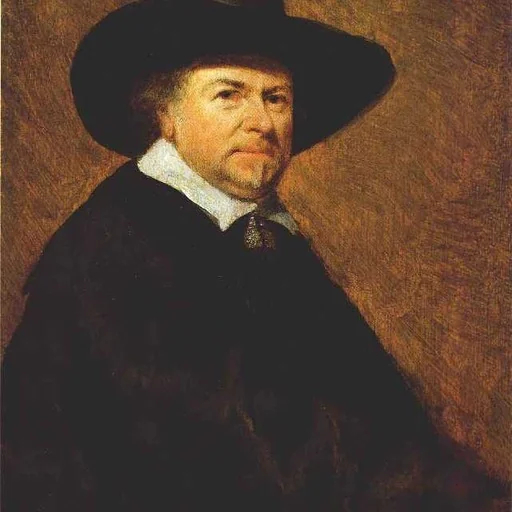
Artist
Jan Josephszoon van Goyen (Dutch pronunciation: ; 13 January 1596 – 27 April 1656) was a Dutch landscape painter.