Artwork
The Dutch Burn English Ships during the Expedition to Chatham, 20 June 1667 (Raid on the Medway)
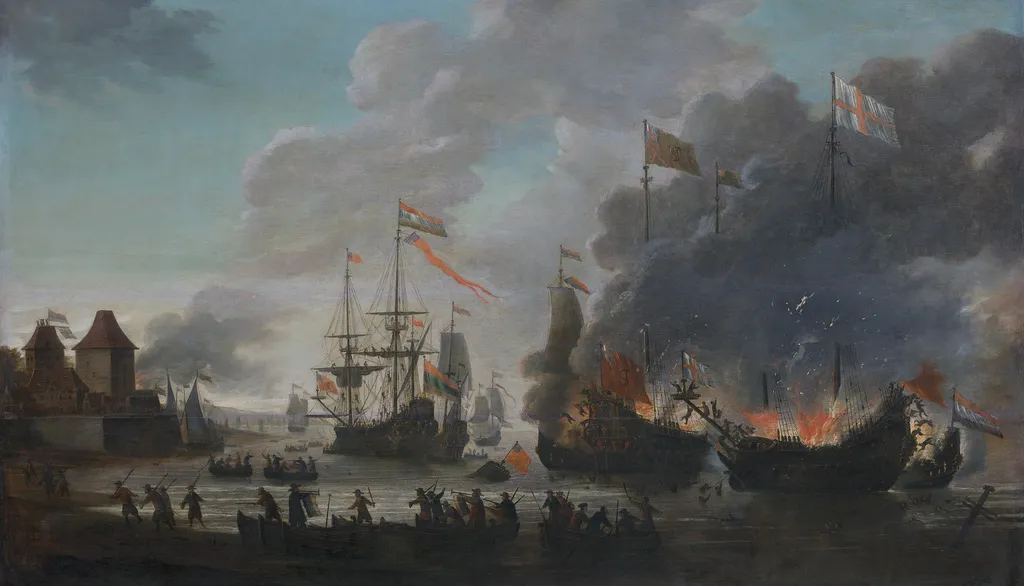
The Dutch Burn English Ships during the Expedition to Chatham, 20 June 1667 (Raid on the Medway) is an oil painting by the Dutch Golden Age artist Jan van Leyden. It dates from 1667 and is held in the collection of the Rijksmuseum.
About this work
Overview
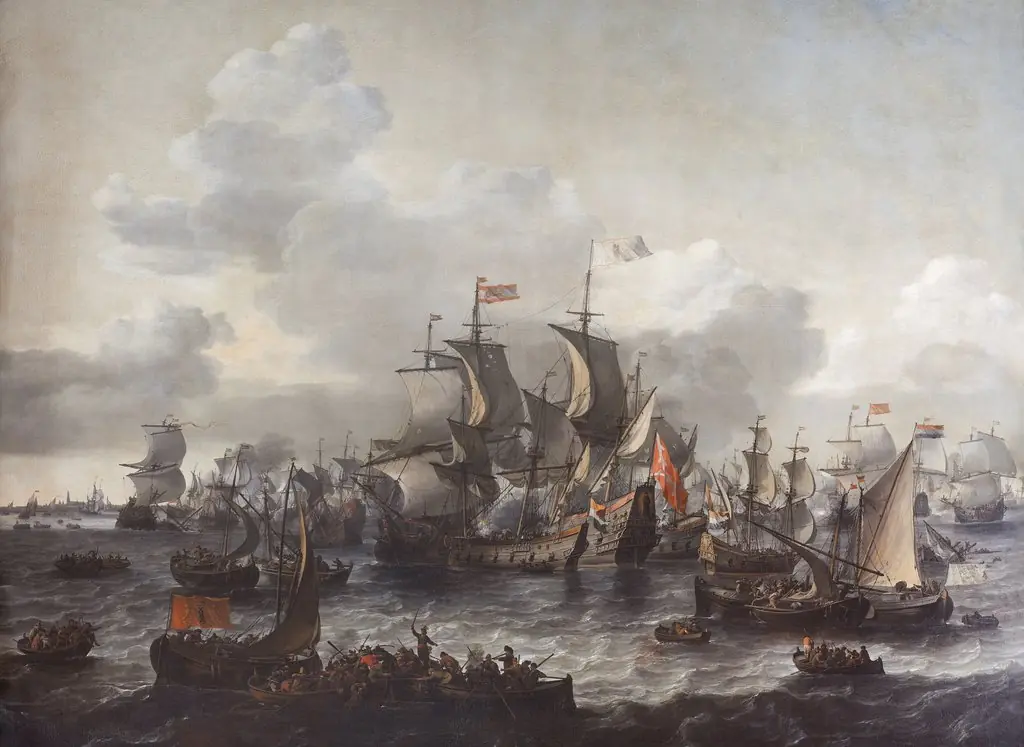
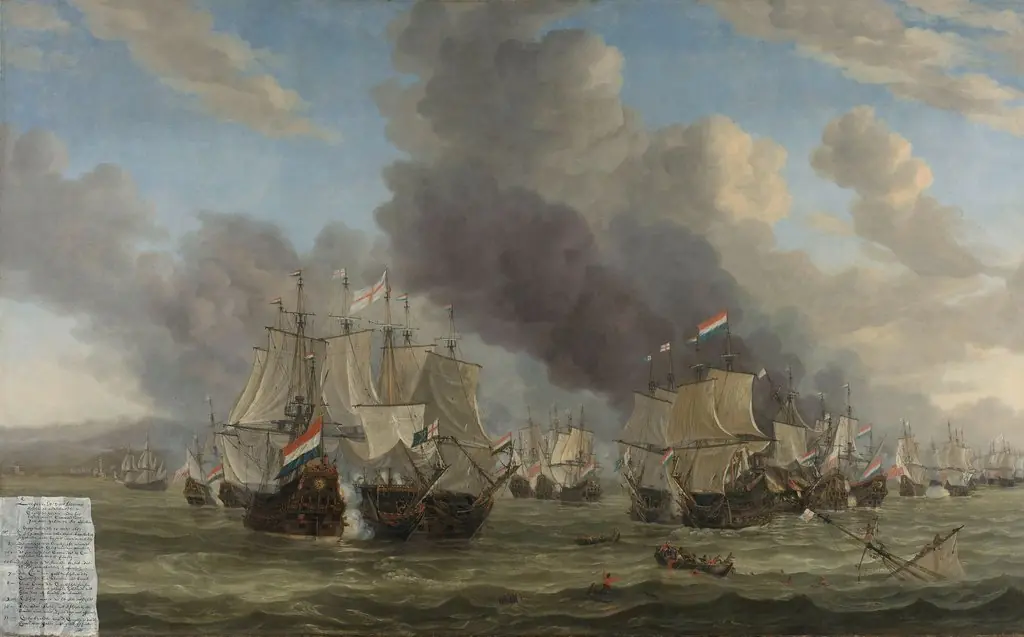
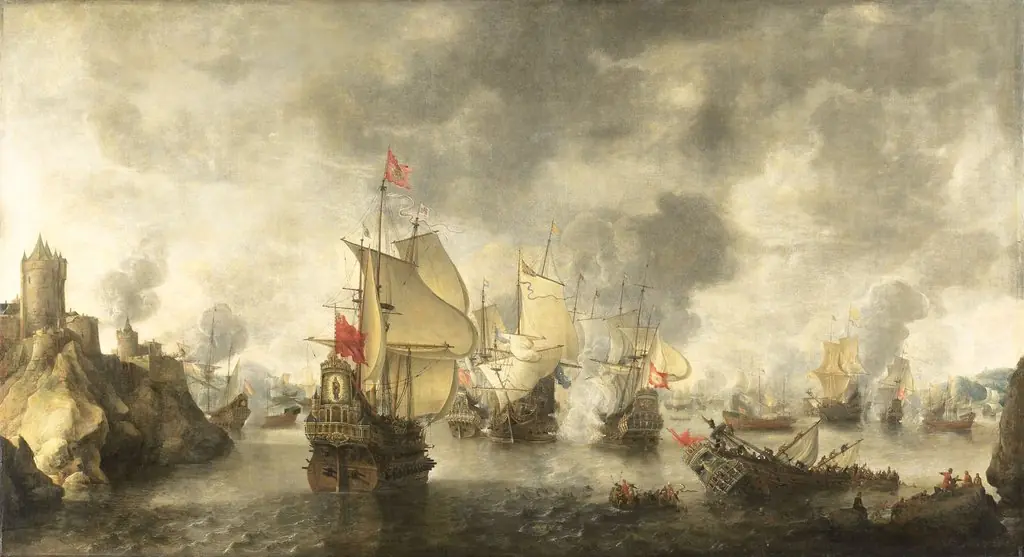
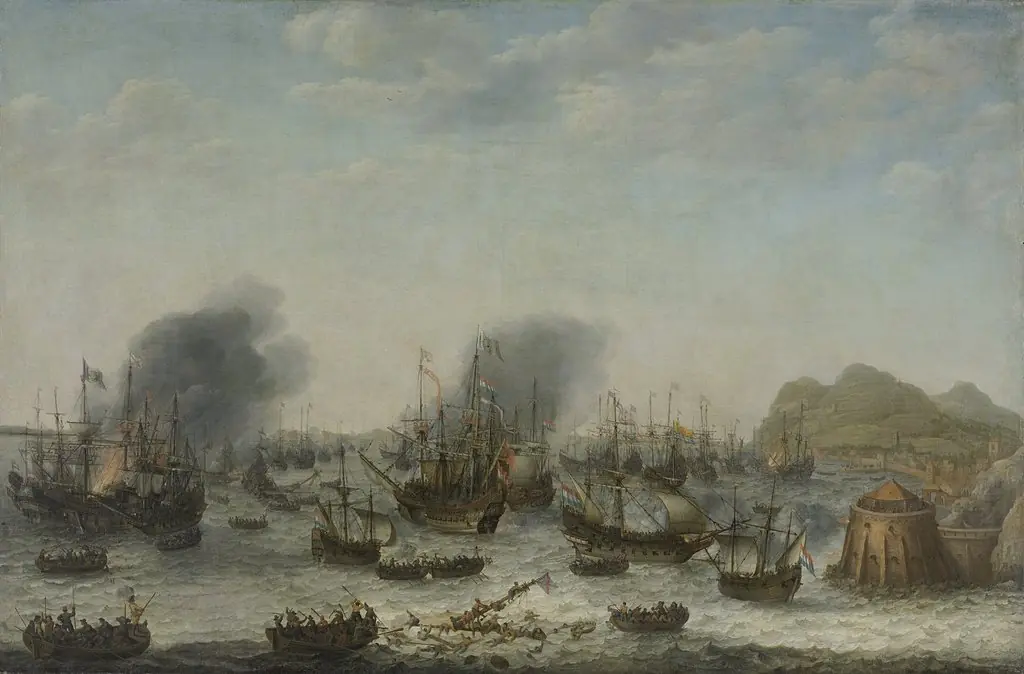
Jan van Leyden’s 1667 oil on canvas records the Dutch raid on England’s Medway River during the Second Anglo‑Dutch War. The composition captures a tumultuous naval engagement, with burning warships, billowing smoke and a shoreline fortification. The work is part of the Rijksmuseum’s collection and exemplifies seventeenth‑century marine painting.
Subject & Meaning
The scene portrays the Dutch fleet’s assault on English vessels anchored at Chatham on 20 June 1667, a decisive blow that exposed England’s naval vulnerability. Soldiers are shown marching toward a small fort on the left, while numerous ships blaze and founder, emphasizing the chaos and triumph of the Dutch offensive.
Technique & Style
Executed in oil, the painting employs strong contrasts of light and dark, a chiaroscuro effect that heightens the drama of fire and smoke against a storm‑clouded sky. The artist renders the rigging and sails with precise detail, while the turbulent water and billowing plumes are suggested through looser brushwork.
History & Provenance
Created the same year as the raid, the work likely served as a contemporary visual record of the event. It entered the Rijksmuseum’s holdings in the twentieth century, where it remains on display as a representative example of Dutch marine art and the period’s political propaganda.
Own this work as a print
Artist & collection