Artwork
The continence of Scipio
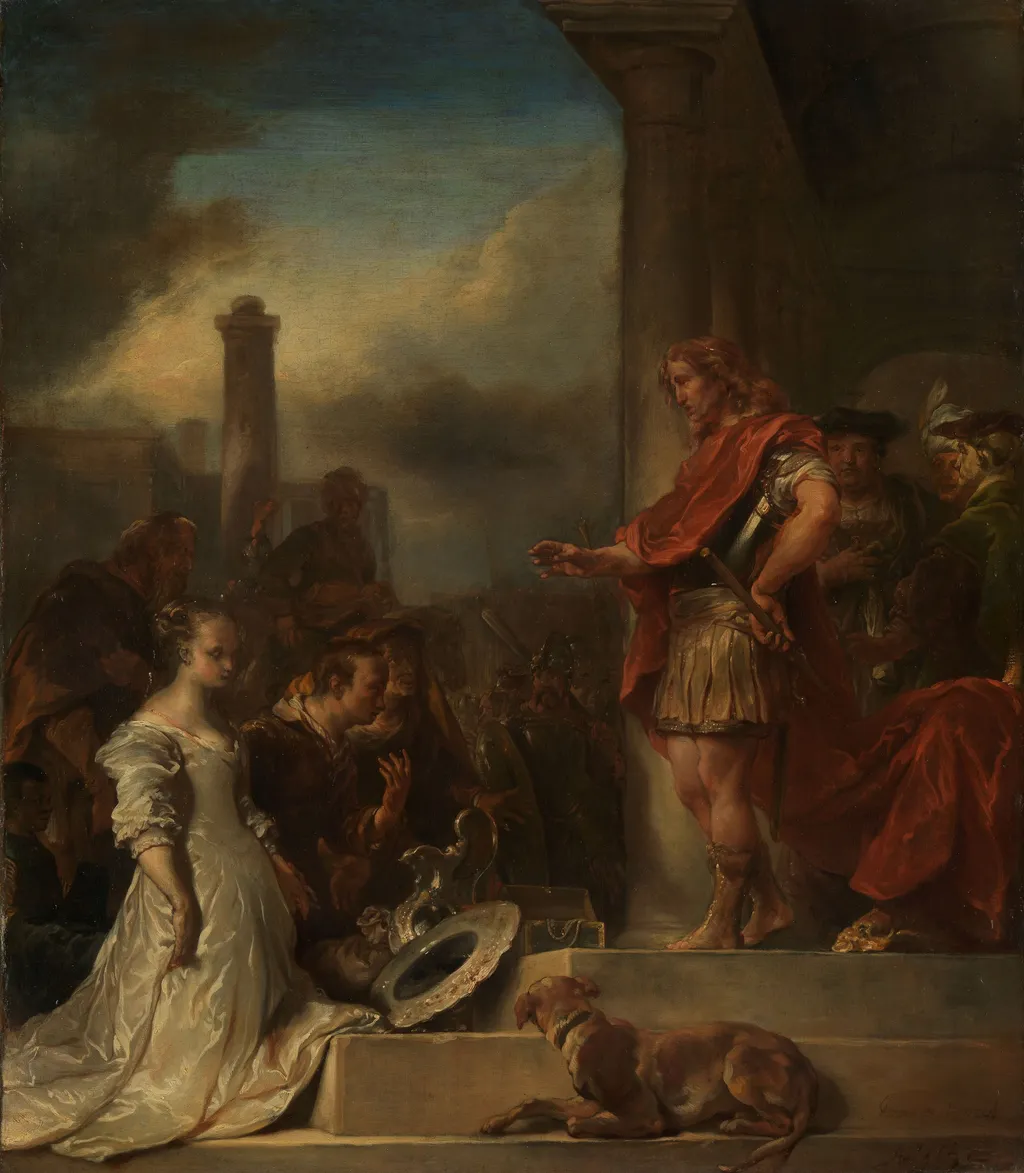
The continence of Scipio is an oil painting by the Dutch Golden Age artist Jan van Noordt. It dates from 1672 and is held in the collection of the Rijksmuseum.
About this work
Overview
Jan van Noordt’s 1672 oil painting, The Continence of Scipio, portrays a moment from the life of the Roman general Scipio Africanus. Executed in the Dutch Baroque tradition, the work is part of the Rijksmuseum’s collection and measures the dramatic tension of a historical narrative through a tightly composed interior scene.
Subject & Meaning
The composition centers on a man in a red cloak—identified as Scipio—who extends his hand in a gesture of magnanimity. A woman in a light dress looks downward, while a kneeling figure clutches a broken helmet and armor, suggesting the aftermath of battle and the general’s famed act of clemency toward a defeated foe.
Technique & Style
Van Noordt employs chiaroscuro, illuminating Scipio’s face and hands against a deepening background. The stark contrast of bright foreground light and encroaching shadow draws the viewer’s eye to the central interaction, while the muted tones of surrounding figures and a reclining dog reinforce the scene’s solemn atmosphere.
History & Provenance
Painted in the year of the Dutch Republic’s recovery from the Rampjaar, the work entered the Rijksmuseum’s holdings as part of its 19th‑century acquisitions of Dutch Baroque art. Its provenance traces back to private collections in Amsterdam before being transferred to the national museum, where it remains on display.
Own this work as a print
Artist & collection