Artwork
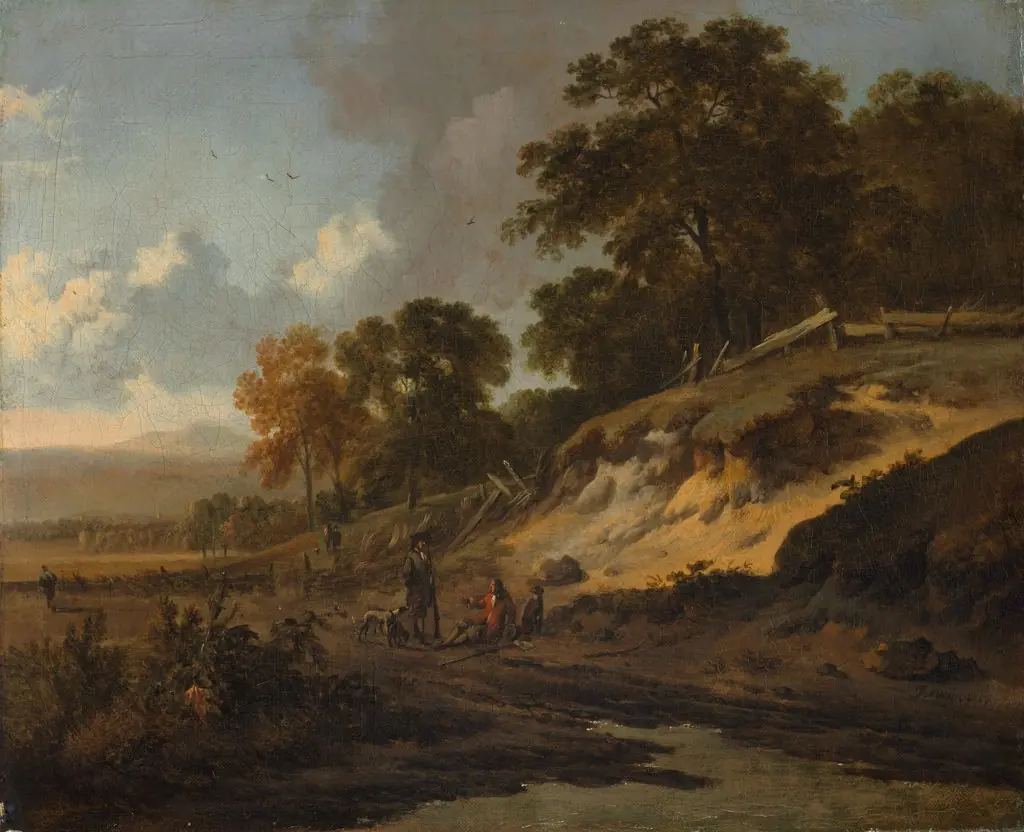
Dune landscape with resting hunters
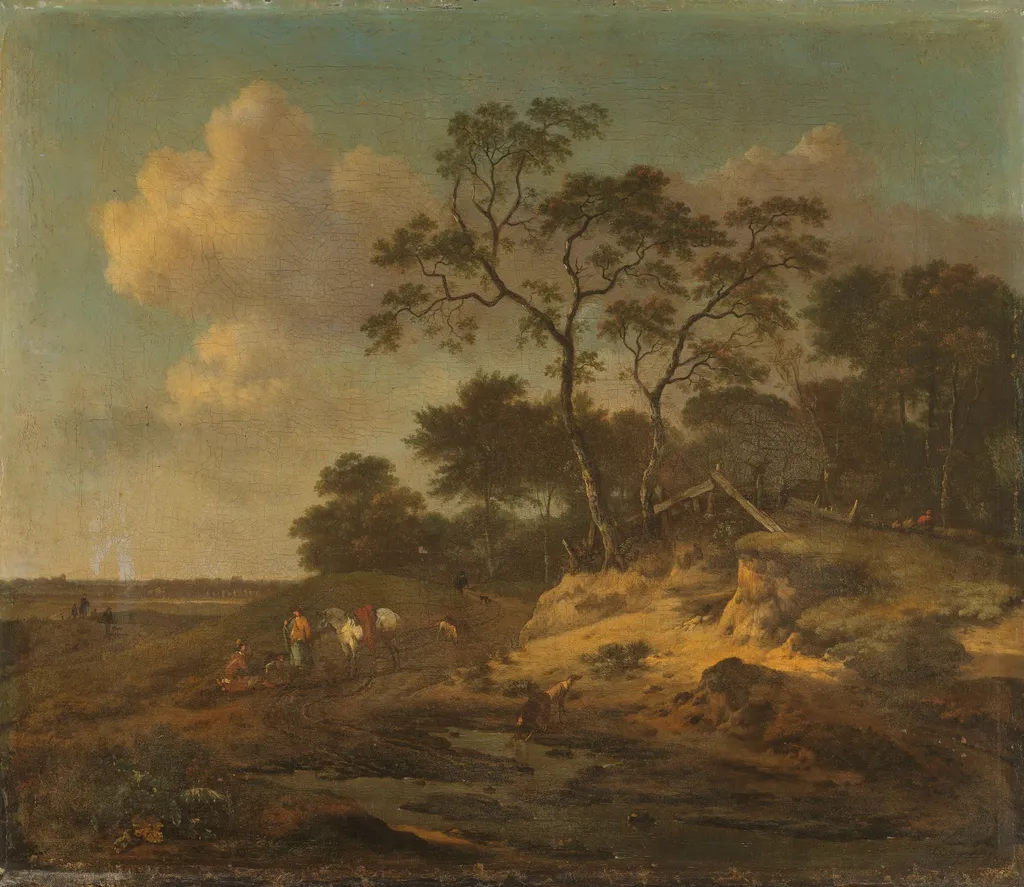
Dune landscape with resting hunters is an oil painting by the Dutch Golden Age artist Jan Wijnants. It dates from 1669 and is held in the collection of the Rijksmuseum.
About this work
Overview
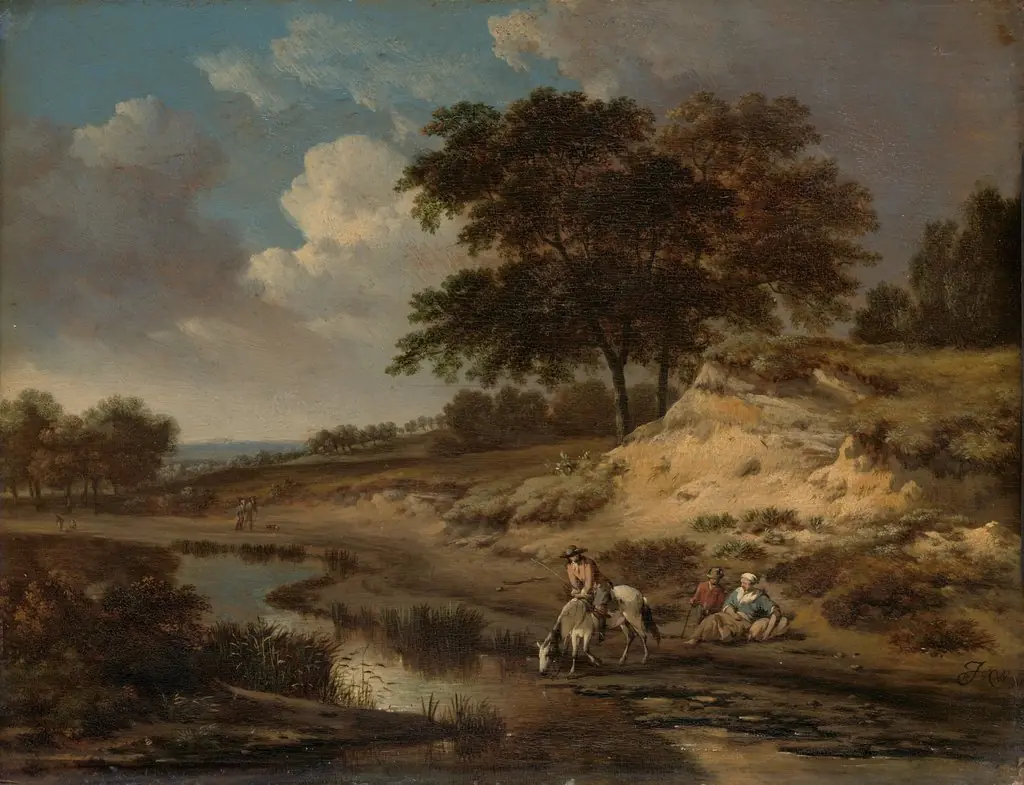
Jan Wijnants’ 1669 oil painting, titled Dune Landscape with Resting Hunters, presents a quiet countryside scene. A modest group of hunters and their horses pause amid gently rolling dunes, while a solitary tree and scattered shrubs punctuate the foreground. The composition extends toward a pale‑blue sky dotted with delicate clouds, creating a sense of spaciousness and calm.
Subject & Meaning
The work captures a moment of repose for a small hunting party dressed in typical mid‑seventeenth‑century attire. Their horses graze nearby, suggesting a pause between activity and travel. The surrounding dunes and solitary tree emphasize the harmony between human presence and the natural environment, inviting contemplation of leisure within the Dutch landscape.
Technique & Style
Executed in oil on canvas, Wijnants employs a restrained palette of earth tones and muted blues, allowing atmospheric perspective to convey depth. Fine brushwork delineates the foliage and distant dunes, while broader strokes render the sky’s softness. The balanced arrangement of figures and terrain reflects the Dutch Golden Age’s preference for realistic yet idealized rural scenes.
History & Provenance
Created in 1669, the painting entered the collection of the Rijksmuseum in Amsterdam, where it remains on display. Its attribution to Jan Wijnants, a noted landscape painter of the period, has been consistently affirmed by museum records and scholarly catalogues.
Own this work as a print
Artist & collection