Artwork
Portrait of Rear-Admiral Job Seaburne May
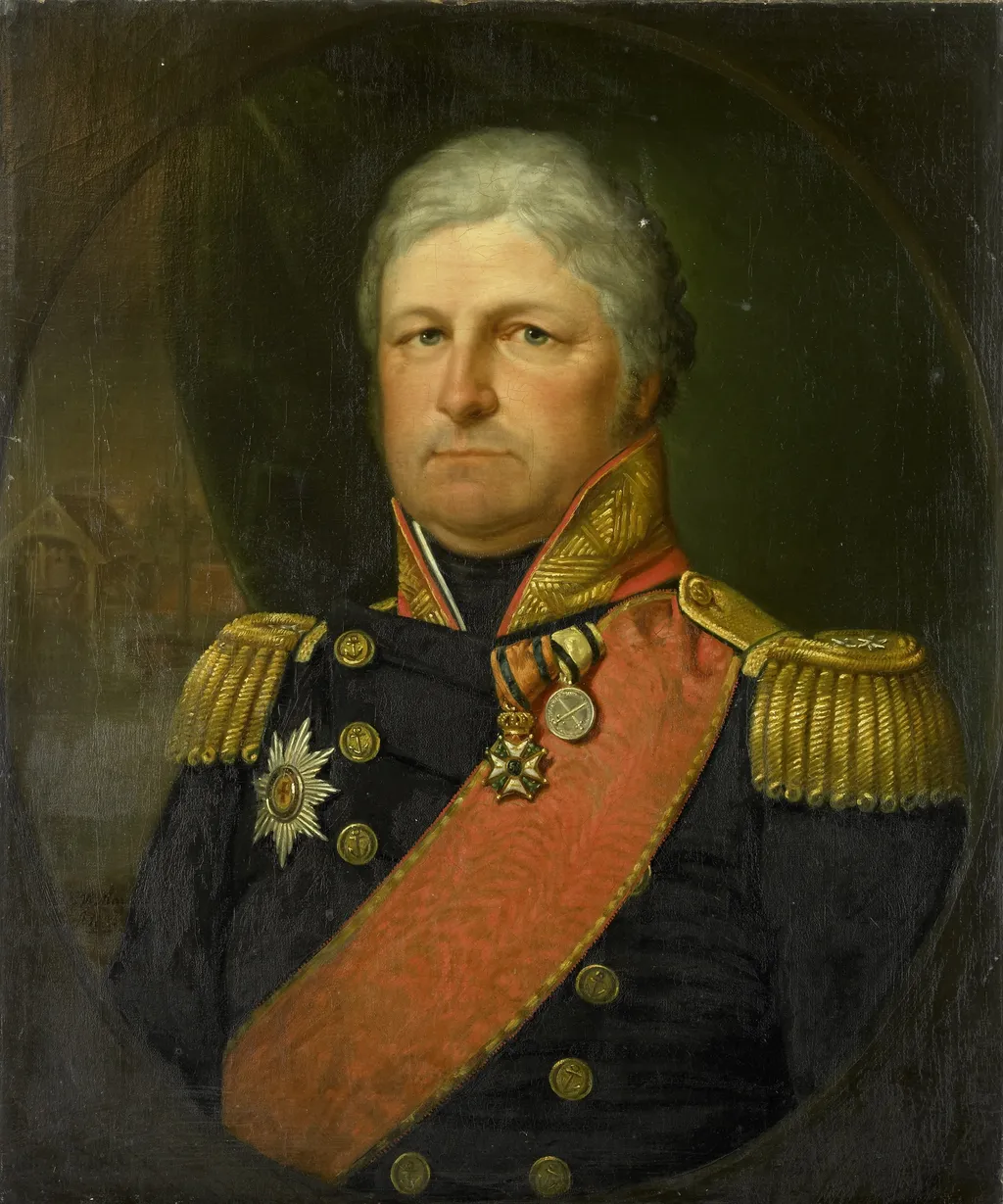
Portrait of Rear-Admiral Job Seaburne May is an oil painting by the Realist artist Jan Willem May. It dates from 1823 and is held in the collection of the Rijksmuseum.
About this work
Overview
Jan Willem May’s 1823 oil portrait presents Rear‑Admiral Job Seaburne May in a formal, half‑length pose. The canvas is owned by the Rijksmuseum, where it remains on display as a representative example of early‑nineteenth‑century Dutch portraiture. The work’s restrained composition and muted backdrop draw the viewer’s attention to the admiral’s attire and insignia.
Subject & Meaning
The sitter, Job Seaburne May, is shown in full dress uniform, signifying his senior naval rank. His calm, composed expression and the orderly arrangement of medals convey a sense of disciplined authority, reflecting the values of duty and honor associated with a career officer of the Royal Navy during the post‑Napoleonic era.
Technique & Style
May employs a subtle chiaroscuro, using soft gradations of light to model the admiral’s face and give it a three‑dimensional presence against a dark, unadorned background. The crisp rendering of the dark blue coat, bright red cuffs, and gilded buttons demonstrates a precise handling of oil paint, while the delicate rendering of fabric folds and metalwork adds a tactile quality.
History & Provenance
Completed in 1823, the portrait entered the collection of the Rijksmuseum, where it has been catalogued as part of the museum’s holdings of Dutch portraiture. Its provenance traces back to the artist’s studio and subsequent acquisition by the museum, confirming its authenticity and historical continuity within the Dutch national collection.
Context
The painting belongs to a period when Dutch artists frequently produced official portraits of foreign military figures, reflecting diplomatic and cultural exchanges. The admiral’s uniform, with its distinctive blue coat and red cuffs, aligns with contemporary British naval dress, situating the work within broader European military visual culture of the early nineteenth century.
Own this work as a print
Artist & collection
