Artwork
Commodore John Rodgers
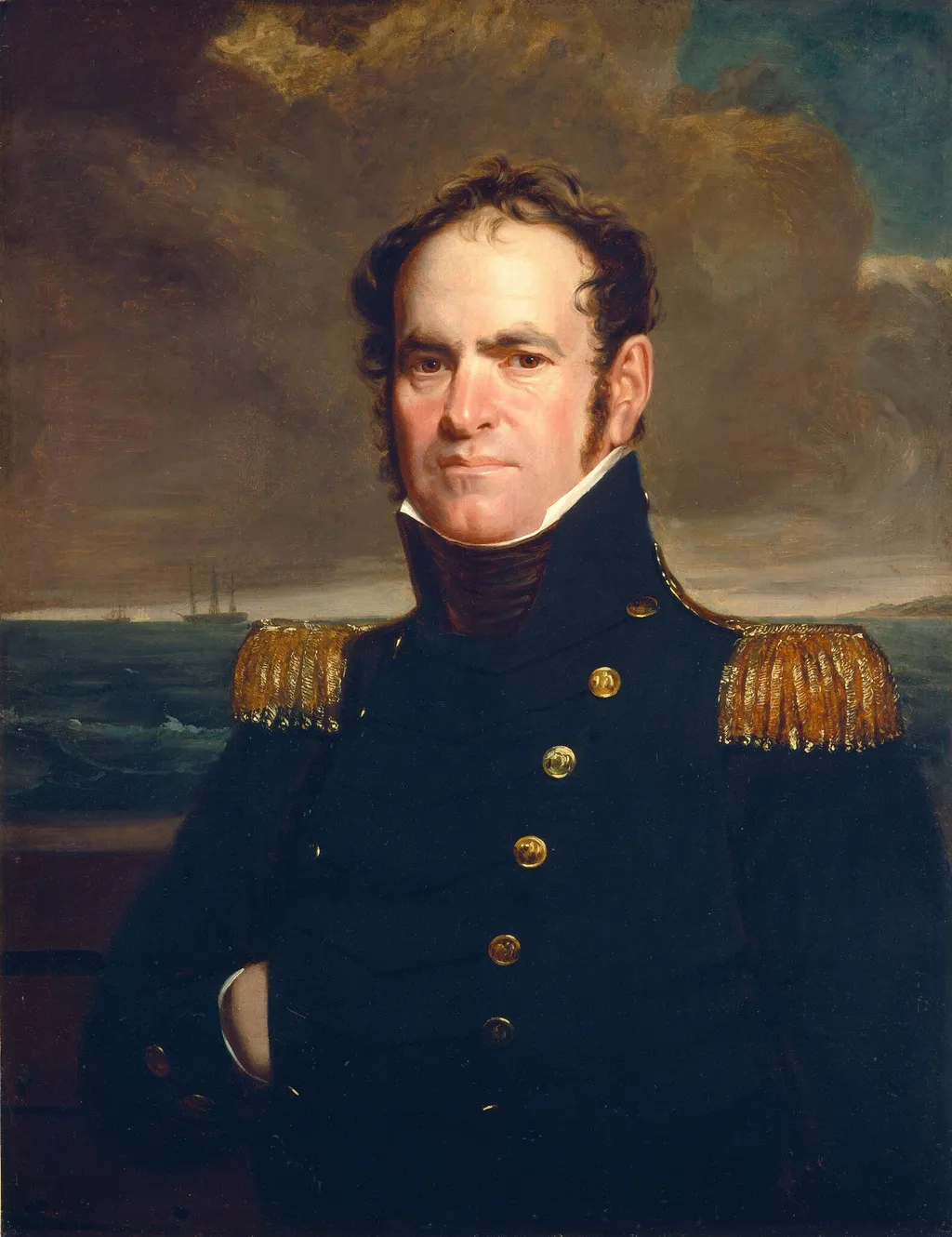
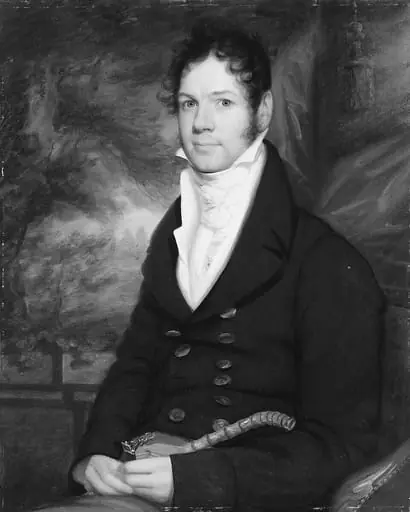
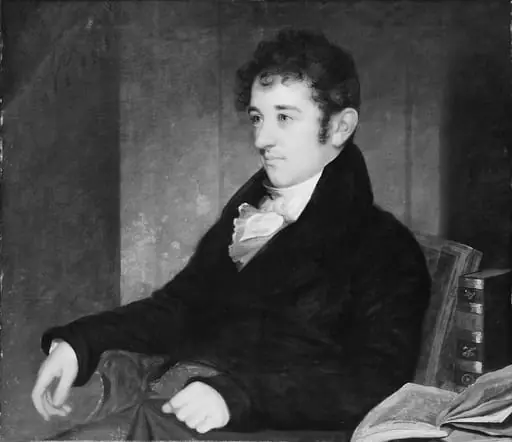
Commodore John Rodgers is an oil painting by the American Folk Art artist John Wesley Jarvis. It dates from 1814 and is held in the collection of the National Gallery of Art.
About this work
Overview
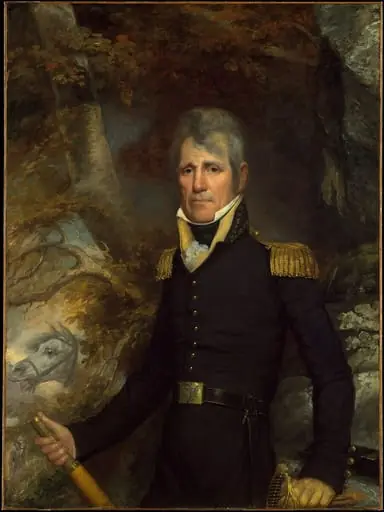
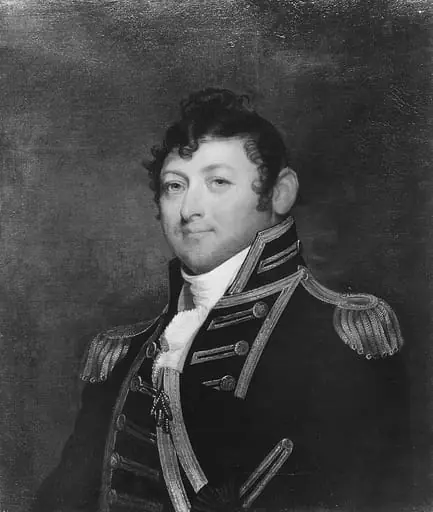
John Wesley Jarvis’s oil portrait of Commodore John Rodgers dates to around 1814. Executed in oil on canvas, the work presents the naval officer in a dark blue uniform trimmed with gold epaulets, set against a muted seascape that merges sky and water in cool blues and grays. The composition centers the figure, whose direct gaze engages the viewer.
Subject & Meaning
The painting records Commodore Rodgers at the height of his naval career, emphasizing his authority through the formal dress and insignia. The uniform’s dark hue and gold detailing signal rank, while the calm maritime backdrop alludes to his service at sea, suggesting both personal stature and the broader maritime ambitions of early‑19th‑century America.
Technique & Style
Jarvis employs chiaroscuro to model the face and uniform, using strong contrasts of light and shadow that give the figure a three‑dimensional presence. Rich, saturated colors highlight the gold epaulets, while the background is rendered with softer, blended tones, creating depth and focusing attention on the officer’s expression and attire.
History & Provenance
Created circa 1814, the portrait likely originated as a commission to honor Rodgers’s naval achievements during the War of 1812. The work has remained within American collections, passing through private hands before entering a museum setting, where it serves as a visual record of early United States naval leadership.
Own this work as a print
Artist & collection

Artist
John Wesley Jarvis (1781–1839) was an American artist, born in South Shields.