Artwork
The Clove - A Storm Scene in the Catskill Mountains
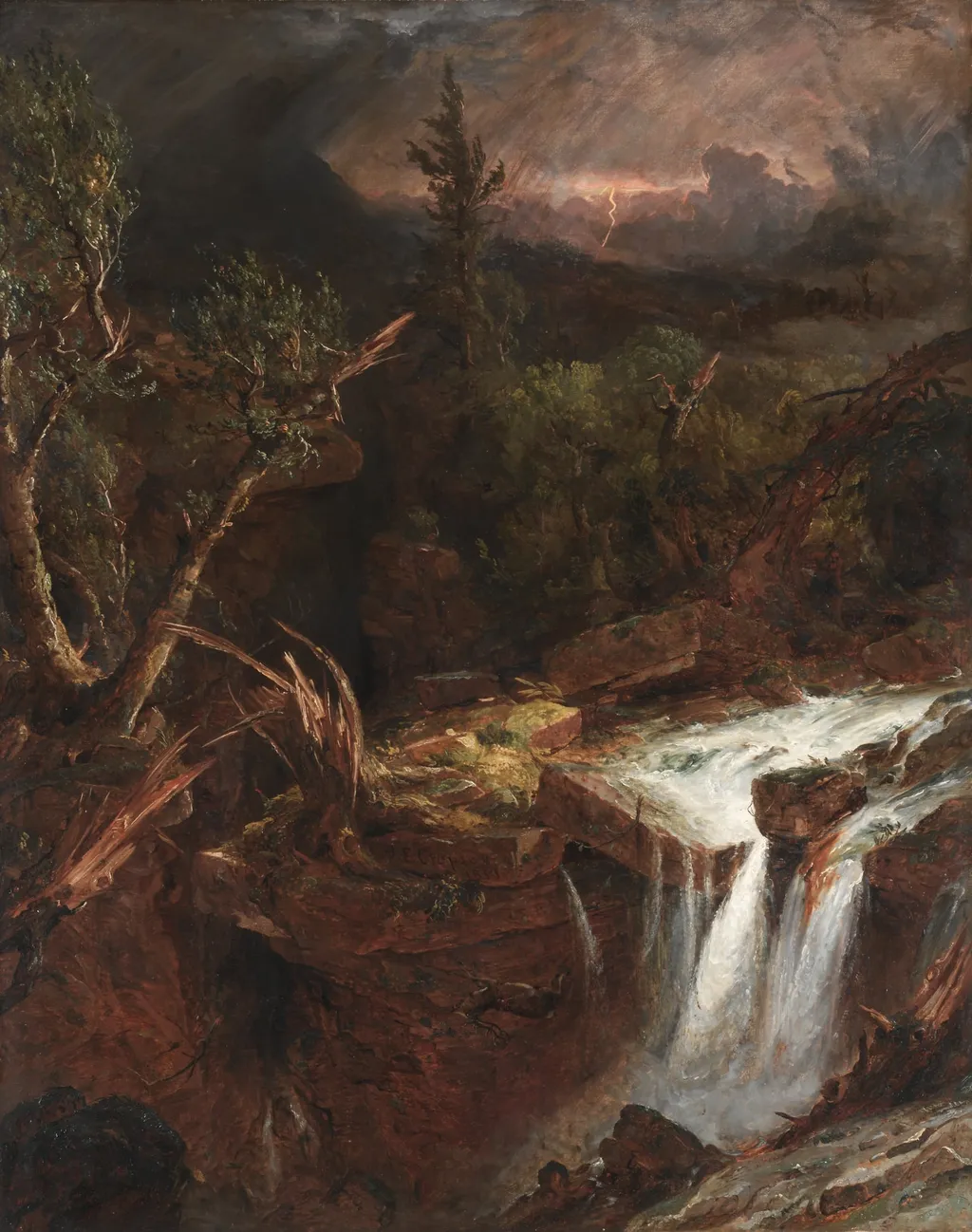
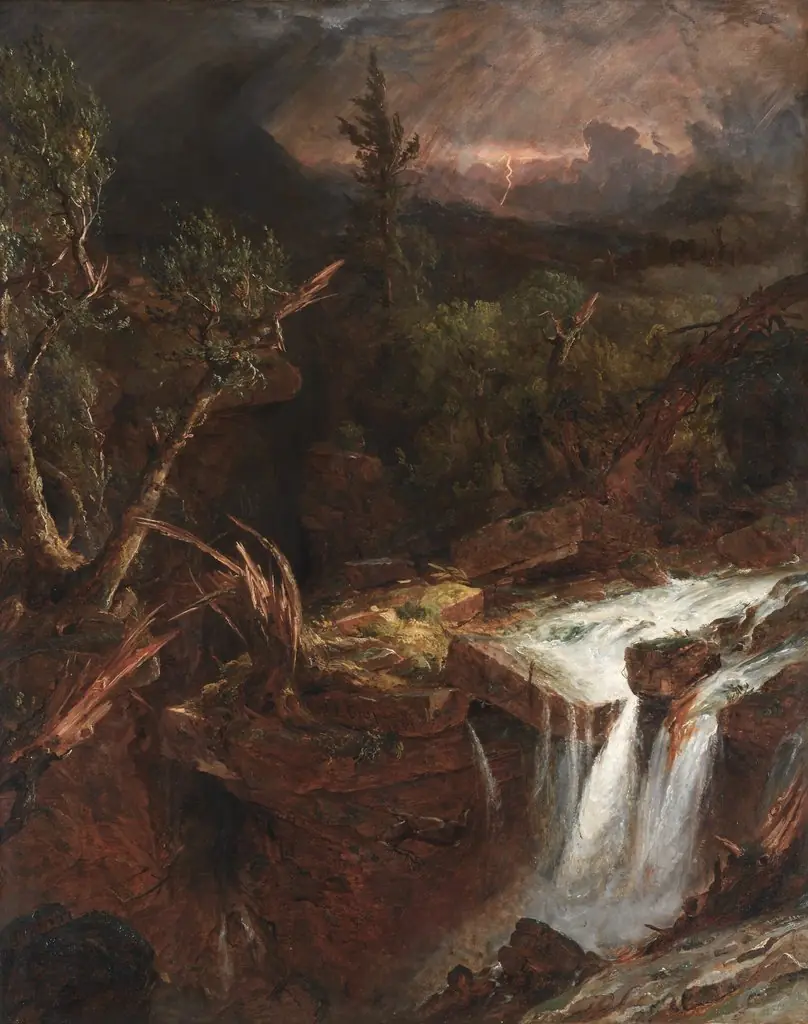
The Clove - A Storm Scene in the Catskill Mountains is an unspecified painting by the Hudson River School artist Jasper Francis Cropsey. It dates from 1851 and is held in the collection of the Cleveland Museum of Art. Jasper F.
About this work
Overview
His background in architecture informed his attention to structural detail, lending precision to the rugged terrain and atmospheric effects.
Jasper F. Cropsey painted *The Clove - A Storm Scene in the Catskill Mountains* in 1851, capturing a turbulent moment in the New York wilderness. As a member of the Hudson River School, he focused on the American landscape not as idealized scenery but as a force of nature. His background in architecture informed his attention to structural detail, lending precision to the rugged terrain and atmospheric effects. The work is now part of The Cleveland Museum of Art’s permanent collection.
Subject & Meaning
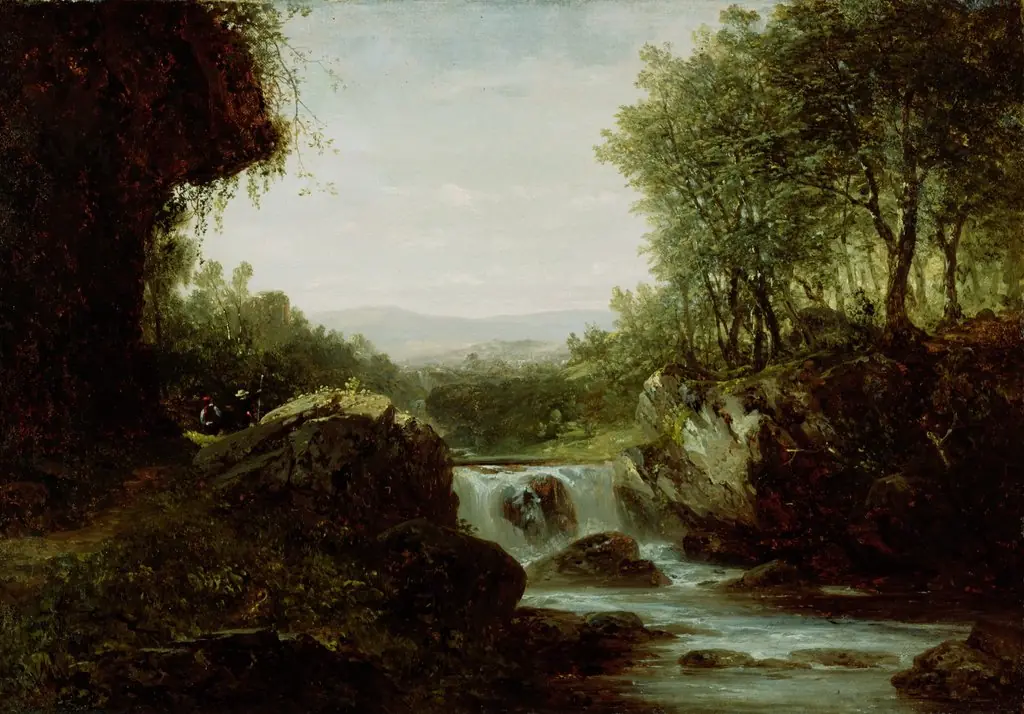
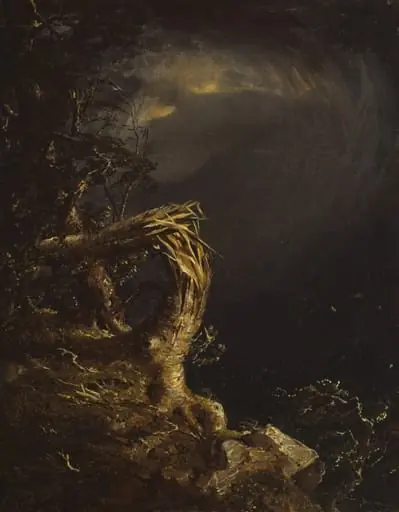
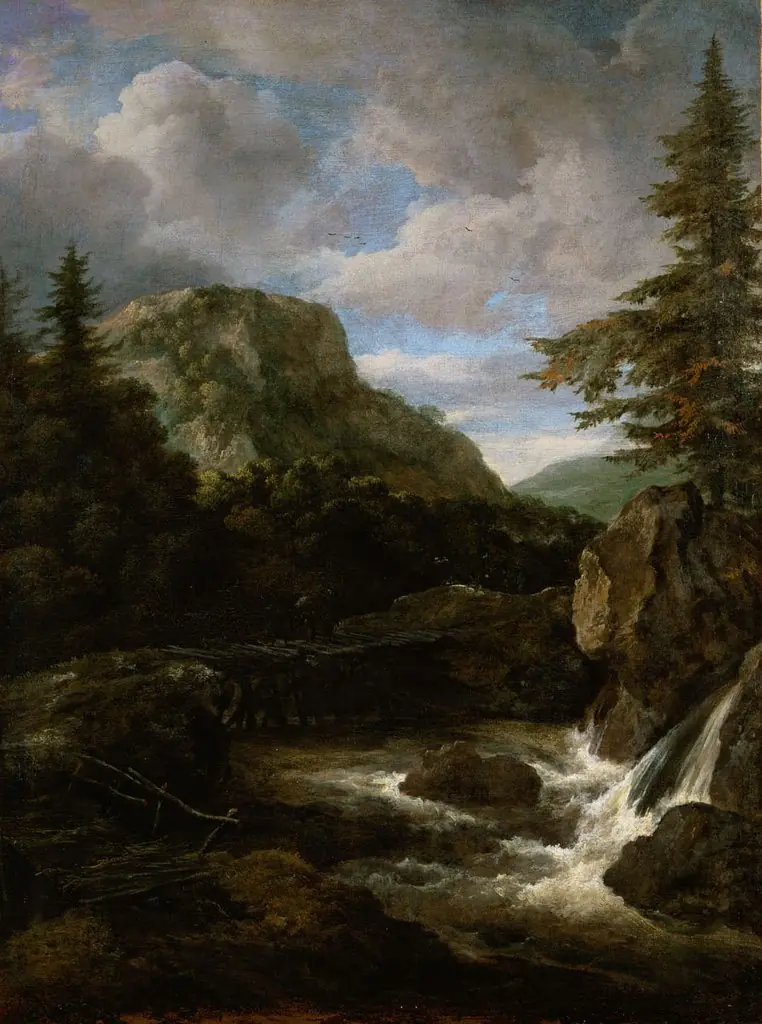
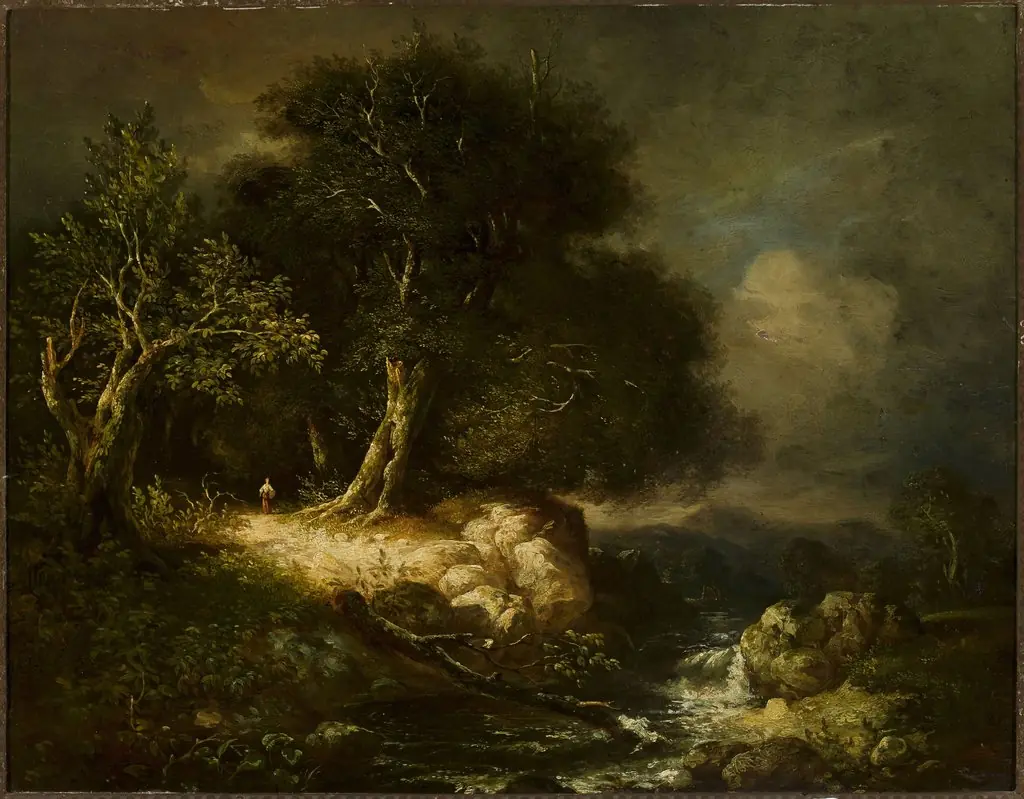
The painting portrays a narrow mountain pass choked with dense, wind-swept trees and a cascading waterfall, all under a brooding, lightning-split sky. Rather than celebrating serenity, Cropsey emphasizes nature’s volatility—the storm feels immediate and overwhelming. The composition conveys a sense of awe and unease, aligning with 19th-century ideas of the sublime, where nature’s power evokes both reverence and fear in the viewer.
Technique & Style
Cropsey employed layered glazes to build depth in the shadowed forest and to render the mist clinging to rock faces. His architectural discipline is evident in the careful arrangement of vertical tree trunks and the angular drop of the waterfall, creating rhythmic structure within chaos. The palette is dominated by muted greens, browns, and grays, with the bright white of the falling water acting as a stark, fleeting contrast against the gloom.
History & Provenance
Completed in 1851, the painting emerged during Cropsey’s most active period as a landscape artist, shortly after his return from Europe. It was likely exhibited in New York before entering private collections and eventually being acquired by The Cleveland Museum of Art. Its preservation reflects its significance as a representative work of mid-19th-century American landscape painting, though it has never been widely reproduced or publicly highlighted.
Context
In the 1850s, American artists sought to define a national identity through depictions of untouched wilderness. The Catskills, already a symbol of rugged beauty, were frequently painted as sites of spiritual and emotional resonance. Cropsey’s storm scene diverged from tranquil Hudson River School compositions, aligning more closely with emerging European Romantic sensibilities that emphasized nature’s unpredictability and emotional weight.
Legacy
While Cropsey is better known for his autumnal vistas, *The Clove* stands as a rare example of his engagement with dramatic weather and psychological tension in landscape. It influenced later artists interested in nature’s volatility, though it did not spark a direct stylistic movement. Today, it remains a quiet but potent testament to the Hudson River School’s capacity to convey nature’s untamed presence beyond mere topography.
Own this work as a print
Artist & collection
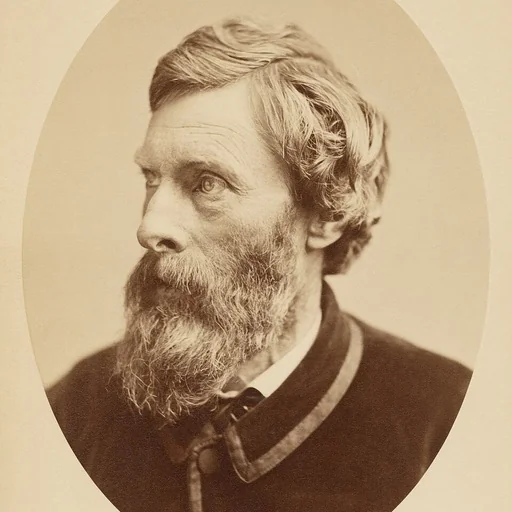
Artist
Jasper Francis Cropsey was an American architect and artist. He is best known for his Hudson River School landscape paintings.