Artwork
Willows and Poplars
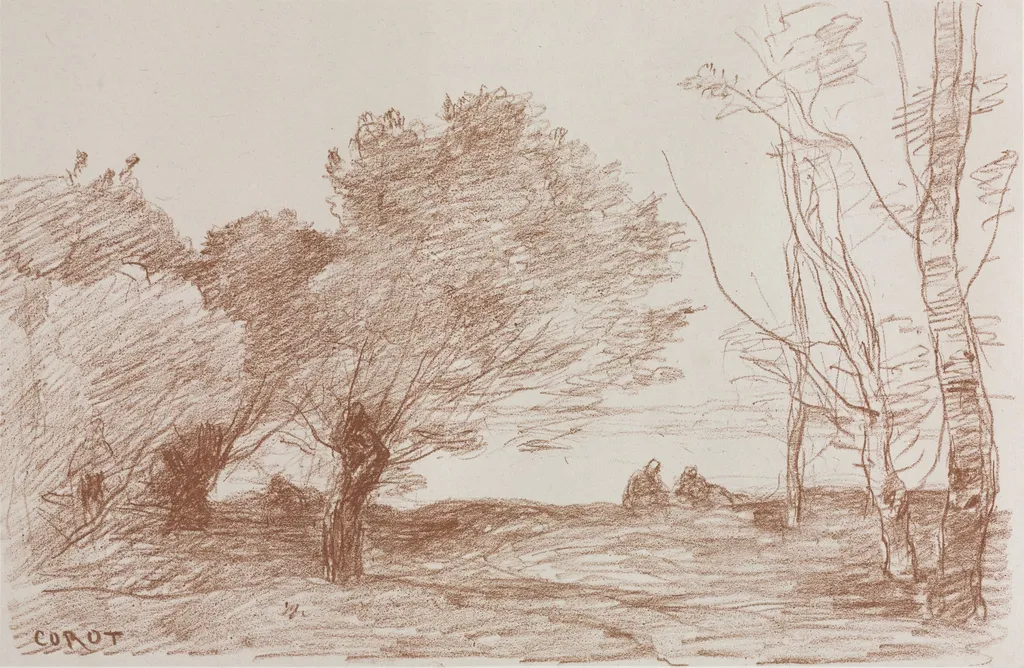
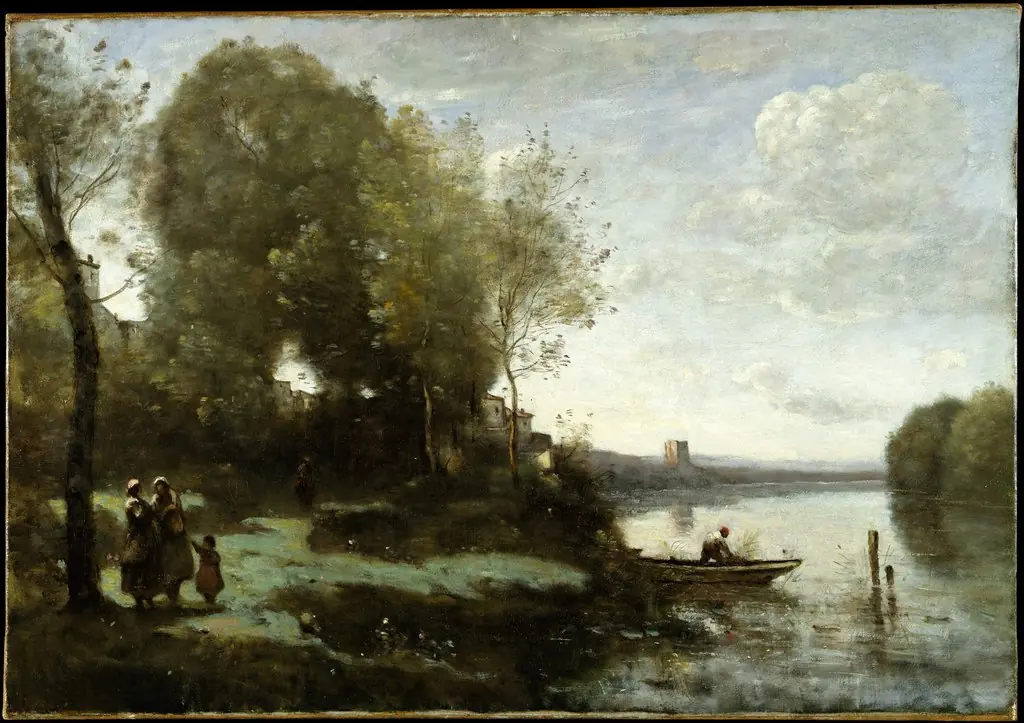
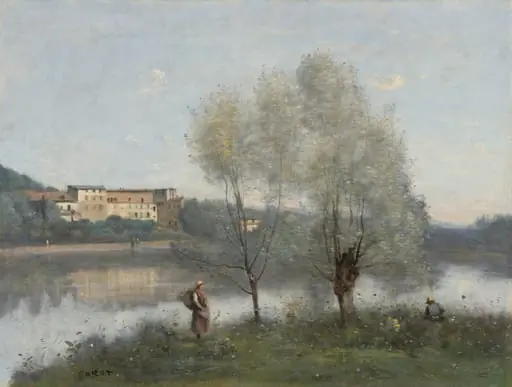
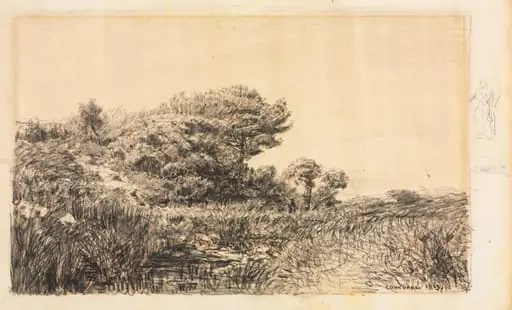
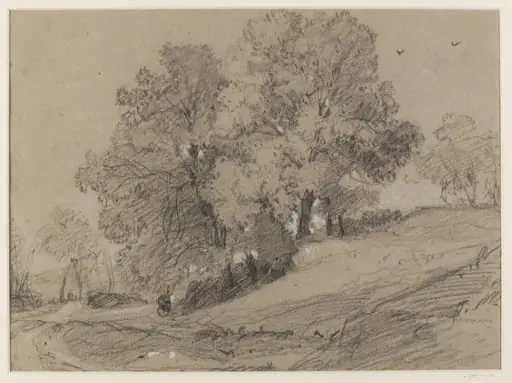
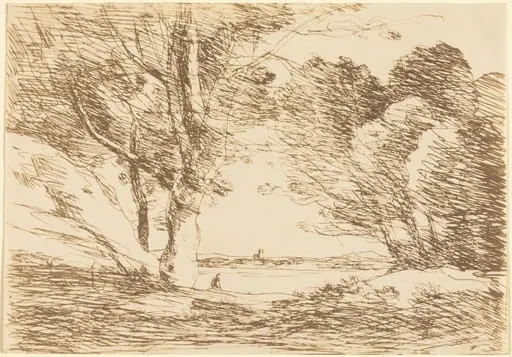
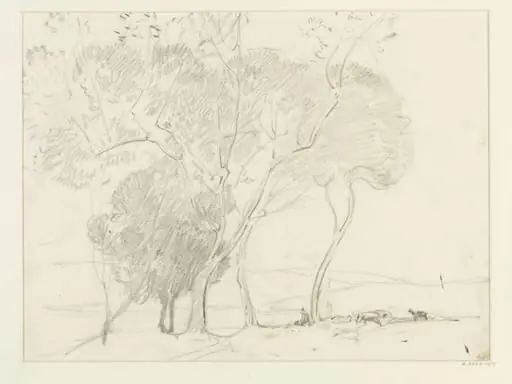
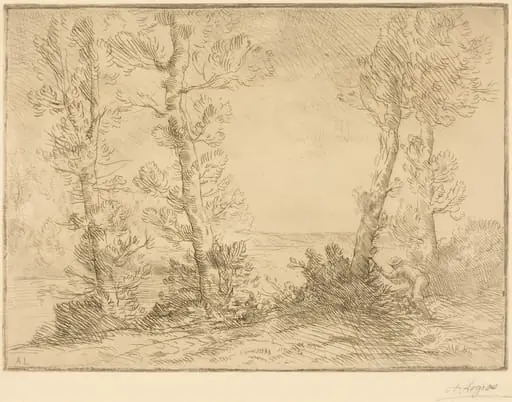
Willows and Poplars is a print by the Impressionist artist Jean Baptiste Camille Corot. It dates from 1871 and is held in the collection of the Cleveland Museum of Art.
About this work
Overview
Willows and Poplars is a late work by Jean-Baptiste-Camille Corot, created when he had largely abandoned strict academic conventions.
Willows and Poplars is a late work by Jean-Baptiste-Camille Corot, created when he had largely abandoned strict academic conventions. The print captures a tranquil rural scene with minimal detail, emphasizing atmosphere over narrative. Its quietude reflects Corot’s shift toward intuitive expression, where emotional resonance outweighs formal precision. The composition invites stillness, aligning with his evolving interest in poetic rather than topographical representation.
Subject & Meaning
Two figures lie motionless beneath a canopy of willows and poplars beside a gentle stream. They are not engaged in any identifiable activity, nor are they anchored to a specific time or place. Their presence suggests an idealized, timeless repose—more an emblem of peace than a portrait of individuals. The scene evokes a quiet, almost mythic solitude, echoing classical notions of Arcadia without literal reference.
Technique & Style
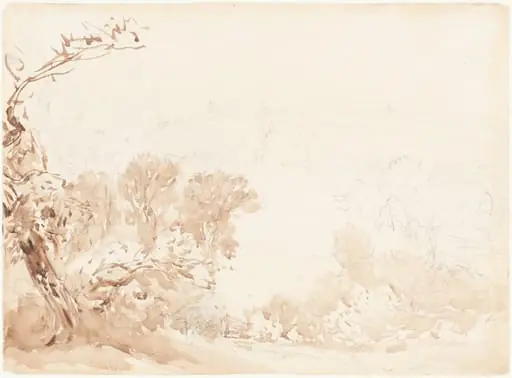
Corot employed soft, blurred contours and muted tonal transitions to dissolve boundaries between land, water, and sky. The trees appear as hazy silhouettes, their forms suggested rather than defined, creating a sense of atmospheric memory. This approach, akin to sfumato, avoids sharp lines, allowing the viewer’s eye to linger and the mood to unfold gradually, reinforcing the work’s meditative quality.
History & Provenance
Created near the end of Corot’s career, this print reflects his mature phase, following decades of travel and study across Europe. It was likely produced as part of his later experiments with printmaking, where he sought to extend the lyrical qualities of his paintings into graphic form. The work remained within private collections, never widely exhibited, preserving its intimate character.
Context
In the latter half of the 19th century, as realism and impressionism gained traction, Corot retained a personal, introspective approach. His work stood apart from both academic rigidity and emerging modernism, offering instead a quiet alternative rooted in emotional tone and natural harmony. Willows and Poplars exemplifies this stance—neither revolutionary nor conventional, but deeply contemplative.
Legacy
The print influenced later artists drawn to mood over detail, particularly those exploring the emotional potential of landscape. Its subdued palette and blurred forms prefigured aspects of Symbolist and even early modernist sensibilities. Though not widely known in his lifetime, Corot’s late works like this one became touchstones for those seeking poetry in the natural world beyond literal depiction.
Own this work as a print
Artist & collection
Artist
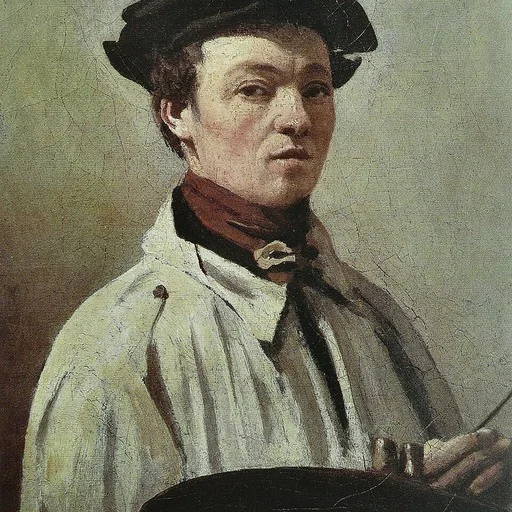
Jean-Baptiste-Camille Corot (UK: KORR-oh, US: kə-ROH, kor-OH; French: ; 16 July 1796 – 22 February 1875), or simply Camille Corot, was a French landscape and portrait painter as well as a printmaker in etching.