Artwork
Lake Geneva
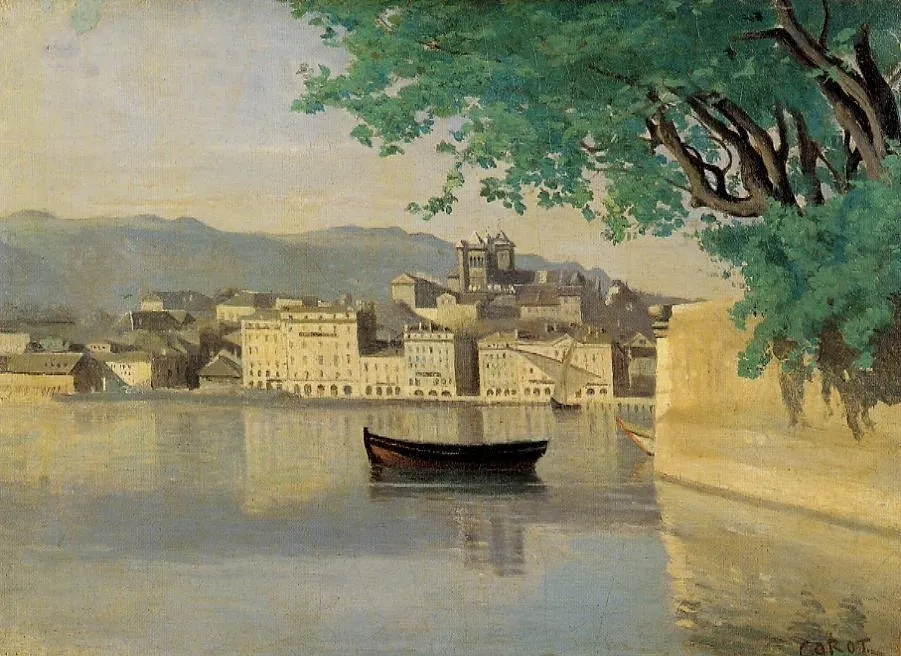
Lake Geneva is an oil painting by the Realist artist Jean Baptiste Camille Corot. It dates from 1834 and is held in the collection of the Philadelphia Museum of Art.
About this work
Overview
Though rooted in classical composition, its sensitivity to atmosphere and subtle tonal shifts aligns with early Realist tendencies in French landscape painting.
Painted in 1834 by Jean-Baptiste-Camille Corot, *Lake Geneva* is an oil on canvas landscape that captures a quiet moment along the shores of Lake Geneva. The work reflects Corot’s transition from academic traditions toward direct observation of nature. Though rooted in classical composition, its sensitivity to atmosphere and subtle tonal shifts aligns with early Realist tendencies in French landscape painting. It is held in the collection of the Philadelphia Museum of Art.
Subject & Meaning
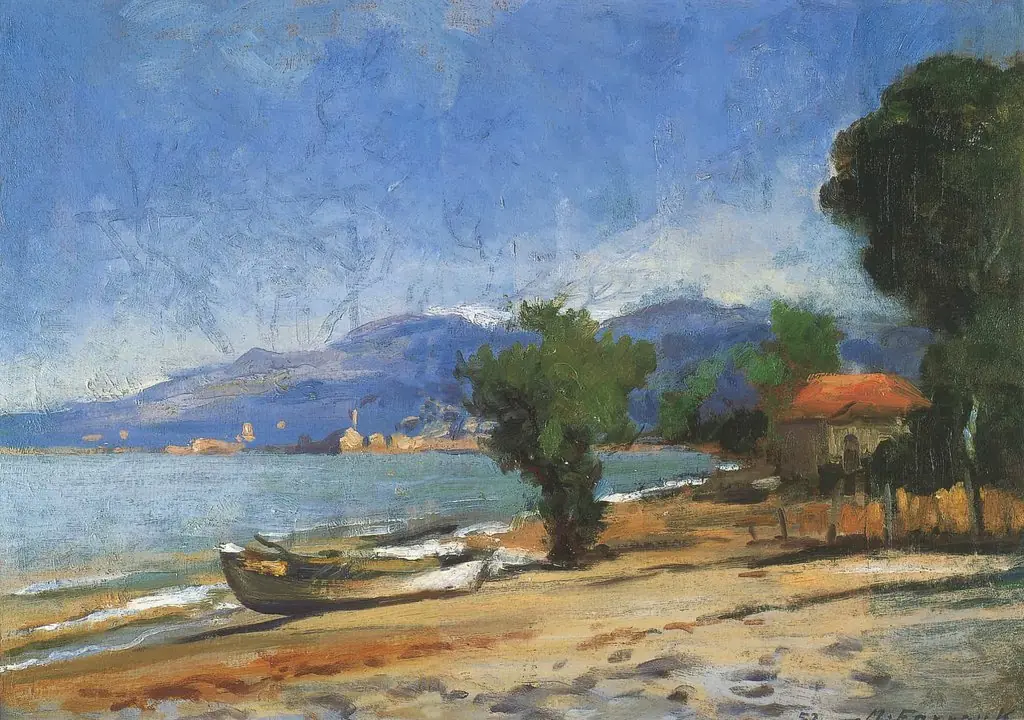
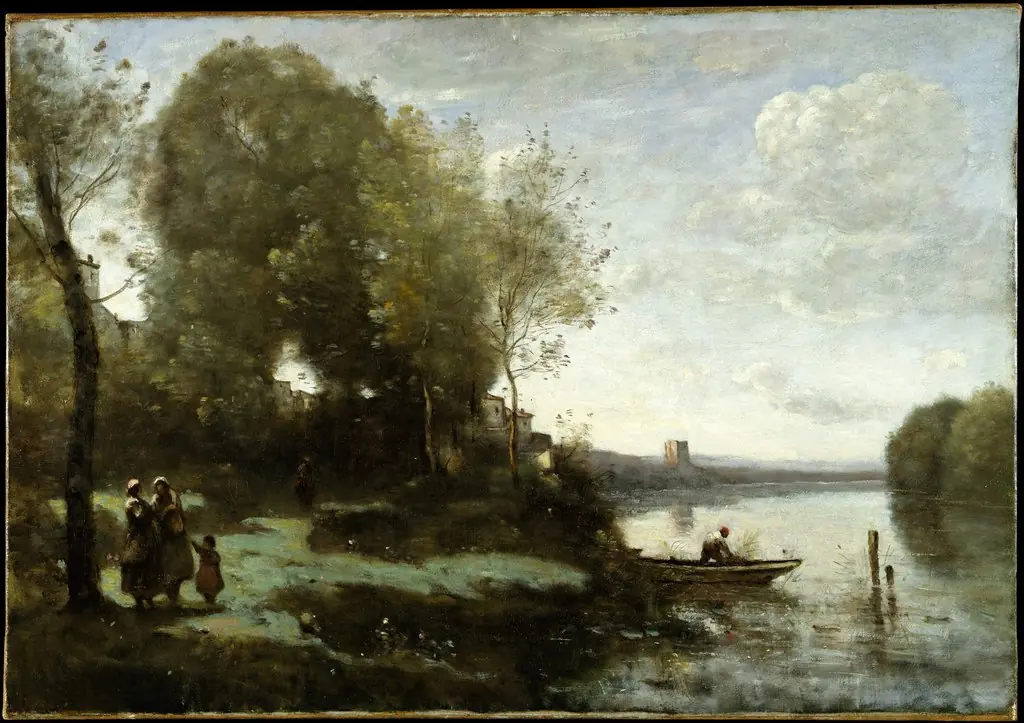
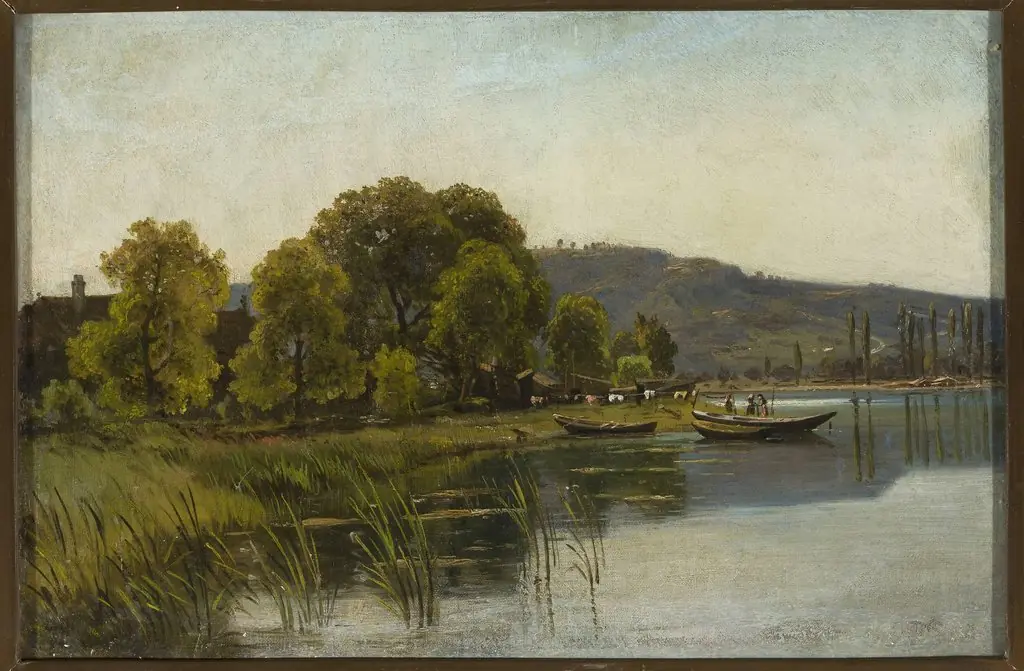
The scene depicts a tranquil lakeside with gently sloping hills, scattered buildings, and distant snow-capped peaks. Trees in the foreground lean over the water, their reflections softening the boundary between land and lake. There is no human activity, no narrative drama—only stillness. The absence of overt action invites contemplation, suggesting a quiet reverence for nature’s quiet rhythms rather than its grandeur.
Technique & Style
Corot employed delicate, blended brushwork to render the air and water with a hazy, atmospheric quality. The palette is restrained—soft greens, muted browns, and pale blues—creating harmony without contrast. Light is diffused, not sharply defined, enhancing the sense of calm. The composition is balanced yet informal, with horizontal bands of land, water, and sky guiding the eye gently across the surface.
History & Provenance
Corot painted *Lake Geneva* during a journey through Switzerland, part of his broader practice of sketching outdoors and refining compositions in the studio. The work was likely completed after his return to France. It entered the Philadelphia Museum of Art’s collection in the 20th century, having passed through private hands in Europe before its acquisition. Its preservation reflects its status as a representative example of Corot’s early landscape work.
Context
In the 1830s, French painting was shifting from idealized historical scenes toward depictions of everyday nature. Corot, influenced by both Neoclassical structure and emerging plein-air practices, helped define a middle ground. *Lake Geneva* exemplifies this transition: it avoids romantic exaggeration while resisting pure topographical accuracy, instead offering a poetic interpretation of observed reality.
Legacy
The painting’s subdued tonality and emphasis on light over detail influenced later generations of landscape artists, including the Impressionists. Though not as widely known as Corot’s later works, *Lake Geneva* demonstrates his early mastery of mood and atmosphere. It stands as a quiet precursor to the more radical experiments with light and perception that would follow in the decades after his death.
Artist & collection
Artist
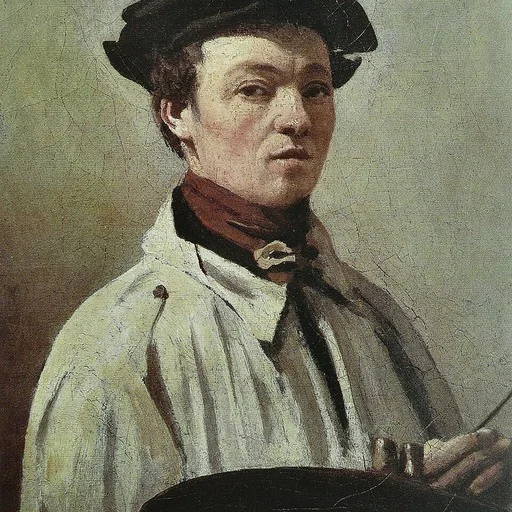
Jean-Baptiste-Camille Corot (UK: KORR-oh, US: kə-ROH, kor-OH; French: ; 16 July 1796 – 22 February 1875), or simply Camille Corot, was a French landscape and portrait painter as well as a printmaker in etching.

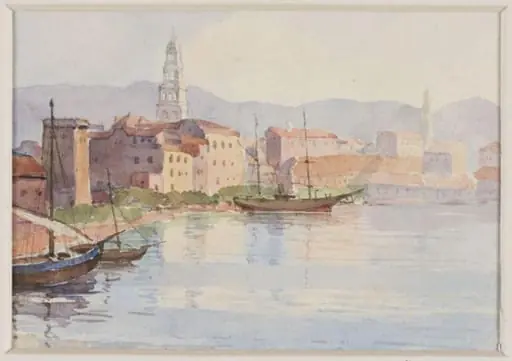
![Untitled [Bay landscape with Italian cities], by Girolamo P. Nerli](https://artifactworldgallery.com/img/girolamo-p-nerli--untitled-bay-landscape-with-italian-cities--780d4d5dc853bdfd-w320.webp)