Artwork
Bacchanal with Children and Chariot
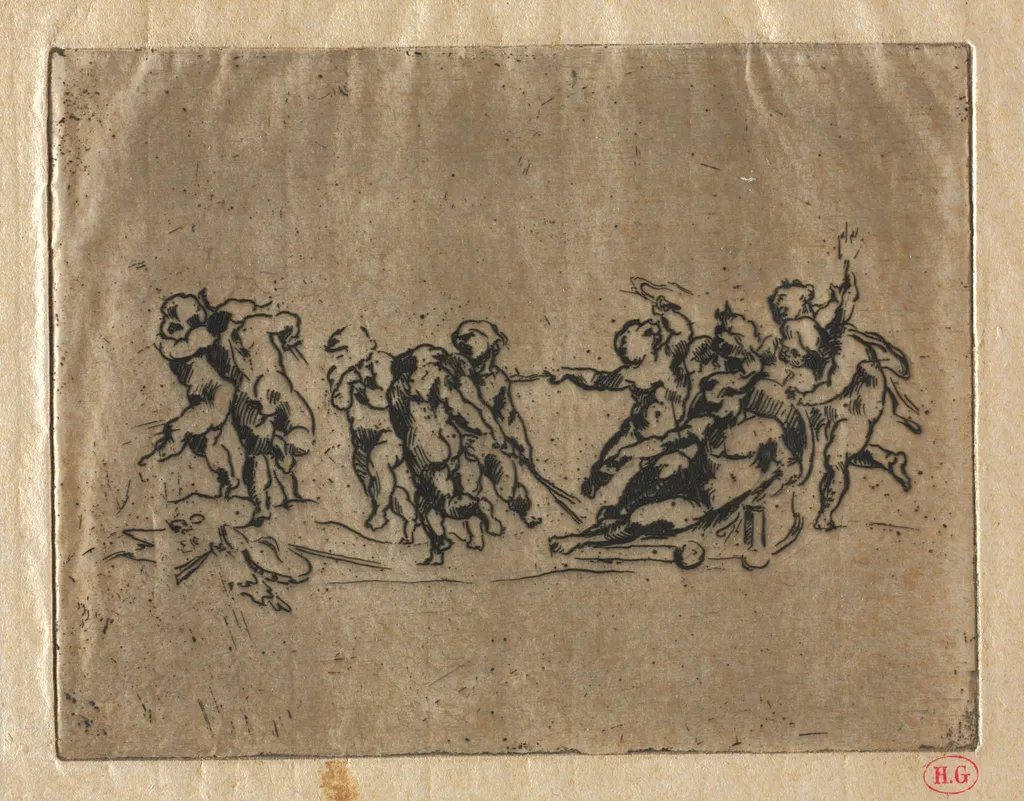
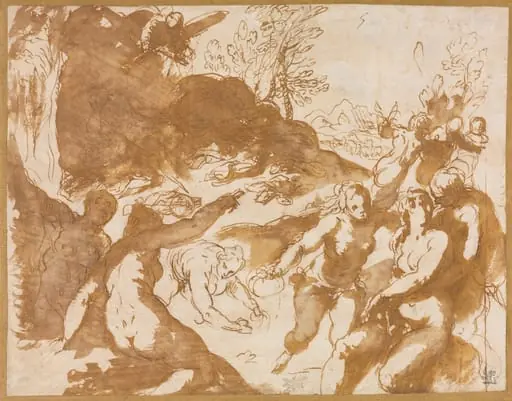
Bacchanal with Children and Chariot is a print by the Impressionist artist Jean-Baptiste Carpeaux. It dates from 1865 and is held in the collection of the Cleveland Museum of Art.
About this work
Overview
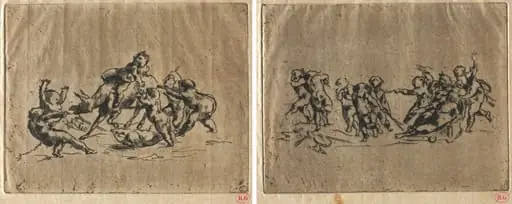
Created around 1865 by French artist Jean-Baptiste Carpeaux, this print captures a mythological bacchanal in a sketchlike medium.
Created around 1865 by French artist Jean-Baptiste Carpeaux, this print captures a mythological bacchanal in a sketchlike medium. Executed with rapid, expressive lines, the composition conveys unrestrained motion and chaotic energy. Though Carpeaux is best known for sculpture, this work reveals his interest in translating dynamic movement into two dimensions. The piece is part of the Cleveland Museum of Art’s collection, reflecting its significance in documenting his broader artistic explorations beyond monumental forms.
Subject & Meaning
The scene illustrates a bacchanal, a ritual celebration dedicated to Bacchus, the Roman god of wine and ecstasy. Figures—part human, part bestial—interlock in frenzied motion, suggesting loss of self in divine revelry. A tipped chariot and airborne horses amplify the sense of disorder, evoking the mythological theme of nature’s untamed forces breaking through social order. The inclusion of children intensifies the primal, unfiltered quality of the moment, aligning with classical depictions of ritual abandon.
Technique & Style
Carpeaux employed loose, scratchy charcoal strokes to build form and motion, favoring immediacy over refinement. The dense, overlapping figures and blurred contours create a sense of turbulence within a compact space. Lines are deliberately uneven, suggesting spontaneity and physical exertion. This gestural approach mirrors the energy of the subject, prioritizing emotional intensity over anatomical precision, and aligns with Romantic-era interests in expressive, transient moments.
History & Provenance
Produced during Carpeaux’s active years under Napoleon III, the print likely served as a preparatory study or independent work exploring movement and myth. It entered the Cleveland Museum of Art’s collection through documented acquisition, though its earlier ownership remains unrecorded. Its survival as a standalone print, rather than a sketch for a larger sculpture, suggests it held independent value to the artist or early collectors interested in his experimental process.
Context
In mid-19th-century France, mythological subjects remained popular among artists seeking to engage with classical tradition while infusing them with contemporary emotional intensity. Carpeaux’s work responded to this trend, but his focus on raw motion distinguished him from more polished academic peers. This print reflects broader artistic currents that valued dynamism and expressive line, foreshadowing later developments in modern drawing practices.
Legacy
Though less known than his sculptures, this print illustrates Carpeaux’s commitment to capturing kinetic energy across media. It contributes to understanding his artistic process and the fluid boundaries between preparatory studies and finished works in his oeuvre. The piece remains a valuable example of how 19th-century French artists reinterpreted classical themes through visceral, informal techniques, influencing later generations interested in expressive draftsmanship.
Artist & collection

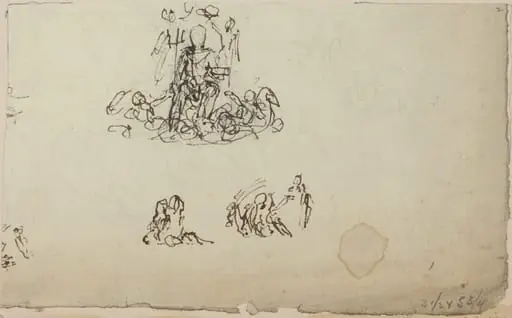 Study of Neptune and Sea Creatures (?)
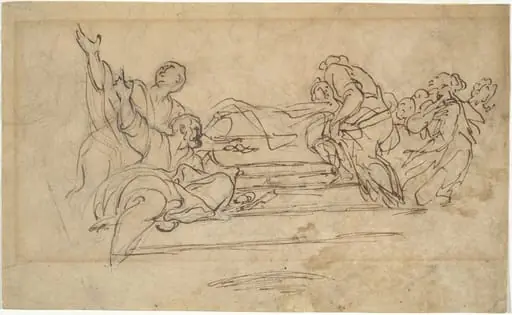 Figures on Steps (Studies for an Assumption of the Virgin)
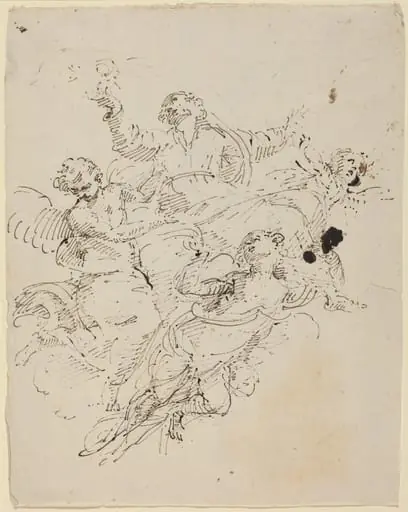 The Ascension of the Virgin
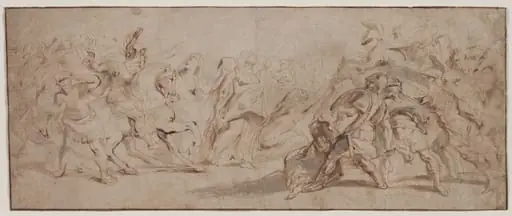 Reconciliation of the Romans and the Sabines (recto)
 Farmers and Fisherman Working
 Rape of the Sabines
![Magdalene Washing the Feet of Christ with Eight Disciples Looking On [recto], by Donato Creti](https://artifactworldgallery.com/img/donato-creti--magdalene-washing-the-feet-of-christ-with-eight-disciples-lo--25318e941cc7fc91-w320.webp) Magdalene Washing the Feet of Christ with Eight Disciples Looking On [recto]
Magdalene Washing the Feet of Christ with Eight Disciples Looking On [recto] From the Apocalypse
 Cupids binding and carrying sheaves of corn
 Apollo and the Muses Awakened by the Call of Fame