Artwork
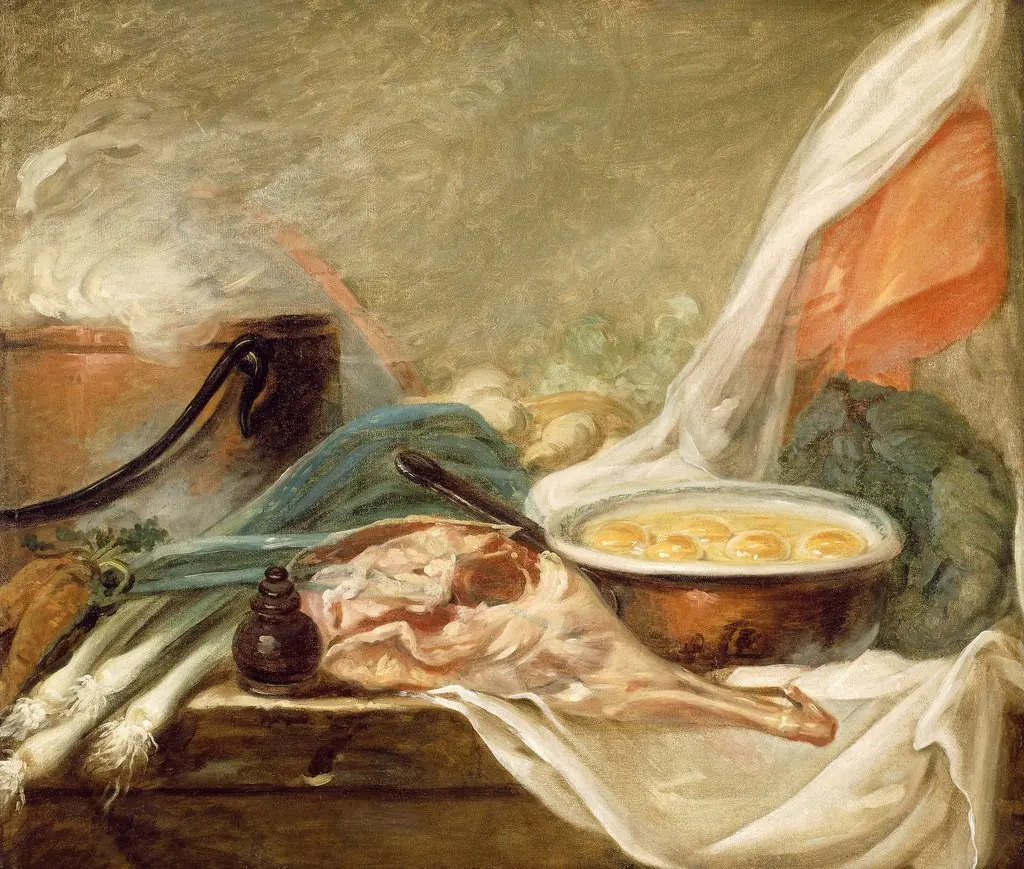
Still Life with a Leg of Lamb
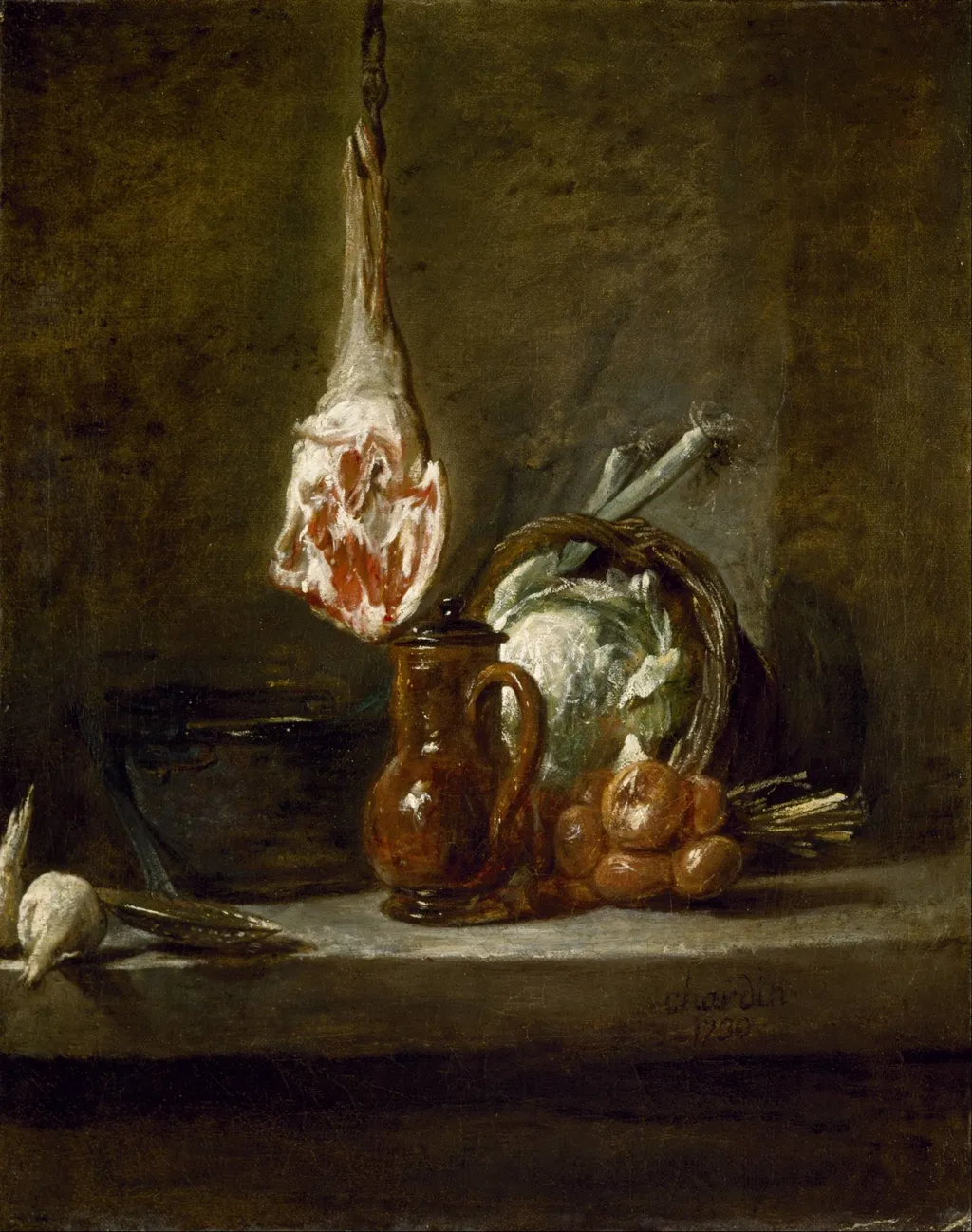
Still Life with a Leg of Lamb is an oil painting by the Rococo painting artist Jean-Baptiste-Siméon Chardin. It dates from 1730 and is held in the collection of the Museum of Fine Arts, Houston.
About this work
Overview
Painted in 1730 by Jean-Baptiste-Siméon Chardin, this oil on canvas work presents a quiet arrangement of domestic fare: a hanging leg of lamb, cabbage, onions, garlic, a pitcher, and kitchen utensils. Set against a dark, unadorned background, the composition emphasizes the material presence of ordinary objects, revealing Chardin’s focus on the dignity of everyday life through restrained stillness and careful observation.
Subject & Meaning
The leg of lamb, partially butchered and suspended, suggests preparation for a meal, grounding the scene in domestic routine.
The painting elevates humble kitchen items—meat, vegetables, and earthenware—into subjects worthy of sustained attention. The leg of lamb, partially butchered and suspended, suggests preparation for a meal, grounding the scene in domestic routine. No symbolic or allegorical layer is overt; instead, meaning arises from the quiet dignity of the mundane, reflecting an 18th-century French appreciation for order, labor, and the sensory richness of the household.
Technique & Style
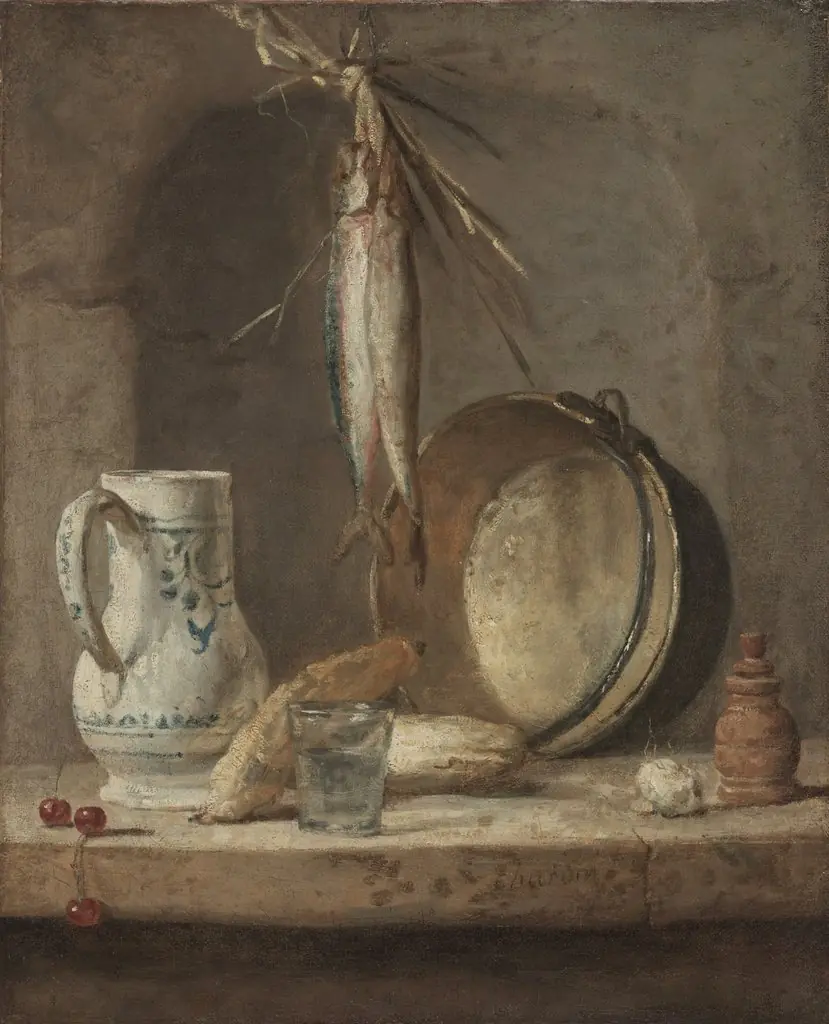
Chardin employs a muted palette and soft, diffused light to model forms with subtle gradations of tone. The textures of wooly fat, damp cabbage leaves, glazed ceramic, and rough garlic skin are rendered with precise, deliberate brushwork. The dark background enhances the volumetric presence of the objects, while the arrangement avoids symmetry, creating a naturalistic balance that feels both deliberate and unforced.
History & Provenance
Created during Chardin’s early period of critical recognition, the painting emerged as part of a broader shift in French art toward intimate, non-idealized subjects. It was likely acquired by private collectors in France before entering public collections. Its survival in good condition reflects its enduring appeal among connoisseurs who valued Chardin’s quiet realism over the more ornate tastes of the Rococo elite.
Context
While Rococo art often favored elegance and playfulness, Chardin’s work stood apart with its sober realism. In a period dominated by grand historical and mythological themes, his focus on kitchen interiors and common foods challenged artistic hierarchies. His paintings resonated with Enlightenment ideals of observation and the value of ordinary experience, aligning him more closely with emerging bourgeois sensibilities than aristocratic spectacle.
Legacy
Chardin’s quiet compositions influenced later realist and modernist painters, including Courbet and Cézanne, who admired his ability to convey weight, texture, and presence without embellishment. This painting exemplifies a tradition in which still life becomes a vehicle for contemplation rather than decoration, reshaping how everyday objects could be seen as worthy of artistic attention in their own right.
Own this work as a print
Artist & collection
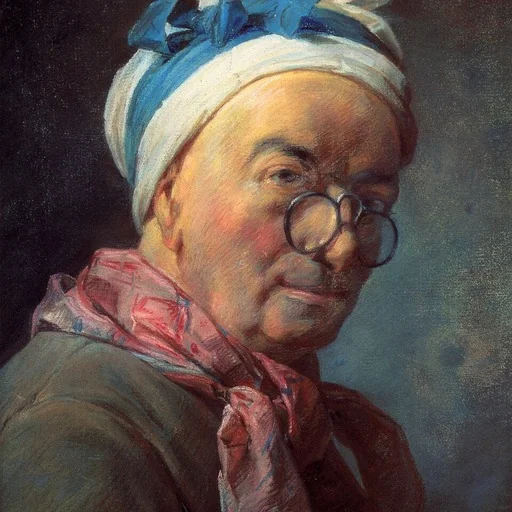
Artist
Jean Siméon Chardin (French: ; November 2, 1699 – December 6, 1779) was an 18th-century French painter.