Artwork
Man Turning over the Soil
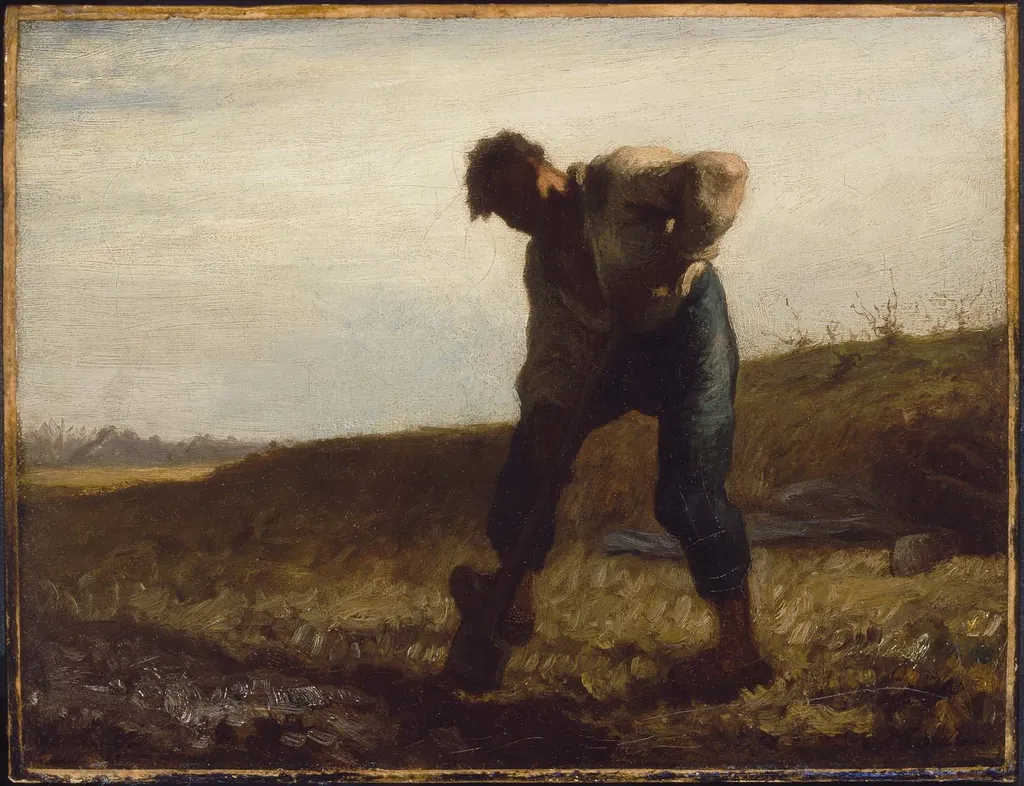
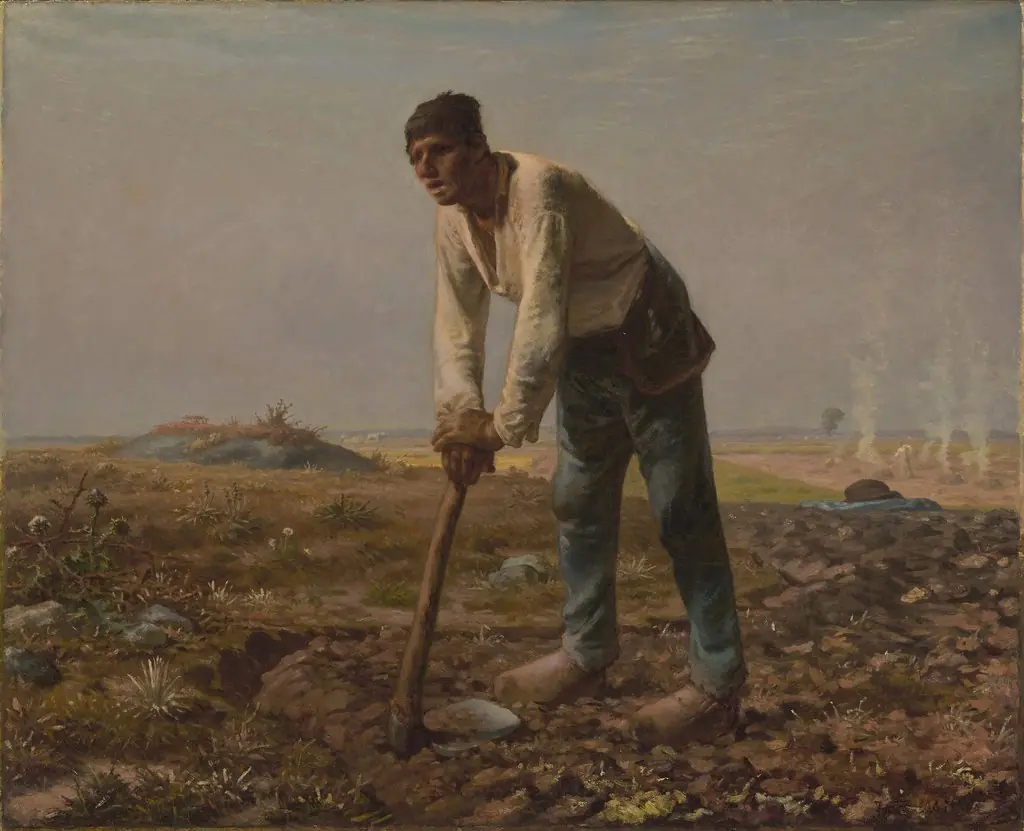
Man Turning over the Soil is an oil painting by the Realist artist Jean François Millet. It dates from 1848 and is held in the collection of the Museum of Fine Arts Boston.
About this work
Overview
The painting aligns with Millet’s broader commitment to documenting rural labor, avoiding idealization in favor of direct observation.
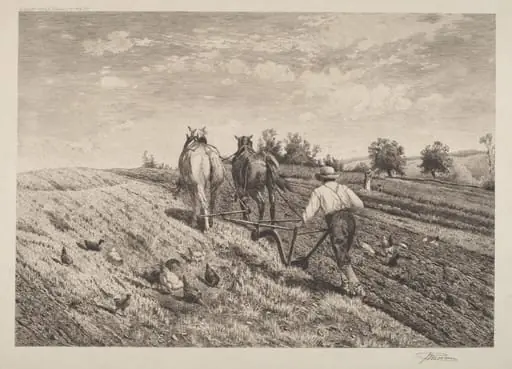
Painted in 1848, *Man Turning over the Soil* is an oil work by Jean-François Millet, a key figure in the Barbizon school. It captures a solitary peasant engaged in the physical act of plowing, rendered with quiet intensity. The painting aligns with Millet’s broader commitment to documenting rural labor, avoiding idealization in favor of direct observation. Its subdued palette and focused composition reflect a deliberate turn toward realism in mid-19th-century French art.
Subject & Meaning
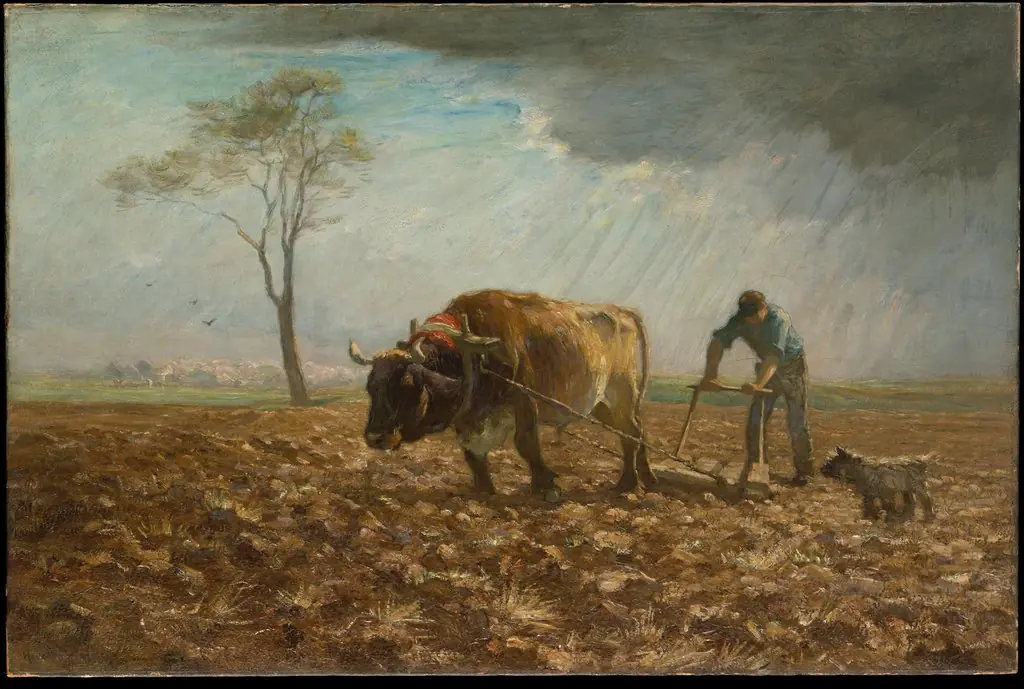
The figure, bent low over the earth, embodies the unglamorous rhythm of agricultural work. His face is hidden beneath the shadow of his hat, anonymizing him as a symbol of the rural working class rather than an individual. The act of turning soil becomes a quiet, repetitive ritual, suggesting endurance and connection to the land. Millet elevates this mundane task into a meditation on human toil, stripped of narrative drama or sentimentality.
Technique & Style
Millet employs chiaroscuro to model the figure’s form against the muted earth and overcast sky, creating a sense of weight and volume. Brushwork is restrained, with thick impasto used sparingly to suggest the texture of soil and fabric. The composition centers the laborer, isolating him within a vast, open landscape. Color is limited to browns, grays, and muted greens, reinforcing the somber tone and grounding the scene in physical reality.
History & Provenance
Created in the year of the French Revolution of 1848, the painting emerged during a period of social upheaval and growing interest in the lives of the rural poor. Though not exhibited publicly at the time, it remained in Millet’s studio until his death. Later acquisitions by private collectors and public institutions preserved its place within the canon of 19th-century French realism, though its early history remains largely undocumented.
Context
Millet worked in Barbizon, near the Forest of Fontainebleau, where artists sought to paint nature and rural life directly from observation. This movement reacted against academic history painting, favoring scenes of everyday existence. *Man Turning over the Soil* reflects this ethos, aligning with contemporaneous efforts by Théodore Rousseau and others to depict the French countryside without romantic embellishment.
Legacy
The painting contributed to a broader shift in art toward dignified portrayals of laborers, influencing later realist and social-realist traditions. Though less famous than Millet’s *The Gleaners*, it exemplifies his consistent focus on the physical and spiritual weight of agricultural work. Its quiet power lies in its refusal to dramatize, instead offering a sober, enduring image of human effort bound to the land.
Artist & collection
Artist
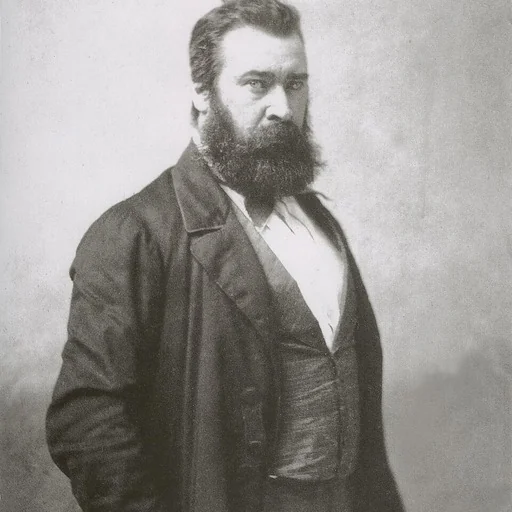
Jean-François Millet (French pronunciation: ; 4 October 1814 – 20 January 1875) was a French painter and one of the founders of the Barbizon school in rural France.