Artwork
Two Reclining Figures
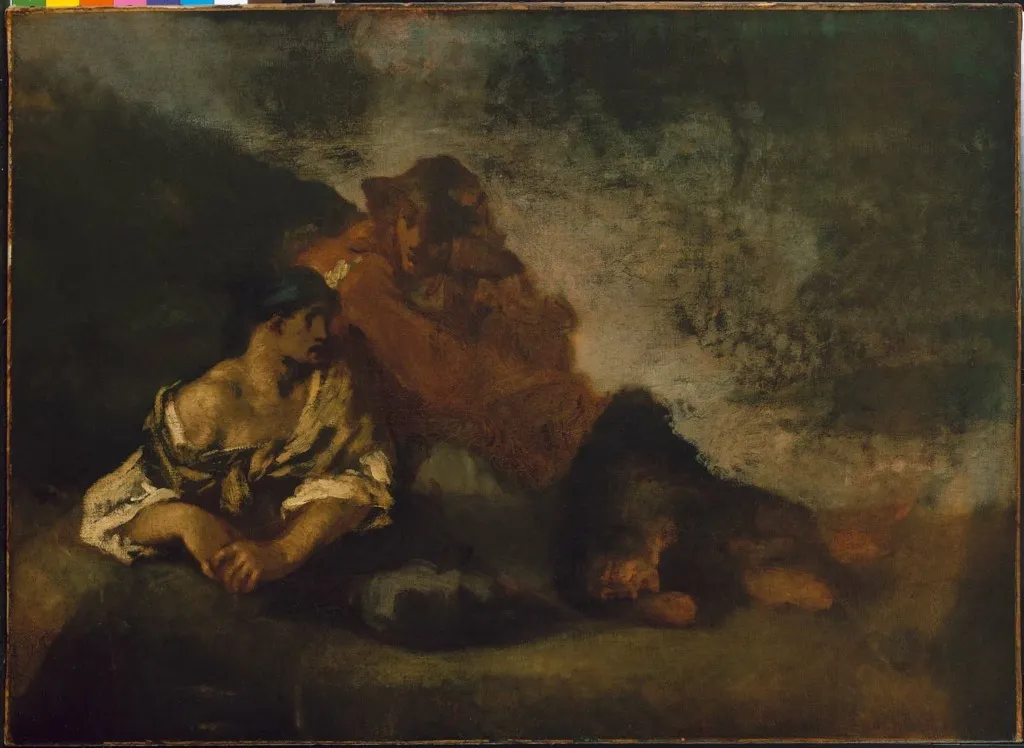
Two Reclining Figures is an oil painting by the Realist artist Jean François Millet. It dates from 1848 and is held in the collection of the Museum of Fine Arts Boston. Painted in 1848 by Jean-François Millet, this oil on canvas work depicts two figures resting on the ground.
About this work
Overview
Painted in 1848 by Jean-François Millet, this oil on canvas work depicts two figures resting on the ground. It belongs to a body of work centered on rural laborers, reflecting Millet’s commitment to portraying ordinary life without romanticization. The composition is subdued, with minimal detail and a restricted palette, emphasizing physical exhaustion over narrative clarity.
Subject & Meaning
The two figures, dressed in simple, worn garments, lie motionless against a low wall, their postures suggesting deep fatigue. Their faces are obscured by shadow, directing focus to their bodies and the weight of their rest. The scene conveys quiet endurance rather than action, aligning with Millet’s interest in the dignity of labor and the quiet moments between toil.
Technique & Style
Millet employed thick, muted oil pigments to create a somber atmosphere, favoring earth tones and deep shadows. Forms are rendered with loose, economical brushwork, avoiding fine detail. The low contrast and dim lighting flatten spatial depth, reinforcing the sense of stillness and isolation. This approach reflects his departure from academic idealism toward a more direct, tactile realism.
History & Provenance
Its provenance traces through private collections before entering a public institution, though specific early ownership records remain limited.
Created shortly after the 1848 revolutions in France, the painting emerged during Millet’s early period in Barbizon, where he settled to observe peasant life firsthand. While not widely exhibited at the time, it was part of his personal exploration of rural existence. Its provenance traces through private collections before entering a public institution, though specific early ownership records remain limited.
Context
In mid-19th century France, urbanization and industrialization reshaped society, yet Millet turned away from city life to document the rhythms of the countryside. His focus on peasants was unconventional in an art world dominated by historical and mythological themes. This work reflects a broader shift toward Realism, valuing the visible truth of labor over idealized narratives.
Legacy
Though less known than Millet’s larger works like 'The Gleaners,' this painting exemplifies his consistent thematic concerns and stylistic restraint. It influenced later artists drawn to quiet, unadorned scenes of working-class life. Its understated power helped cement the legitimacy of rural subjects in modern art, contributing to the enduring legacy of the Barbizon school.
Artist & collection
Artist
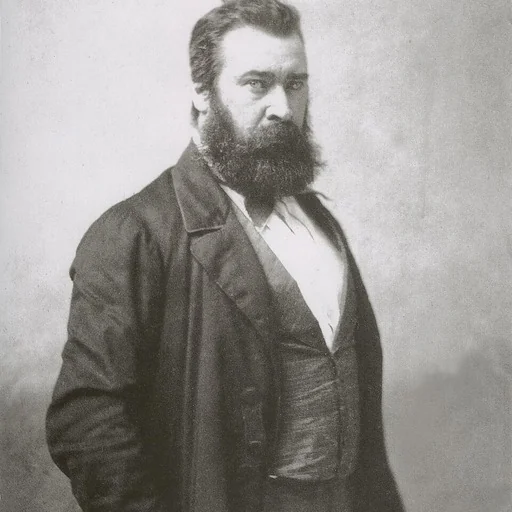
Jean-François Millet (French pronunciation: ; 4 October 1814 – 20 January 1875) was a French painter and one of the founders of the Barbizon school in rural France.

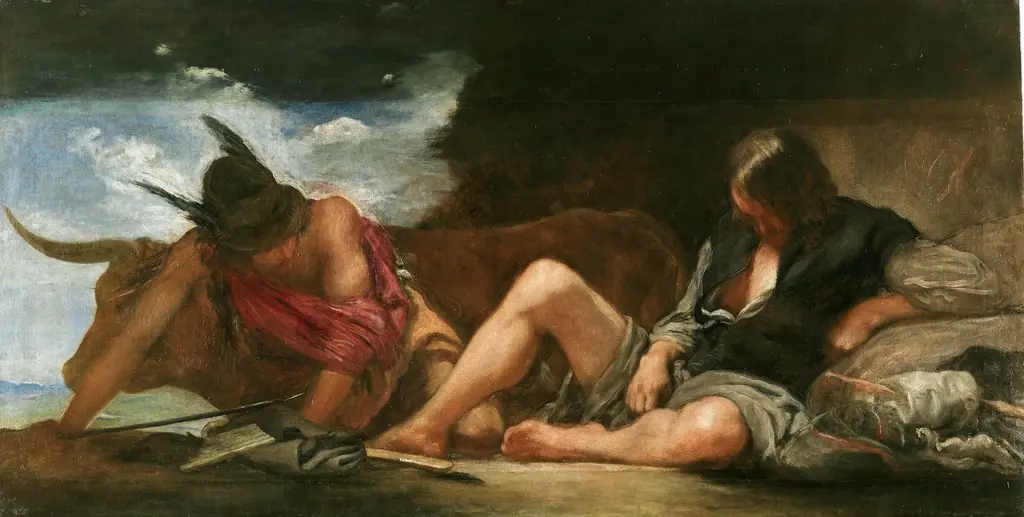 Mercury and Argus
 A Connemara Girl
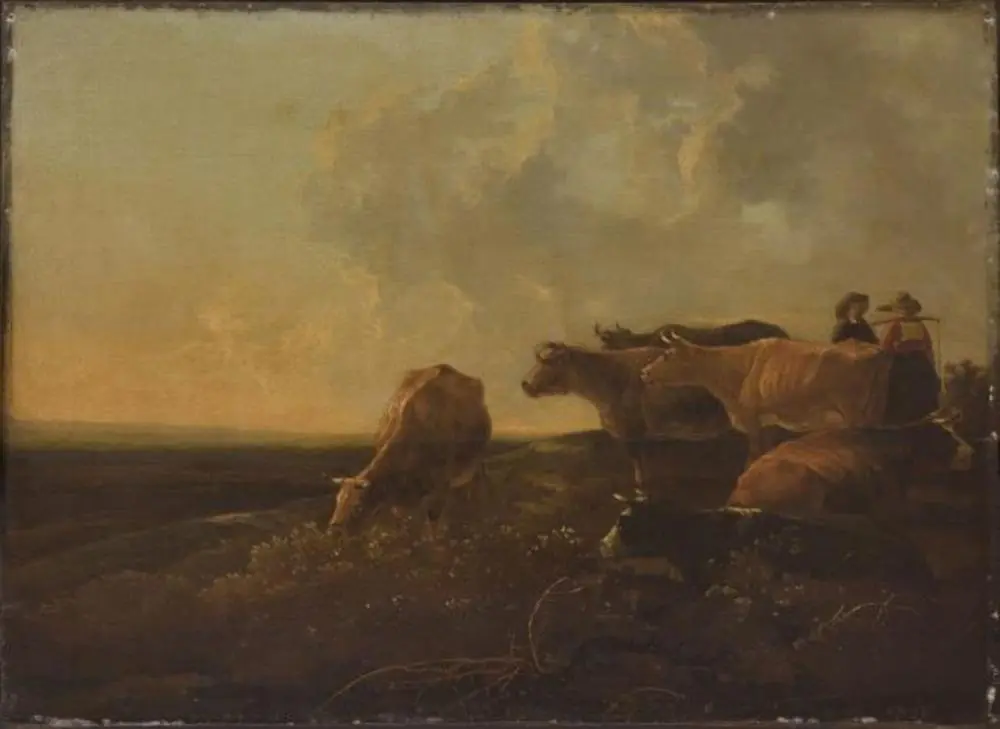 Hilly Landscape with Cattle
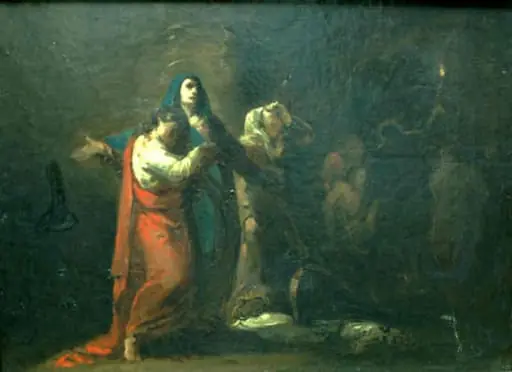 Scenă biblică
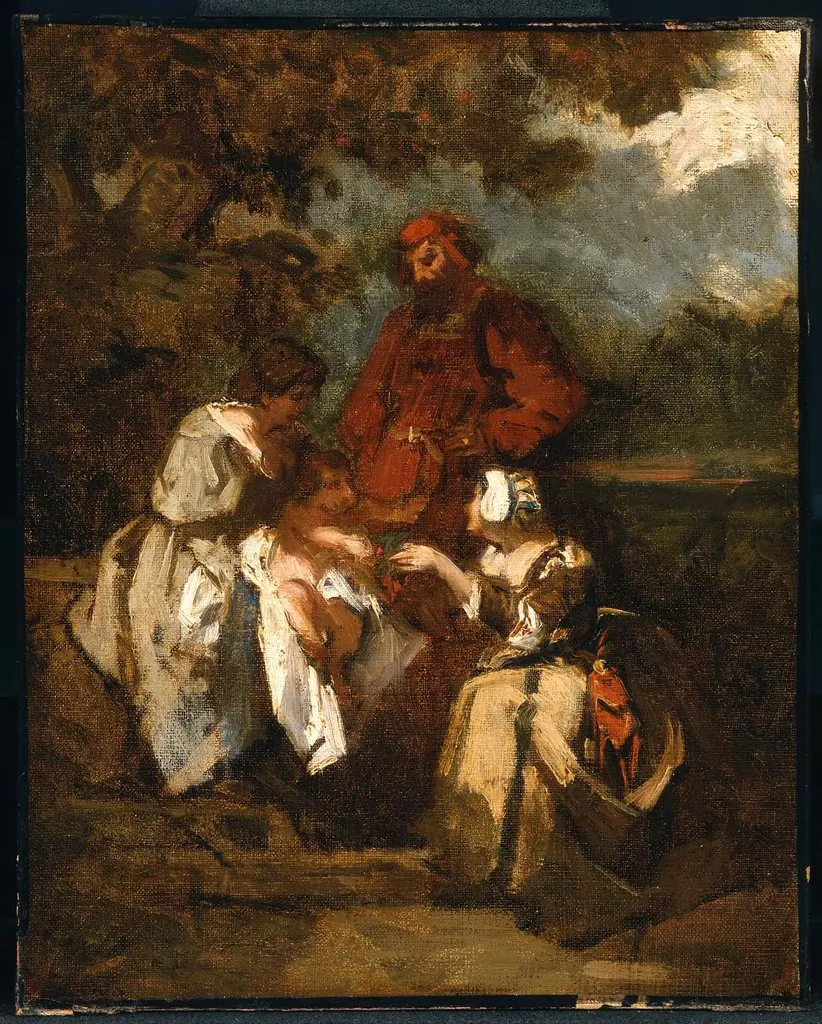 Family Group
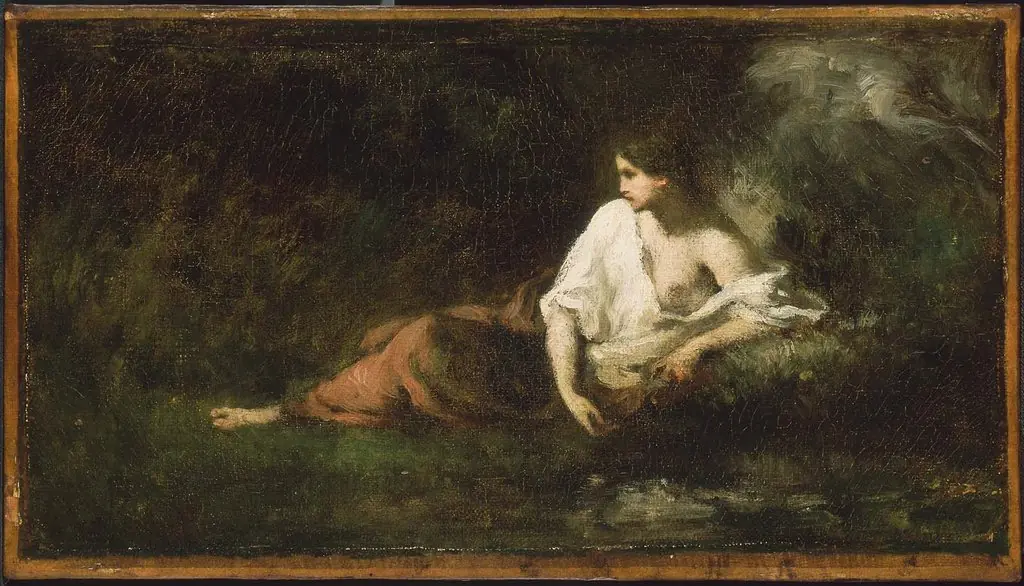 Woman Reclining in a Landscape
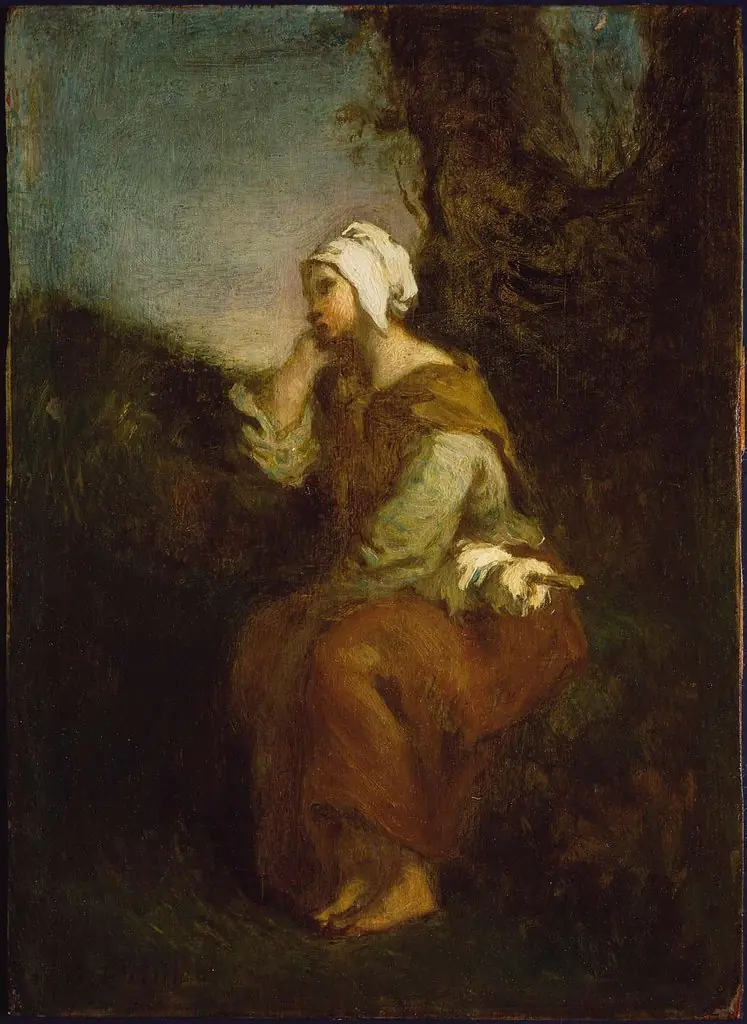 Peasant Girl Daydreaming
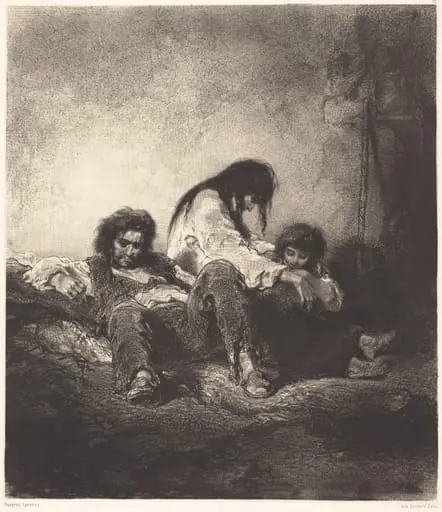 The Poor Family (Une famille pauvre)
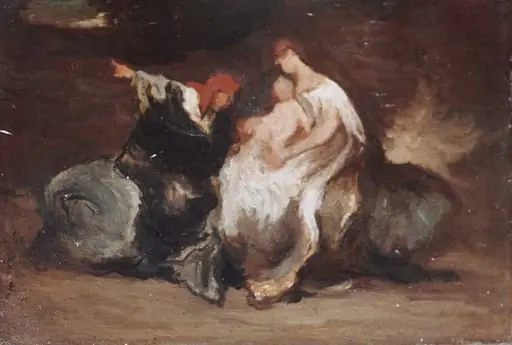 The Fortune Teller
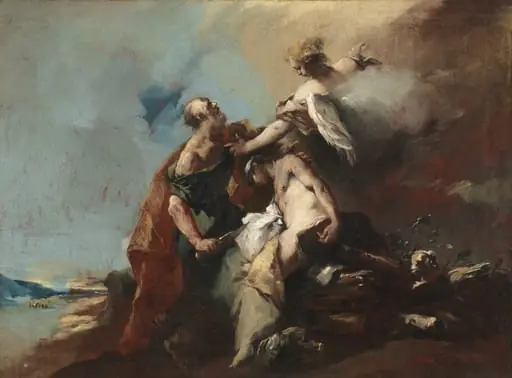 The Sacrifice of Isaac, Tobias and the Angel, The Angels Appearing to Abraham, Abraham Welcoming the Three Angels (painting series)
 The Chibouk
 Two Figures