Artwork
Madonna and Child
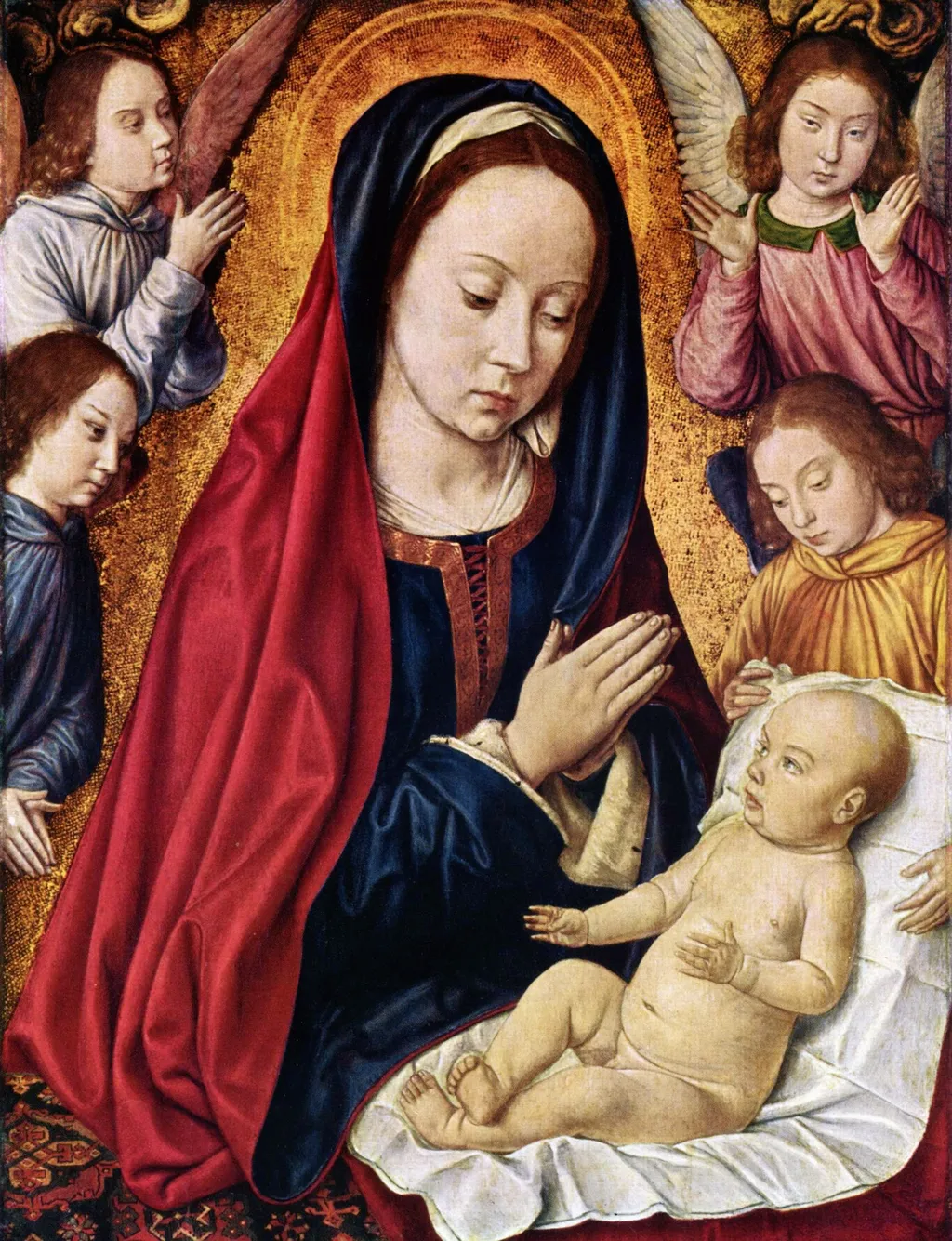
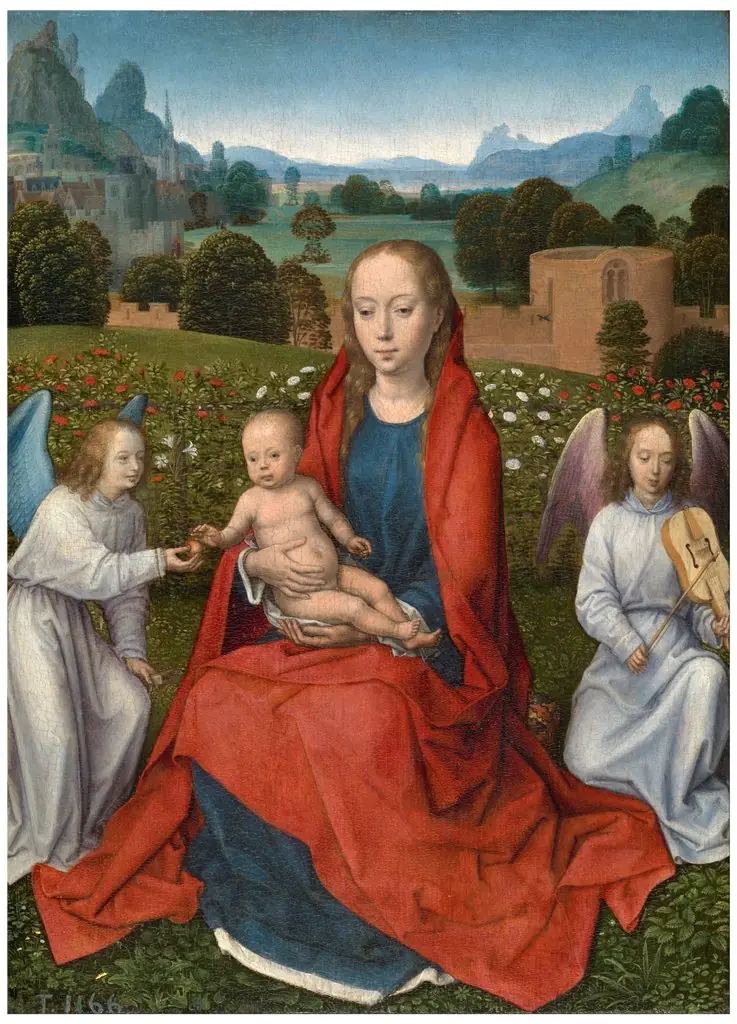
Madonna and Child is an oil painting by the Northern Renaissance artist Jean Hey. It dates from 1496 and is held in the collection of the Royal Museums of Fine Arts of Belgium.
About this work
Overview
The painting resides in the Royal Museums of Fine Arts of Belgium, where it remains a key example of late 15th-century religious imagery from the Low Countries.
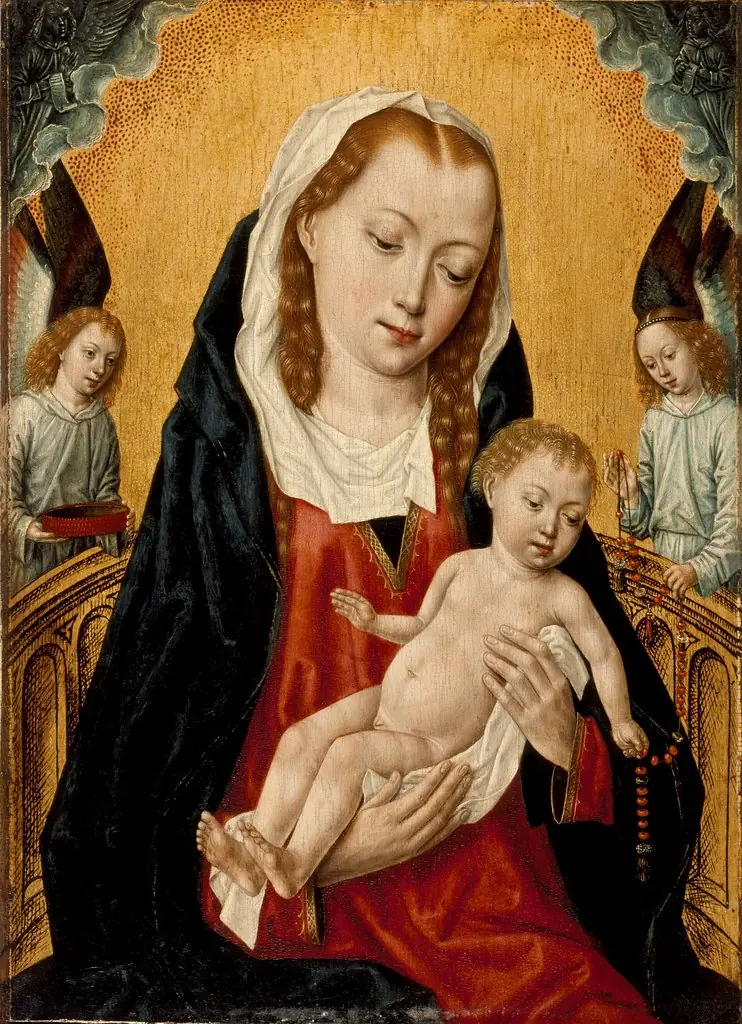
Painted in 1496 by Jean Hey, a painter linked to the Bourbon court, this work is a devotional panel from the Northern Renaissance. Executed in oil on wood, it presents the Virgin Mary with the infant Jesus surrounded by three celestial beings. The painting resides in the Royal Museums of Fine Arts of Belgium, where it remains a key example of late 15th-century religious imagery from the Low Countries.
Subject & Meaning
The Virgin Mary, seated with the Christ Child, is attended by three winged figures, likely angels, observing the sacred pair. The child reaches toward one of them, suggesting divine recognition or impending destiny. The composition emphasizes maternal tenderness while reinforcing theological themes of incarnation and heavenly witness, common in devotional art of the period.
Technique & Style
Hey used oil paint to achieve subtle gradations of light and texture. The figures are rendered with distinct handling: the infant’s skin appears smooth and rounded, contrasting with the sharper contours of the adults. This distinction visually elevates the divine. The background, rich in gold leaf, enhances the otherworldly atmosphere, while the Virgin’s crimson cloak draws focus against the luminous field.
History & Provenance
Commissioned during Hey’s active years at the Bourbon court, the painting likely served private devotion or chapel use. It entered the Royal Museums of Fine Arts of Belgium’s collection through documented acquisitions in the 19th century. Its survival with minimal alteration offers rare insight into the artistic patronage of French noble circles in the late Middle Ages.
Context
Created during the Northern Renaissance, the work reflects the fusion of devotional intensity and refined technique characteristic of Flemish painting. While Italian art emphasized classical harmony, Northern artists like Hey focused on symbolic detail and emotional immediacy. The use of gold leaf and celestial attendants aligns with traditional iconography, yet the intimate interaction between mother and child reveals evolving devotional sensibilities.
Legacy
Jean Hey’s oeuvre remains limited, making this panel a significant reference for understanding regional styles beyond the major centers of Bruges or Antwerp. The painting’s preservation allows scholars to trace the transmission of iconographic motifs and technical methods among court-associated artists. It contributes to broader studies of how religious imagery functioned in aristocratic domestic and spiritual life.
Own this work as a print
Artist & collection
Artist
Jean Hey (or Jean Hay) (fl. c. 1475 – c. 1505), now generally identified with the artist formerly known as the Master of Moulins, was an Early Netherlandish painter working in France and the Duchy of Burgundy, and…

Museum
Royal Museums of Fine Arts of Belgium
Continue through works from the same source collection.
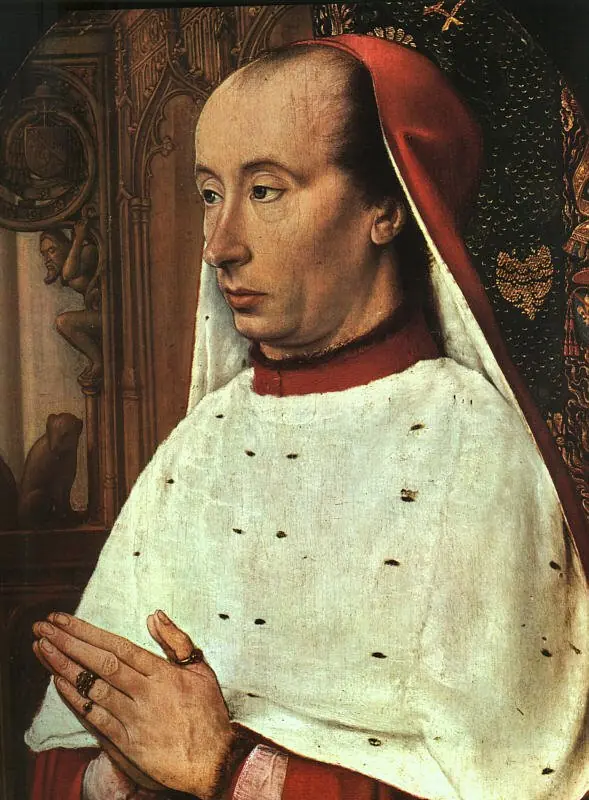 Portrait of Charles II of Bourbon
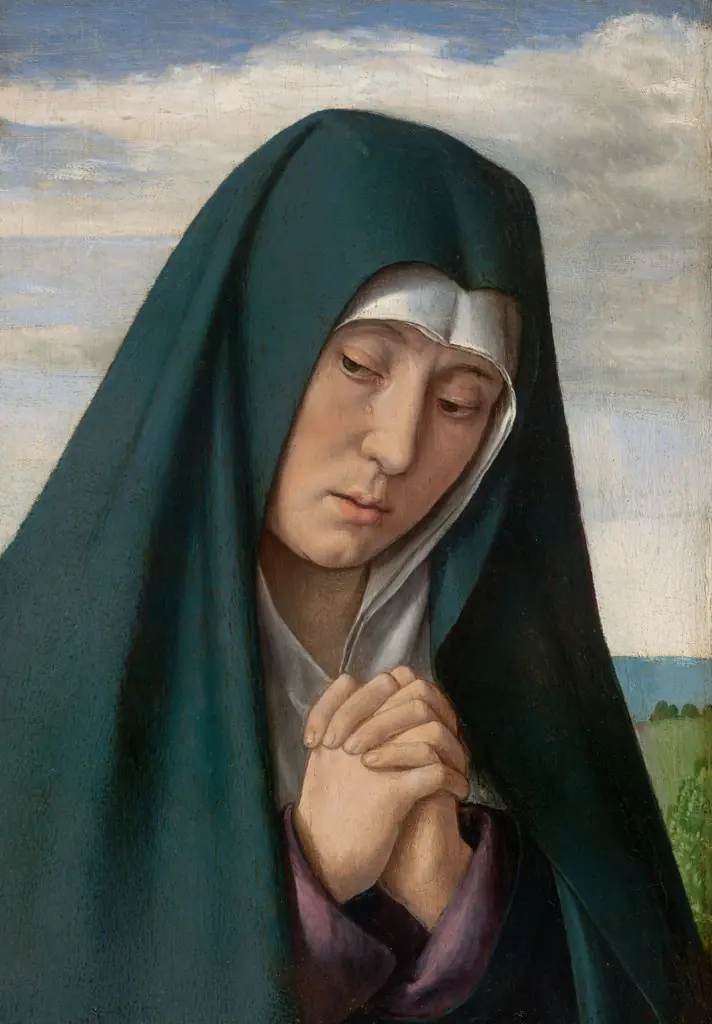 Fragment from Christ Carrying the Cross: Mourning Virgin
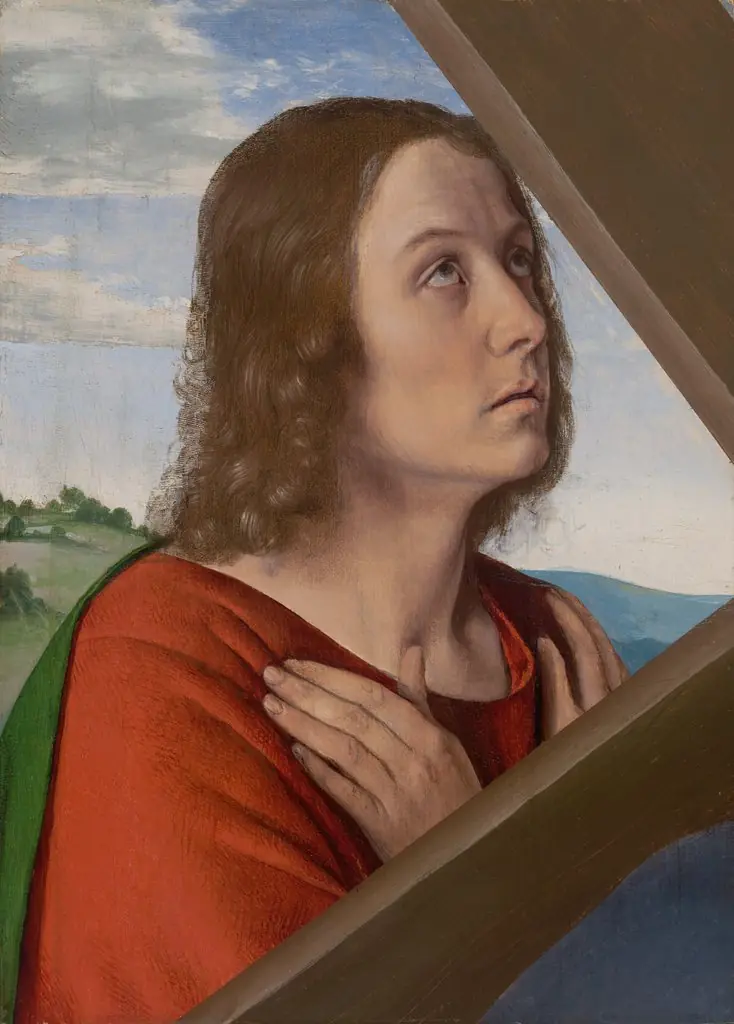 Fragment from Christ Carrying the Cross: Saint John the Evangelist
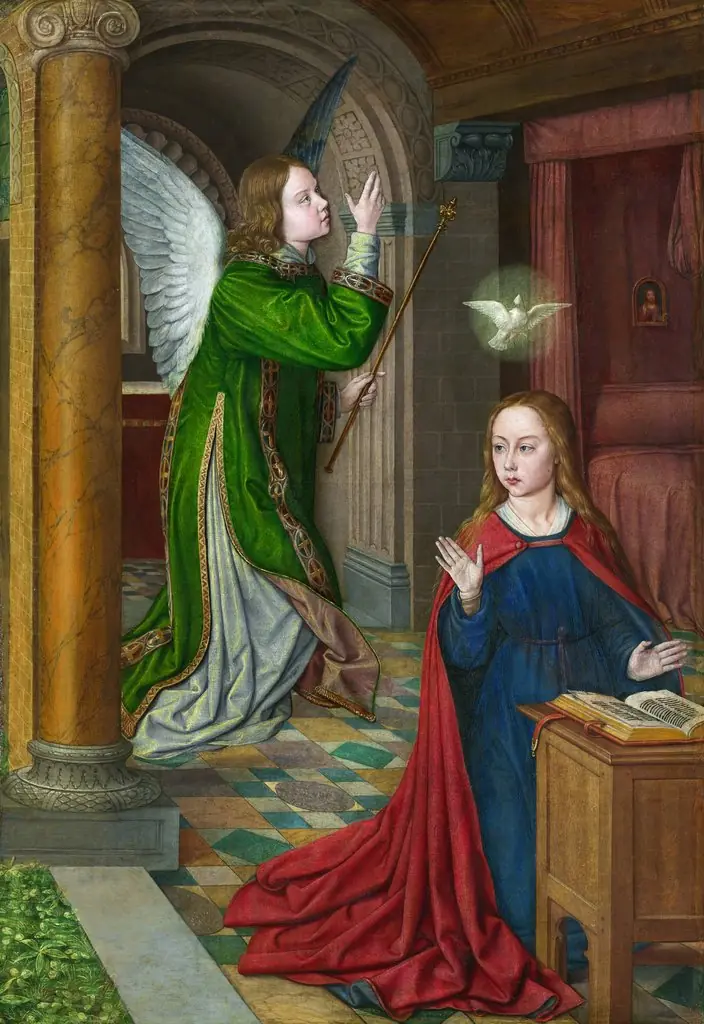 The Annunciation
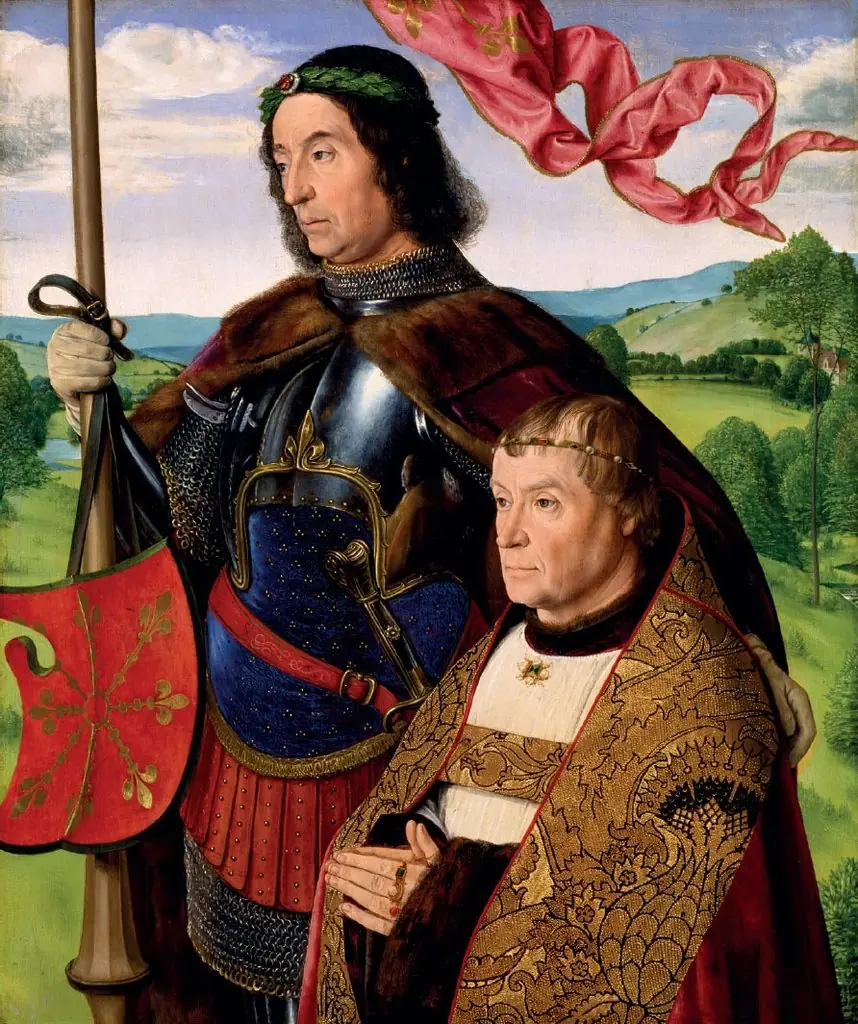 Saint Maurice with a Donor
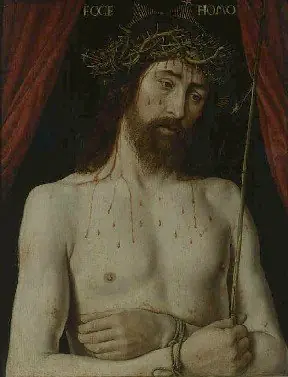 Christ with Crown of Thorns (Ecce Homo)
 The Annunciation
 Fragment from Christ Carrying the Cross: Saint John the Evangelist
 Madonna and Child
 Virgin and Child with Two Angels
 Madonna and child
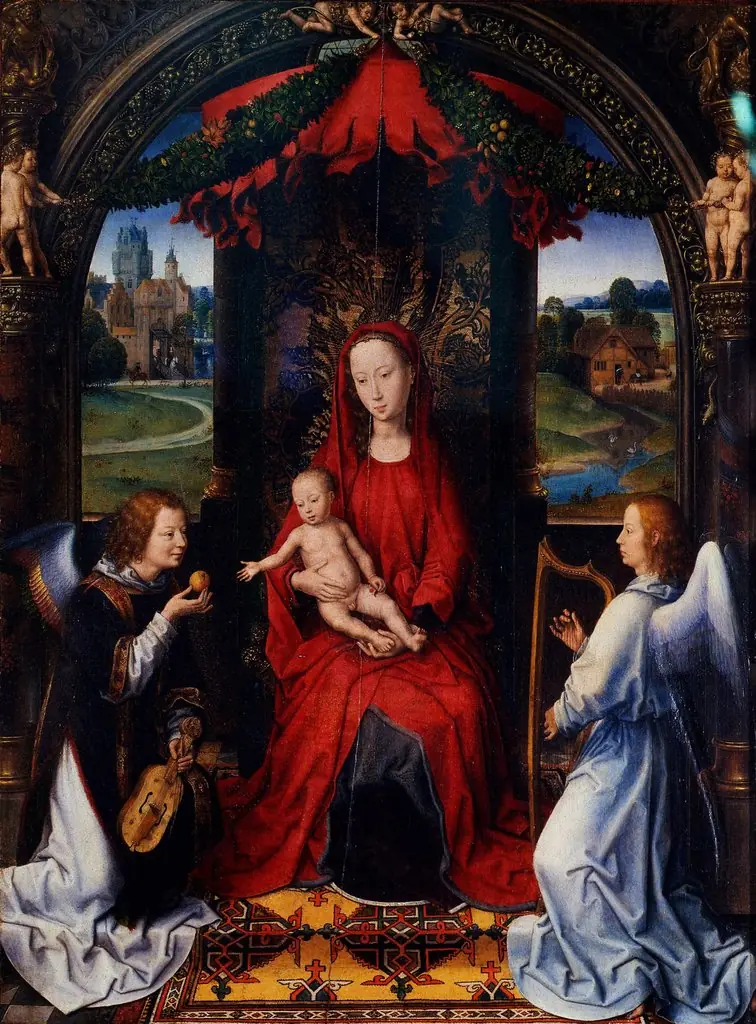 Madonna enthroned with child and two musical angels
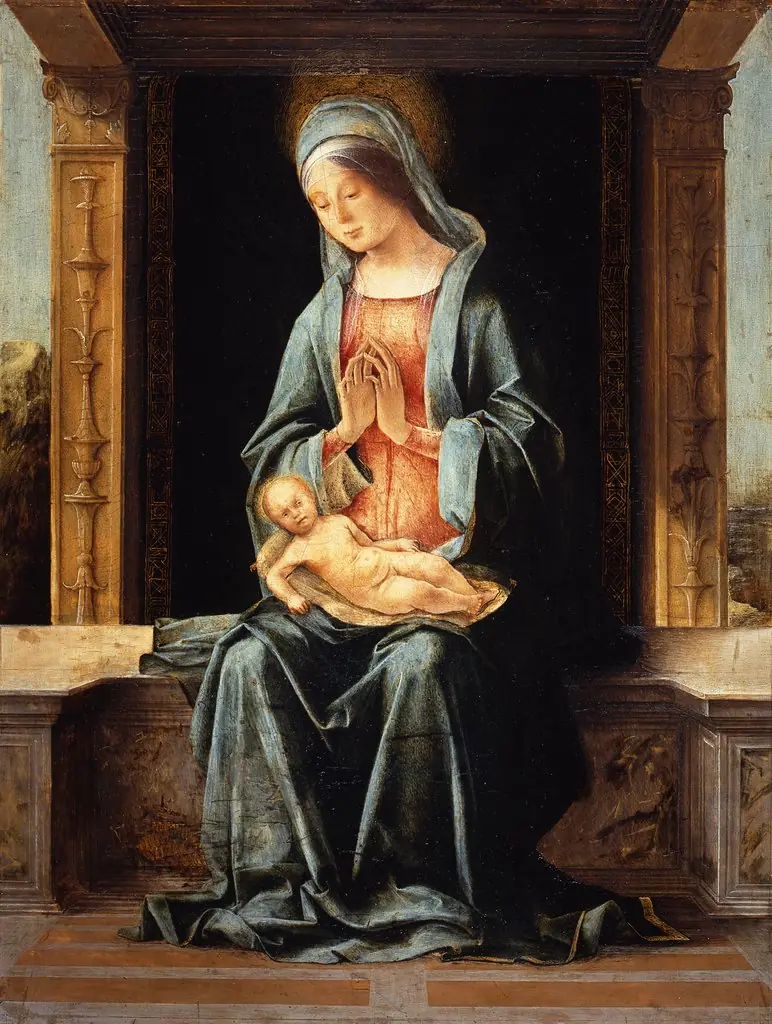 The Virgin and Child
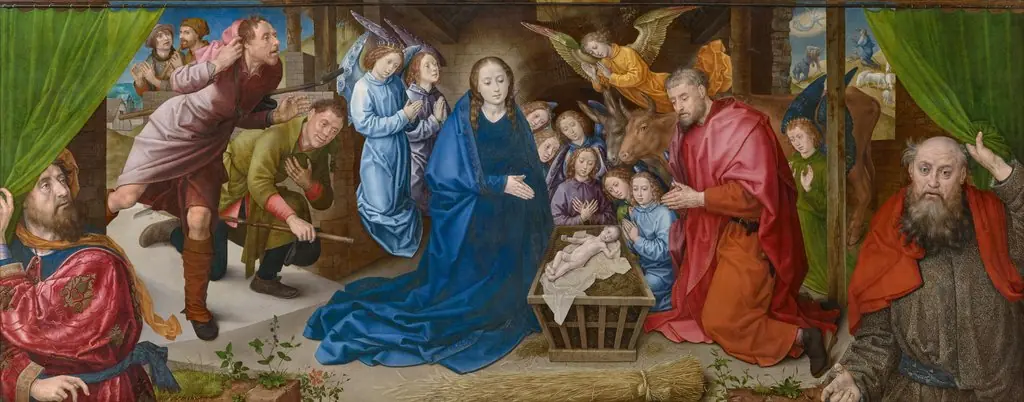 Adoration of the Shepherds
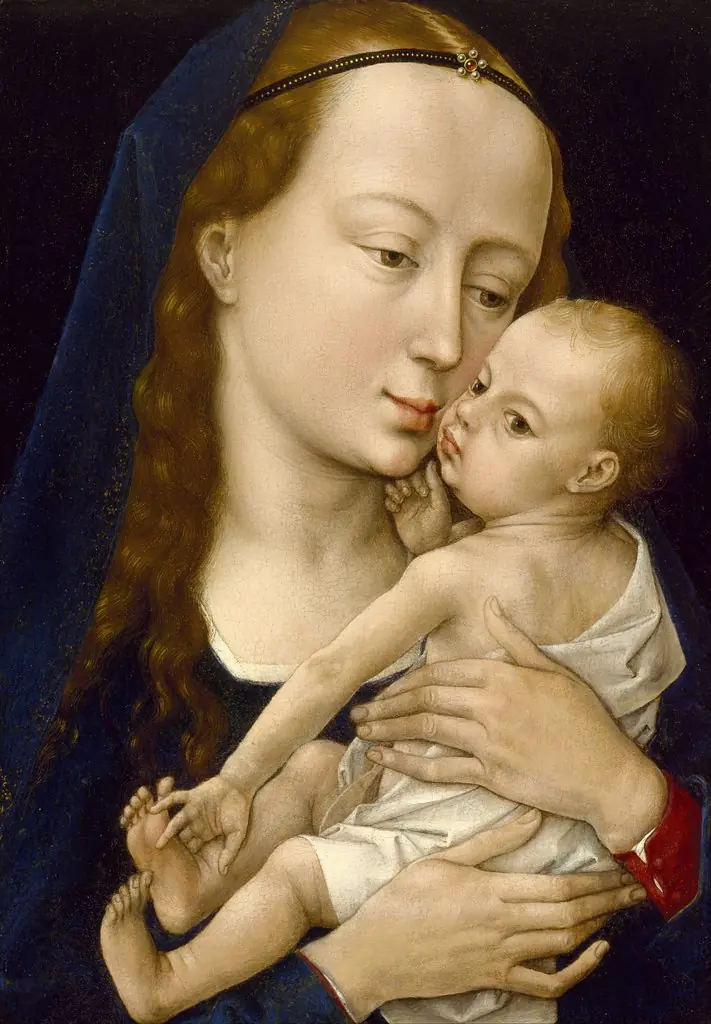 Virgin and Child
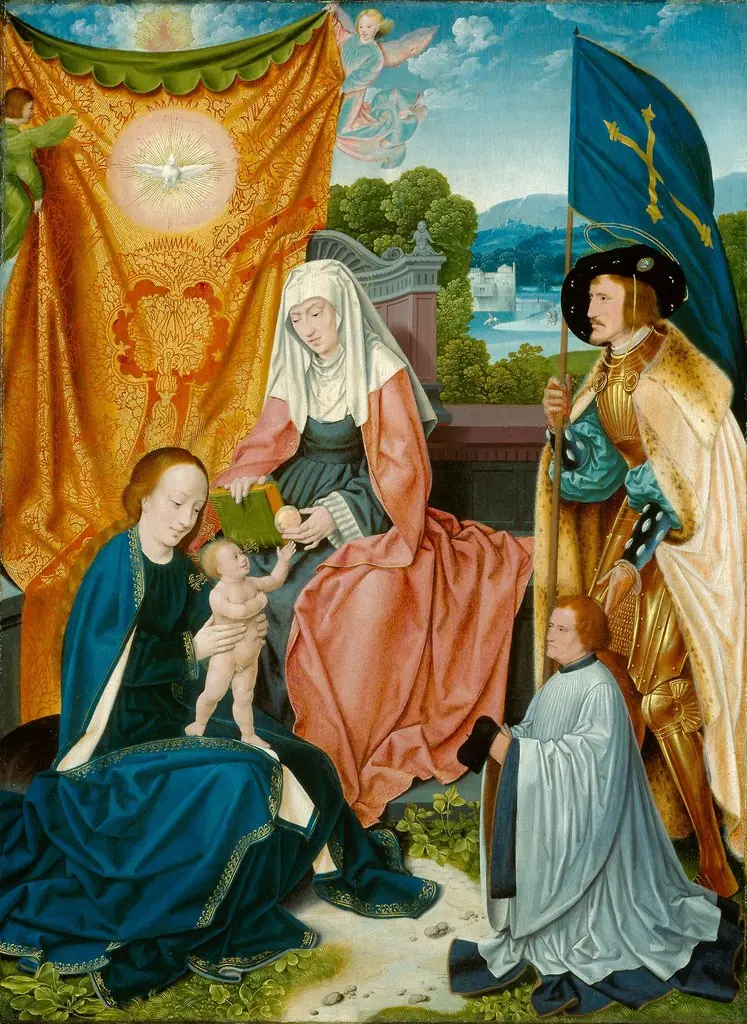 Virgin and Child with Saint Anne, Saint Gereon, and a Donor
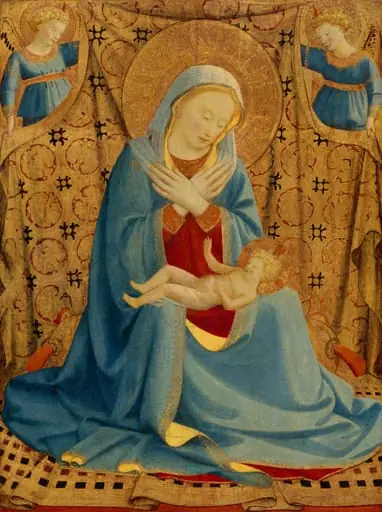 The Madonna of Humility
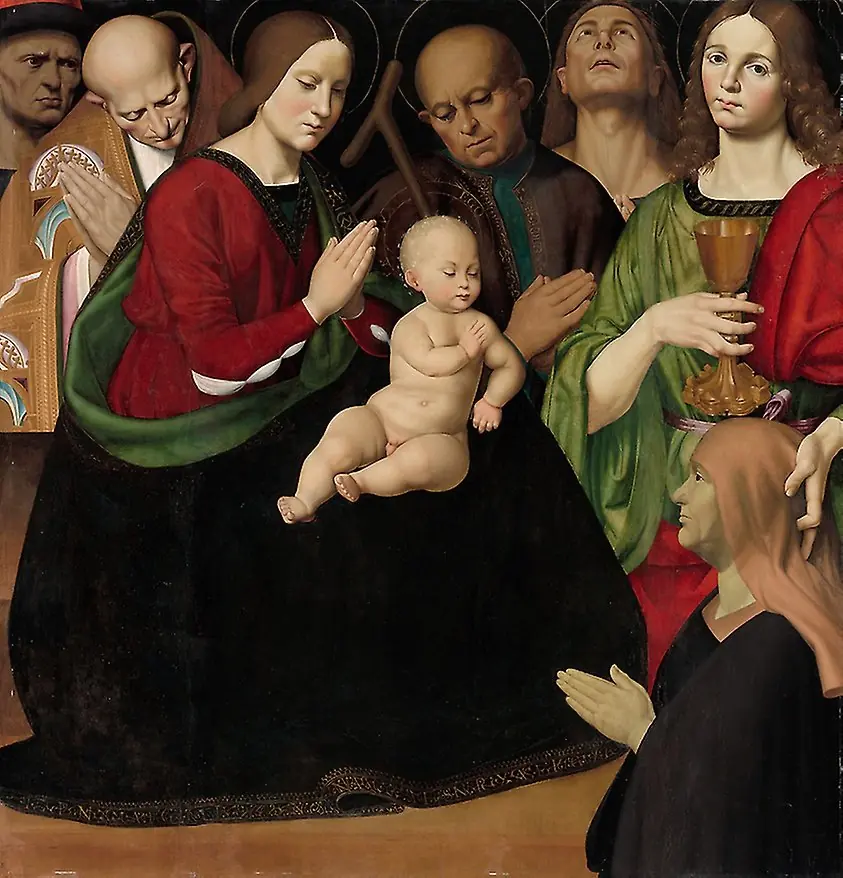 The Holy Family with Four Saints and a Female Donor
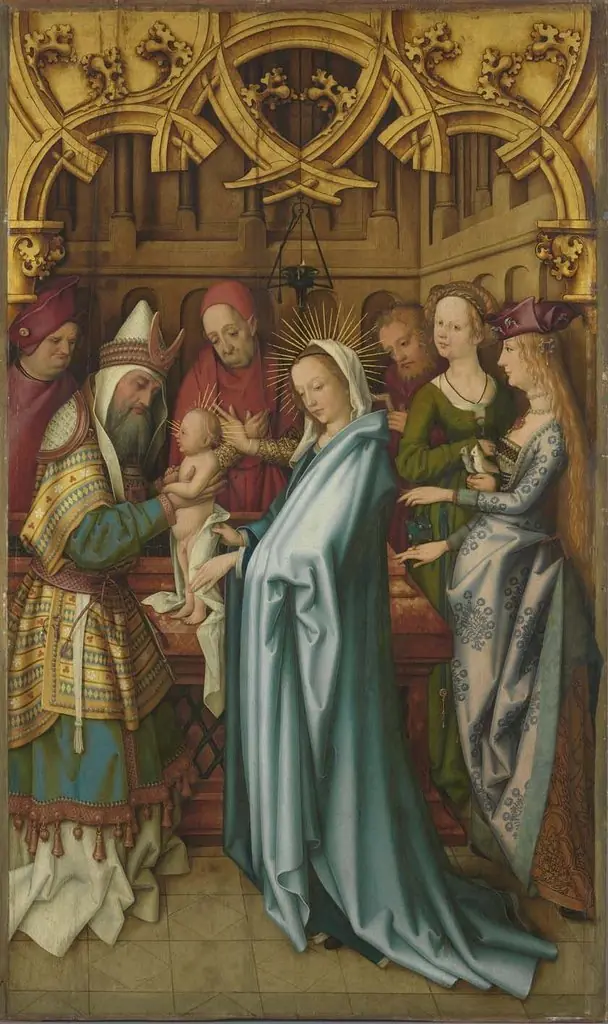 Kaisheimer Altar: Darbringung im Tempel
 Virgin and Child with two angels