Artwork
Orpheus and Eurydice (recto)
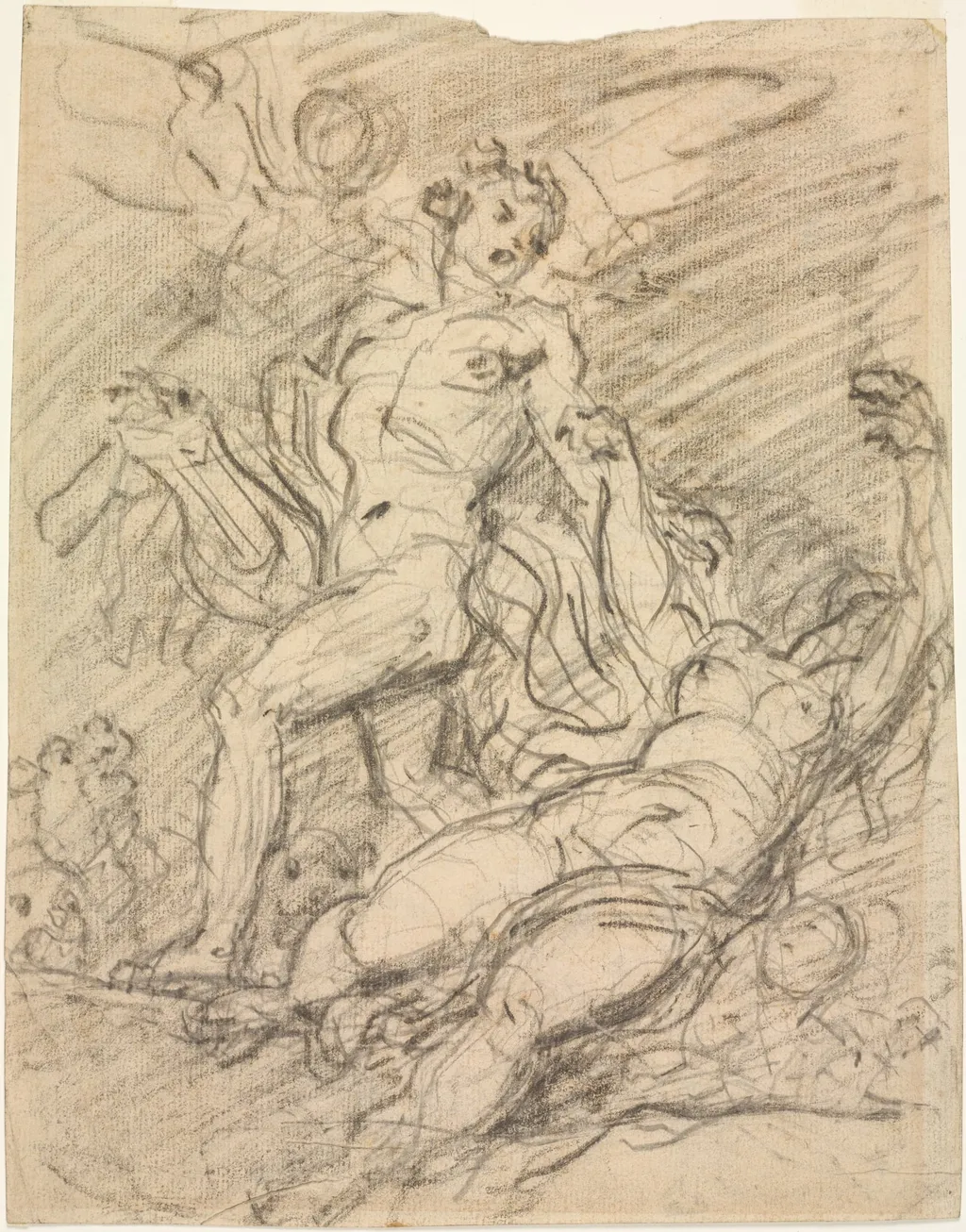
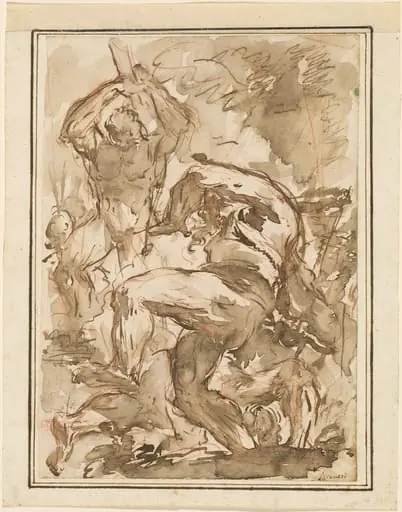
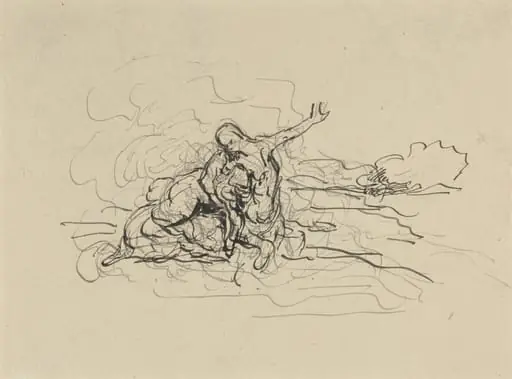
Orpheus and Eurydice (recto) is a drawing by the Romanticist artist Jean Honoré Fragonard. It dates from 1761 and is held in the collection of the Cleveland Museum of Art.
About this work
Look up Jean-Honoré Fragonard (French, 1732–1806) to see more of his playful, lively style.
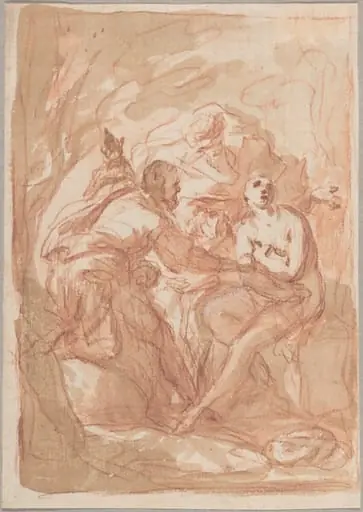
This sketch shows Orpheus reaching for Eurydice as she’s pulled toward Hades. The animals at his feet could be Cerberus, the underworld’s three-headed guard dog. Shadows and light play off the figures, giving the scene drama.
Fragonard may have made this while traveling in Italy. The loose lines feel like quick notes, not a finished work.
Look up Jean-Honoré Fragonard (French, 1732–1806) to see more of his playful, lively style.
Overview
Orpheus and Eurydice (recto) is a drawing by Jean-Honoré Fragonard, capturing a poignant moment from classical mythology. The work's purpose, whether as a record of an observed painting or a preliminary idea for the artist's own work, remains uncertain.
Subject & Meaning
The drawing depicts Orpheus, identifiable by his lute, grasping for Eurydice as she is pulled into Hades. Snarling animals at his feet are likely meant to evoke Cerberus, the underworld's guardian. The scene conveys the emotional intensity of Orpheus' desperate attempt to retain his love.
Technique & Style
Executed in loose, quick lines, the sketch bears the characteristics of a rapid study rather than a finished piece. The interplay of shadows and light across the figures adds dramatic depth, consistent with Fragonard's known expressive and lively artistic approach.
History & Provenance
The drawing may have been created during Fragonard's travels in Italy, potentially inspired by a painting he encountered. Specific details regarding its creation date and early ownership are not provided.
Context
Understanding the work within the context of Fragonard's broader oeuvre, known for its playfulness and vitality, suggests this piece might represent a fleeting creative exploration or observational study during his Italian journeys.
Legacy
As a characteristic example of Fragonard's sketching practice, the drawing offers insight into his creative process and engagement with mythological themes, though it does not stand out as a defining work in his legacy.
Artist & collection

Artist
Jean-Honoré Fragonard was born on 5 April 1732 in Grasse, the son of a glover, and moved with his family to Paris in 1738.

![Los and His Spectre [verso], by William Blake](https://artifactworldgallery.com/img/william-blake--los-and-his-spectre-verso--615ad7f82d334e5f-w320.webp)