Artwork
Orpheus and Eurydice (recto); Figure Studies (verso)
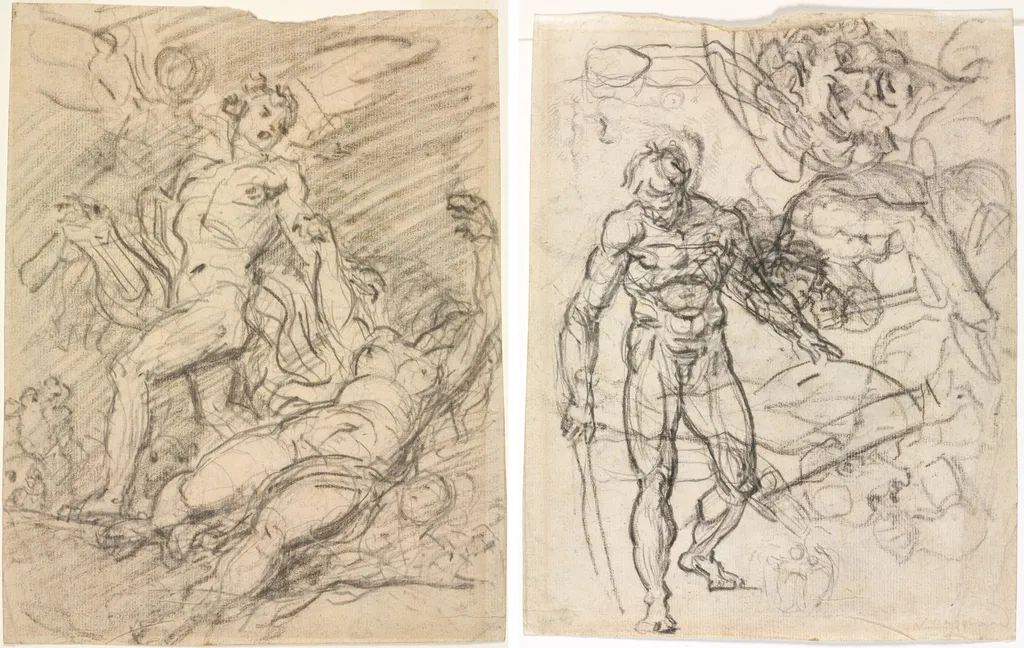
Orpheus and Eurydice (recto); Figure Studies (verso) is a drawing by the Romanticist artist Jean Honoré Fragonard. It dates from 1761 and is held in the collection of the Cleveland Museum of Art. This drawing on paper, executed in a rapid style, features Orpheus and Eurydice on one side and figure studies on the other.
About this work
Overview
This drawing on paper, executed in a rapid style, features Orpheus and Eurydice on one side and figure studies on the other.
Subject & Meaning
The recto depicts a scene from mythology where Orpheus, identified by his lute, attempts to reclaim Eurydice as she is pulled into the underworld. Snarling animals at his feet may symbolize Cerberus, the guardian of Hades.
Technique & Style
The drawing's swift execution and use of chiaroscuro, a technique that exploits contrasts between light and dark, convey a sense of emotional intensity and chaos.
History & Provenance
The drawing may have been created after observing a painting during Fragonard's Italian journey or as a preliminary study for one of his own works.
Artist & collection

Artist
Jean-Honoré Fragonard was born on 5 April 1732 in Grasse, the son of a glover, and moved with his family to Paris in 1738.

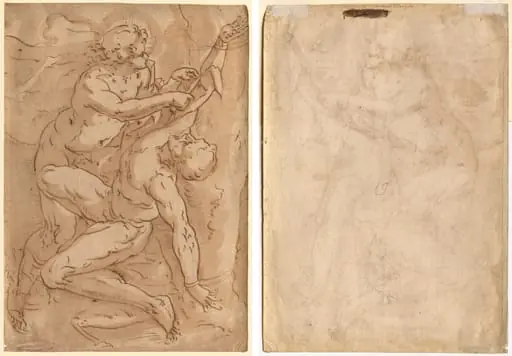 Apollo Flaying Marsyas (recto); Two Sketches of a Mother and Child (verso)
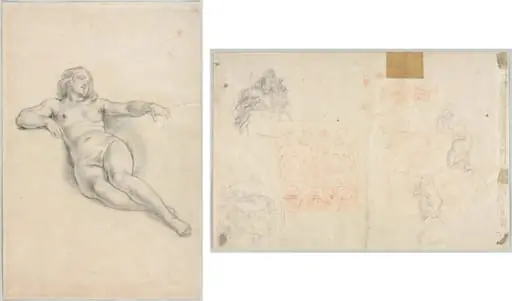 Reclining Female Nude (recto); Various Sketches of Figures and Plants (verso)
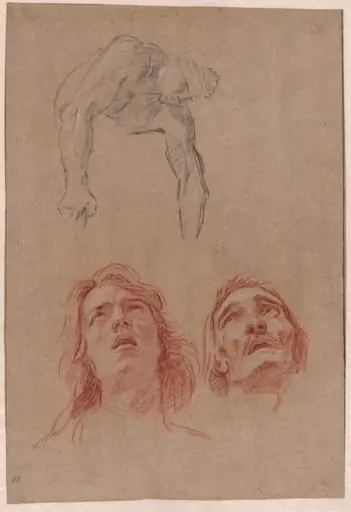 Man Reaching Down and Two Studies of Heads (recto)
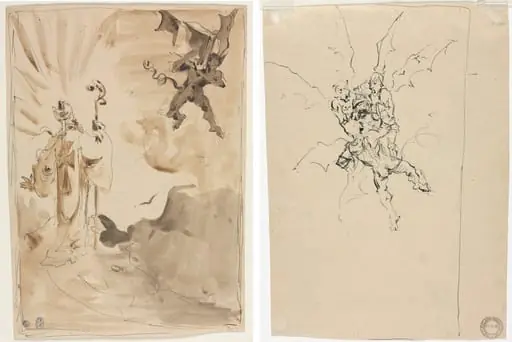 The Bishop and the Demon (recto); Three Demons Holding a Knight (verso)
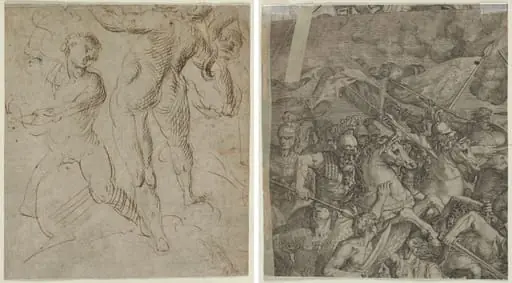 Laocoön (recto); Battle of the Milvian Bridge (fragment) (verso)
![Apollo and Studies of the Artist's Own Hand [recto], by Francesco Fontebasso](https://artifactworldgallery.com/img/francesco-fontebasso--apollo-and-studies-of-the-artist-s-own-hand-recto--ee93288e84456aea-w320.webp) Apollo and Studies of the Artist's Own Hand [recto]
Apollo and Studies of the Artist's Own Hand [recto]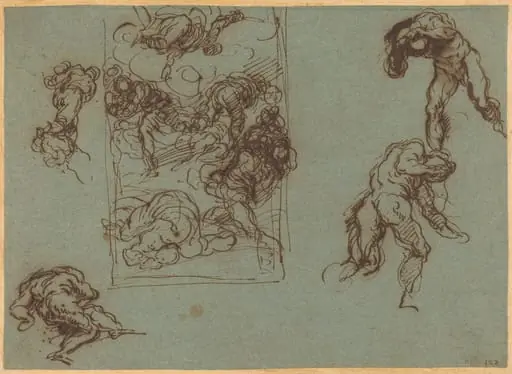 Figure Studies