Artwork
The Good Mother
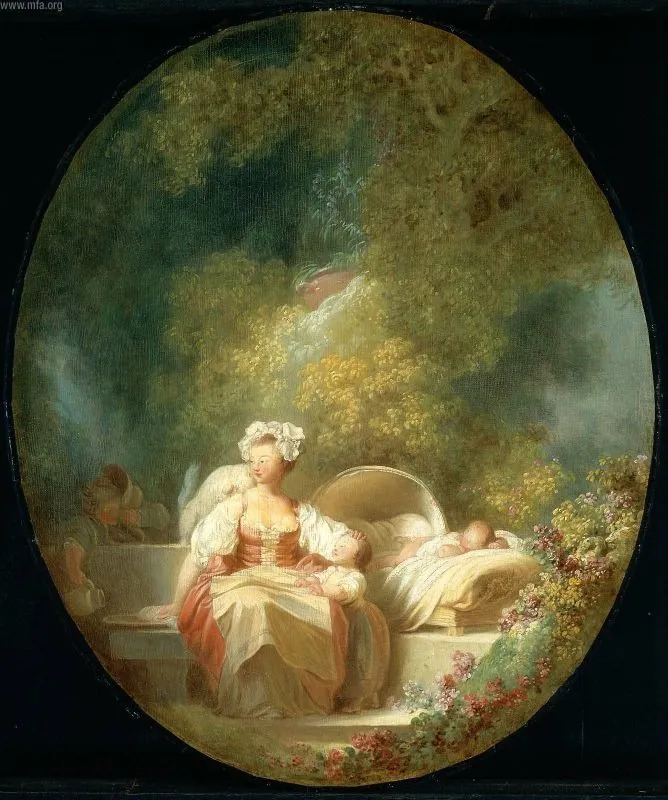
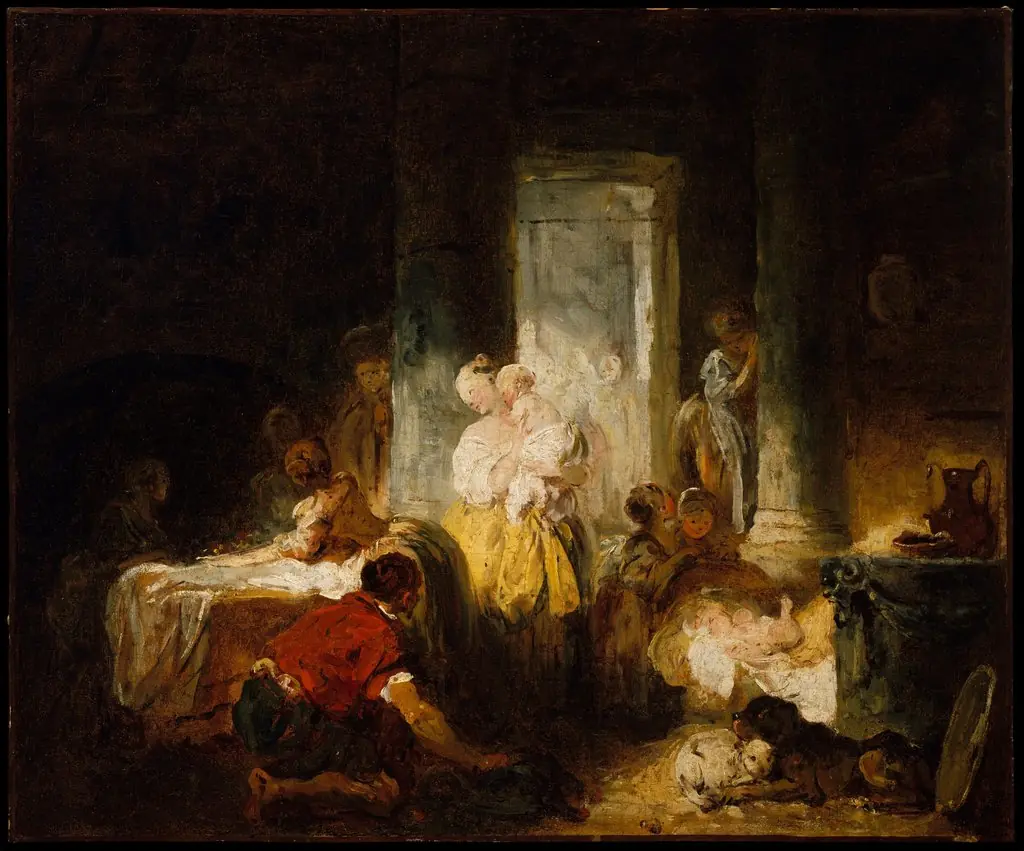
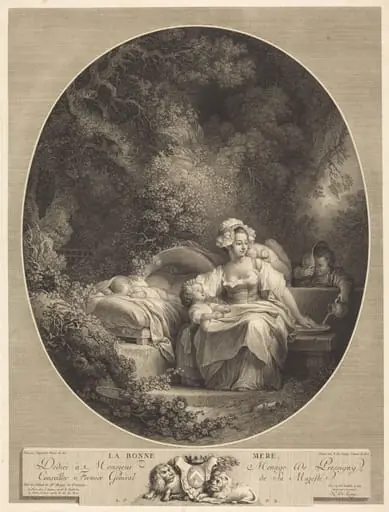
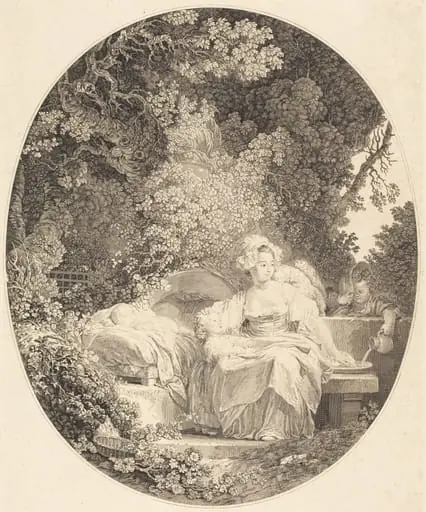
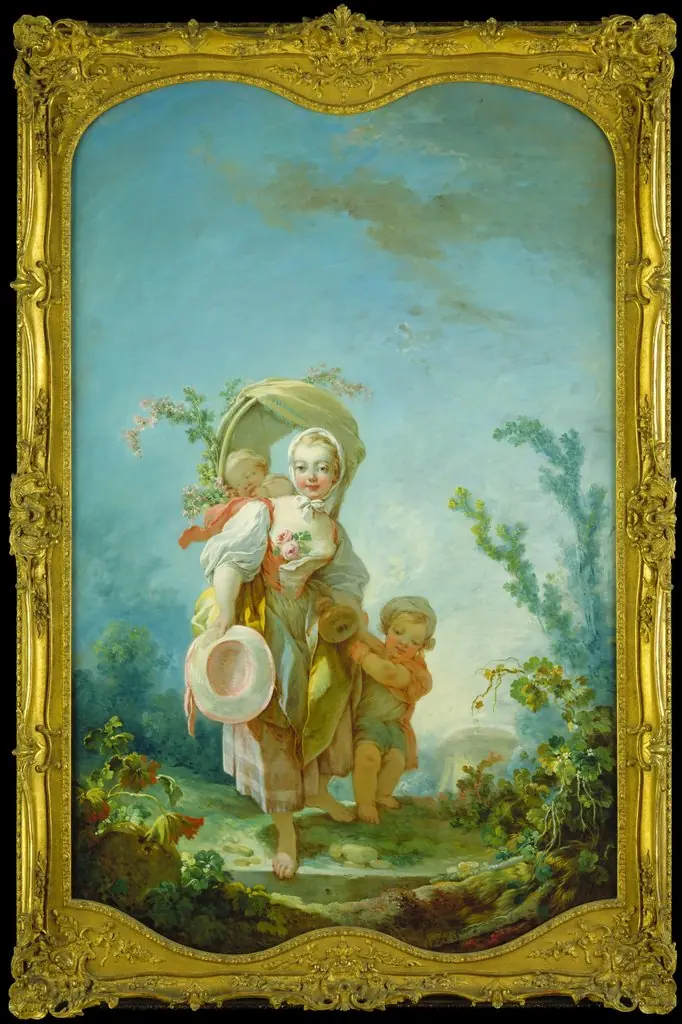
The Good Mother is an oil painting by the Rococo painting artist Jean Honoré Fragonard. It dates from 1750 and is held in the collection of the Museum of Fine Arts Boston.
About this work
Overview
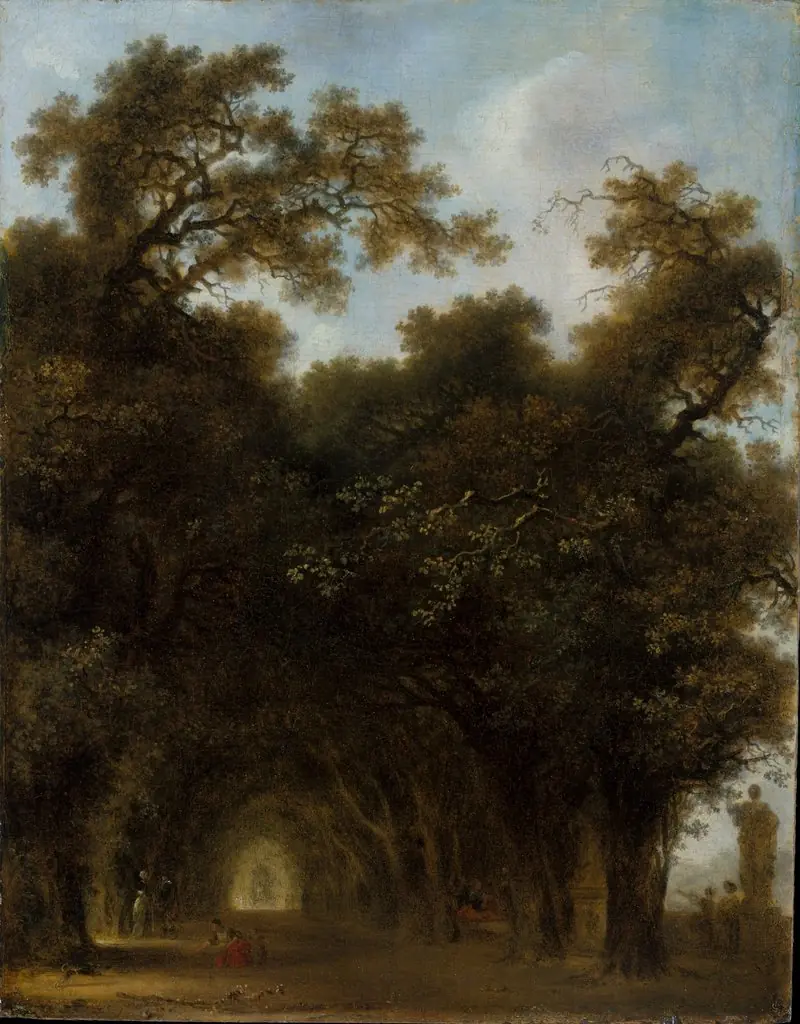
Created around 1750, The Good Mother is an oil on canvas by the French Rococo painter Jean‑Honoré Fragonard. The work is part of the collection of the Museum of Fine Arts in Boston. It presents a tranquil domestic scene in a garden setting, rendered with a gentle palette of greens, yellows and pinks that emphasize a calm, intimate atmosphere.
Subject & Meaning
The composition centers on a seated woman in a long dress and white headpiece, cradling an infant while gazing at the child. Behind her, a bed holds two additional babies, suggesting themes of motherhood and familial care. The surrounding garden, with its trees and blossoms, reinforces a sense of natural harmony and the nurturing role of the mother within a serene environment.
Technique & Style
Fragonard employs the delicate brushwork typical of Rococo, allowing soft transitions between light and shadow. The oil medium facilitates a luminous surface, while the restrained color scheme avoids the exuberance often associated with his later works. The rendering of fabric, foliage, and infant skin demonstrates a careful observation of texture and a subtle handling of atmospheric light.
History & Provenance
The Good Mother was painted circa 1750, during the early phase of Fragonard’s career before his fame for more erotic and playful subjects. The painting entered the Museum of Fine Arts, Boston, where it remains on display, contributing to the museum’s representation of mid‑18th‑century French painting and offering insight into the artist’s exploration of domestic themes.
Artist & collection

Artist
Jean-Honoré Fragonard was born on 5 April 1732 in Grasse, the son of a glover, and moved with his family to Paris in 1738.