Artwork
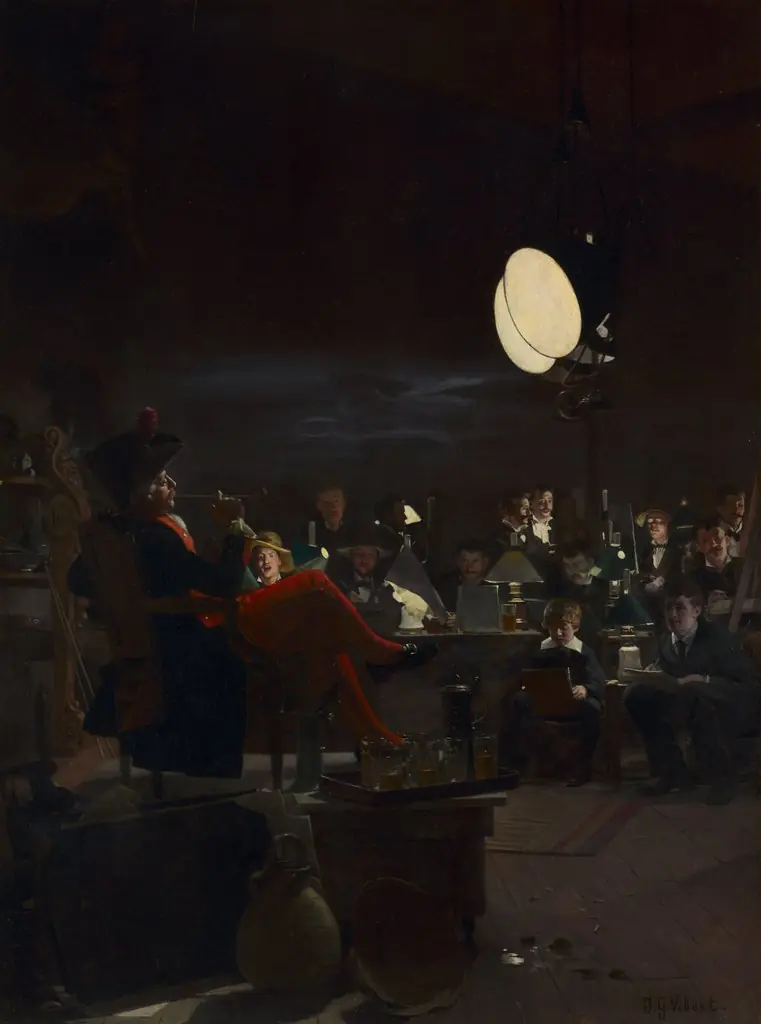
A Night Class
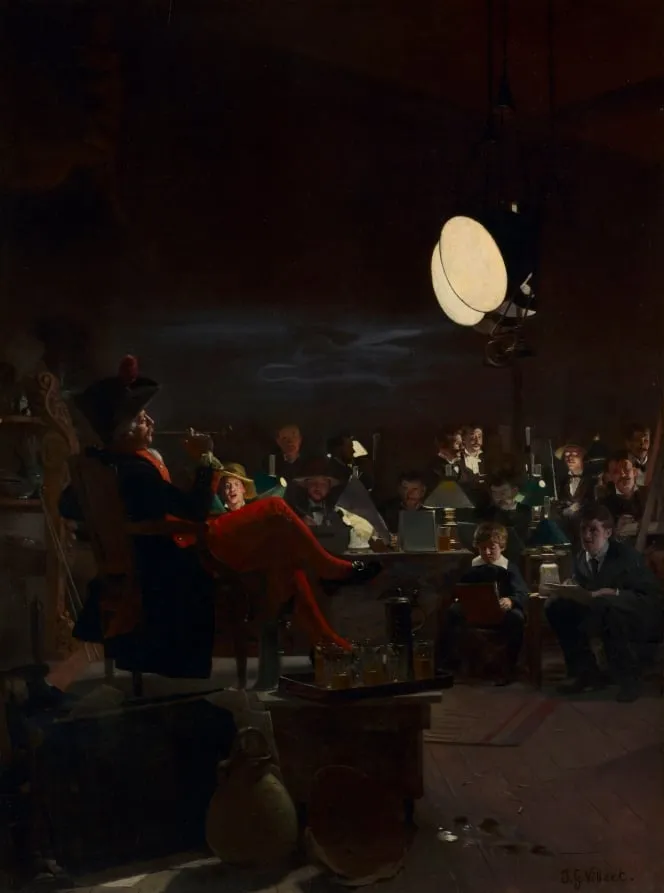
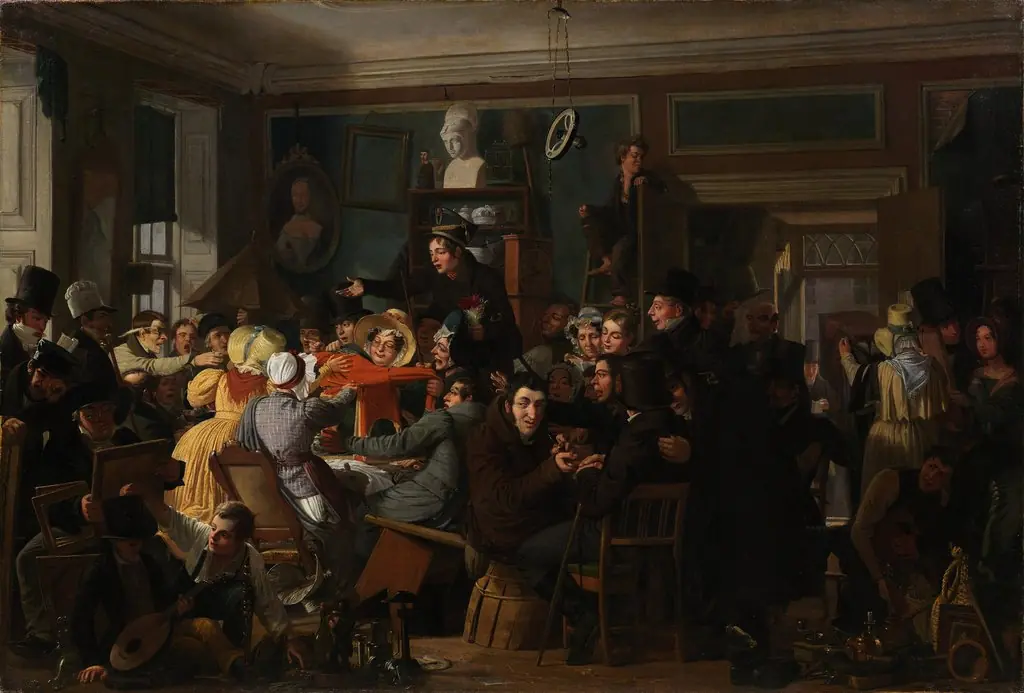
A Night Class is an unspecified painting by the Impressionist artist Jehan Georges Vibert. It dates from 1881 and is held in the collection of the Cleveland Museum of Art.
About this work
Overview
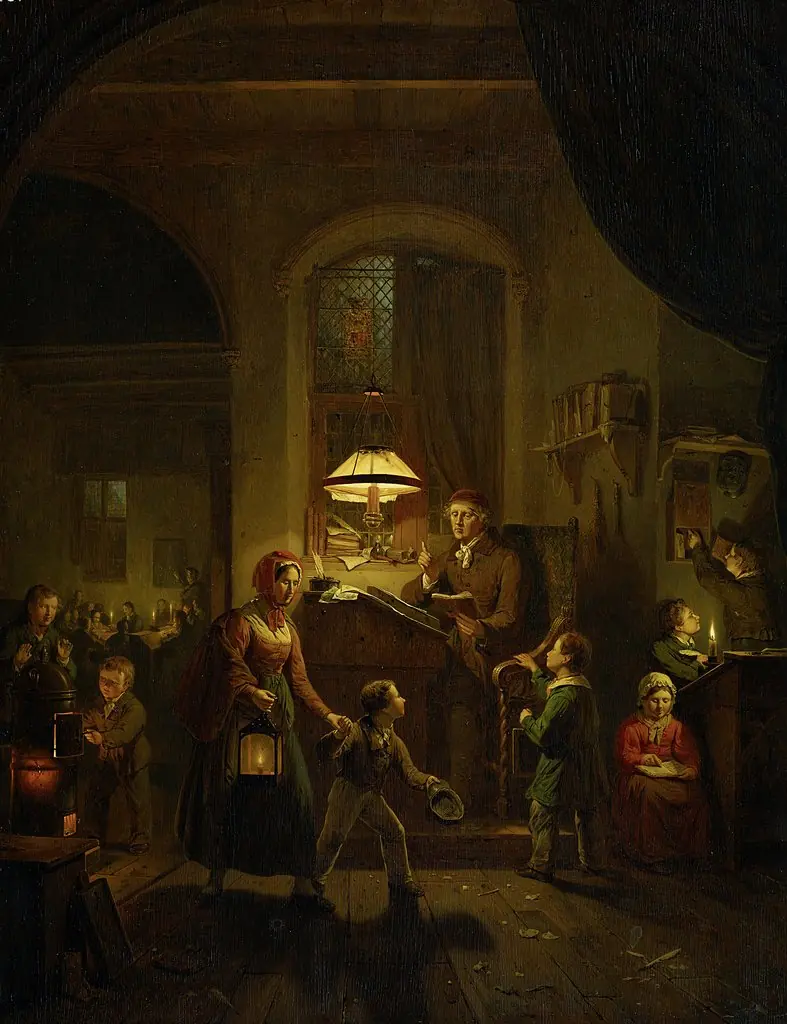
A Night Class, painted by French artist Henri Vibert, depicts a nocturnal studio scene illuminated by early electric lighting.
A Night Class, painted by French artist Henri Vibert, depicts a nocturnal studio scene illuminated by early electric lighting. A model dressed in period costume stands before a group of aspiring pupils, whose varied levels of ability are subtly hinted at through their attentive yet uncertain postures. The work was first exhibited at the Salon of 1881, positioning it within the public eye of the era.
Subject & Meaning
The composition juxtaposes the enthusiasm of youthful art students with the artist’s wry commentary on their prospects. While a few figures appear poised for genuine artistic achievement, others seem destined for commercial work, and the majority are suggested to lack a sustainable future in the field. This narrative reflects Vibert’s satirical view of the ambitions circulating within the academic art world.
Technique & Style
Vibert employs a pronounced chiaroscuro, using the glow of the electric lamps to carve out deep shadows and highlight the model’s costume and the students’ faces. The brushwork remains rooted in the academic tradition, yet the exaggerated expressions and slightly caricatured gestures reveal a playful deviation from strict realism, underscoring the painting’s humorous intent.
History & Provenance
Created in the early 1880s, A Night Class entered the Salon exhibition circuit in 1881, where it garnered attention for its blend of academic skill and satirical edge. The painting subsequently passed through several private collections before being acquired by a regional museum in the mid‑20th century, where it remains on display.
Context
During the late nineteenth century, French art academies emphasized rigorous training and historical subjects, often fostering a culture of pretension among students and patrons. Vibert, himself educated in this conservative milieu, used the work to lampoon the self‑importance of his peers, aligning the piece with a broader trend of artists critiquing institutional norms.
Artist & collection