Artwork
Rue Nôtre-Dame, Paris
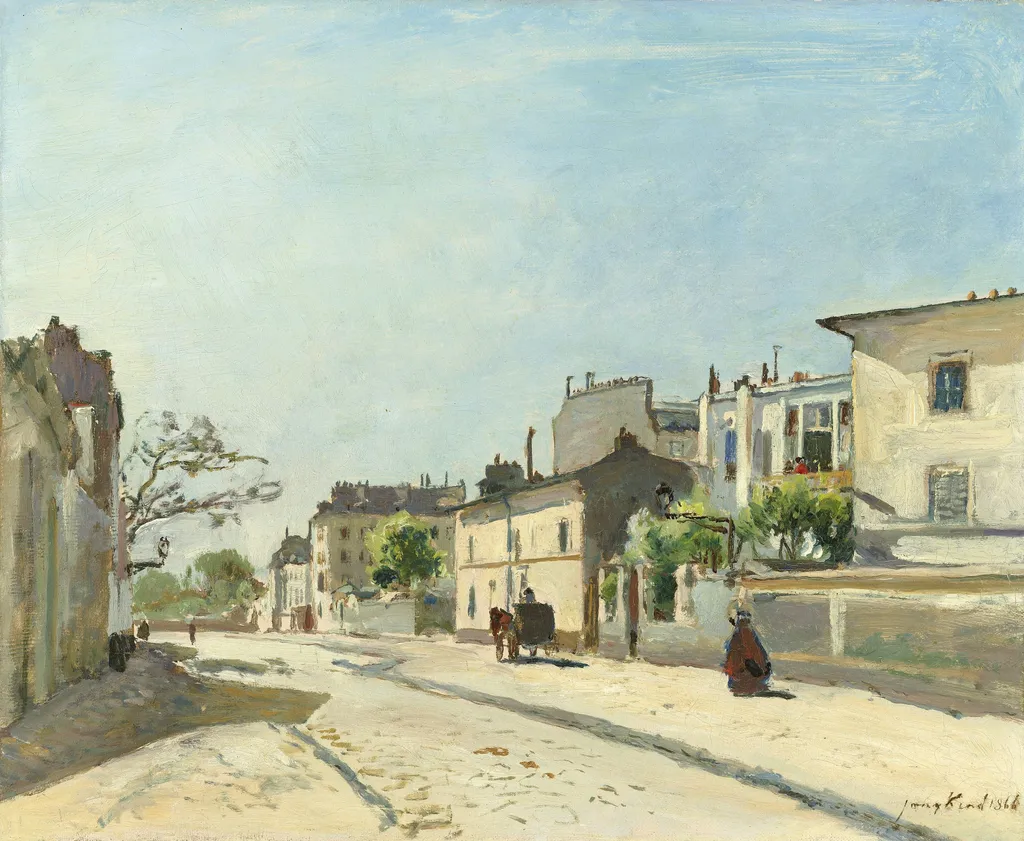
Rue Nôtre-Dame, Paris is an oil painting by the Realist artist Johan Jongkind. It dates from 1866 and is held in the collection of the Rijksmuseum.
About this work
Overview
Johan Jongkind’s 1866 oil painting, *Rue Nôtre‑Dame, Paris*, captures a tranquil segment of the French capital. The composition centers on a modest street flanked by light‑toned façades, a horse‑drawn carriage traversing the roadway, and a solitary figure in a dark cloak strolling along the curb. The scene is bathed in a pale sky, lending the work a calm, atmospheric quality.
Subject & Meaning
The canvas presents a quiet urban moment on rue Censier, with the iconic silhouette of Notre‑Dame visible in the distance. By focusing on everyday activity—a carriage and a pedestrian—Jongkind emphasizes the ordinary rhythm of Parisian life, inviting viewers to contemplate the subtle interplay between architecture, movement, and the fleeting effects of light.
Technique & Style
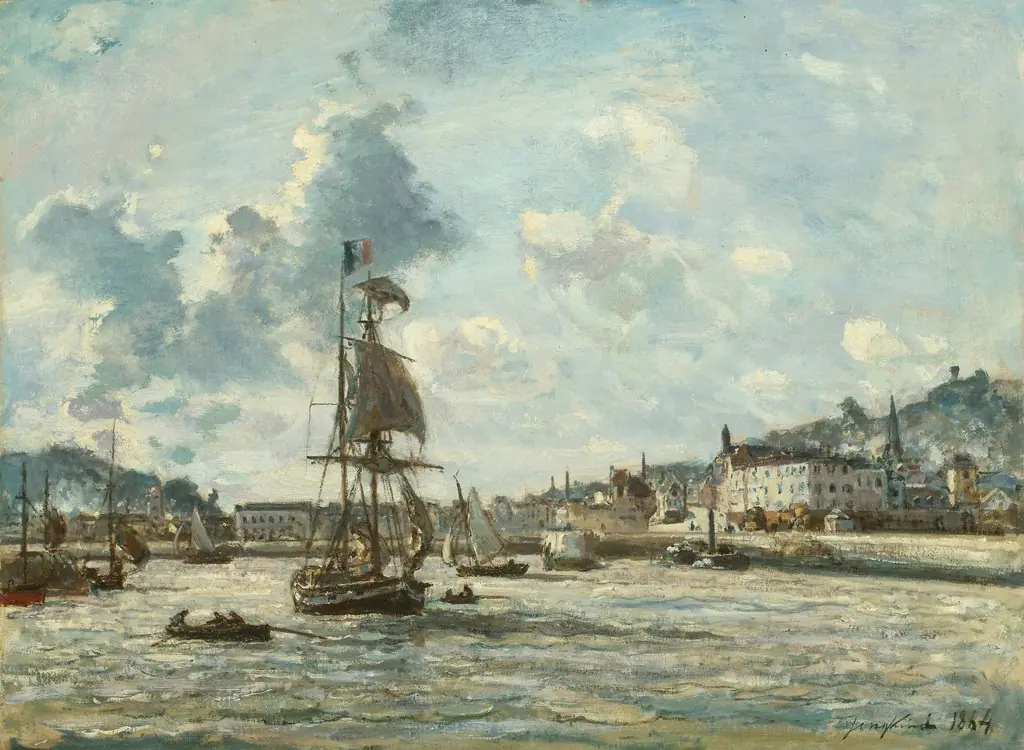
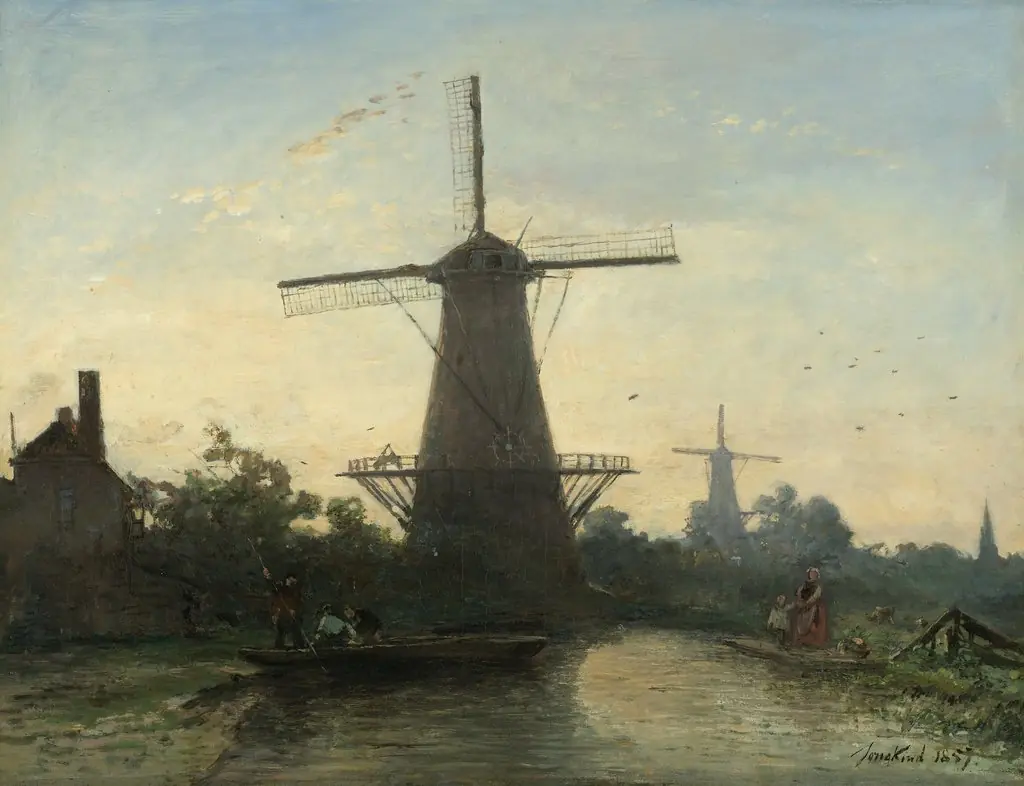
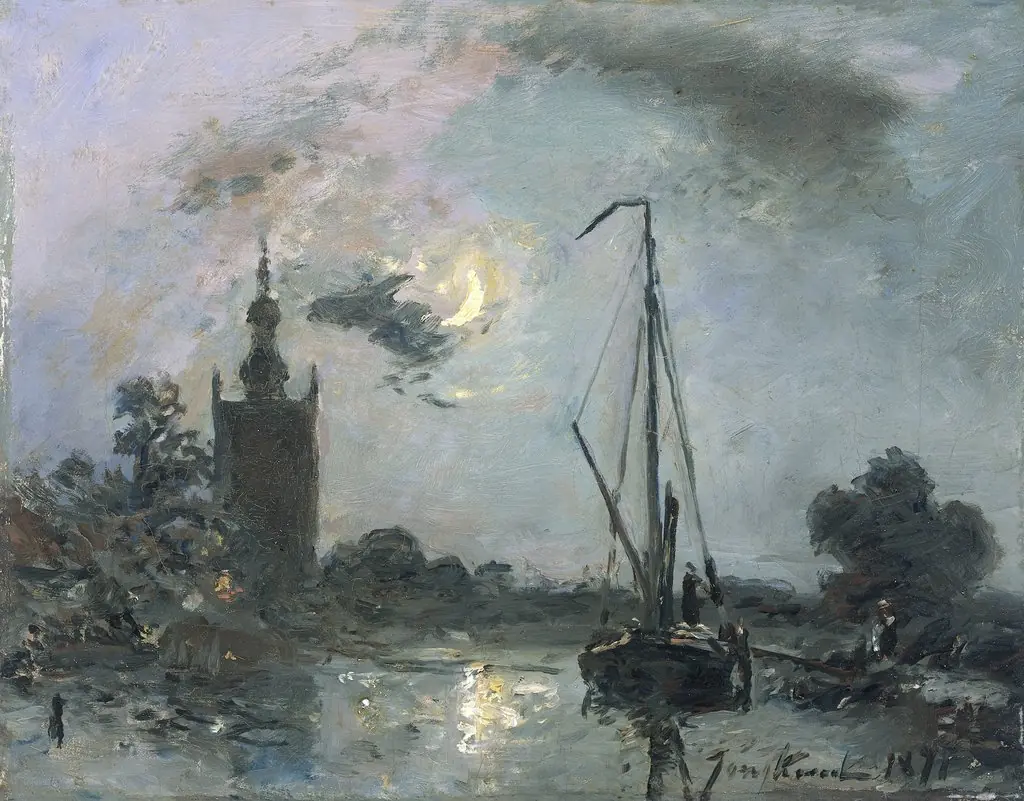
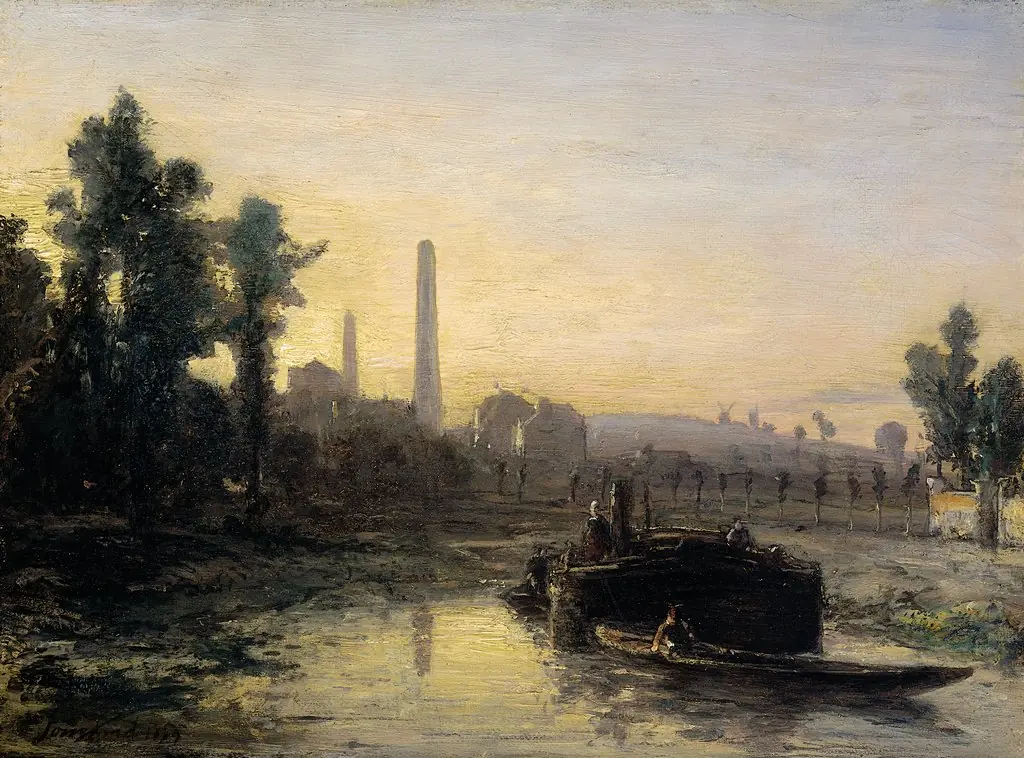
Executed in a Realist manner, the painting employs loose, rapid brushwork that softens edges and creates a slightly hazy ambience. Jongkind’s palette is restrained, dominated by muted greys, beiges, and pale blues, avoiding stark contrasts. This approach yields a dreamy, almost impressionistic surface while retaining a faithful representation of the street’s forms.
History & Provenance
Created in 1866, the work reflects Jongkind’s transition from marine subjects to urban vistas, a shift that would later influence early Impressionist painters. *Rue Nôtre‑Dame, Paris* entered the collection of the Rijksmuseum in Amsterdam, where it remains part of the museum’s holdings of 19th‑century Dutch art.
Own this work as a print
Artist & collection
Artist
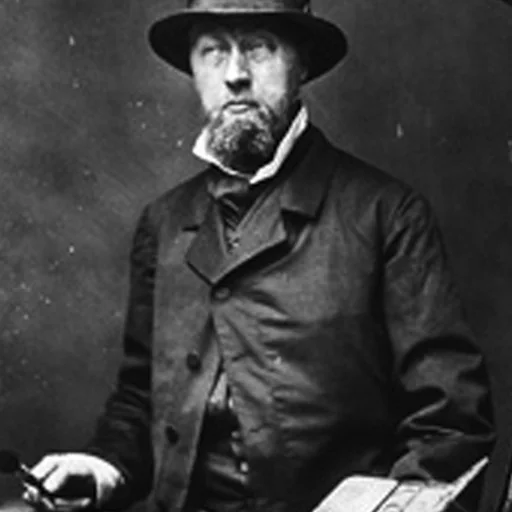
Johan Barthold Jongkind (Dutch pronunciation: ; 3 June 1819 – 9 February 1891) was a Dutch painter and printmaker. He painted marine landscapes in a free manner and is regarded as a forerunner of impressionism.