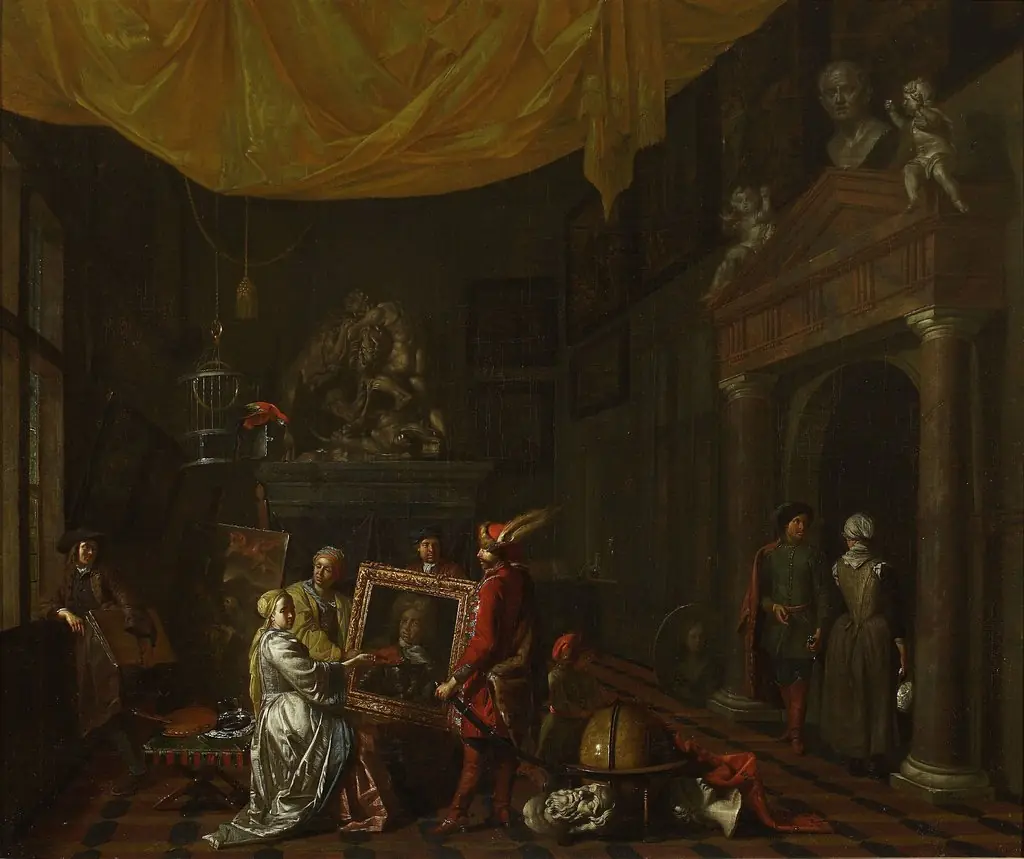
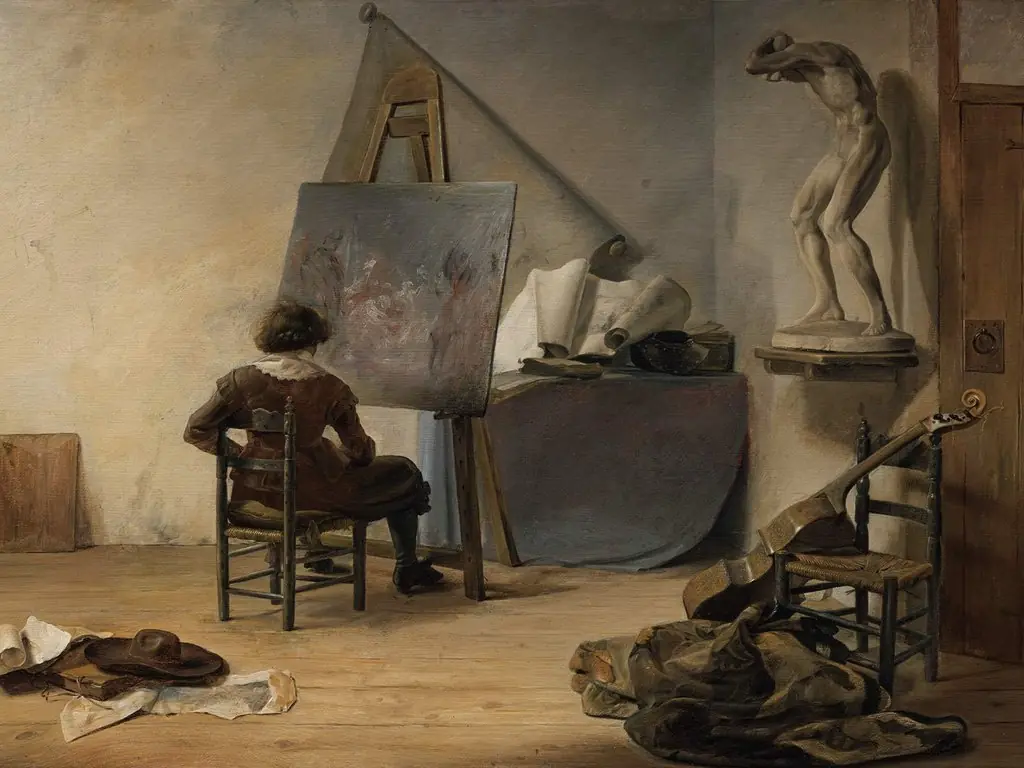
Artwork
The Artist's Studio
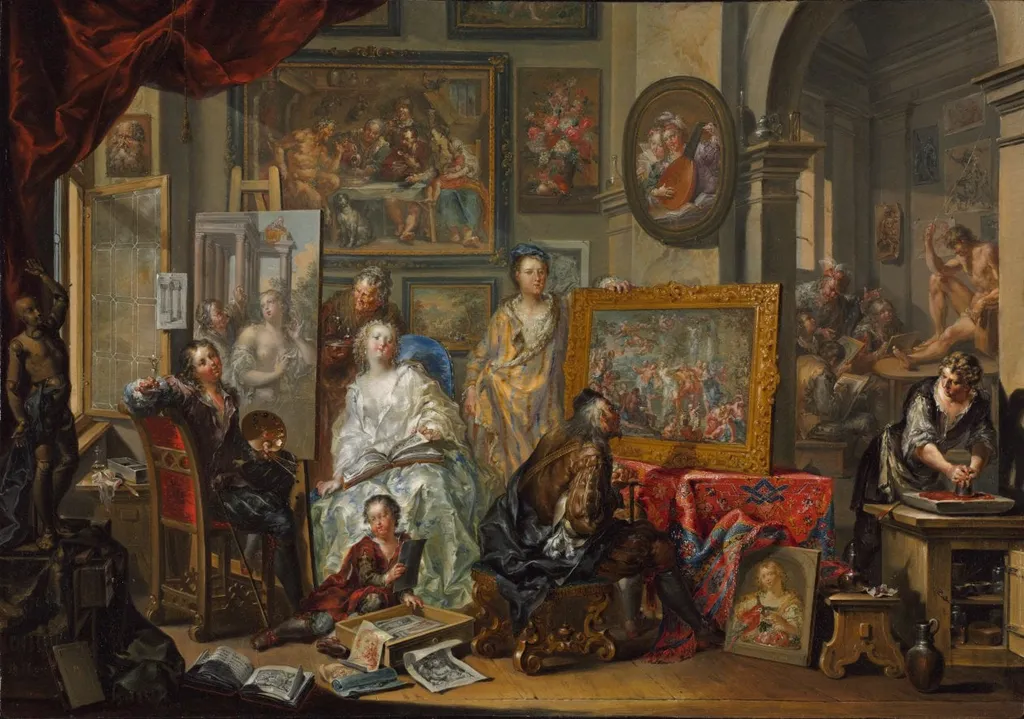
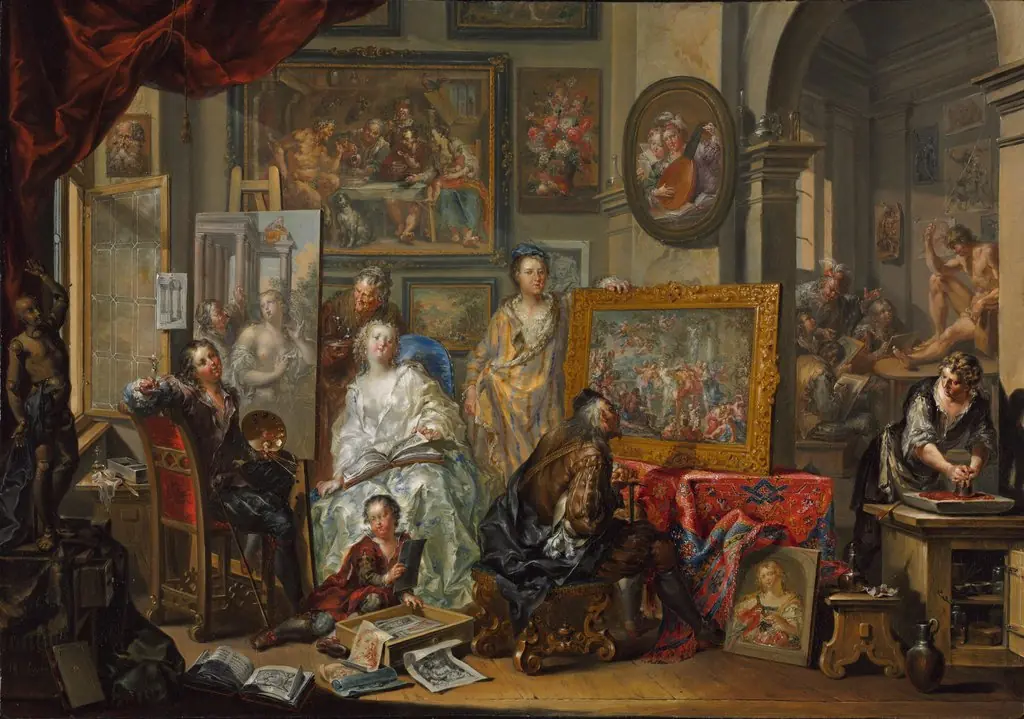
The Artist's Studio is an unspecified painting by the Baroque artist Johann Georg Platzer. It dates from 1750 and is held in the collection of the Cleveland Museum of Art.
About this work
Overview
Johann Georg Platzer created intimate cabinet paintings on copper, each no larger than a postcard, designed for private contemplation.
Johann Georg Platzer created intimate cabinet paintings on copper, each no larger than a postcard, designed for private contemplation. His studio scenes are meticulously rendered with microscopic detail, capturing the quiet intensity of artistic labor. These works were not grand public displays but objects of refined curiosity, valued for their precision and layered symbolism. The scale invites close viewing, rewarding the observer with intricate narratives hidden in every corner.
Subject & Meaning
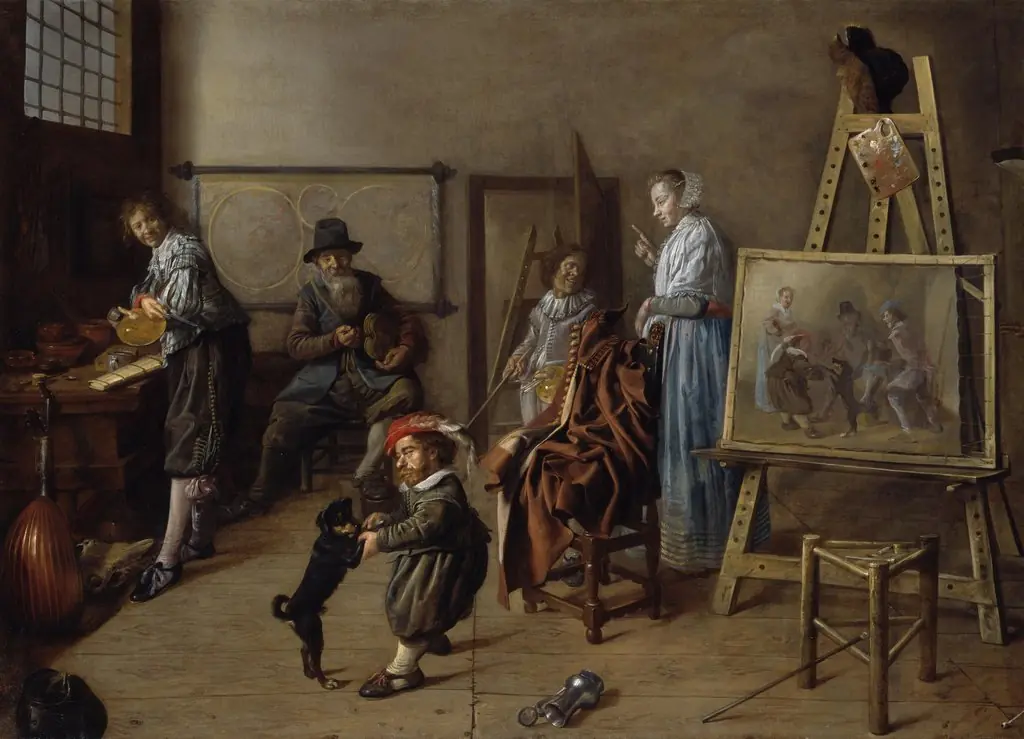
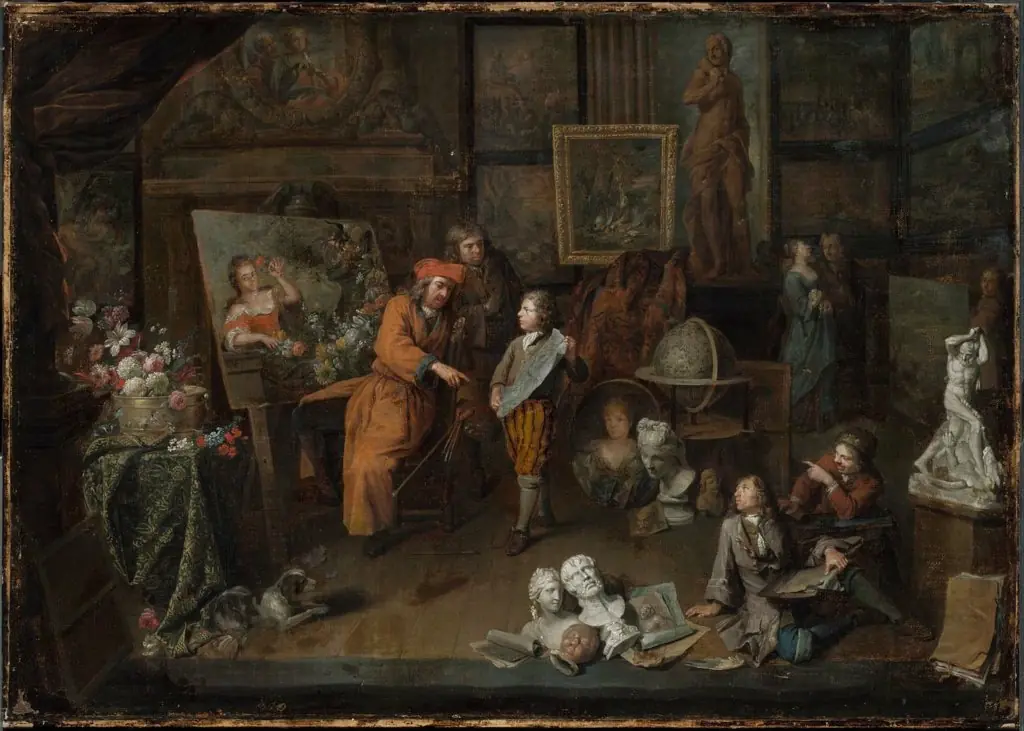
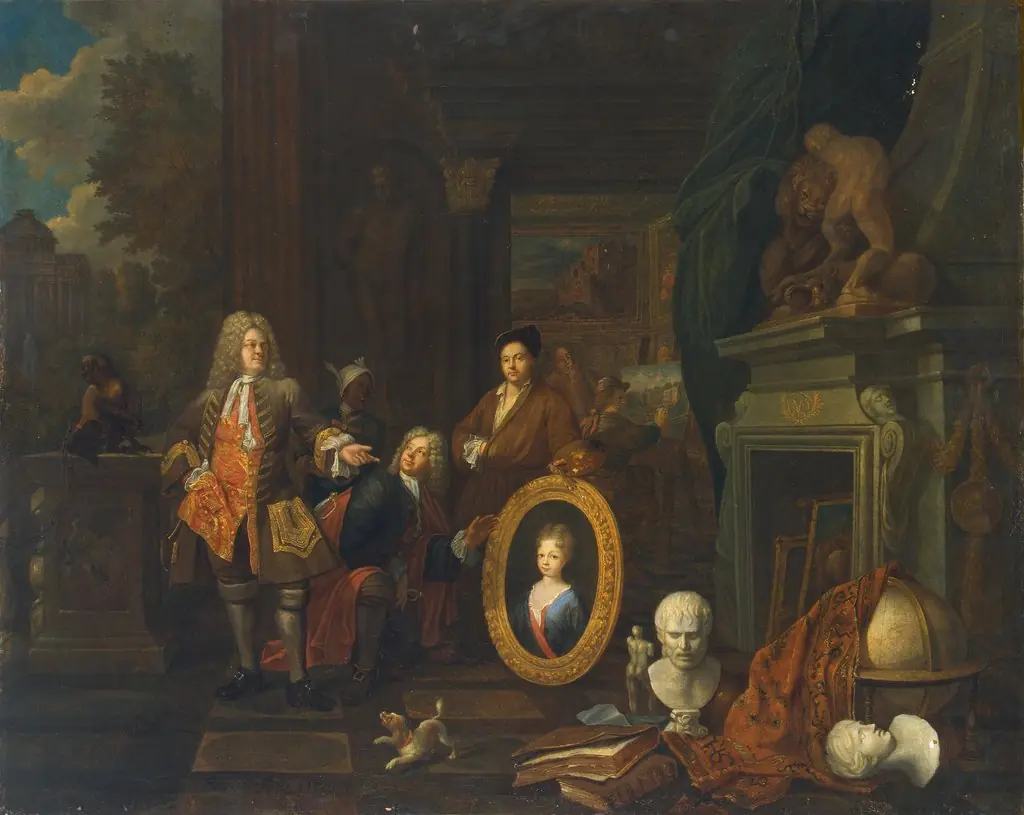
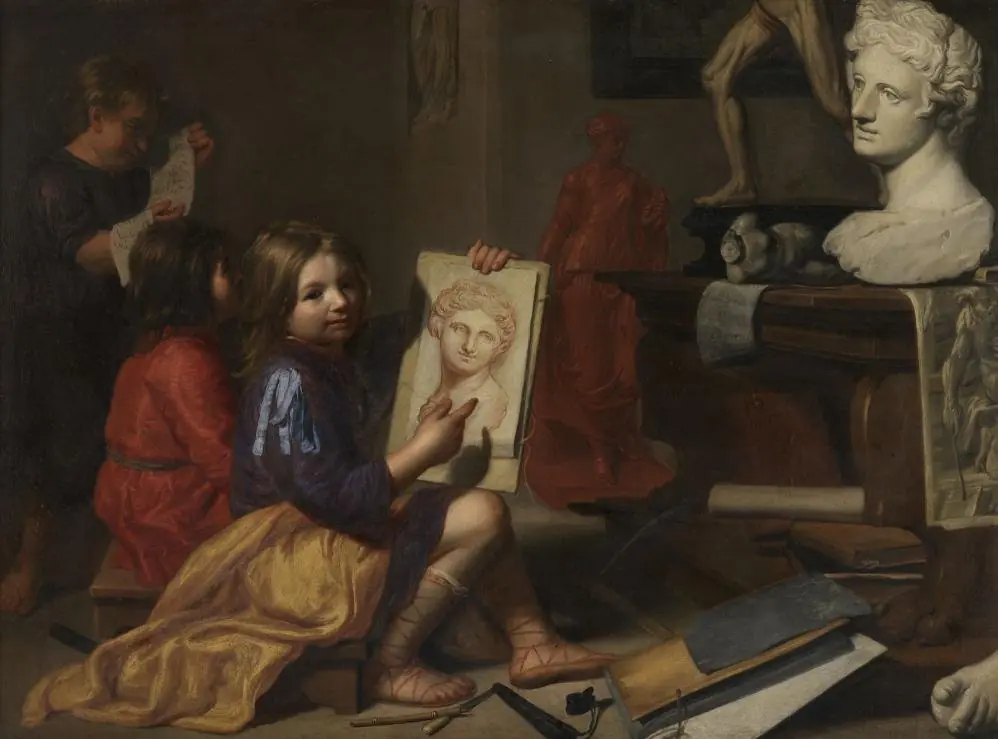
The central figure is the artist, dressed in a fur-lined robe, presenting a finished work to a discerning visitor. Around him, pupils sketch from life, models pose, and assistants prepare materials. The cluttered studio functions as a visual manifesto: painting is portrayed not as mere craft but as an intellectual discipline requiring study, mentorship, and disciplined practice. The presence of historical artworks suggests lineage and continuity within the artistic tradition.
Technique & Style
Platzer painted on copper plates, a surface that allowed for extreme fine detail and luminous color. His brushwork is precise, capturing individual strands of fur, the texture of fabric, and the subtle expressions of each figure. The composition is densely packed yet orderly, with every element contributing to the narrative. Light falls evenly, eliminating dramatic shadows to emphasize clarity and control, reflecting the Enlightenment ideal of rational order.
History & Provenance
Created in mid-18th century Austria, these works catered to aristocratic collectors who prized small-scale, highly finished paintings for their cabinets of curiosities. Platzer’s studio scenes were part of a broader regional trend where artists turned everyday professional life into allegorical subjects. Their survival in private collections underscores their value as both artistic achievements and status objects among connoisseurs of the time.
Context
In 18th-century Austria, the arts were increasingly viewed through the lens of Enlightenment rationalism. Platzer’s studio aligns with this shift, presenting art-making as a systematic, almost scientific endeavor. The inclusion of classical sculptures and Renaissance-inspired paintings reflects a reverence for historical precedent. Unlike chaotic depictions of studios, his scenes convey discipline, hierarchy, and the cumulative nature of artistic knowledge.
Legacy
Platzer’s small-scale studio scenes influenced later artists who sought to elevate the depiction of artistic labor. His fusion of realism and allegory became a model for how to represent the intellectual weight of creativity. Though overshadowed by larger historical narratives, his work remains a quiet testament to the dignity of the artist’s daily practice and the cultural value placed on meticulous observation in the age of reason.
Artist & collection

Artist
Johann Georg Platzer (1704–1761) was a prolific Austrian Rococo painter and draughtsman.