Artwork
Anna of Hanover
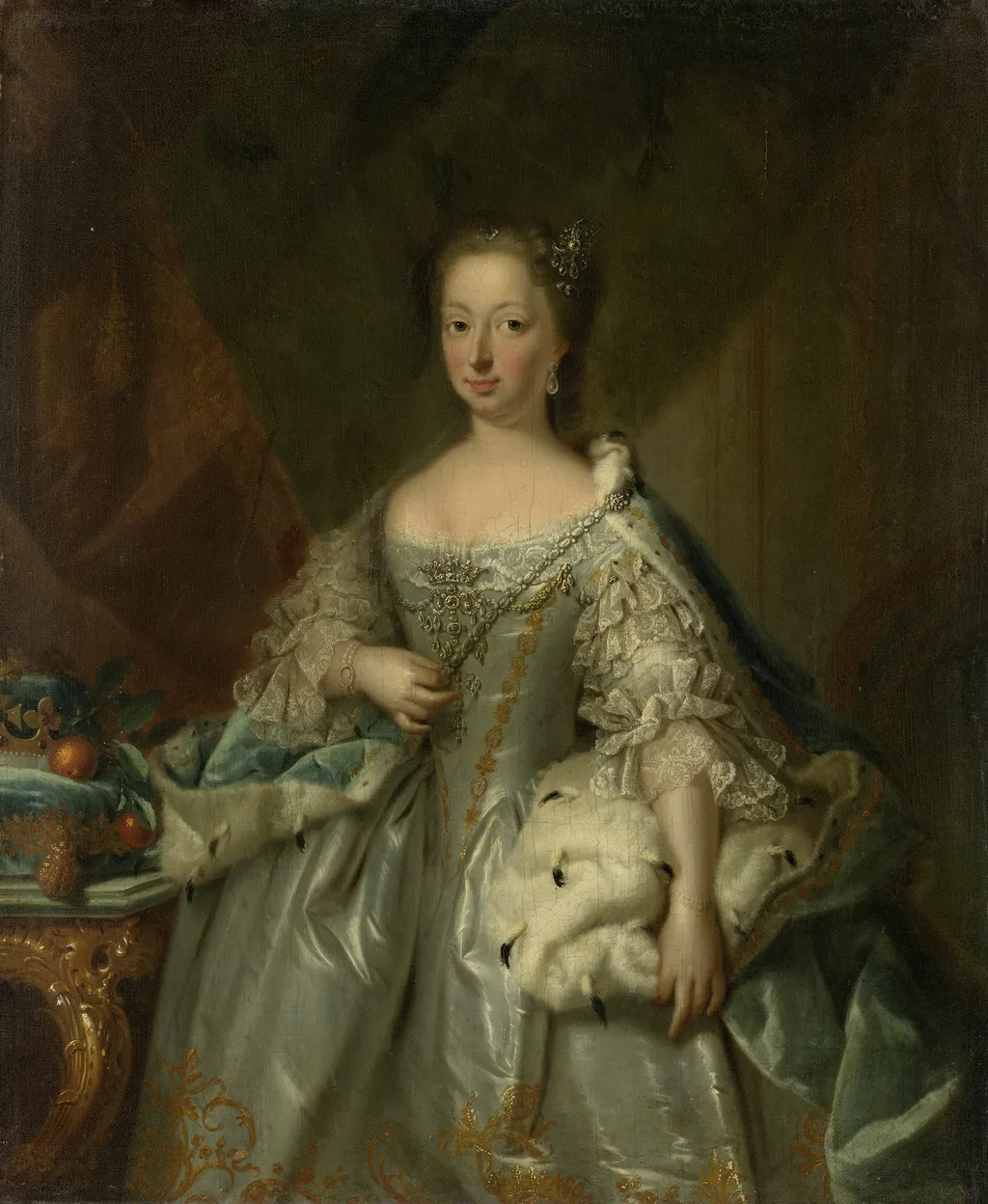
Anna of Hanover is an oil painting by the Rococo painting artist Johann Valentin Tischbein. It dates from 1753 and is held in the collection of the Rijksmuseum.
About this work
Overview
Johann Valentin Tischbein’s 1753 oil portrait presents Anne, Princess Royal and Princess of Orange, in a poised stance before a darkened backdrop.
Johann Valentin Tischbein’s 1753 oil portrait presents Anne, Princess Royal and Princess of Orange, in a poised stance before a darkened backdrop. The composition centers on the sitter, whose refined attire and composed demeanor convey the aristocratic poise expected of a mid‑eighteenth‑century royal portrait. The work resides in the collection of the Rijksmuseum, where it exemplifies the period’s courtly portraiture.
Subject & Meaning
The figure is Anne, daughter of King George II, who held the titles Princess Royal and Princess of Orange through marriage. Her portrayal emphasizes both her British lineage and her role in the Dutch court, symbolized by the crown placed on the nearby table. The inclusion of fruit may allude to fertility and abundance, reinforcing her status as a dynastic link between two realms.
Technique & Style
Tischbein employs chiaroscuro to model the sitter’s form, allowing the illuminated blue dress and gold embroidery to emerge from the surrounding darkness. The contrast accentuates the texture of the white fur shawl draped over her arm and the gleam of her gold jewelry. Fine brushwork renders the intricate details of the fabric and the delicate expression on her face, creating a sense of three‑dimensional presence.
History & Provenance
Completed in 1753, the portrait entered the Dutch royal collection before eventually being transferred to the Rijksmuseum, where it is displayed as part of the museum’s European paintings. Its documented provenance traces a clear line from the sitter’s court to the public institution, confirming its authenticity and historical continuity.
Context
The painting reflects the conventions of mid‑eighteenth‑century European portraiture, where royal women were often depicted with symbols of authority and domestic virtue. The dark background, a common device of the era, serves to focus attention on the sitter’s attire and accessories, reinforcing her elevated rank while aligning with contemporary aesthetic preferences for dramatic lighting.
Own this work as a print
Artist & collection
Artist
Johann Valentin Tischbein (1715–1768) was an artist, born in Kloster Haina.
